Archive for ‘Latin America & Caribbean’

22/02/2019

World Youth Report: Addressing the Complex Challenges Facing Young People Today

Human Wrongs Watch

22 February 2019 (United Nations)* — Today, there are 1.2 billion young people aged 15 to 24 years, accounting for 16 per cent of the global population.

World Youth Report: Addressing the Complex Challenges Facing Young People Today

The active engagement of youth in sustainable development efforts is central to achieving sustainable, inclusive and stable societies by the target date, and to averting the worst threats and challenges to sustainable development, including the impacts of climate change, unemployment, poverty, gender inequality, conflict, and migration.

read more »

22/02/2019

‘At Least 43 Percent of the 7,000 Languages Spoken in the World Today Are Endangered; Many of Them Belong to Indigenous Peoples’

Human Wrongs Watch

By IWGIAInternational Work Group for Indigenous Affairs*

At least 43 percent of the 7,000 languages spoken in the world today are endangered. Many of these belong to indigenous peoples and if something doesn’t change soon, UNESCO predicts that we will lose as many as 3,000 indigenous languages by the end of this century.

Photo from IWGIA

In an effort to raise public awareness of this threat to the world’s cultural and linguistic diversity, the UN General Assembly has proclaimed 2019 to be the International Year of Indigenous Languages.

22/02/2019

‘Due to Globalization Processes, Mother Languages Are Increasingly under Threat, or Disappearing Altogether’ – International Day

Human Wrongs Watch

.

.

When languages fade, so does the world’s rich tapestry of cultural diversity. Opportunities, traditions, memory, unique modes of thinking and expression — valuable resources for ensuring a better future — are also lost.

read more »

22/02/2019

How Bangladesh Spearheaded Creation of International Mother Language Day

Human Wrongs Watch

Concerned that one language goes extinct every two weeks, the United Nations is honouring linguistic diversity and celebrating indigenous languages on International Mother Language Day. And the roots of the Day start in a South-Asian country with a bloody and historic connection to 21 February.

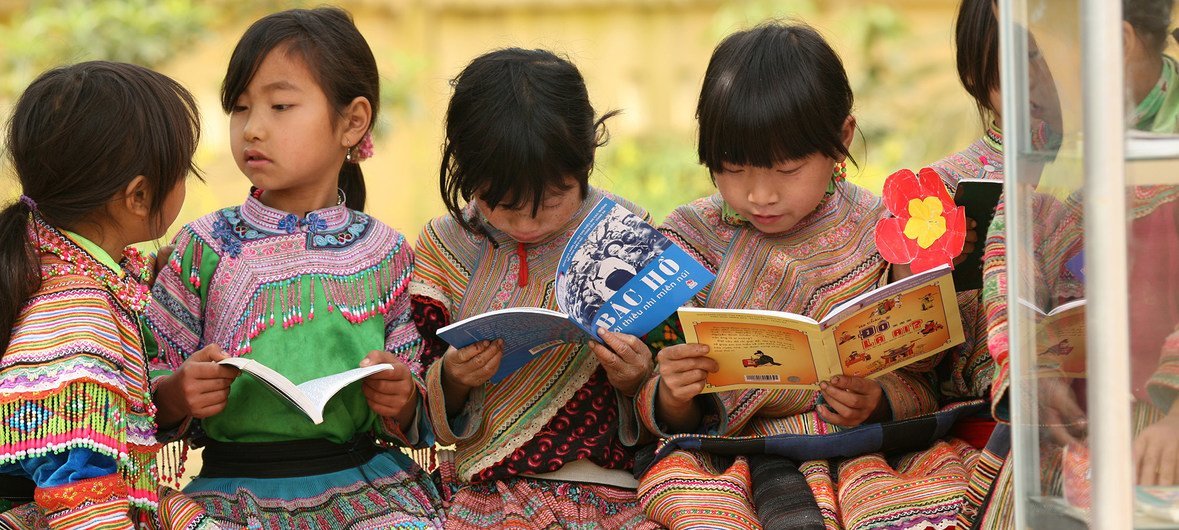
UNICEF/UNI10236/Estey | Girls from an indigenous community read outdoors at Ban Pho Primary School in Bac Han District in remote Lao Cai Province, Viet Nam.

“We have to protect our heritage, our culture, our existence,” said Ambassador Masud Bin Momen, of Bangladesh, the country which successfully lobbied the UN Educational, Scientific and Cultural Organization (UNESCO) in 1999 to create International Mother Language Day. The UN General Assembly formally recognized the Day in 2008.

read more »

21/02/2019

Wake Up and Smell the Organic Coffee

Human Wrongs Watch

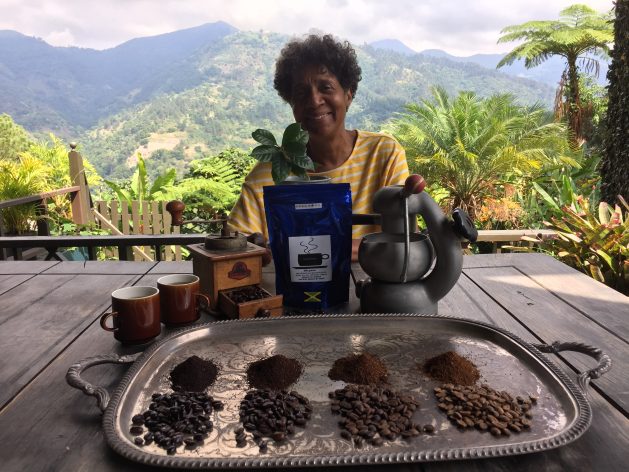
BULAWAYO, Zimbabwe, Feb 20 2019 (IPS)* In 1992, the idea of replanting her father’s ruined coffee farm seemed foolhardy at the time. But in retrospect it was the best business decision that Dorienne Rowan-Campbell, an international development consultant and broadcast journalist, could have made.

Dorianne-Rowan-Campbell-is-an-organic-coffee-farmer-in-Jamaica-credit-Dorienne-Rowan-Campbell-629x472.jpg

Dorianne Rowan-Campbell is an organic coffee farmer in Jamaica. Taking over her father’s farm in 1992 and turning it into an organic one was a huge risk at the time. However, she sustainably grows 1,800 coffee trees and harnesses nature to deal with pests, rather than using pesticides. Courtesy: Dorienne Rowan-Campbell

read more »

21/02/2019

A World Party

Human Wrongs Watch

By Roberto Savio*

Rome, Feb., 2019 (Other News)*  – I  have been a member of the first international party: the Transnational Radical Party, founded in 1956 by Marco Pannella and Emma Bonino. Then in 1988, I was a wetness of the large protest, in Berlin West, against the meeting of the International Monetary Fund and the World Bank, a precursor of the “Battle of Seattle” in 1988, where 40.000 protesters disrupted the annual meeting of the two world’s financial institutions. I was even detained for a day by the police, even if was just a witness: my condition of foreigner made me automatically suspect.
Savio-small1

Roberto Savio

And I was a witness of the Nobel prize Joseph Stigliz address to the protesters of “Occupy Wall Street”, in 2001. In the same year, I was part of the creation of the Word Social Forum, in Porto Alegre.

And I have been carefully following the arrival of the new International nationalist and populist wave, since Orban’s arrival in Hungary in 2010, Kaczynski in Poland in 2015, Brexit in 2016, Trump in 2016, and totally different movements like now the Yellow Jackets in France.

Therefore, I have decided that I can be more useful as a practitioner than as a theoretician in the cultured an interesting debate that Paul Raskin has opened on a world political party.

read more »

20/02/2019

‘About 68% of World’s Population Expected to Live in Urban Areas by 2050 – Mostly in Africa and Southeast Asia, Where Hunger and Poverty Are Highest’

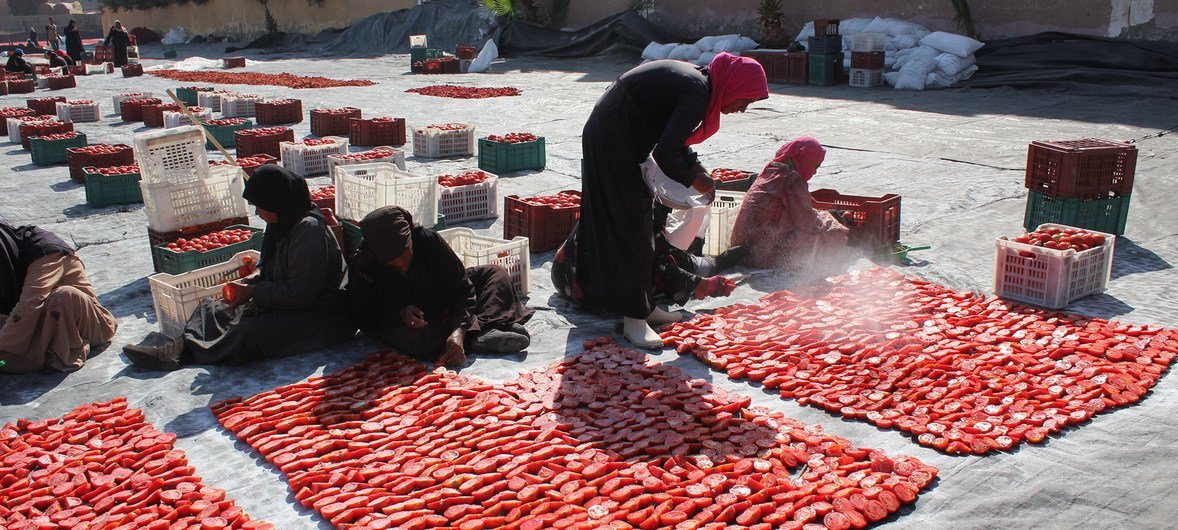
© FAO/ Egypt | Sun drying tomatoes by local women in Luxor, Egypt, as part of the United Nations Food and Agriculture Organization’s (FAO) activities on reducing food loss along the tomato value chain.

It is important to make “global commitments local realities,” José Graziano da Silva, Director-General of the Food and Agriculture Organization (FAO), told the meeting and UN Headquarters, discussing common challenges to the Sustainable Development Goals (SDGs), such as climate change and food security.

read more »

20/02/2019

Juan Guaidó: The Man Who Would Be President of Venezuela Doesn’t Have a Constitutional Leg to Stand On

By Roger Harris – TRANSCEND Media Service*

Donald Trump imagines Juan Guaidó is the rightful president of Venezuela. Mr. Guaidó, a man of impeccable illegitimacy, was exposed by Dan Cohen and Max Blumenthal as “a product of a decade-long project overseen by Washington’s elite regime change trainers.”

Roger-Harris-e1549438478629

Roger Harris

Argentinian sociologist Marco Teruggi described Guaidó in the same article as “a character that has been created for this circumstance” of regime change. Here, his constitutional credentials to be interim president of Venezuela are deconstructed.

Educated at George Washington University in DC, Guaidó was virtually unknown in his native Venezuela before being thrust on to the world stage in a rapidly unfolding series of events.

In a poll conducted a little more than a week before Guaidó appointed himself president of the country, 81% of Venezuelans had never even heard of the 35-year-old.

read more »

20/02/2019

‘A Child’s “Real Passport” to the Future –Education– Should Be Stamped in the Classroom, Not at a Border Checkpoint.’ New Funding Urgent for ‘Lost Generation’ of Children Forced Out of Classrooms

A child’s “real passport” to the future – education – should be stamped in the classroom, not at a border checkpoint, UN Special Envoy for Global Education Gordon Brown said on Tuesday [19 February 2019].*


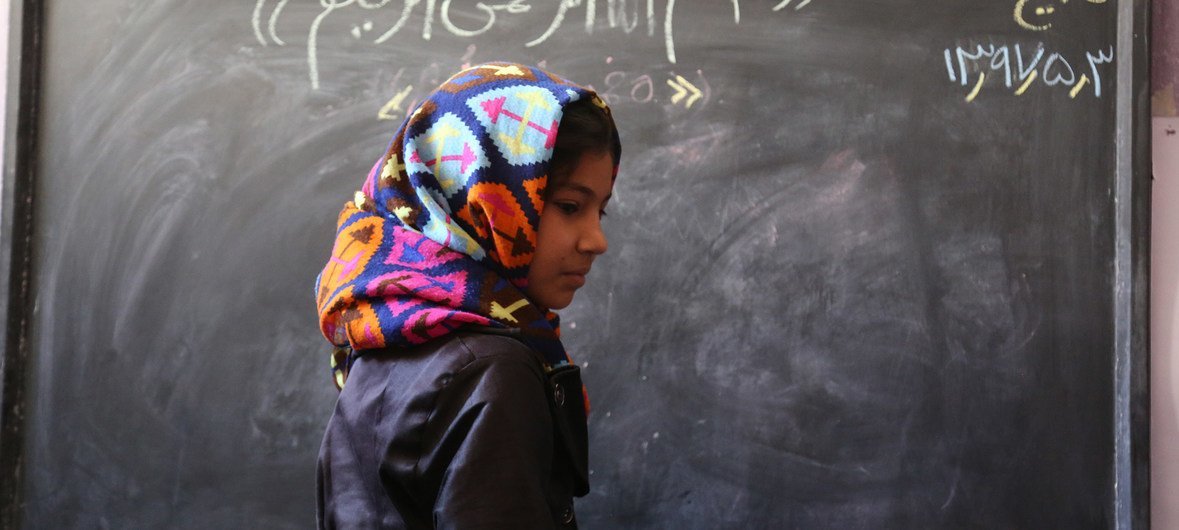
© UNICEF/UN0212108/Mohammadi | Afghanistan’s education system has been devastated by more than three decades of sustained conflict. For many of the country’s children, completing primary school remains a distant dream. Here, 10-year-old Fatima is on the board to solve a math question, at the ALC in Baghe Mellat, Herat.

Ensuring that the world’s children have a place in school classroom is essential to achieve the Sustainable Development Goal (SDG) 4, which calls for quality education for all by 2030.

read more »

20/02/2019

‘Despite Record Numbers of People Forcibly Displaced across Borders – with 1.2 Million in Need of a New Permanent Place to Call Home- Only 4.7% of Them Were Able to Be Resettled in 2018’

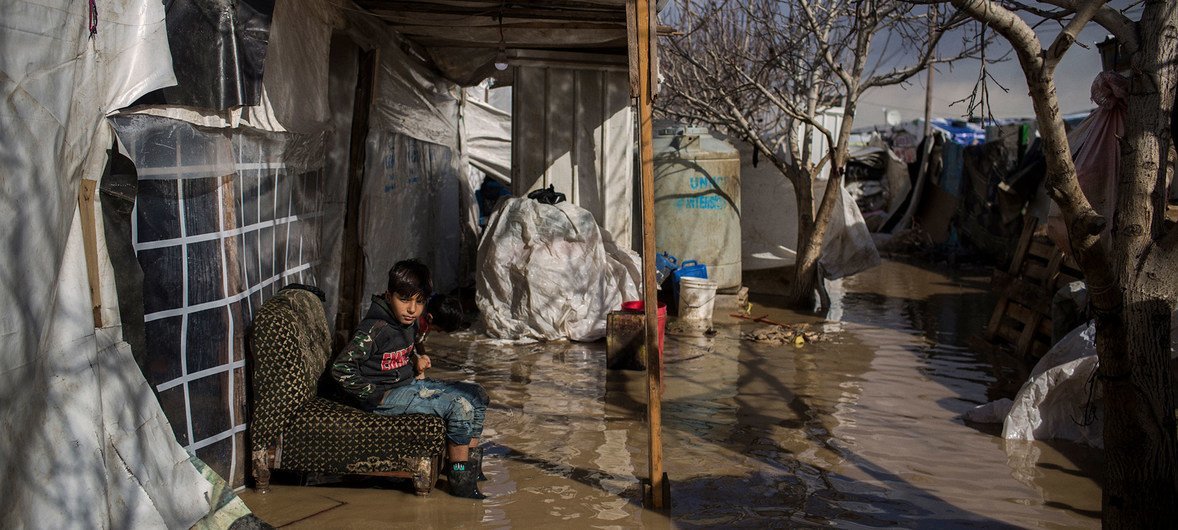
© UNHCR/Diego Ibarra Sánchez | Nine-year-old Syrian refugee from Deir el Zor sits outside his flooded tent at Dalhamiya informal settlement camp in Lebanon. 9 January 2019.
Resettlement, which involves the relocation of refugees from a country of asylum to a country that has agreed to admit them and grant them permanent settlement, is available only to a fraction of the world’s refugees. Typically, less than one per cent of the 20 million refugees under UNHCR’s mandate worldwide are ever resettled.