BOGOTA, Colombia, Oct 15 2024 (IPS)* – Information manipulation and misinformation are not new phenomena, but they have taken on exaggerated importance, especially with the massive use of social media.
.
In Lima, Peru, during a 2021 national demonstration by indigenous women movements. Credit: Felipe Caicedo
New York (UNDP)* — A staggering 455 million of the world’s poor live in countries exposed to violent conflict, hindering and even reversing hard-won progress to reduce poverty, according to the latest update of the global Multidimensional Poverty Index (MPI) released on 17 October 2024.
The report includes an in-depth case study on Afghanistan, where 5.3 million more people fell into multidimensional poverty during the turbulent period 2015/16–2022/23. In 2022/23, nearly two-thirds of Afghans were poor. UNDP Afghanistan
Preventing malnutrition is central to WFP’s strategy – but access and funding pose key roadblocks
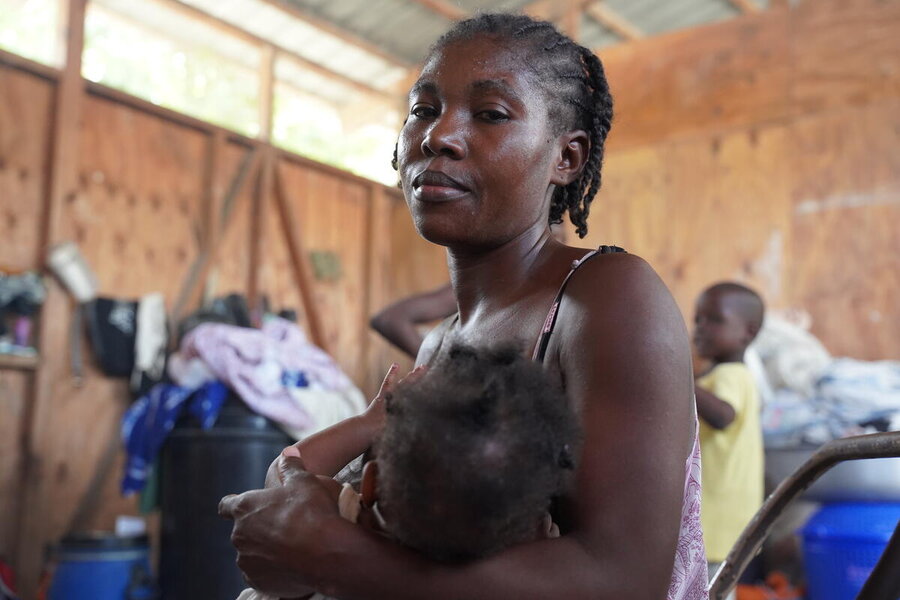
Paulema Rodeline nurses 7-month-old Kermissa at a centre for displaced people in Port-au-Prince, Haiti. Photo: WFP/Tanya Birkbeck
(WFP)* —In Gaza, Ikhlas recounts pulling her daughter from the rubble of another bombardment, as she was pregnant with her fourth child. “We escaped death,” she says, speaking from the southern city of Rafah. “We live on whatever aid is distributed.”
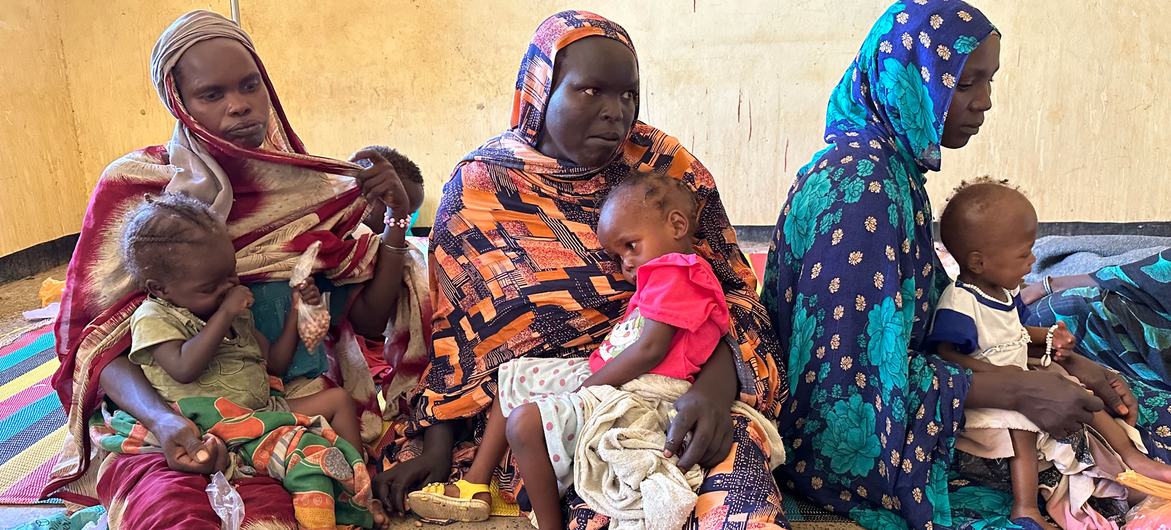
(UN News)* — Nearly two million children suffering from severe wasting are at risk of death due to funding shortages for life-saving Ready-to-use-Therapeutic-Food (RUTF) to treat the condition, which is the most dangerous form of malnutrition.
The warning comes from UN children’s agency UNICEF which said levels of severe wasting in children under five remain gravely high in several countries due to conflict, economic shocks and climate crises.
Deadly condition
Severe wasting – also known as severe acute malnutrition – is caused by a lack of nutritious and safe foods and repeated bouts of disease, such as diarrhoea, measles and malaria.
In a world characterized by an unprecedented level of economic development, technological means and financial resources, millions of persons are living in extreme poverty, a moral outrage, according to the UN. Poverty is not solely an economic issue, but rather a multidimensional phenomenon that encompasses a lack of both income and the basic capabilities to live in dignity.
Nearly 1,000 social protection measures introduced by governments across 171 countries, only 18 per cent focused on women’s economic security. Credit: iStock/Down to Earth
Rural earn 82% for every dollar that men earn. Climate change has a more pronounced impact on women, primarily indigenous and peasant women
Achieving gender equality and empowering women is not only the right thing to do but is a critical ingredient in the fight against extreme poverty, hunger and climate change.
Women engaged in wage employment in agriculture earn 82 cents for every dollar that men earn, according to a recent FAO report. PHOTO:Sasint/Adobe Stock
As farmers, women have learned how to cope with and adapt to climate change, for example, by practicing sustainable agriculture in harmony with nature, switching to drought-resistant seeds, employing low-impact or organic soil management techniques, or leading community-based reforestation and restoration efforts.
The world’s farmers produce enough food to feed more than the global population yet, hunger persists. Around 733 million people are facing hunger in the world due to repeated weather shocks, conflicts, economic downturns, inequality, and the pandemic.
WWF’s flagship Living Planet Report details sharp declines in monitored wildlife populations with the steepest drops recorded in Latin America and the Caribbean (95%), Africa (76%) and Asia–Pacific (60%), followed by North America (39%) and Europe and Central Asia (35%).
Washington, DC (October 9, 2024) –There has been a catastrophic 73% decline in the average size of monitored wildlife populations* in just 50 years (1970-2020), according to World Wildlife Fund‘s (WWF) Living Planet Report 2024.
(UNEP)* —They pollute the air. They warm the planet. They prevent crops from growing. Overall, super pollutants are a pretty nasty group of chemical compounds – and unfortunately, they’re all around us.
Photo by UNEP
A new video from the United Nations Environment Programme (UNEP) looks at some of the most problematic of these creepy critters, including black carbon, which contributes to 4 million deaths a year, and methane, which warms the planet 86 times faster than carbon dioxide.
Despite the pervasiveness of super pollutants, experts say humanity doesn’t have to put up with them. To learn more about what you can do to help, check out this interactive story after you’ve watched the video below.
That’s one shocking revelation from a new report being launched by the UN’s Special Representative working to end violence against children, marking the beginning of the mandate 15 years ago.






 HUMAN WRONGS WATCH