Joanita and her husband live in two different countries to support their family and remittances sent back home have been a lifeline for them. Migrant workers sent US $669 billion back to their families in remittance-reliant countries in 2023. PHOTO:IOM/Maulana Iberahim
(United Nations)* — It is projected that by 2030 more than US$ 5 trillion will have been sent home by migrants to low- and middle-income countries (LMICs), with much of this money going directly to rural areas where 80 percent of the world’s poor live, facing food shortages and the impacts of climate change.
(UN News)* —The global fight to tackle female genital mutilation (FGM) is being undermined by the movement of some girls across national borders and beyond to undergo the procedure, the UN human rights office (OHCHR) warned in a new report published on Friday [14 June 2024].
Although many States have intensified their efforts towards eradication, the practice continues across the world in part due to “the clandestine nature of cross-border and transnational FGM,” it said.
“Female genital mutilation is part of a continuum of gender-based violence and has no place in a human rights-respecting universe,” said the UN High Commissioner for Human Rights, Volker Türk.
(UN News)* — As nearly 40 per cent of land across the planet is degraded with more acres lost every second, governments, businesses and communities must galvanize action to reverse the damage and protect Earth, the UN chief said in a strong message for the World Day to Combat Desertification and Drought, marked annually on 17 June.
“The security, prosperity and health of billions of people rely on thriving lands supporting lives, livelihoods and ecosystems, but we’re vandalising the Earth that sustains us.”
CARACAS, Jun 14 2024 (IPS)* –– Government and private initiatives and programmes to address the climate crisis in Latin America and the Caribbean are in fact a vast array of fake solutions, according to a new regional map made by environmental organisations in several of its countries.| En español
.
A map of fake solutions shows projects with climate-friendly intentions or appearances but with counterproductive social and environmental impacts. Indigenous communities are one of the most affected population sectors. Credit: Platform for Climate Justice
Brussels (IOM)* — The International Organization for Migration (IOM) on 14 June 2024 launched two new reports on Belgium’s remittances landscape and the impact of high transaction costs on remittance flows and development outcomes for 21 countries.
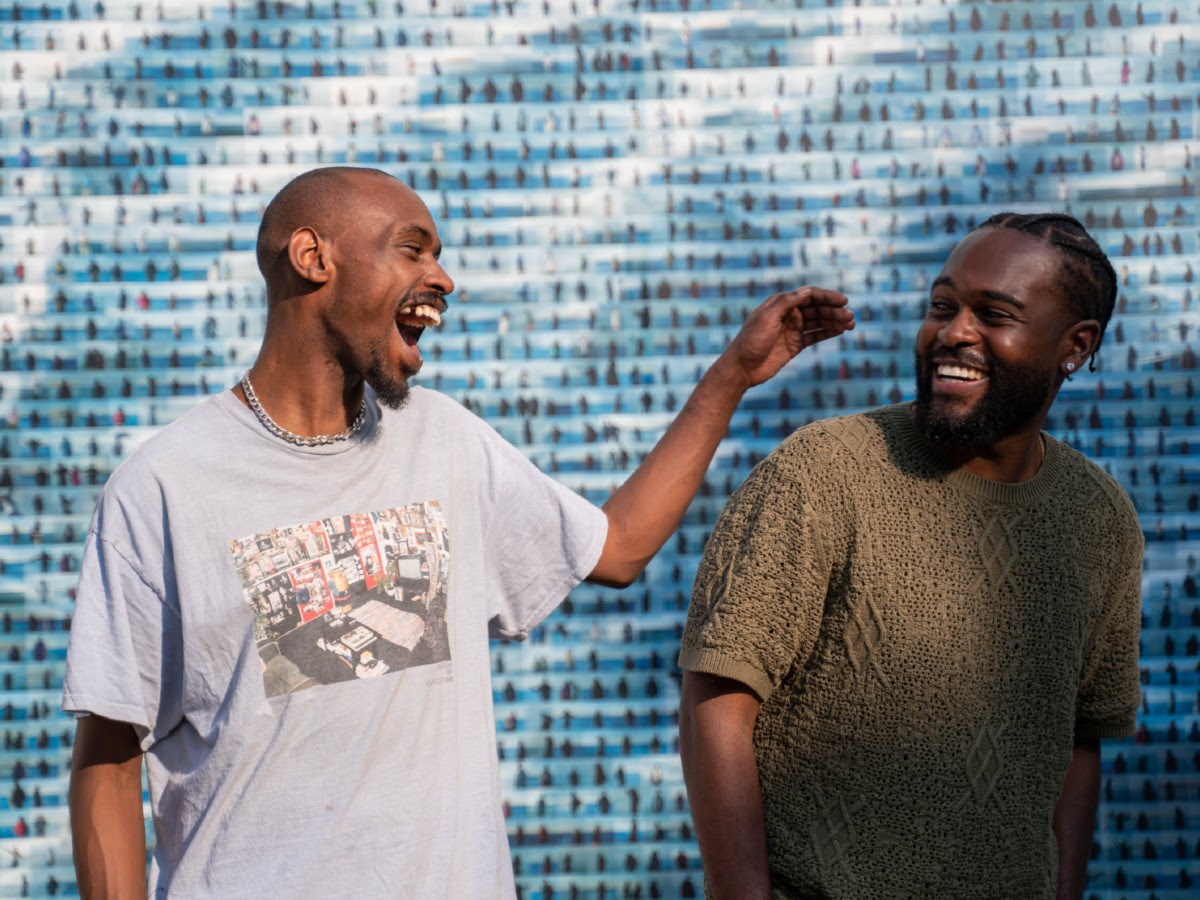
Kriticos who is originally from Zambia and Tanzania and Jason from Rwanda are two of the many diaspora members who have embraced a new life in Belgium as well as their roots. Photo: IOM/Moayad Zaghdani
In Belgium, where one third of the population has a migrant background, over USD 7 billion (EUR 6.5 billion) in remittances were sent in 2023, but the costs of sending are high.
(UN News)* —Violence against children caught in armed conflict reached “extreme levels” last year, with a “shocking” 21 per cent increase in extreme violations, UN Secretary-General António Guterres said in a report published on Thursday [13 June 2024].
Children were killed and maimed in unprecedented numbers in places such as Israel and the occupied Palestinian territories, notably Gaza; Burkina Faso, the Democratic Republic of the Congo, Sudan and Ukraine, his annual report on Children and Armed Conflict revealed.
The alarming increase was due to the evolving nature, complexity, and intensification of armed conflict, as well as the use of explosive weapons in populated areas, the report said.
UNHCR warns against apathy and inaction amid spike in forced displacement.
GENEVA, 13 June 2024 (UNHCR)* — Overall numbers rise to 120 million by May 2024; conflicts from Sudan to Gaza and Myanmar are creating new displacement and urgently require resolution.
Forced displacement surged to historic new levels across the globe last year and this, according to the 2024 flagship Global Trends Report from UNHCR, the UN Refugee Agency.
The rise in overall forced displacement – to 120 million by May 2024 – was the 12th consecutive annual increase and reflects both new and mutating conflicts and a failure to resolve long-standing crises.
The figure would make the global displaced population equivalent to the 12th largest country in the world, around the size of Japan’s.
KARACHI, Jun 12 2024 (IPS)* –A dark head emerges, followed by the torso. The balding man heaves himself up, hands on the sides of the manhole, as he is helped by two men. Gasping for breath, the man, who seems to be in his late 40s, sits on the edge, wearing just a pair of dark pants, the same color as the putrid swirling water he comes out from.
.
A sewer worker who is popularly known as Mithoo emerges from the sewer. Credit: Zofeen T. Ebrahim/IPS
This is an all-too-familiar sight in Karachi, with its over 20 million residents producing 475 million gallons per day(MGD) of wastewater going into decades-old crumbling sewerage-systems.
3 June 2024 — For the second year in a row Burkina Faso is the world’s most neglected displacement crisis, according to a new report from the Norwegian Refugee Council (NRC). The normalisation of neglect is exacerbating needs and deepening despair.
.
.
.
.
.
.
.
“My biggest worry as a mother is that my children are hungry, and I don’t have enough food to feed them,” said Mariam, a displaced mother now living in Kongoussi, Burkina Faso.
The annual list of neglected displacement crises is based on three criteria: lack of humanitarian funding, lack of media attention, and a lack of international political and diplomatic initiatives compared to the number of people in need.
The crisis in Cameroon is listed second, having featured on the list every year since 2018.






 HUMAN WRONGS WATCH