02/02/2024
ABUJA , Feb 1 2024 (IPS)* – One day in October 2020, Serah Akpan, 70, was seated in her house at Boki Local Government in Cross River, southern Nigeria, when she heard the murmurings of irate youth outside. Before she could grasp what was really happening, they had broken into her house, bundled her outside, and threatened to kill her for allegedly being a witch.

This elderly woman was marginalized as a ‘witch’ in Southern Nigeria. Her face has been obscured to protect her identity. Credit: Peace Oladipo.
read more »
Posted in Africa, Asia, Latin America & Caribbean, Middle East, Others-USA-Europe-etc., The Peoples |
Leave a Comment »
01/02/2024
Siddarth Kara’s book exposes the exploitation behind the Fourth Industrial Revolution.
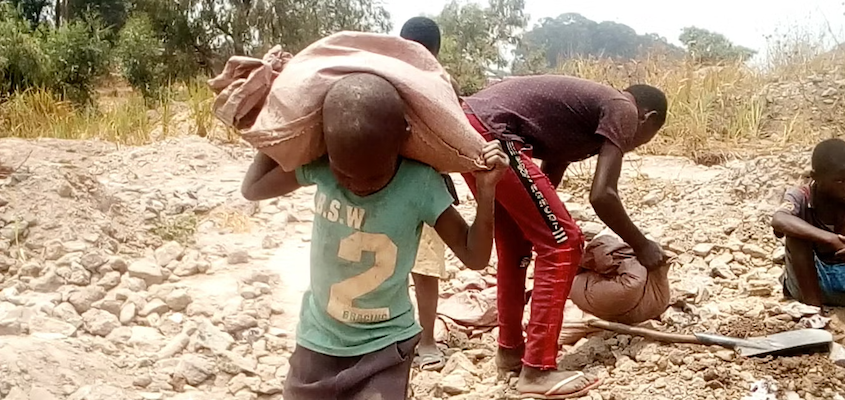
Photo Courtesy of Siddharth Kara
“Unspeakable riches have brought the people of the Congo little other than unspeakable pain.” So writes Siddharth Kara in Cobalt Red, How the Blood of the Congo Powers Our Lives. It’s one of the many poetic phrases that make this book easy on the ear but hard on the heart and mind.
There’s pleasure in turning the pages of such finely crafted prose, pain in knowing that, if you have half a heart, you’ll never be able to see your smartphone, laptop, tablet, solar power system, or electric car quite the same way again, that you’ll see blood all over the supply chain that put them in your hand, on your roof, or in your driveway.
read more »
Posted in Africa, Asia, Latin America & Caribbean, Market Lords, Middle East, Others-USA-Europe-etc., The Peoples, War Lords |
Leave a Comment »
01/02/2024
CARACAS, Jan 31 2024 (IPS)* – Rural life in Latin America and the Caribbean continues to be marked by poverty and inequality compared to the towns and cities where the vast majority of the population lives. A new focus on rural life in the region could help reveal and address the challenges and neglect faced by people in the countryside.
| En español
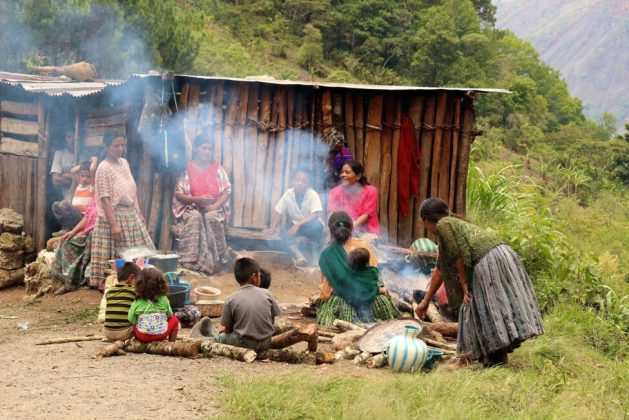
A family from the Q’eqchi Mayan indigenous people of Guatemala gathers to share a meal cooked with firewood. Life in many rural areas of Latin America continues to be marked by scarce resources and inequality, in comparison with urban areas. CREDIT: IDB
read more »
Posted in Climate Crisis, Latin America & Caribbean, Market Lords, Migrants and Refugees, Mother Earth, Others-USA-Europe-etc., The Peoples, War Lords |
Leave a Comment »
31/01/2024
KUALA LUMPUR, Malaysia, Jan 31 2024 (IPS)* – Contractionary economic trends since 2008 and ‘geopolitical’ conflicts subverting international cooperation have worsened world conditions, especially in the poorest countries, mainly in Africa, leaving their poor worse off.

Jomo Kwame Sundaram
Conditions and prospects are so bad that two well-known globalisation cheerleaders have appealed to rich nations for urgent action.
Former IMF Deputy Managing Director and World Bank Senior Vice-President, Professor Anne Krueger and influential Financial Times columnist Martin Wolf warn ominously of the dire consequences of inaction.
Deepening stagnation
Following tepid growth after the 2008 global financial crisis, Covid-19 disrupted supply chains worldwide. Then, post-pandemic recovery was disrupted by wars in Ukraine and then Gaza.
read more »
Posted in Africa, Asia, Climate carnage, Latin America & Caribbean, Market Lords, Middle East, Migrants and Refugees, Mother Earth, Others-USA-Europe-etc., The Peoples, War Lords |
Leave a Comment »
30/01/2024
Whose Child is This? Whose child is this? Is this child an Iraqi . . . an Israeli . . . a Chechnyan . . . an Afghani . . . a Kurd . . . a Nigerian? Is she or he English, Indonesian, Spanish, Lebanese, Turkish, Congolese, Bosnian, Persian? Does it matter? Is this child not a daughter or son to each of us?
Photo: Courtesy of Dr. Amer Hosin.
Is this child not a human being born of a union of a man and woman whose intimacy, whose passion, whose very breathe yielded a life that sought only to live . . . to enjoy some moments of laughter and delight, some moments of comfort and calm . . . to make yet another life.
read more »
Posted in Africa, Asia, Climate carnage, Latin America & Caribbean, Market Lords, Middle East, Migrants and Refugees, Mother Earth, Others-USA-Europe-etc., The Peoples, War Lords |
Leave a Comment »
21/01/2024
UNITED NATIONS, Jan 15 2024 (IPS)* – The world’s rich are getting progressively richer while the world’s poor continue to be increasingly poorer.
.
In a new report released January 15, Oxfam says the wealth of the world’s five richest men has doubled since 2020 –even as five billion people were made poorer in a “decade of division.”
read more »
Posted in Africa, Asia, Latin America & Caribbean, Market Lords, Middle East, Migrants and Refugees, Mother Earth, Others-USA-Europe-etc., The Peoples, War Lords |
Leave a Comment »
18/01/2024
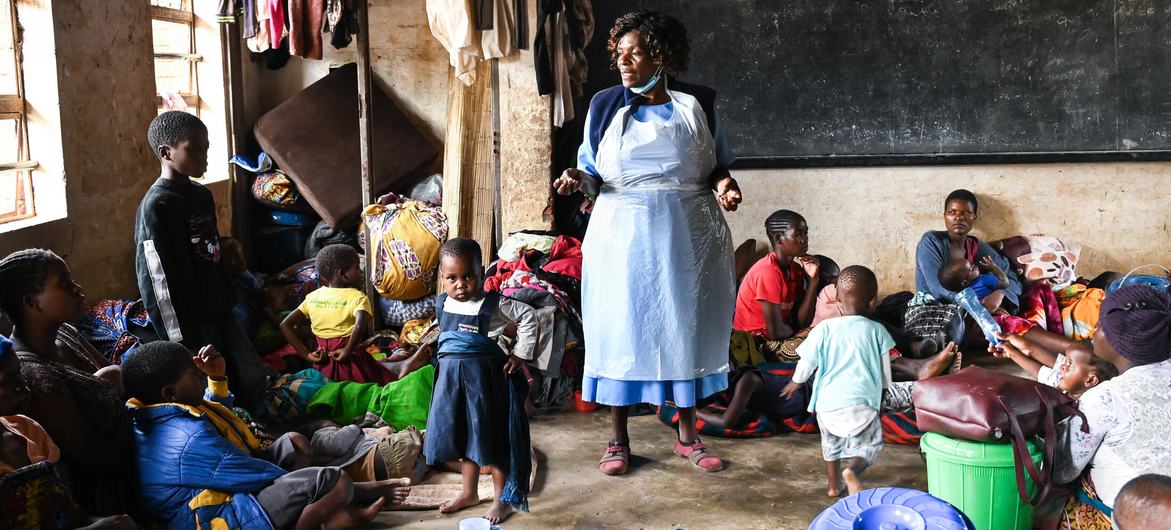
(UN News)* — The world enters 2024 with soaring cases of cholera globally, with over 667,000 cases and more than 4,000 deaths last year, UN agencies have reported.
© UNICEF/Thoko Chikondi | A health worker at a camp in southern Malawi talks to displaced people about cholera prevention measures. (file)
Eastern and southern African nations are among the worst affected, accounting for about 75 per cent of the fatalities and a third of the cases, as of 15 January, according to UN Children’s Fund (UNICEF).
With the regions also suffering from lack of adequate clean water and sanitation, and poor case management, children are particularly vulnerable as the outbreaks spread rapidly.
read more »
Posted in Africa, Asia, Climate carnage, Latin America & Caribbean, Market Lords, Middle East, Migrants and Refugees, Others-USA-Europe-etc., The Peoples, War Lords |
Leave a Comment »
17/01/2024
Principled Diplomacy Critical to Uphold Human Rights Framework
Read a text description of this video
(New York) – Global leaders have failed to take strong stands to protect human rights during 2023, a year of some of the worst crises and challenges in recent memory, with deadly consequences, Human Rights Watch on 11 January 2024 said in its World Report 2024.
read more »
Posted in Africa, Asia, Climate carnage, Latin America & Caribbean, Market Lords, Middle East, Migrants and Refugees, Mother Earth, Others-USA-Europe-etc., The Peoples, War Lords |
Leave a Comment »
17/01/2024
(WMO)*, 12 January 2024 — The World Meteorological Organization (WMO) has officially confirmed that 2023 is the warmest year on record, by a huge margin.
Ed Hawkins Warming Stripes |  | Ed Hawkins
The annual average global temperature approached 1.5° Celsius above pre-industrial levels – symbolic because the Paris Agreement on climate change aims to limit the long-term temperature increase (averaged over decades rather than an individual year like 2023) to no more than 1.5° Celsius above pre-industrial levels.
Posted in Africa, Asia, Climate carnage, Latin America & Caribbean, Market Lords, Middle East, Migrants and Refugees, Mother Earth, Others-USA-Europe-etc., The Peoples |
Leave a Comment »
17/01/2024
KUALA LUMPUR, Malaysia, Jan 17 2024 (IPS)* – World Bank aid encourages governments to enable illicit financial outflows to offshore tax havens by reducing capital controls, thus draining precious foreign exchange and government resources.

Jomo Kwame Sundaram
Aiding elite wealth
Aid disbursements to highly aid-dependent countries coincide with sharp increases in bank deposits in offshore financial centres known for banking secrecy and private wealth management.
Using Bank for International Settlements (BIS) data, Jørgen Juel Andersen, Niels Johannesen and Bob Rijkers found trends suggesting wealth accumulation abroad by national elites coinciding with World Bank aid disbursements.
Capital outflows follow aid inflows apparently captured by ruling politicians, bureaucrats and their cronies. In the 22 most World Bank aid-dependent countries, aid disbursements coincide “with increased deposits in foreign bank accounts in tax havens”.
read more »
Posted in Africa, Asia, Latin America & Caribbean, Market Lords, Middle East, Others-USA-Europe-etc., The Peoples, War Lords |
Leave a Comment »

 HUMAN WRONGS WATCH