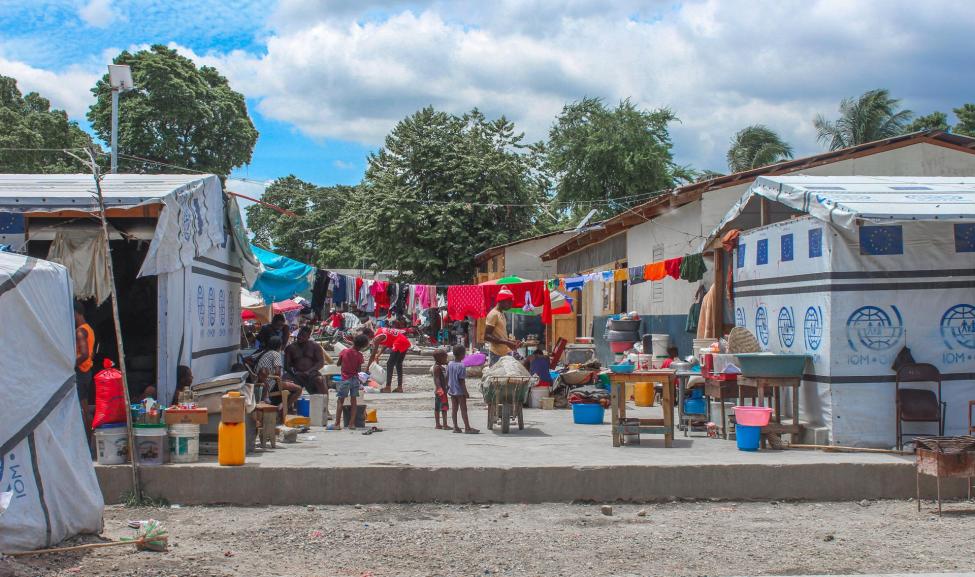
Geneva/ Port-au-Prince, 18 June 2024 (IOM)* – Nearly 580,000 people are internally displaced across Haiti, a 60 per cent increase since March, according to the latest data from the International Organization for Migration (IOM) in the country.
.
.
.
.
.
.
.
“The figures we see today are a direct consequence of years of spiraling violence – that reached a new high in February – and its catastrophic humanitarian impact,” said Philippe Branchat, head of the IOM in Haiti.
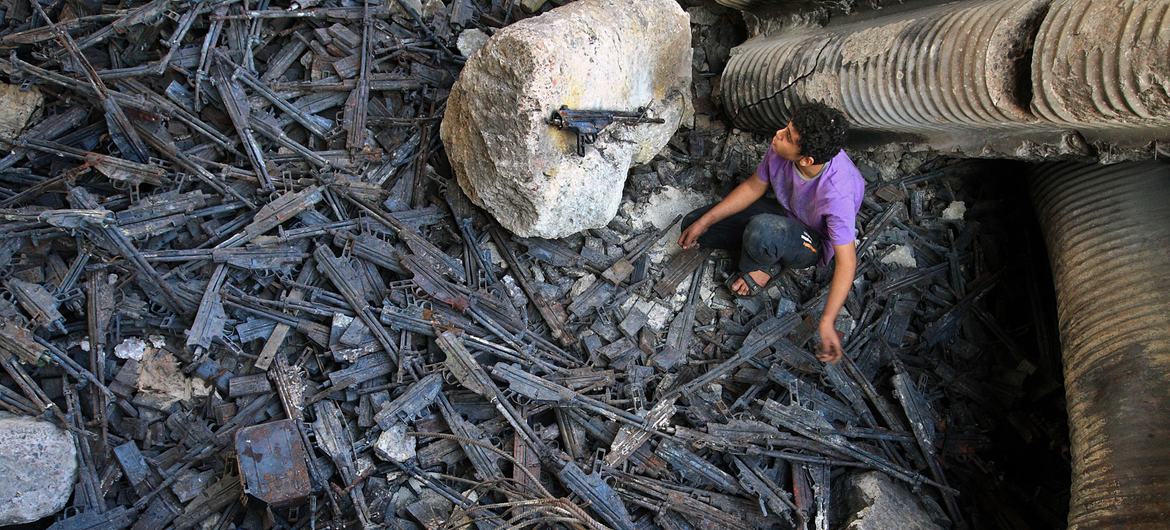
Delivering remarks in New York on behalf of the Secretary-General at a meeting aimed at eradicating the illicit trade in small arms, Izumi Nakamitsu, the head of the UN Office of Disarmament Affairs, warned on Tuesday [] that military expenditures continue to rise across the globe.
New conflicts are placing millions of people in the line of fire, and small arms and light weapons play a major role in these conflicts, she said.
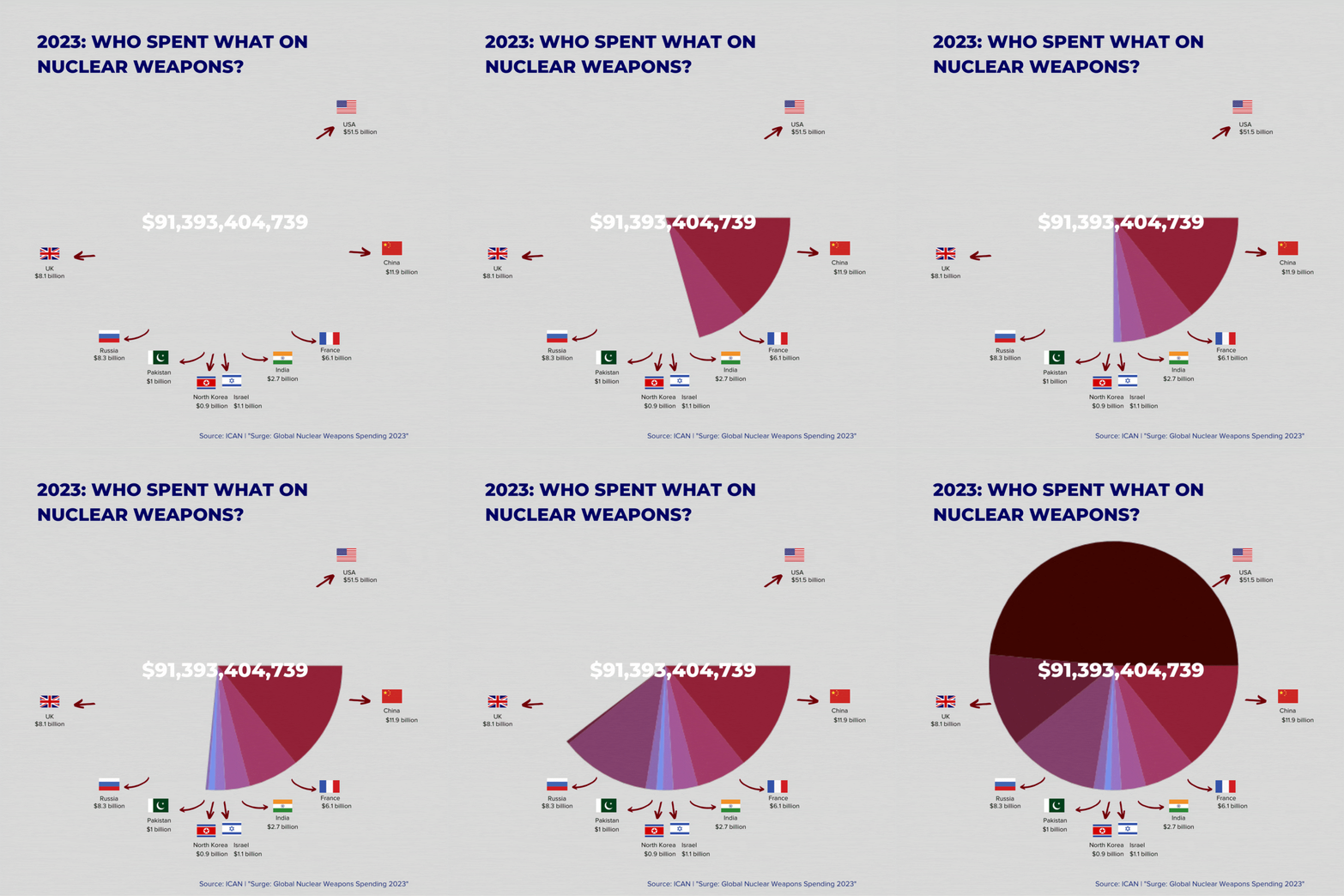
17 June 2024 — In 2023, the nine nuclear-armed states spent a combined total of $91,393,404,739 on their arsenals – equivalent to $2,898 a second. ICAN’s latest report “Surge: 2023 Global nuclear weapons spending” shows $10.7 billion more was spent on nuclear weapons in 2023 than in 2022.
KUALA LUMPUR, Malaysia, Jun 17 2024 (IPS)* –Since 2008, farmland acquisitions have doubled prices worldwide, squeezing family farmers and other poor rural communities. Such land grabs are worsening inequality, poverty, and food insecurity.
Squeezing land and farmers
A new IPES-Food report highlights land grabs (including for ostensibly ‘green’ purposes), the financial means used, and some significant implications.
Jomo Kwame Sundaram
Powerful governments, financiers, speculators, and agribusinesses are opportunistically gaining control of more cultivable land.
The report notes the 2007-08 food price spike and financial crash catalysed more land acquisitions.
Quantitative easing and financialization after the 2008 global financial crisis enabled even more land grabs. Investors, agri-food companies, and even sovereign wealth funds have obtained farmland worldwide.
Agribusinesses and other investors want land to make more profits, urging governments to enable takeovers. Cultivable land is being used for cash crops, natural resource extraction, mining, real property and infrastructure development, and ‘green’ projects, including biofuels.
Rome (IFAD)* -–In celebration of the International Day of Family Remittances (IDFR) on 16 June, the G20’s Global Partnership for Financial Inclusion (GPFI) has on 14 June 2024 unveiled a new report that provides evidence of the transformative impact of digital remittances, as a driver of financial inclusion and poverty reduction worldwide.
Despite persistent gender gaps, the hard-earned money sent back home by migrant workers remains a vital lifeline for over 800 million people, particularly for women and vulnerable populations.
Joanita and her husband live in two different countries to support their family and remittances sent back home have been a lifeline for them. Migrant workers sent US $669 billion back to their families in remittance-reliant countries in 2023. PHOTO:IOM/Maulana Iberahim
(United Nations)* — It is projected that by 2030 more than US$ 5 trillion will have been sent home by migrants to low- and middle-income countries (LMICs), with much of this money going directly to rural areas where 80 percent of the world’s poor live, facing food shortages and the impacts of climate change.
‘I’ve seen the opposite of hope. We can’t allow the normalisation of this.’
.
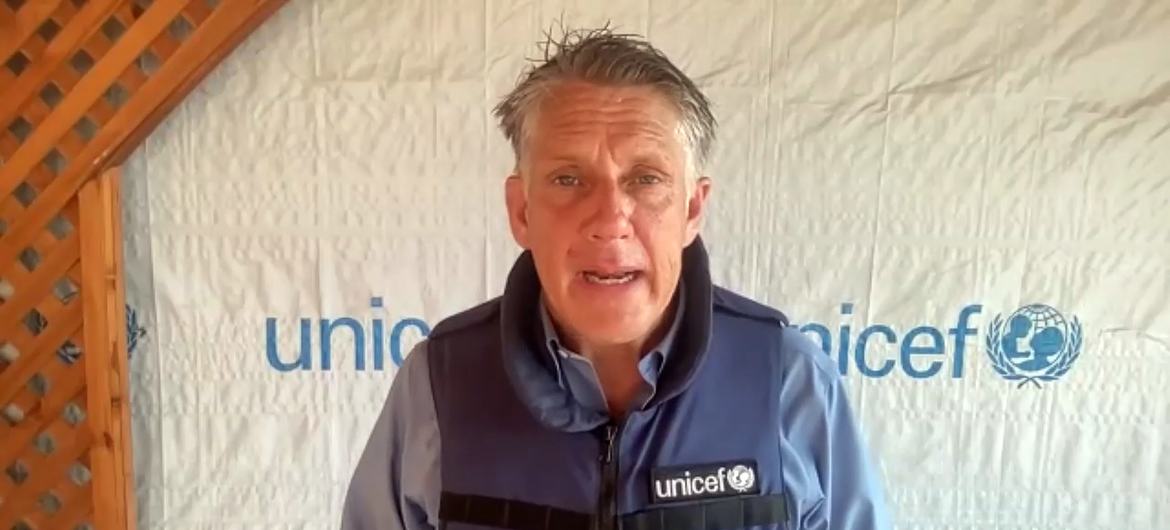
UN News/Abdelmonem Makki | Speaking from Gaza, UNICEF spokesperson James Elder told UN News “this is and has been a war on children.”
(UN News)* — Almost 3,000 malnourished children are at risk of dying before their families’ eyes in Gaza, where the eight-month-long war continues, according to the UN Children’s Fund (UNICEF) as spokesperson James Elder told UN News on Saturday [] about the situation on the ground in the besieged and bombarded enclave.
(UN News)* — As nearly 40 per cent of land across the planet is degraded with more acres lost every second, governments, businesses and communities must galvanize action to reverse the damage and protect Earth, the UN chief said in a strong message for the World Day to Combat Desertification and Drought, marked annually on 17 June.
“The security, prosperity and health of billions of people rely on thriving lands supporting lives, livelihoods and ecosystems, but we’re vandalising the Earth that sustains us.”
CARACAS, Jun 14 2024 (IPS)* –– Government and private initiatives and programmes to address the climate crisis in Latin America and the Caribbean are in fact a vast array of fake solutions, according to a new regional map made by environmental organisations in several of its countries.| En español
.
A map of fake solutions shows projects with climate-friendly intentions or appearances but with counterproductive social and environmental impacts. Indigenous communities are one of the most affected population sectors. Credit: Platform for Climate Justice




 HUMAN WRONGS WATCH