read more »
'Unseen' News and Views
Let us try to look at the situation from a distance

Roberto Savio
To write about Venezuela has become extremely difficult. The country has become so polarized, that just two narratives are left.
One, that the government has been so handicapped by the sanctions and other punitive measures introduced by the Trump’s administration, and its allies (0ver 50 countries, and the European Union), that the economy has been strangled, with a terrible social and economic impact.
The other, that the government is in fact a dictatorship, who has made an administrative mess, has destroyed the economy, ad survives only thank to the support of the military, which has been corrupted by the government. Those are two oversimplifications, that we use for the sake of brevity. Let us try to look at things by a distance.

Richard Falk
Responses to interview questions from Javad Heiran-Nia on ‘World Order in the Time of COVID-19,’ with emphasis on China & United States, especially as reflected in the restructuring of the world economy.
The underlying issue is whether the Chinese or U.S. approach to global policy and world order will gain the upper hand, and at what costs to humanity. The interview will be published in a forthcoming issue of Age of Reflection, a monthly magazine.
This post adds some observations at the end that do not appear in the interview.
1 – In recent years, and especially with the spread of the Corona virus and the way China and the United States have dealt with this virus, the issue of Chinese and American order has received more and more attention. Do you think it is relevant to talk about Chinese order?
.
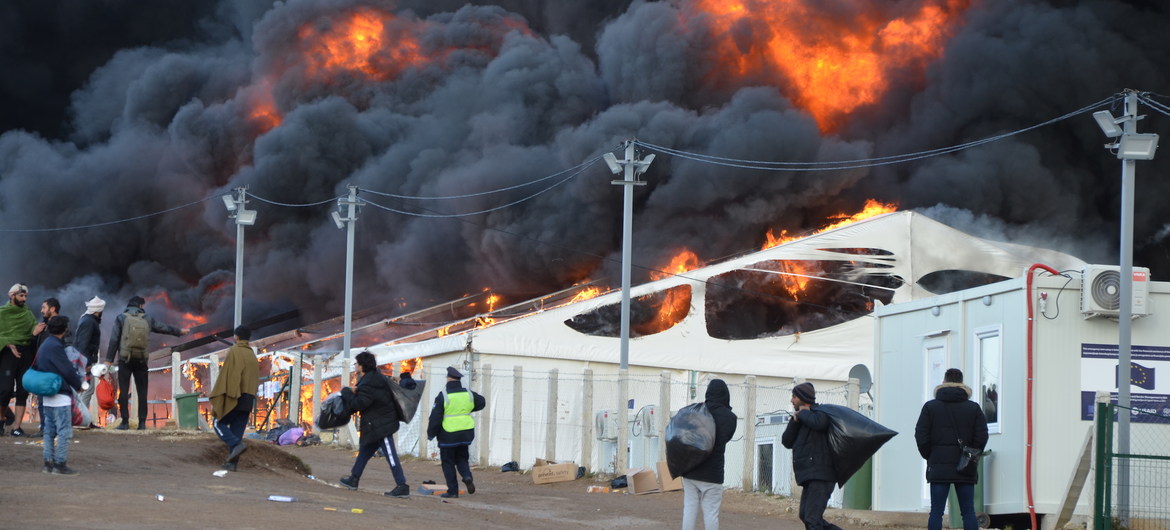
(UN News)* — The closure and subsequent fire, on Wednesday, at a migrant camp in Bosnia and Herzegovina has left thousands of migrants without shelter and protection, amid plummeting winter temperatures, the UN International Organization for Migration (IOM) has reported.
(UN News)* — In an open letter to Donald Trump on Tuesday [22 December 2020], an independent UN human rights expert asked the departing United States President to pardon Wikileaks founder Julian Assange.

“Mr. Assange has been arbitrarily deprived of his liberty for the past ten years”, wrote Nils Melzer, Special Rapporteur on torture and other cruel, inhuman or degrading treatment or punishment. “This is a high price to pay for the courage to publish true information about government misconduct throughout the world”.
(UN News)* — Despite a sharp fall in global trade in 2020 due to the coronavirus pandemic and lingering trade tensions, Asia and the Pacific is expected to perform relatively less badly than the rest of the world, the United Nations development arm in the region said on Tuesday [22 December 2020].
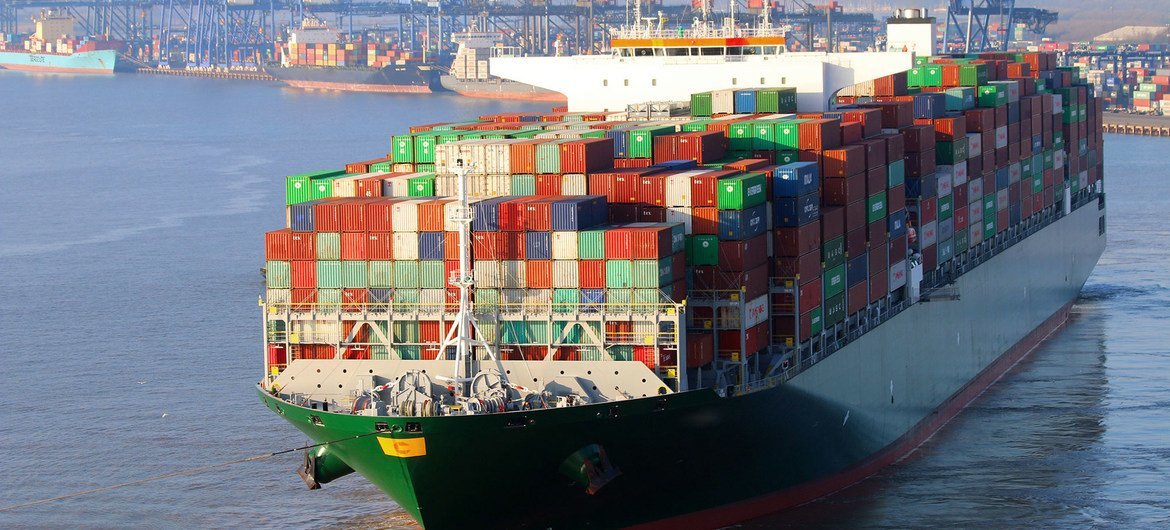
Worldwide trade is expected to fall by 14.5 per cent in 2020 and following that trend, trade in the region could contract by around 1.9 per cent, estimates from the UN Economic and Social Commission for Asia and the Pacific (ESCAP) suggest.
The rest of the world, however, fared worse, and as a result, the region’s share in global merchandise export and import is expected to rise to an all-time high in 2020, to 41.8 per cent and 38.2 per cent respectively, up from 39.9 per cent and 36.9 per cent a year earlier.
– The year 2020 is ending with the world caught up in an unprecedented human and economic crisis. The pandemic has contaminated 75 million people and killed 1.7 million. With the lockdowns, the global economy has suffered the worst recession in 75 years, causing the loss of income for millions of people. In such a bleak environment, what will the new year bring? Whilst uncertainty is the only certainty, eight points are likely to be key in the year ahead:

Isabel Ortiz
1. A gradual but uneven recovery
With the deployment of vaccines and public support, high-income countries will be on the path to recovery from the second half of 2021.
However, middle income and particularly low income countries in Africa, Asia and Latin America will see recovery delayed – unless the UN or China provide them with sufficient COVID19 vaccines and governments escalate public support.

(IOM)* — Faced with the lack of options for safe and legal migration opportunities, thousands of Ethiopians leave the country every year using irregular channels to reach destinations in Northern Africa and Europe, the Gulf States and Southern Africa. These journeys are often risky, with thousands of Ethiopians believed to have died or gone missing, whether due to violence, vehicle accidents, shipwrecks or lack of access to medicine, shelter and food along the way.
(UN News)* — Reports of artillery strikes on civilians and mass killings of non-combatants in Ethiopia’s Tigray region, must be investigated and full access granted to independent investigators, UN rights chief Michelle Bachelet said on Tuesday [22 December 2020].
 HUMAN WRONGS WATCH
