Leading companies are turning a blind eye to the violence, exploitation and environmental destruction that is endemic in the global mining industry.
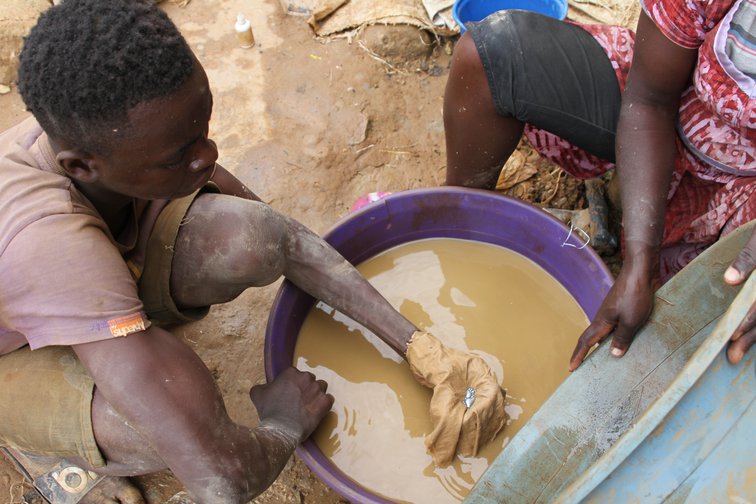
Kristin Palitza/DPA/PA Image | 15-year-old Richmond Asiamah working with mercury at a gold mine in Brong-Ahafo, Ghana
4 December 2020 (openDemocracy)* — The crunching sound of bulldozers came as a death rattle for men working deep in a gold mine in eastern Zimbabwe. On 15 November, contractors’ bulldozers converged on the mine on the outskirts of Mutare. They planned to “reclaim” it from the local community, who had been mining there independently with low-tech tools and without the backing of a company (known as artisanal or small-scale mining). However, the tonnes of soil and rock poured down the mineshaft to block up its entrances created a living grave for the men still at work underground.
4 December 2020 (Wall Street International)* — All economies are fundamentally based on the exploitation of the Earth and its resources, which are not infinite.
The most important oil companies constitute less and less transparent and more powerful economies (the case of Enrico Mattei teaches), more powerful than the States in which they are active.
Soil pollution a risk to our health and food security
Photo by UNEP / 04 Dec 2020
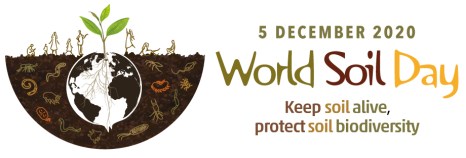
4 December 2020 (UNEP)* — Each year, the world marks World Soil Day on 5 December to raise awareness about the growing challenges in soil management and soil biodiversity loss, and encourage governments, communities and individuals around the world to commit to improving soil health.
New FAO report examines the potential of soil organisms in ensuring sustainable agri-food systems and mitigating climate change
.
ROME, 4 December 2020 (FAO)* — Soil organisms play a crucial role in boosting food production, enhancing nutritious diets, preserving human health, remediating polluted sites and combating climate change, but their contribution remains largely underestimated, FAO on 4 December 2020 in its first ever report on “The State of Knowledge of Soil Biodiversity“.
The report was launched today on the occasion of World Soil Day, marked on 5 December.
Soil biodiversity reflects the variability among living organisms including micro-organisms not visible with the naked eye, and macro-fauna like this little shrew. PHOTO:Marija Šajgen, Russia.
4 December 2020 (United Nations)* — Plants nurture a whole world of creatures in the soil, that in return feed and protect the plants. This diverse community of living organisms keeps the soil healthy and fertile.
This vast world constitutes soil biodiversity and determines the main bio-geochemical processes that make life possible on Earth.
The coronavirus pandemic has swept across a world that was already profoundly unequal. The failure to tackle inequality has left the majority of countries far more vulnerable and unprepared for both the health and economic impacts of the disease.
In the Central African Republic, the Covid-19 represents a health crisis which is added to an already alarming humanitarian crisis. One in two people in need of humanitarian assistance, and about 70% of health services are provided by humanitarian organizations. Photo: Aurelie Godet/Oxfam
The UN agency devoted to ending AIDS as a public health threat is calling on top politicians and governments across the world to ensure the right to quality healthcare is upheld, and not just a privilege to be enjoyed by the wealthy.
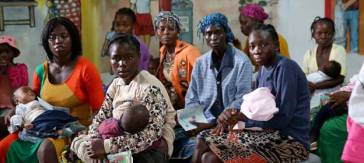
Patients seeking treatment at the Redemption Hospital in Monrovia, Liberia. Credit: World Bank/Dominic Chavez
WASHINGTON DC, Dec 2 2020 (IPS)* – Wealth begets wealth. This simple concept of privilege has added to growing discontent with inequality that has escalated under the shadow of the COVID-19 pandemic.
(UN News)* — Global pressure on wages from COVID-19 will not stop with the arrival of a vaccine, the head of the International Labour Organization (ILO) warned on Wednesday [2 December 2020], coinciding with a major report showing how the pandemic had slowed or reversed a trend of rising wages across the world, hitting women workers and the low-paid hardest.
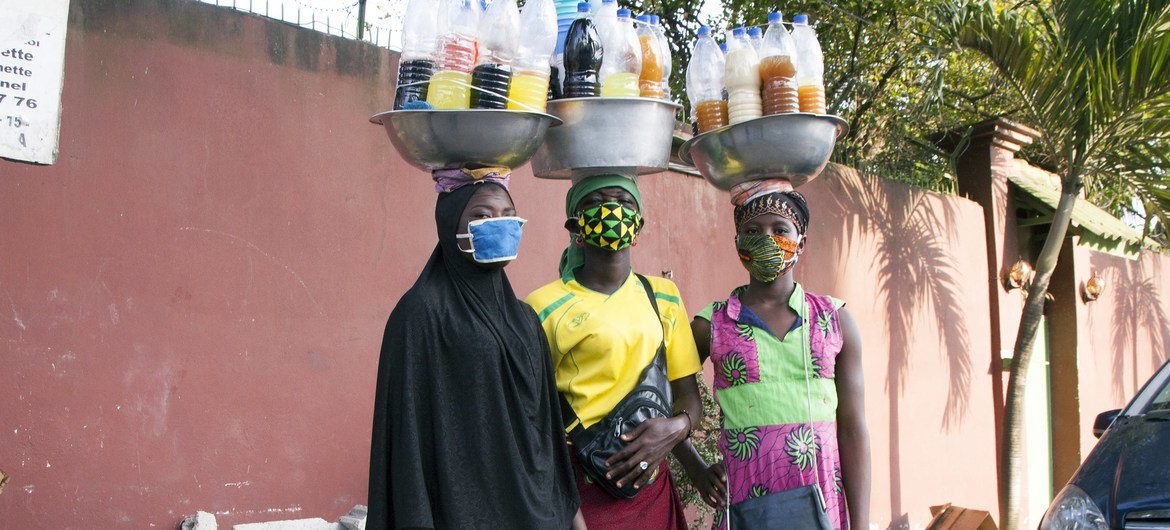
ILO/Jennifer A. Patterson | Three young women wearing masks are selling medicine on the street during the COVID-19 crisis in Abidjan, Côte d’Ivoire.
“It’s going to be a long road back and I think it’s going to be turbulent and it’s going to be hard”, said ILO Director-General Guy Ryder, as he announced the findings of the ILO’s flagship Global Wage Report, which is published every two years.
(UN News)* — More than 32 million of the world’s poorest people face being pulled back into extreme poverty because of COVID-19, leading UN economists said on Thursday [3 December 2020], highlighting data showing that the pandemic is likely to cause the worst economic crisis in decades among least developed countries (LDCs).
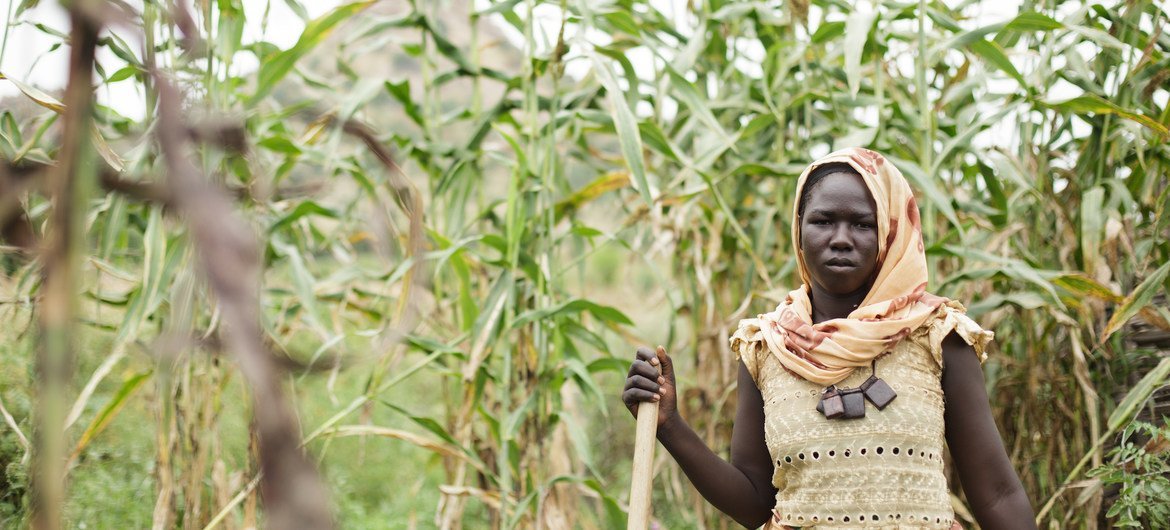
UNICEF/Asselin | An over-reliance on traditional activities such as farming has left all but a handful of least developed countries (LDCs) extremely vulnerable to the economic shock caused by COVID-19. Pictured here, a family farmer in Chad. (file photo)
.In a call for urgent investment and support from the wider international community, the UN trade and development agency, UNCTAD, warned that the new coronavirus risked reversing years of “painstaking progress” in poverty reduction, nutrition and education.
An additional 207 million people could be pushed into extreme poverty by 2030, due to the severe long-term impact of the coronavirus pandemic, bringing the total number to more than a billion, a new study from the UN Development Programme (UNDP) has found (*).
.
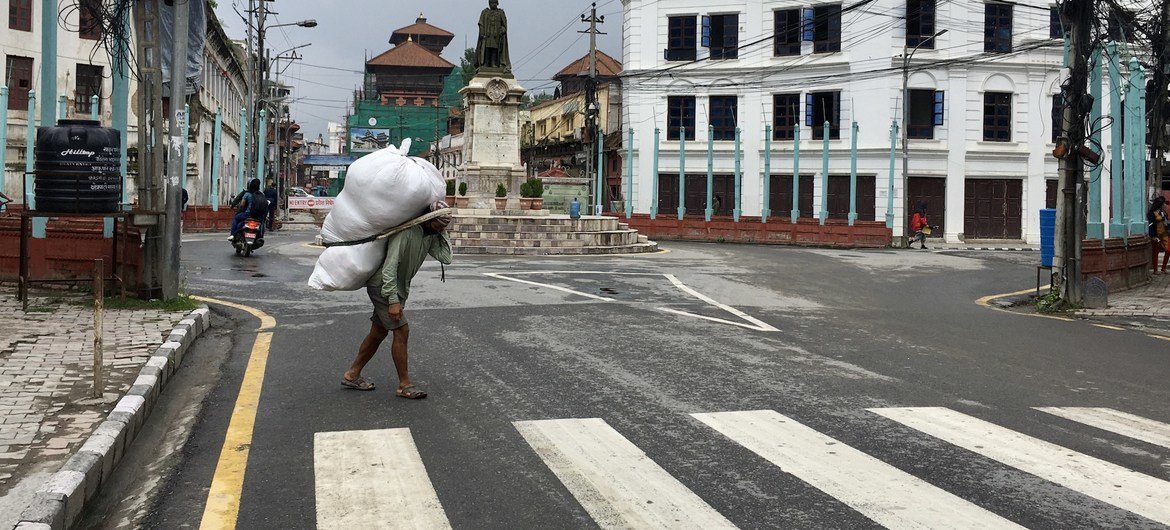
UN News\Vibhu Mishra | A man, carrying a load on his back, in what is generally a busy business district in Kathmandu, Nepal. COVID-19 and the associated lockdown has hit people hard, with many daily-wage earners losing their only source of income.
.
According to the study, released on Thursday, [3 December 2020], such a “high damage” scenario would mean a protracted recovery from COVID-19, anticipating that 80 per cent of the pandemic-induced economic crisis would continue over a decade.


 HUMAN WRONGS WATCH