Geneva/ Paris, 10 August 2020 (IOM)*– The International Chamber of Commerce (ICC) and the International Organization for Migration (IOM) this week are releasing employer guidance for measures to protect migrants during COVID-19.
Burmese migrants work on fishing boats and in coastal communities in Phang Nga, southern Thailand. Photo: Thierry Falise/IOM
10 August 2020 (UN News)* — Amidst reports that many migrant workers in the Middle East are being made destitute, due to an economic crisis exacerbated by the COVID-19 pandemic, the UN is calling on governments and employers to respect their rights, and show solidarity with their plight.
ILO/Hisham Ashraf | A woman views an exhibition of portraits of domestic workers on their day off on International Domestic Workers Day in Qatar.
Thrown into the streets, locked in rooms, and forced to work without pay, recent media reporting has revealed the abuse and poor treatment that some migrant domestic workers in the Middle East have suffered, since the onset of the pandemic.
The International Labour Organization (ILO) has confirmed that many of these workers, particularly those who have no employment contract, and live outside the household, have been severely impacted by the pandemic.
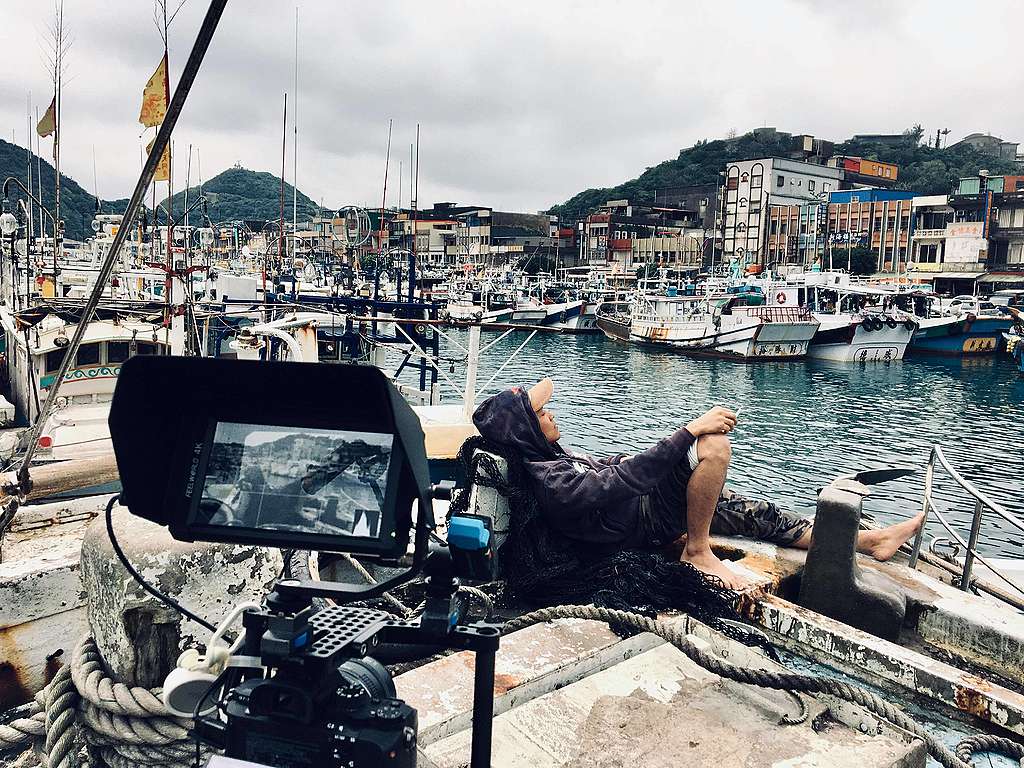
(Greenpeace International)* — The promise of work on foreign shores usually ignites hopes, dreams, and ambitions. For hundreds of thousands of migrant fishers, mainly from Southeast Asia, who are deployed overseas onto massive fishing vessels each year to help pick and pack tonnes of seafood for global consumption, this job represents a pathway to a better life: the chance to earn more money than they could in their home country, and the opportunity to provide for their family. But once on-board and far away from land, working long hours and exposed to the harsh elements, their hopes and dreams become as distant as the out-of-sight shore.
10 August 2020 (Wall Street International)* .. The Russian poet Boris Pasternak once said: “We have learned that we are guests of existence, travelers between two stations. We must discover security within ourselves.”
The search for security remains the overarching aim for many societies worldwide in today’s volatile era. Who wants to live in an Orwellian society guided by insecurity and social disorder or in a world order as described in Thomas Hobbes’ book Leviathan?
STOCKHOLM / ROME, Aug 10 2020 (IPS)* – COVID-19 has become a scourge affecting all levels of human society – morals, behaviour, human interaction, economy and politics. The pandemic has wrecked havoc on our way of being and its impact will remain huge and all-encompassing.
It is not only affecting our globally shared existence, it is also changing what has been called ”the little life”, i.e. our own way of thinking and being, our personal life situation and the one of those close to us; people we love and depend upon – our friends and family.
10 August 2020 (UN News)* — Nuclear weapons are still one of the most serious threats to mankind, and the dangers are growing. Young people can play an important role in ensuring that they are eliminated once and for all, says the UN’s top disarmament official, ahead of International Youth Day on 12 August.
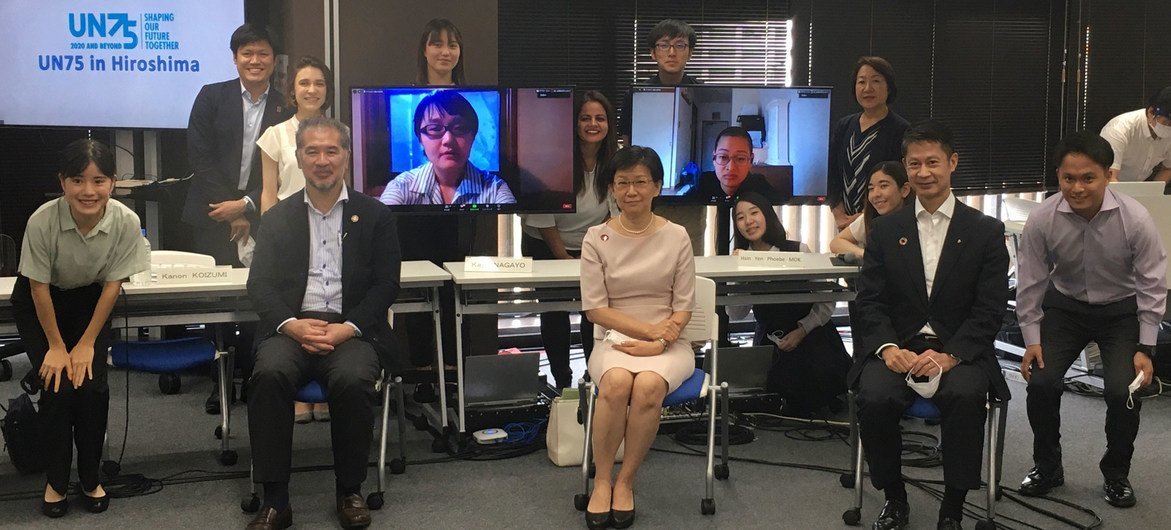
Hiroshima City | The UN Under-Secretary-General of Disarmament Affairs Izumi Nakamitsu (centre) meets young people in Japan at an event focused on the 75th anniversary of the nuclear bombing of Hiroshima and the establishment of the UN.
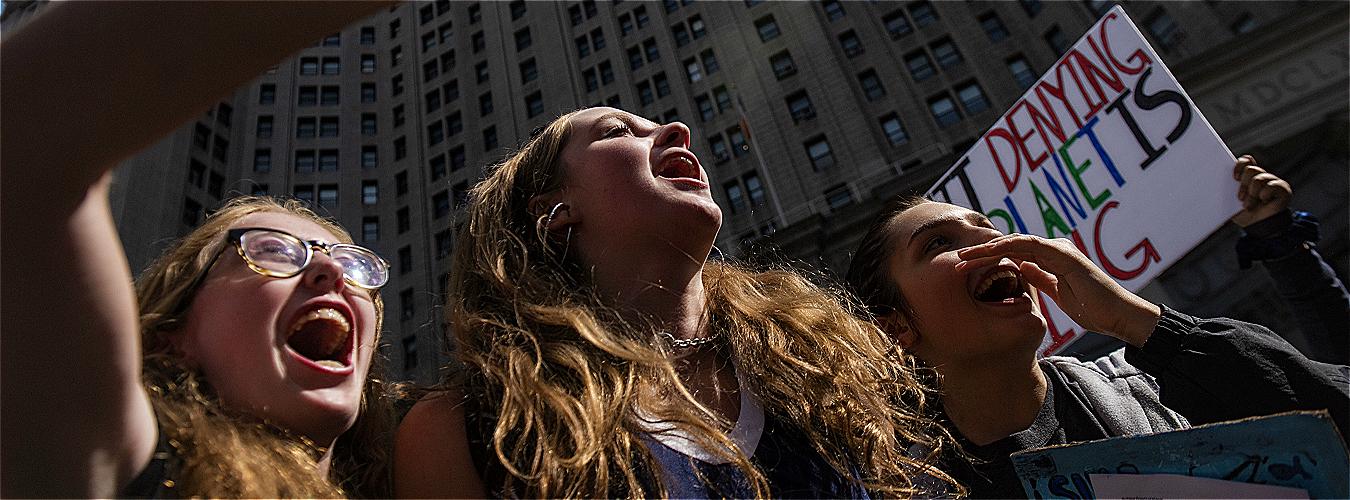
PHOTO:UN Women/Amanda Voisard | Young people led millions around the world in marches demanding action on climate change days before the UN Climate Action Summit (23 September 2019). UN Women/Amanda Voisard
International Youth Day gives an opportunity to celebrate and mainstream young peoples’ voices, actions and initiatives, as well as their meaningful, universal and equitable engagement. The commemoration will take the form of a podcast-style discussion that is hosted by youth for youth, together with independently organized commemorations around the world that recognize the importance of youth participation in political, economic and social life and processes.
(UN News)* — A group of UN independent human rights experts have called on countries to lift – or at the very least, ease – sanctions to allow affected nations and communities access to vital supplies to fight against the global coronavirus pandemic.
People in countries under sanctions cannot protect themselves against the disease or get life-saving treatment if they fall ill because humanitarian exemptions to the sanctions are not working, the experts said in a news release on Friday [7 August 2020].
Siblings Nyamach and Nyakoang are among more than 42,000 South Sudanese refugee children in Ethiopia who are either unaccompanied or separated from their parents or guardians. | Español | Français | عربي
7 August 2020 (FAO)* — Huamani Cardenas lives in Lima, but is originally from Conayca, a rural town of roughly 1 300 people in the central highlands of Peru. When he received a delivery of fresh food from his hometown, he was thrilled. “I sincerely thank the authorities of Conayca for thinking of us,” he wrote in a social media group for young Conaycans living in Lima.
 Burmese migrants work on fishing boats and in coastal communities in Phang Nga, southern Thailand. Photo: Thierry Falise/IOM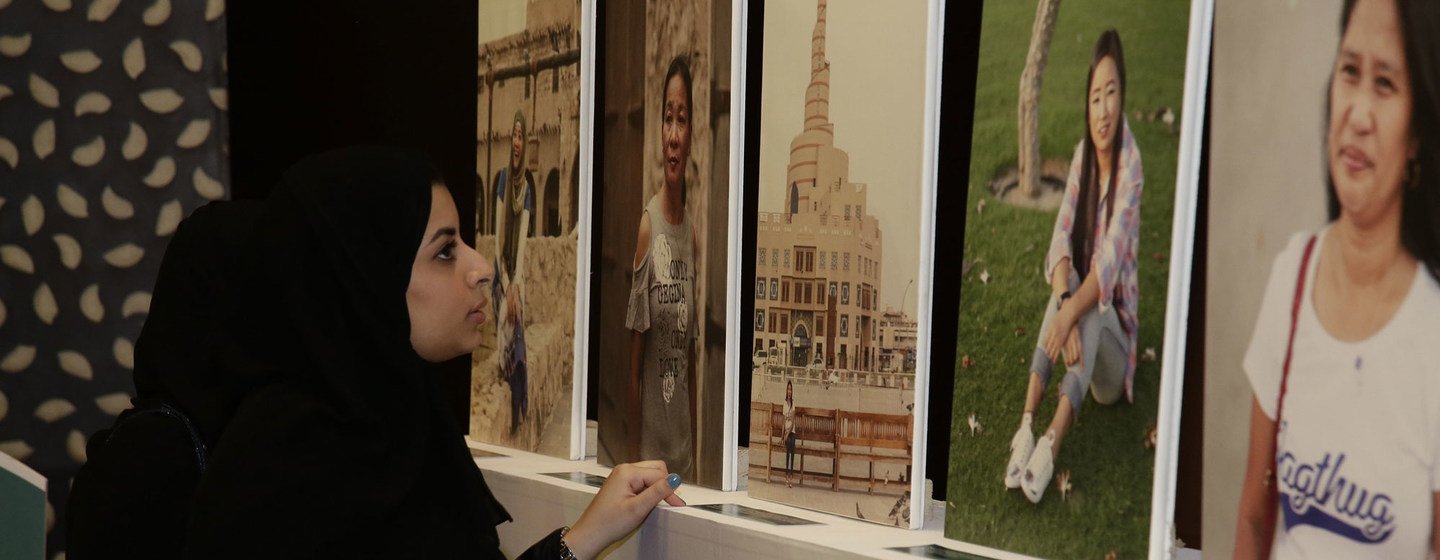


 HUMAN WRONGS WATCH