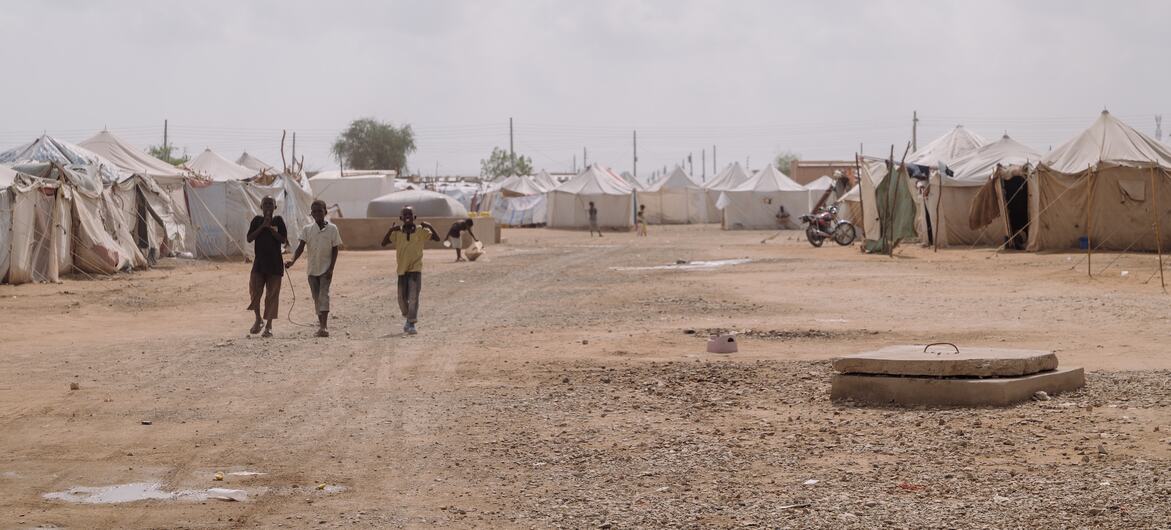
(UN News)* —The war in Sudan is entering a deadlier phase, the United Nations has warned, as intensified fighting in the Kordofan region, mounting civilian casualties from drone strikes and growing risks of regional spillover push the conflict toward the 1,000-day mark.
Briefing the Security Council on Monday [], senior UN political and humanitarian officials described a sharply deteriorating security and humanitarian situation marked by indiscriminate attacks, expanding territorial gains by the Rapid Support Forces (RSF), and escalating dangers for civilians, aid workers and peacekeepers.
(UN News)* — An estimated 500,000 people have been forced from their homes since fighting erupted in South Kivu province, Democratic Republic of Congo (DRC), at the beginning of December.
That’s according to the UN World Food Programme (WFP).
“This hunger crisis risks spiraling without urgent action,” said Cynthia Jones, WFP Country Director for the DRC.
She added that even the families who have provided shelter to those forced to flee are already living at emergency levels of food insecurity, “sharing their last food with displaced neighbors—pushing all of them closer to utter desperation.”
UNITED NATIONS, Dec 23 2025 (IPS)* – Jeanne Kirkpatrick, a former U.S. ambassador to the United Nations, once made a highly debatable distinction between “friendly” right-wing “authoritarian” regimes (which were mostly U.S. and Western allies) and “unfriendly” left-wing “totalitarian” dictatorships (which the U.S. abhorred).
Tercer Piso. Source Amnesty International
Around the same time, successive U.S. administrations were cozying up to a rash of authoritarian regimes, mostly in the Middle East, widely accused of instituting emergency laws, detaining dissidents, cracking down on the press, torturing political prisoners and rigorously imposing death penalties.
(UN News)* —As Myanmar approaches elections scheduled for 28 December, the UN’s top human rights official has said that civilians are being coerced from all sides – forced by the military to vote and threatened by armed opposition groups to boycott – in a climate of fear, violence and mass repression.
Unsplash/Kyle Petzer | A pagoda at dawn in downtown Yangon, the commercial hub of Myanmar.
UN High Commissioner for Human Rights Volker Türk warnedthat the military-controlled ballot is unfolding amid intensified violence, intimidation and arbitrary arrests, leaving no space for free or meaningful participation.
“These elections are clearly taking place in an environment of violence and repression,” Mr. Türk said in a news release.
MONTEVIDEO, Uruguay, Dec 22 2025 (IPS)** – Myanmar is heading for an election, beginning on 28 December, that’s ostensibly an exercise in democracy – but it has clearly been designed with the aim of conferring more legitimacy on its military junta.
.
Credit: Issei Kato/Reuters via Gallo Images
Almost five years after its February 2021 coup, the regime continues to fight pro-democracy forces and ethnic armed organisations, barely controlling a fifth of Myanmar’s territory.
The junta hasacknowledgedthat voting won’t be possible in much of the country.
MONTEVIDEO, Uruguay, Dec 17 2025 (IPS)** –Machines with no conscience are making split-second decisions about who lives and who dies. This isn’t dystopian fiction; it’s today’s reality. In Gaza, algorithms have generated kill lists ofup to 37,000 targets.
Credit: Annegret Hilse/Reuters via Gallo Images
Autonomous weapons are also being deployed inUkraineand were on show at a recentmilitary paradein China. States are racing to integrate them in their arsenals, convinced they’ll maintain control. If they’re wrong, the consequences could be catastrophic.
Unlike remotely piloted drones where a human operator pulls the trigger, autonomous weapons make lethal decisions.
A new global synthesis report and refugee voices from East Africa and the Middle East warn that reductions in humanitarian footprints risks breaking the refugee protection system.
Sahrawi refugees walk near the Awserd Refugee Camp in the Tindouf Province of Algeria. Credit: UN Photo/Evan Schneider
SRINAGAR, India, Dec 16 2025 (IPS)* –– The global refugee system is entering a period of deep strain. The delivery of protection and assistance is undergoing a transformation due to funding cuts, institutional reforms, and shifting donor priorities.
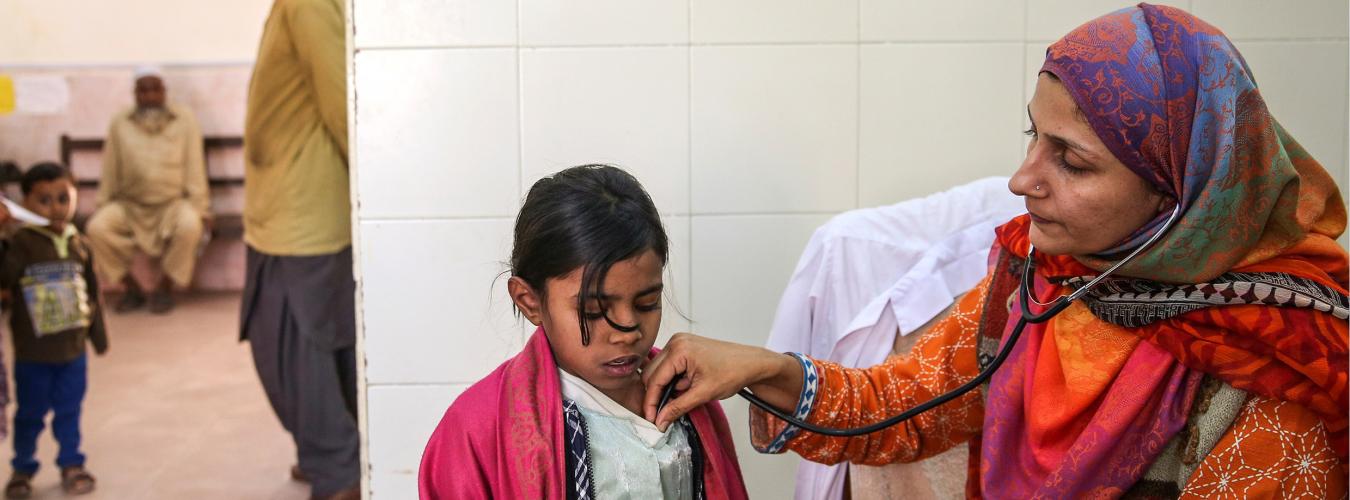
More than half the world’s population still lacks access to essential health services.
.
And a quarter of them face financial hardship when paying for health care out of their own pockets, often at the expense of food, education or housing.
On 12 December 2012, the United Nations General Assembly endorsed a resolution urging countries to accelerate progress toward universal health coverage (UHC) – the idea that everyone, everywhere should have access to quality, affordable health care.
Statement by Maureen Magee, Global Director of Field Operations, at the Norwegian Refugee Council, commenting on the Global Humanitarian Overview (GHO) for 2026:
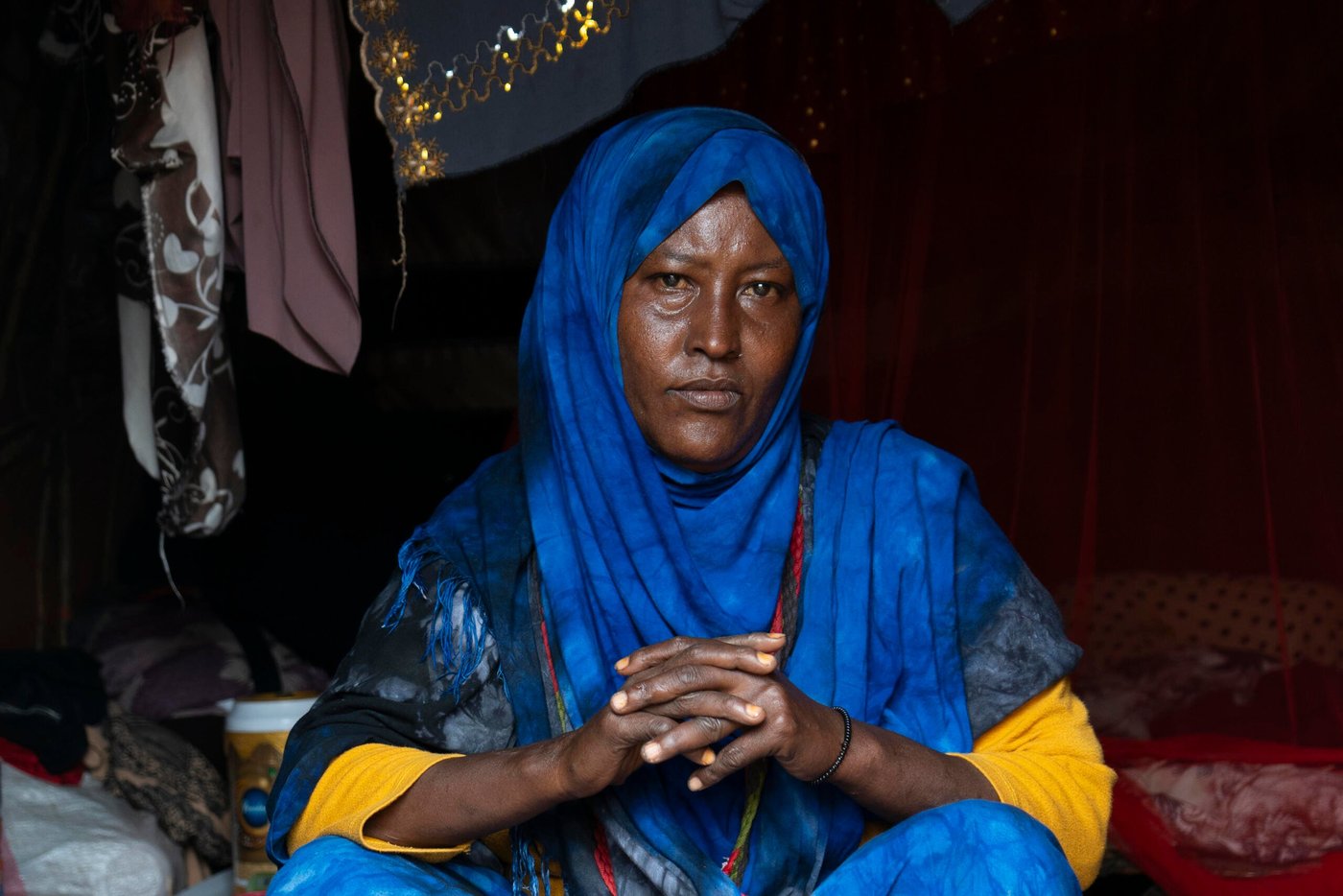
Halima Omar, a displaced mother of seven lives in a camp in Baidoa, Somalia. Halima has been directly impacted by aid cuts: “We had access to water and latrines, but those services are no longer available. The organisations that used to support us have stopped their programmes.” Photo: Abdulkadir Mohamed/NRC
“2026 is set to stretch humanitarian responses to their limit as they seek to support people with the most severe needs around the world.
“Next year, 239 million people will be in need of humanitarian assistance and protection. Humanitarians are aiming to reach just over half of them.
By Volker Türk, the UN High Commissioner for Human Rights*
10 December 2025 (OHCHR)* — Human rights are underfunded, undermined and under attack. And yet. Powerful. Undeterred. Mobilizing.
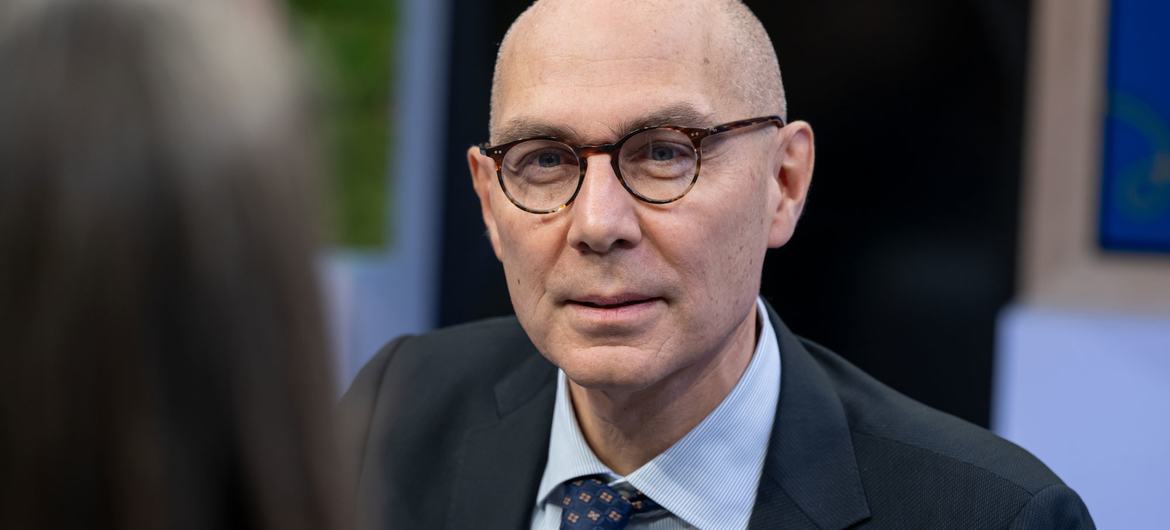
UN Photo/Mark Garten | Volker Türk, UN High Commissioner for Human Rights, in an interview with UN News.
This year no doubt has been a difficult one. And one full of dangerous contradictions. Funding for human rights has been slashed, while anti-rights movements are increasingly well-funded.
Profits for the arms industry are soaring, while funding for humanitarian aid and grassroots civil society plummets.
Those defending rights and justice are attacked, sanctioned and hauled before courts, even as those ordering the commission of atrocity crimes continue to enjoy impunity.





 HUMAN WRONGS WATCH