Benin-City, Edo State, Nigeria, 11 June 2024 (IOM)* –Frederick could barely hold back tears as he recounted his story. Six years after his return, he is still healing from the trauma of his experience in Libya.
.
.
.
Frederick poses in his barbershop in Benin-City, Edo State. Like him, thousands of Nigerians have returned home and with IOM’s support, they’re slowly rebuilding their lives. Photo: IOM/François-Xavier
“When I came back, I had nothing,” he says in a low, breaking voice, sitting outside his modest barbershop in a suburb of Benin-City, in Nigeria’s Edo State. “But today, at least I have a business and I am healthy. I was in hell in that country, but I am happy to be back home.”
Europe’s agriculture industry is exploiting the at least 2.4 million migrants who harvest Europe’s fruits and vegetables. This is according to a new report published on 4 June 2024 by the University of Comillas and Oxfam researchers titled “Essential but invisible and exploited.”
(UN News)* —The scenes of devastation witnessed in the aftermath of Israel’s military operation to release hostages from the Nuseirat refugee camp proves that each day the war continues “it only grows more horrific” the UN’s top humanitarian official said on Sunday [].
According to Gaza’s health ministry, more than 270 people including children and other non-combatants were killed during intense fighting between Israeli forces and Hamas militants in and around the Nuseirat refugee camp on Saturday [8 June 2024], in the middle area of the war-torn enclave. More than 600 were reportedly injured with hospitals overwhelmed.
(UN News)* —Horrific violence and the risk of famine continue to stalk the people of Sudan, UN humanitarians warned on Friday [], as they echoed condemnation by UN Secretary-General António Guterres of an attack on a village south of Khartoum two days ago that is now believed to have left more than 100 dead.
“The UN Secretary-General strongly condemns the attack reportedly carried out on 5 June by the Rapid Support Forces (RSF) in the Wad Al-Noura village, Jazira state, which is said to have killed over 100 people,” his Spokesperson said in a statement overnight, which also underscored “the immense suffering of the Sudanese population as a result of the continued hostilities”.
The war has caused unprecedented devastation to the Palestinian labour market and the wider economy, according to new data and analysis by the ILO and the Palestinian Central Bureau of Statistics.
Since hostilities erupted in October 2023, the unemployment rate in the Gaza Strip has reached a staggering 79.1 per cent. In the West Bank, which has also been severely impacted by the crisis, unemployment has reached 32 per cent.
The alarming surge in global debt burden calls for urgent reforms to the international financial systems to safeguard a prosperous future for both people and the planet.
(UNCTAD)* — In a new report released on 4 June, the United Nations sounded the alarm over the escalating debt burdens to global prosperity.
Titled ”A world of debt 2024: A growing burden to global prosperity”, the report highlights the unprecedented surge in public debt – comprising both domestic and external general government borrowing – which reached a historic peak of $97 trillion in 2023, up by a notable $5.6 trillion from the previous year.
Children experiencing this level of food poverty are up to 50 per cent more likely to suffer from life-threatening malnutrition, new analysis finds.
UN0517643
NEW YORK, 6 June 2024 (UNICEF)* -–Around 181 million children worldwide under 5 years of age – or 1 in 4 – are experiencing severe child food poverty, making them up to 50 per cent more likely to experience wasting, a life-threatening form of malnutrition, a new UNICEF report reveals today.
Port Sudan, 6 June 2024 (IOM)* – The International Organization for Migration (IOM) is warning that the number of people displaced by conflict inside Sudan could top 10 million in the coming days. The world’s worst internal displacement crisis continues to escalate, with looming famine and disease adding to the havoc wrought by conflict.
Hafsa, a mother of four, fled her home in Khartoum when conflict erupted. Now displaced in Gedaref, she faces an uncertain future. Photo: IOM Sudan 2024/Omer Tariq
IOM’s Displacement Tracking Matrix, which issues weekly statistics, recorded 9.9 million people internally displaced across all 18 states in Sudan this week – 2.8 million prior to the April 2023 war, and 7.1 million since. More than half of all internally displaced persons (IDPs) are women, and over a quarter are children under the age of five.
(UN News)* — “It’s climate crunch time” when it comes to tackling rising carbon emissions the UN Secretary-General said on Wednesday [], stressing that while the need for global action is unprecedented, so too are the opportunities for prosperity and sustainable development.
Play video
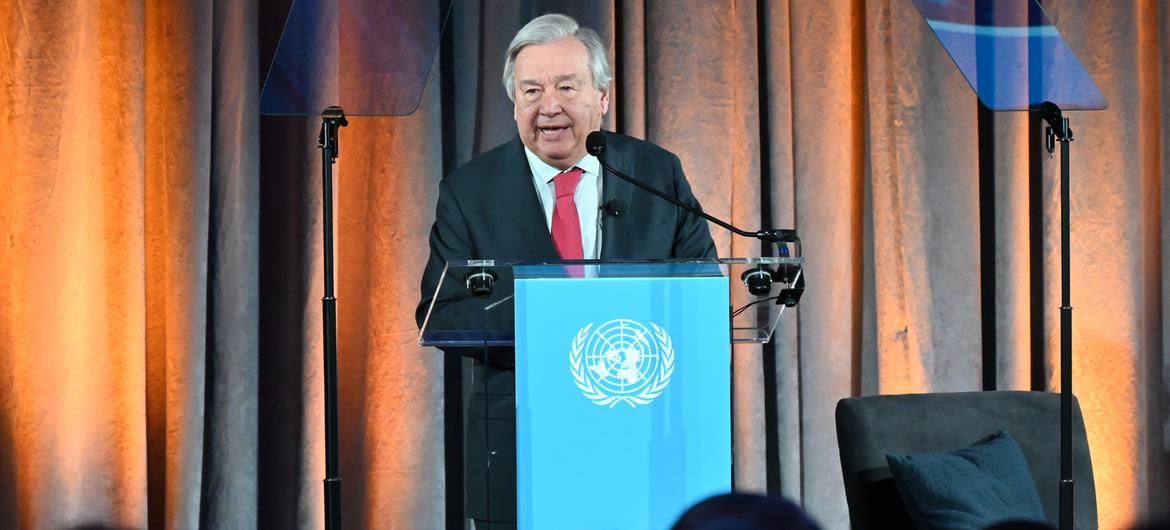
United Nations | UN Secretary-General António Guterres delivers his special address on climate action from the American Museum of Natural History in New York.
Choosing the iconic Family Hall of Ocean Life at the American Museum of Natural History in New York to deliver his impassioned plea to grasp the solutions at hand, António Guterres warned that we stand at “a moment of truth”.
“In the case of climate, we are not the dinosaurs. We are the meteor. We are not only in danger – we are the danger. But we are also the solution.”
5 June 2024 (United Nations)* —All over the world, ecosystems are threatened. From forests and drylands to farmlands and lakes, natural spaces on which humanity’s existence depends are reaching a tipping point.
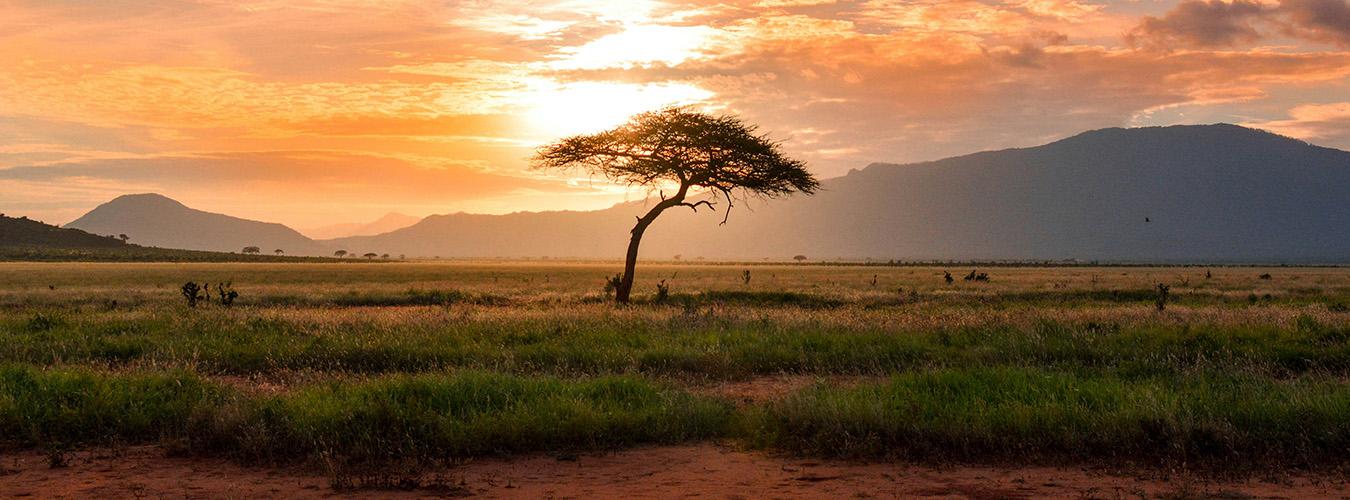
Grasslands, shrublands and savannahs cover approximately half of the world’s terrestrial surface. Distributed from Eurasia and Patagonia to Africa and Australia they are home to millions of people. PHOTO:Damian Patkowski/Unsplash
According to the UN Convention to Combat Desertification, up to 40 per cent of the planet’s land is degraded, directly affecting half of the world’s population. The number and duration of droughts has increased by 29 per cent since 2000 – without urgent action, droughts may affect over three-quarters of the world’s population by 2050.
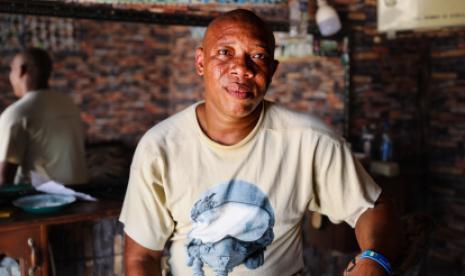

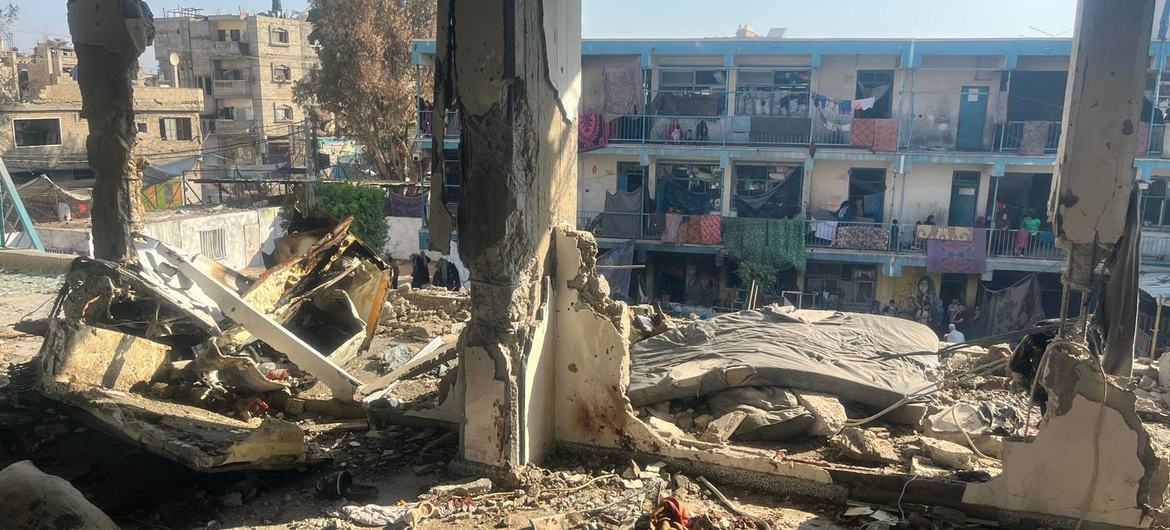
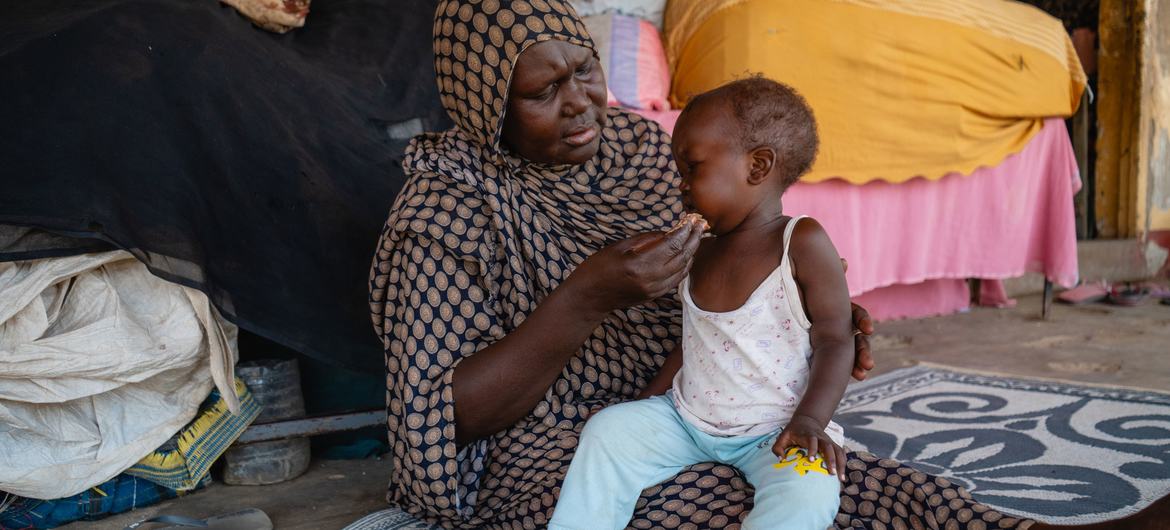
 Photo credit: UNICEF. \


 HUMAN WRONGS WATCH