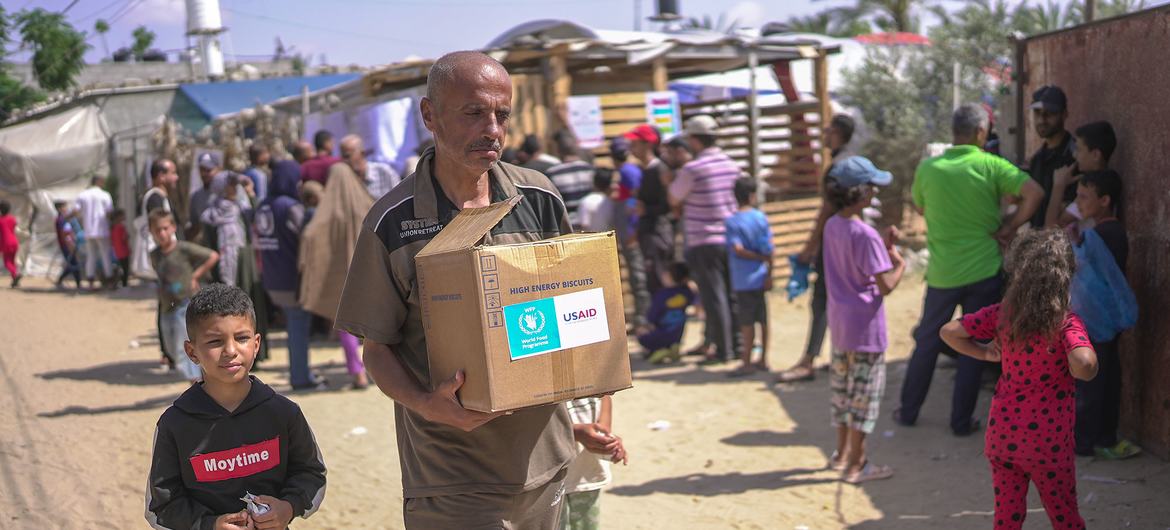
(UN News)* — Far too little aid is reaching people in Gaza to the extent that children are now starving, UN humanitarians said on Friday [], in a renewed appeal to Israel to respect international law regarding the safe passage of lifesaving relief in the war-shattered enclave.
The alert from the World Health Organization (WHO) follows the finding that more than four in five children “did not eat for a whole day at least once in the three days” ahead of a food insecurity survey.
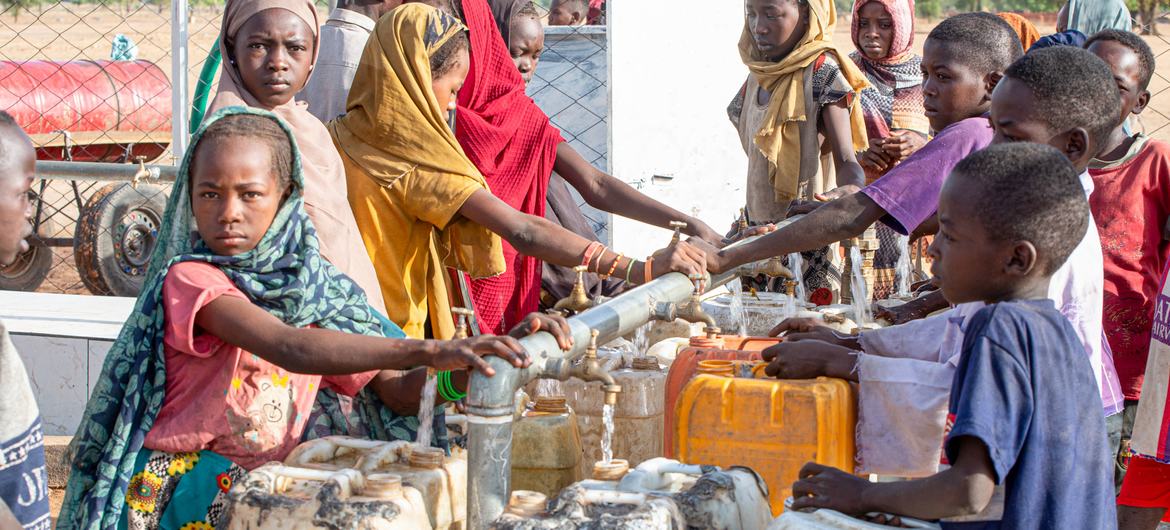
(UN News)* — Famine in Sudan is “imminent” if aid agencies continue to be prevented from providing relief, UN humanitarians warned on Friday [].
In a bleak assessment of the dire situation in Sudan where conflict is in its second year, the heads of 19 global humanitarian organizations issued an alert that further obstacles to providing aid “rapidly and at scale” will mean that “more people will die”.
UNITED NATIONS, May 30 2024 (IPS)* – Scattered over the vast area of our oceans, Small Island Developing States (SIDS) are often pictured as blue, serene and beautiful paradises. However, we are risk losing the beauty of these islands, due to the triple threats of climate change, loss of biodiversity, and pollution, especially marine plastic debris.
If not stopped, the annual flow of plastic into the ocean will nearly triple by 2040, to 29 million metric tonnes per year, 50 kilgrammes of plastic for every metre of coastline worldwide. Credit: UN Development Programme (UNDP)
If business continues as usual, the annual flow of plastic into the ocean will nearly triple by 2040, to 29 million metric tonnes per year, equivalent to 50 kilogrammes of plastic for every metre of coastline worldwide. Soon, the ocean will turn into plastic soup, and islands will be covered in, and surrounded by, plastic waste.
29 May 2024 — Starting in April, flash floods have wreaked havoc across Afghanistan, leaving at least 300 dead, hundreds injured, and nearly 9,000 homes destroyed. Thousands are now homeless. Roads, bridges, schools, and health facilities in Baghlan, Badakshan, Takhar, Faryab and Ghor are in ruins.
Once again, Afghanistan is heavily affected by a climate catastrophe after last year’s earthquakes in Herat, and frequent sandstorms and drought hitting the most vulnerable, particularly women and children, the hardest.
But why are these sudden deluges so deadly, and what makes this disaster particularly devastating?
GENEVA – Israeli air strikes on a camp sheltering displaced civilians in Tal al-Sultan in Rafah, that have reportedly claimed at least 46 lives including 23 women, children and older persons on Sunday night are an outrage, UN experts* said today [29 May 2024], demanding decisive international action to end the bloodshed in Gaza.
(UN News)* —With no let up in reported street battles and Israeli bombardment across Gaza on Thursday [], UN humanitarians warned that the flow of vital lifesaving aid into the enclave has fallen by more than two thirds since the Israeli military stepped up its campaign in Rafah and seized the key aid conduit.
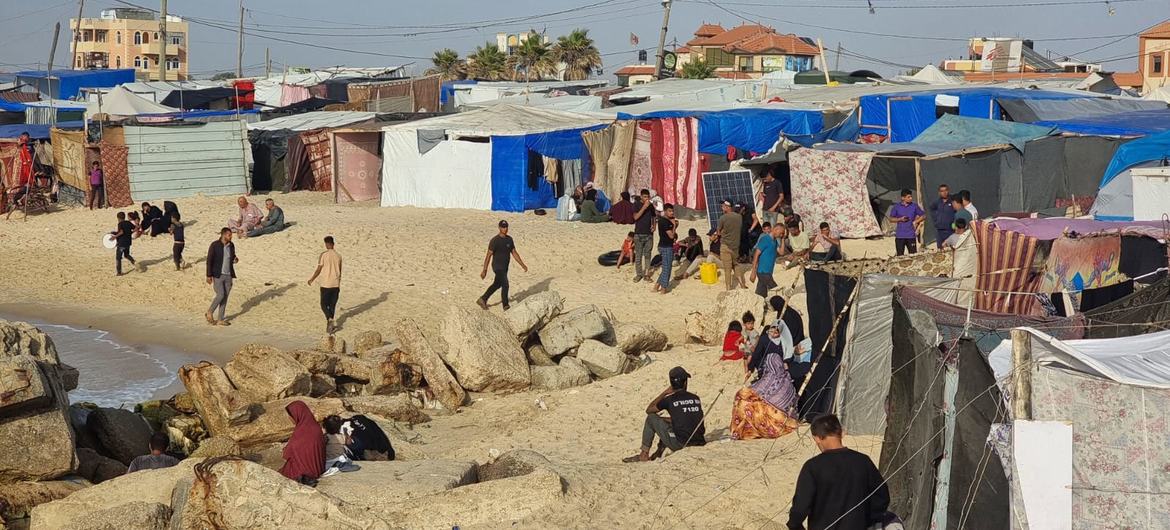
UN News/Ziad Taleb | Conditions at Al Mawasi camp in southwest Gaza remain unsuitable for the hundreds of thousands of Gazans uprooted by the latest escalation of violence in nearby Rafah and elsewhere across the Gaza Strip.
“Humanitarian facilities in Rafah are forced to close one after another…The flow of humanitarian aid supplies into Gaza, already insufficient to meet the soaring needs, has dropped by 67 per cent since 7 May,” reported the UN aid coordination office, OCHA, amid reports that kitchens, clinics and hospitals are shutting down.
GENEVA (UN Human Rights) – UN Human Rights Chief Volker Türk on Monday [27 May 2024] voiced his horror at the further loss of civilian life in Gaza, after Israeli air strikes on Sunday hit a camp for displaced people in the southern city of Rafah.
“The images from the camp are horrific and point to no apparent change in the methods and means of warfare used by Israel that have already led to so many civilian deaths,” said Türk.
“Sunday’s strike underscores once again that there is literally no safe place in Gaza.”
(UN News)* — International financing is the fuel for sustainable development, but small island States are “running on empty” – drowning in debt and rising sea levels due to climate change and through no fault of their own.
Play video
UN Photo/Eskinder Debebe | A view of Antigua and Barbuda, the host of the fourth International Conference on Small Island Developing States (SIDS4).
That’s the warning from UN Secretary-General António Guterres on Day Two of the pivotal Fourth International Conference on Small Island Developing States (SIDS4) taking place in the Caribbean twin island nation of Antigua and Barbuda this week.
The 39 States known collectively as SIDS have been uniquely vulnerable to the trifecta of COVID – which crippled the tourism many rely on – the Russian invasion of Ukraine; and “battered by a climate catastrophe they did not create”, said Mr. Guterres.
— Every time they are in the spotlight for the disastrous effects of their business, fossil fuel companies serve up the same old fraudulent arguments. Tired of their bogus excuses? So are we. Here are their most common lies and the facts to counter them.
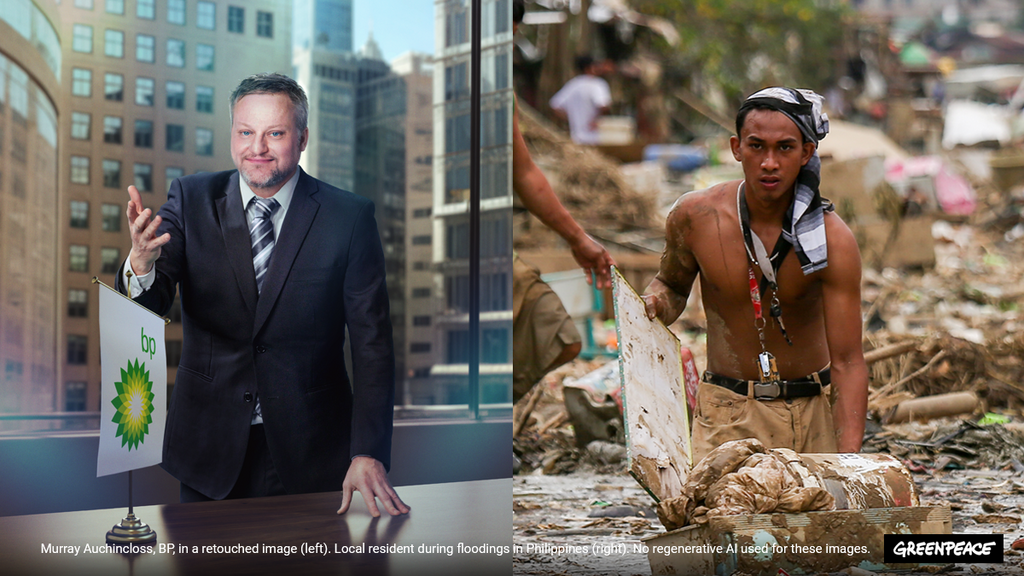
Murray Auchincloss, BP, in a retouched image (left). Local resident during floods in Philippines (right). Disclaimer: Images of CEOs used in this campaign are staged and doctored for illustrative purposes. Illustrations are created without the use of generative AI.
False Excuse #1: “We’re only responding to consumer demand”
This is one of the classic arguments for climate inaction from fossil fuel companies: deflecting their responsibilities onto consumers rather than engaging in a real energy transition. No altruistic desire to meet the needs of the population here.
(UN News)* —While nearly one million species are currently at risk of extinction, the United Nations University (UNU) in Bonn is drawing attention to “co-extinctions”: the chain reaction occurring when the complete disappearance of one species affects another.
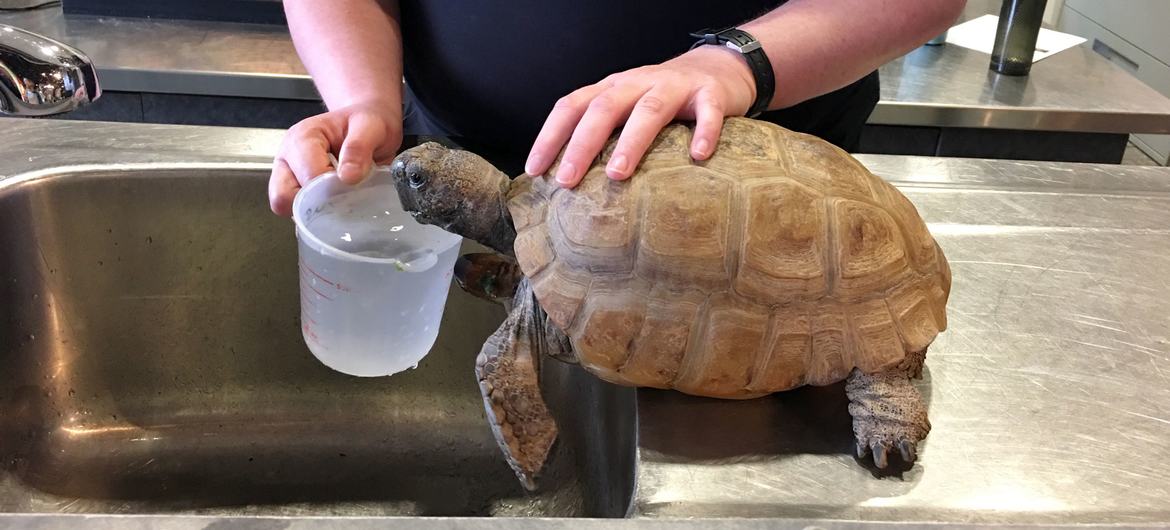
Among the animals at risk is the gopher tortoise, one of the oldest living species on the planet. This tragic story of biodiversity loss is unfolding at the heart of the coastal plains of the southern United States.

 .
.


 HUMAN WRONGS WATCH