Instead of buying into the World Economic Forum’s dystopian “Great Reset,” we can build an alternative system with a mandate to serve the people.
This is part two to a May 5, 2022 article called “A Monetary Reset Where the Rich Don’t Own Everything,” the gist of which was that national and global debt levels are unsustainably high. We need a “reset,” but of what sort?
Ellen Brown
The “Great Reset” of the World Economic Forum (WEF) would leave the people as non-owner tenants in a feudalistic technocracy.
The reset of the Eurasian Economic Union would allow participating nations to opt out of the Western capitalist system altogether, but what of the Western countries that are left? That is the question addressed here.
Our Forefathers Had Some Innovative Solutions
Fortunately for the United States, our national debt is in U.S. dollars. As former Federal Reserve Chairman Alan Greenspan once observed, “The United States can pay any debt it has because we can always print money to do that. So there is zero probability of default.”
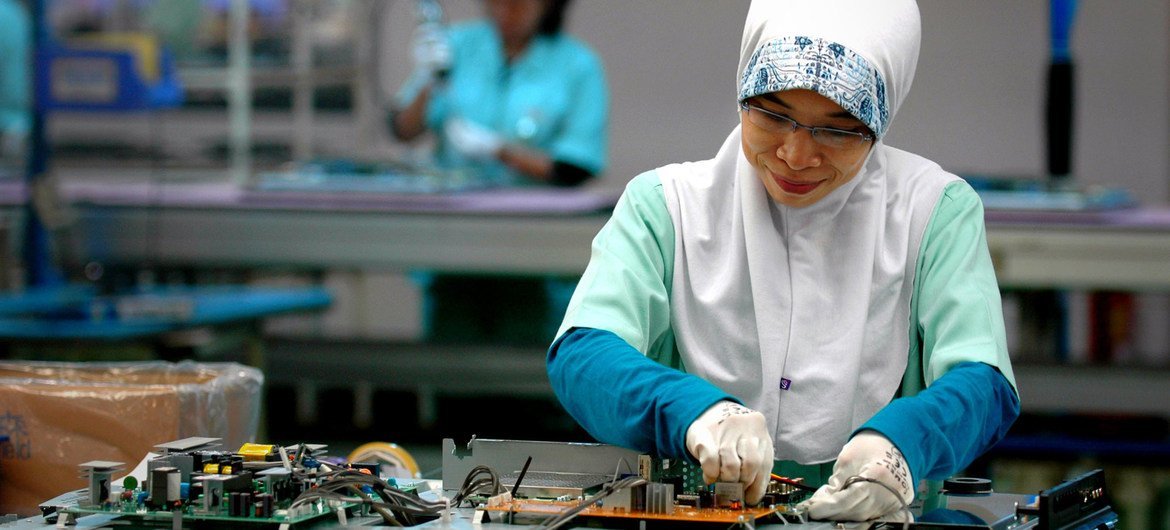
(UN News)* — More than 33 million new jobs need to be created by 2030 in the Middle East and North Africa region by 2030, if the world’s largest unemployment hot spot is to be substantially improved, four United Nations agencies said on Monday [23 May 2022].
The joint-release by the UN labour agency, ILO, the UN Development Programme (UNDP), the UN Population Fund (UNFPA) and the UN Children’s Fund (UNICEF) was issued ahead of a two-day meeting in Amman, Jordan, aiming to address the youth transition from learning, to work, a key priority for adolescents and young people across the vast predominantly Arabic-speaking region.
(UN News)* — The recovery of the global jobs market is going into reverse, the UN labour agency, ILO, said on Monday [23 May 2022], blaming COVID-19 and “other multiple crises” that have increased inequalities within and between countries.
In its latest update on the world of work, International Labour Organization Director-General Guy Ryder said that although there had been “tentative signs of recovery in the final months of last year, with global employment returning to higher levels in industrialised nations”, rising food and fuel prices and financial turbulence have destabilised the job market.
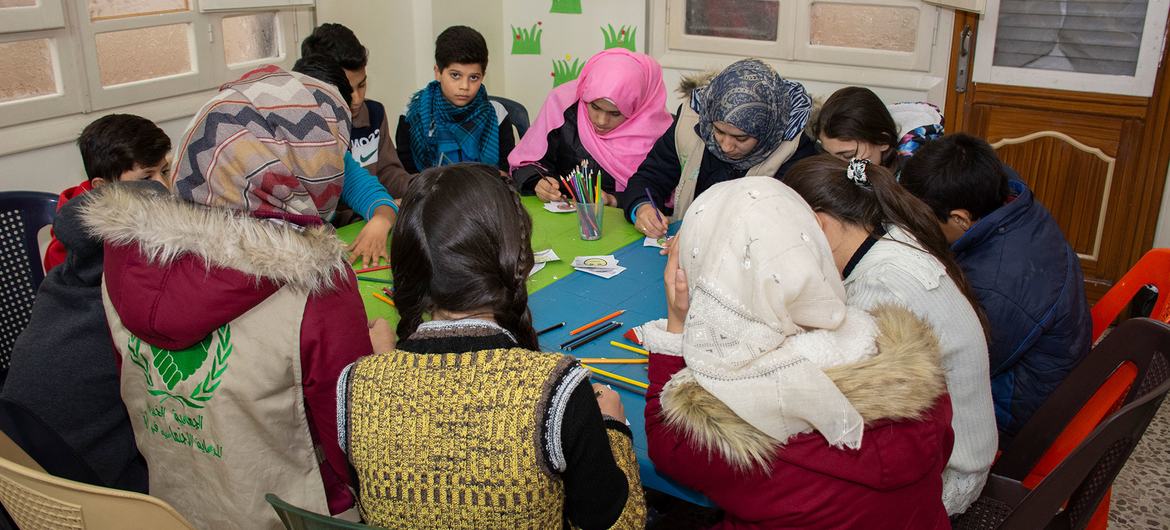
(UN News)* — With a scorching summer fast approaching, food prices rising and access to water and electricity limited in many parts of Syria, donors must make good on $4.3 billion in humanitarian pledges committed at last week’s Brussels funding conference, the UN’s senior humanitarian official told the Security Council on Friday [20 May 2022].
Martin Griffiths, Humanitarian Affairs chief and Emergency Relief Coordinator, thanked donors for their contributions – totalling nearly $6.7 billion – which includes $2.4 billion earmarked for 2023 and beyond.
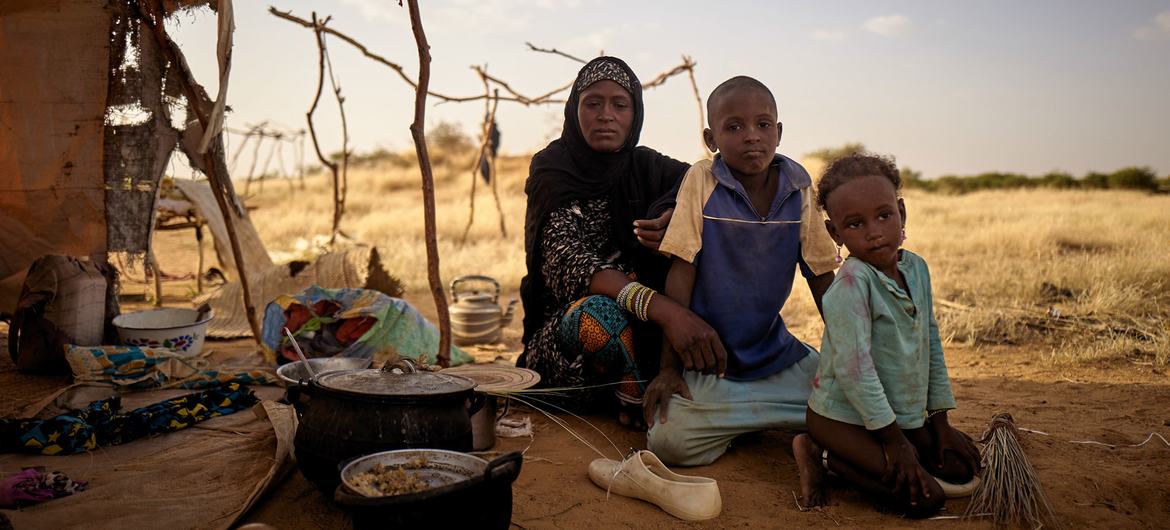
(UN News)*– As 18 million people in Africa’s Sahel region teeter on the edge of severe hunger over the next three months, the UN released on Friday [20 May 2022] an additional $30 million from its emergency humanitarian fund, to boost the humanitarian response across four countries.
Food insecurity is set to reach its highest level since 2014, warned the UN Office for the Coordination of Humanitarian Affairs (OCHA).
“Entire families in the Sahel are on the brink of starvation,” said Martin Griffiths, UN Humanitarian Affairs chief and Emergency Relief Coordinator. “If we don’t act now, people will perish”.
Sobering numbers
In the Sahel, 7.7 million children under five are expected to suffer from malnutrition, of which 1.8 million are severely malnourished.
And if aid operations are not scaled up, this number could reach 2.4 million by the year’s end.
MADRID, May 20 2022 (IPS)* – It is often said that a pessimistic person is an optimistic but well-informed person. Here, a good number of people may believe that human wit and inventiveness are capable of facing both the current and the looming disasters, like the impact of climate change, for instance.
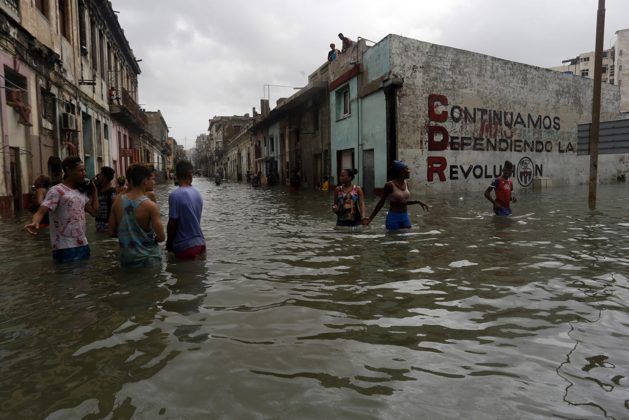
“The good news is that human decisions are the largest contributors to disaster risk, so we have the power to substantially reduce the threats posed to humanity, and especially the most vulnerable among us” Credit: Jorge Luis Baños/IPS
Others, instead, may think that such human ingenuity will once more address the symptoms rather than the causes provoking them. Thus, they would be right to want to be informed and aware of the root causes of such disasters in order to push for eradicating them.
Global Coalition Calls for Financial Remedy for Deaths, Wage Theft.
London, 18 May 2022 – Hundreds of thousands of migrant workers in Qatar have not received financial compensation or any other adequate remedy for serious labor abuses suffered while building and servicing infrastructure for the FIFA World Cup, which begins in November 2022, Human Rights Watch on 18 May 2022 said.
Yet those who skimmed the headlines of initial reports from several U.S. media outlets may have been left with a different impression of what happened.
“Israeli Police Clash with Mourners at Funeral Procession,” read the headline of MSNBC’s online report. The Wall Street Journal had a similar headline on its story: “Israeli Forces, Palestinians Clash in West Bank before Funeral of Journalist.”
16 May 2022 (UNEP)*— As anyone who visits Egypt between the months of May to September can attest, the weather gets hot, often uncomfortably so.
.
Photo: Shutterstock/Octasy
.
That is especially true in Cairo—a megacity home to nearly 22 million people—where the mercury can hit 40°C.
Those sky-high temperatures are partially a product of the so-called ‘heat island effect,’ which sees buildings, roads, and other infrastructure absorb and re-emit the sun’s warmth more than natural landscapes.
Research shows that things will only get worse for cities due to the climate crisis.
The United Nations Environment Programme (UNEP) estimates that by the year 2100, many cities across the world could warm as much as 4°C if greenhouse gas emissions continue “at high levels,” – a potential health hazard for inhabitants.
MADRID, May 18 2022 (IPS)* – While the attention of mostly Western media and politicians is quasi exclusively hoarded up by the proxy war in Ukraine and its consequences on the energy sector, the world’s big oil business continues to burn Planet Earth with its underreported though highly polluting, wasteful practice of gas flaring.
.
Global gas flaring increased to 144 billion cubic metres (bcm) in 2021 from 142 bcm in 2020. It is estimated that each cubic metre of associated gas flared results in about 2.8 kilograms of CO2-equivalent emissions. Credit: public domain
This is anything but a minor issue: in fact, as much as 144 billion cubic metres of gas was flared at upstream oil and gas facilities in just one year-2021. Such an amount caused the emission of 400 tons of carbon dioxide (CO2) equivalent, according to the World Bank.




 HUMAN WRONGS WATCH