(Washington, DC) – The Trump administration’s omission of key sections and manipulation of certain countries’ rights abuses degrade and politicize the 2025 US State Department human rights report, Human Rights Watch on 12 August 2025 said.
(UN News)* — When Israeli forces in Gaza issue a new displacement order ahead of an incursion into a neighbourhood or city, Palestinian civilians are expected to pack their bags and flee – perhaps for the third, fourth, or tenth time.
But for an increasing number of Palestinians, including those who cannot hear the orders or whose mobility is impaired, following these orders may be impossible. Yet, failure to do so, could cost them their lives.
“In a normal situation, people with disabilities suffer the most. And in wartime, of course, the situation is heightened further,” said Muhannad Salah Al-Azzeh, member of the UN Committee on the Rights of Persons with Disabilities at a public dialogue this week in Geneva.
With the number of disabled people in Gaza increasing every day, Mr. Al-Azzeh said that the minimum level of safety for people with disabilities is not being upheld.
JNOUB, Lebanon, Aug 15 2025 (IPS)* ––“Special, targeted operations in southern Lebanon,” a phrase that has echoed repeatedly over the past two years in Israeli Defence Force (IDF) statements.
.
But behind these clinical military terms lies a human cost that statistics cannot capture.
Morning after an Israeli attack in Tyre, Lebanon. Credit: Nour
.
.
.
.
.
.
.
.
The residents of southern Lebanon—mothers, fathers, children, and elders—are the ones who face the daily reality of displacement, loss, and uncertainty.
Their homes become coordinates on military maps; their neighborhoods, theaters of “operations.”
(UN News)* — Sexual violence in conflict zones rose sharply in 2024, increasing by a quarter compared to the previous year, the UN reported on Thursday [].
More than 4,600 survivors endured abuses used as weapons of war, torture, terrorism and political repression.
According to the annual Report of the Secretary-General on Conflict-Related Sexual Violence, both State and non-State actors were responsible for violations in 21 countries, with the highest numbers recorded in the Central African Republic (CAR), the Democratic Republic of the Congo (DRC), Haiti, Somalia and South Sudan.
Women and girls made up 92% of victims, but men, boys, people with diverse sexual orientations and gender identities, racial and ethnic minorities – together with some persons with disabilities – were also targeted, ranging in age from one to 75.
FREIBURG, Germany, Aug 15 2025 (IPS)** –– The EU likes to think of itself as a normative power — a community of values, committed to upholding international law, promoting peace, protecting civilians and building a rules-based global order.
These are not just lofty ideals; they are enshrined in EU treaties, declarations and Council conclusions.
Credit: alliance/Anadolu/Moiz Salhi
But when it comes to the brutal, drawn-out destruction of Gaza and the continued illegal occupation of Palestine, these principles seem to have become hollow rhetoric.
Worse, they are being actively undermined by the craven inaction of the EU’s institutions and the blockage of governments like Germany, Italy, Hungary and the Czech Republic.
The European Commission has been shamefully absent as well.
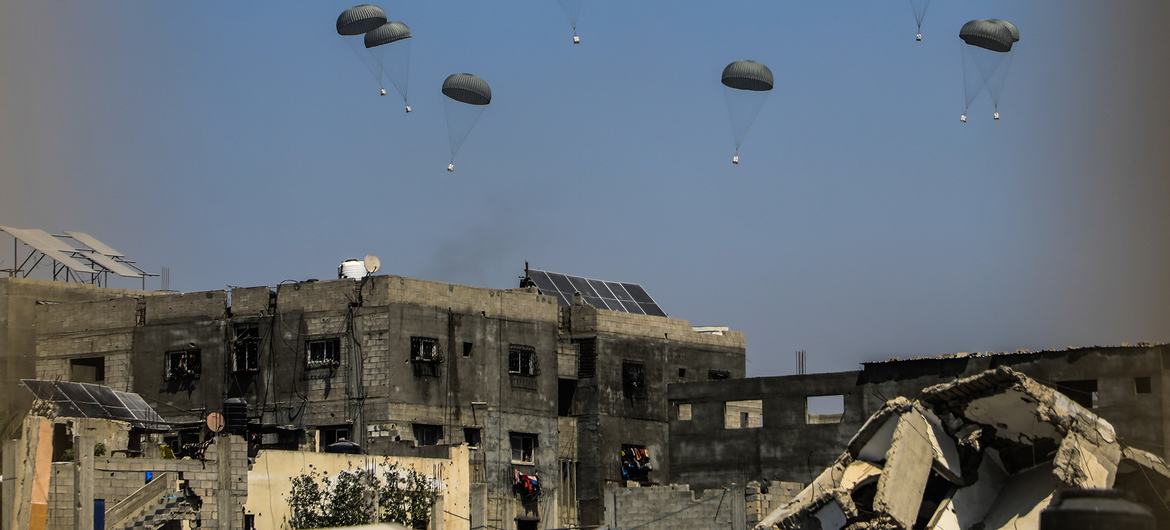
(UN News)* — At least 100 children in Gaza have died from malnutrition and hunger, prompting humanitarians to underscore the need to speed up medical evacuations from the enclave while also allowing more food to enter.
These young deaths are “the latest in the war on children and childhood in Gaza,” Philippe Lazzarini, head of UN Palestine refugee agency UNRWA, said in a tweet on Wednesday [].
The toll also includes some 40,000 boys and girls reported killed or injured due to bombardment and airstrikes, at least 17,000 unaccompanied and separated children, and one million deeply traumatised youngsters who are not getting an education.
WFP calls for humanitarian access, as Sudanese city grapples with starvation
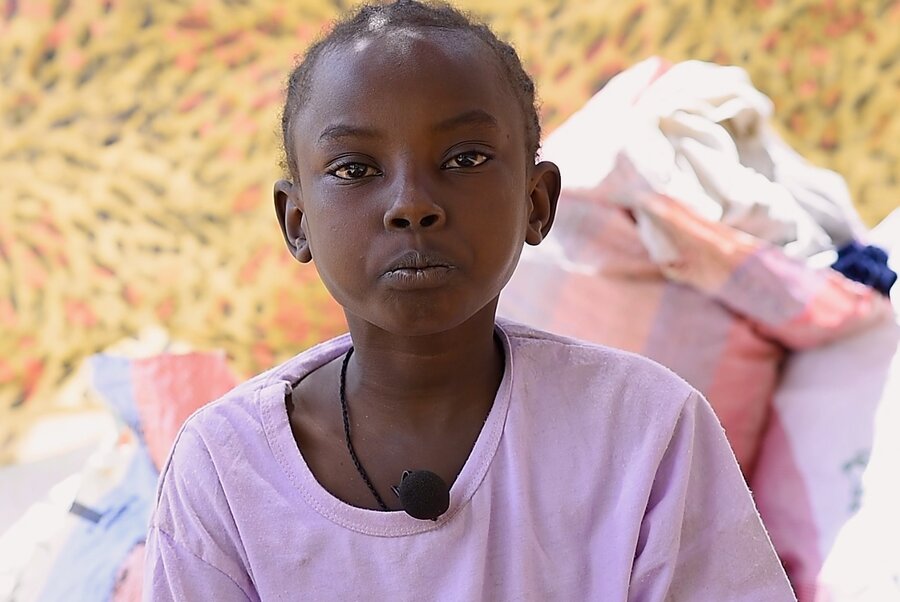
Hunger and bombs forced eight-year-old Sondos and her family to flee Sudan’s North Darfur capital of El Fasher. Photo: WFP/Mohamed Galal
Surrounded by burlap bags and a sea of sand, eight-year-old Sondos describes fleeing Sudan’s war-besieged city of El Fasher with her family, after weeks surviving on only millet.
“Hunger forced us to leave,” said the little girl, speaking from Tawila displacement camp, roughly 75 kilometres away. “Only hunger and bombs,” she added of the shells raining down on North Darfur’s capital.
UNITED NATIONS, Aug 12 2025 (IPS)* —The food crisis in Sudan is starving more day by day, yet it is affecting women and girls at double the rate compared to men in the same areas.
.
In Sudan, women-led households are three times more likely to deal with serious food insecurity compared to male-led households. Credit: UN Women Sudan
New findings from UN-Women reveal that female-headed households (FHHs) are three times more likely to be food insecure than ones led by men.
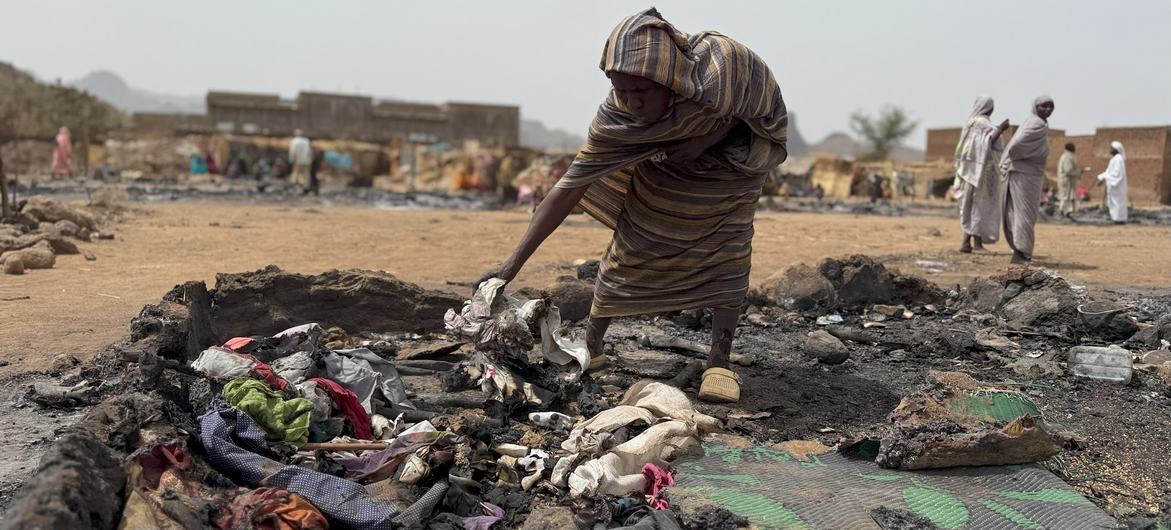
(UN News)* — The UN has expressed deep alarm over a large-scale assault by the Rapid Support Forces (RSF) militia on El Fasher, the government-held capital of Sudan’s North Darfur State, and the nearby Abu Shouk displacement camp, which has been under siege since April 2024.
Monday’s attack left 40 civilians dead and 19 injured within Abu Shouk, according to humanitarian partners.
The International Organization for Migration (IOM) reported that the renewed violence forced at least 500 residents of the camp to flee to other parts of North Darfur.
Acting Humanitarian Coordinator for Sudan, Sheldon Yett, condemned “all deliberate and indiscriminate attacks on civilians” in the strongest terms.
At 22 pages, the current draft text contains 32 draft articles which will be discussed in fine detail, according to the UN. The text is designed to shape the future instrument and will serve as a starting point for negotiations. For 10 days from 5-14 August, delegations from 179 countries will pore over the text as they meet at UN Geneva, alongside more than 1,900 other participants from 618 observer organizations including scientists, environmentalists and industry representatives.
Plastic garbage is offloaded from a fishing boat on the east coast of China. Credit: UNEP/Justin Jin
GENEVA, Aug 12 2025 (IPS)** –– The future plastics treatyis being sold as potentially an environmental breakthrough. But in its current form during this week’s negotiations, it contains adangerous flawthat must be addressed before the final text is agreed — or it could undercut the world’s most widely ratified health treaty, the WHO Framework Convention on Tobacco Control (FCTC), and hand the tobacco industry the tools to expand its market under the banner of environmental action.
 US Secretary of State Marco Rubio speaks after being sworn in by Vice President JD Vance near the White House in Washington, DC, January 21, 2025. © 2025 AP Photo/Evan Vucci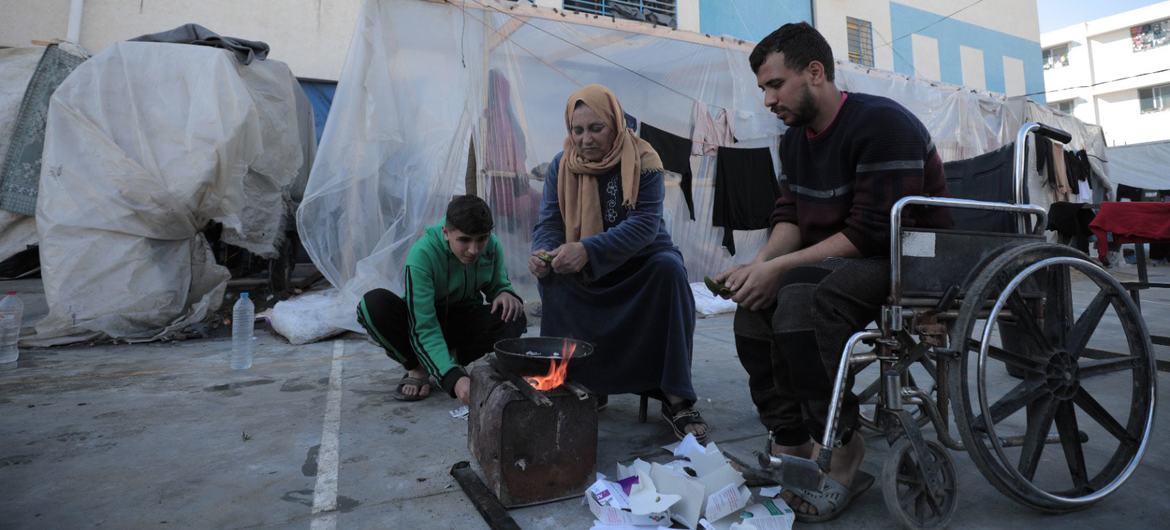





 HUMAN WRONGS WATCH