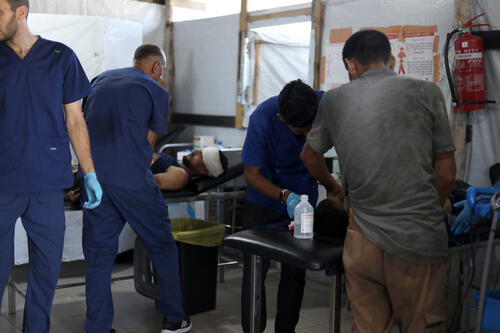
JERUSALEM, 7 August 2025–An analysis of Médecins Sans Frontières (MSF) medical data, patients’ testimonies, and first-hand medical witnessing at two MSF clinics in Gaza, Palestine, point to both targeted and indiscriminate violence by Israeli forces and private American contractors against starved Palestinians at food distribution sites run by the so-called Gaza Humanitarian Foundation (GHF).
The GHF-run food distributions in Gaza, Palestine, have become sites of “orchestrated killing and dehumanisation”, not humanitarian aid.
STOCKHOLM, Sweden, Aug 7 2025 (IPS)* –– On August the first, the Italian daily La Repubblica published an interview with David Grossman, Israel’s most renown author and supporter of a “two-state solution”, as well as an outspoken critic of Israel’s violence against Palestinian civilians.
Grossman’s interview received international attention and was quoted by respected newspapers like The Guardian, Le Figaro and Haaretz.
Israeli presence on the West Bank. The orange and red patches are what remains of Palestinian controlled areas.
(UN News)* —Extreme heat is breaking records around the world, with wildfires and poor air quality compounding the crisis, according to a report from the World Meteorological Organization (WMO) released Thursday [].
Extreme temperatures caused approximately 489,000 heat-related deaths annually between 2000 and 2019, with 36 per cent occurring in Europe and 45 per cent in Asia.
The health impacts of heat are especially severe in cities due to the so-called ‘urban heat island effect’ – the over-heating of dense city areas compared with their rural surroundings – which is magnifying problems as urbanisation continues.
Amid rising 21st-century temperatures, the WMO underscored that July 2025 was the third-warmest July ever recorded, behind those in 2023 and 2024.
An invitation for the reader to analyze and decide which countries, peoples, and/or cultures can be considered civilized in the 21st century—more specifically, in 2025.
A civilization or culture is defined as a set of customs, traditions, ethics, values, language, music, dance, gastronomy, clothing, religion, and social and political organization of a people, ethnic group, tribe, or nation.
British scholars of the 19th century classified the peoples and races as Civilized, Barbarians and Savages, based on their respective “evolutions.” Such classification was based primarily on three factors:
Charles Darwin’s Theory of Evolution;
the Industrial Revolution in the beginning of industrial capitalism; and
the Reformation of the Catholic Church, the schism from which Protestantism arose.
(UN News)* —UN data published on Wednesday [] underscores the tiny amount of cultivable land that remains in the Gaza Strip, contributing to the famine-like conditions now being endured by more than two million people there.
A new report from the Food and Agriculture Organization (FAO) and the UN Satellite Centre (UNOSAT) reveals that just 8.6 percent of cropland in Gaza is still accessible, while only 1.5 per cent of cropland is both accessible and undamaged, as of 28 July.
.
More than 86 per cent of cropland is damaged, while 12.4 per cent is undamaged but out of reach, as fighting between Israeli forces and militants from Hamas and other armed groups continues.
.
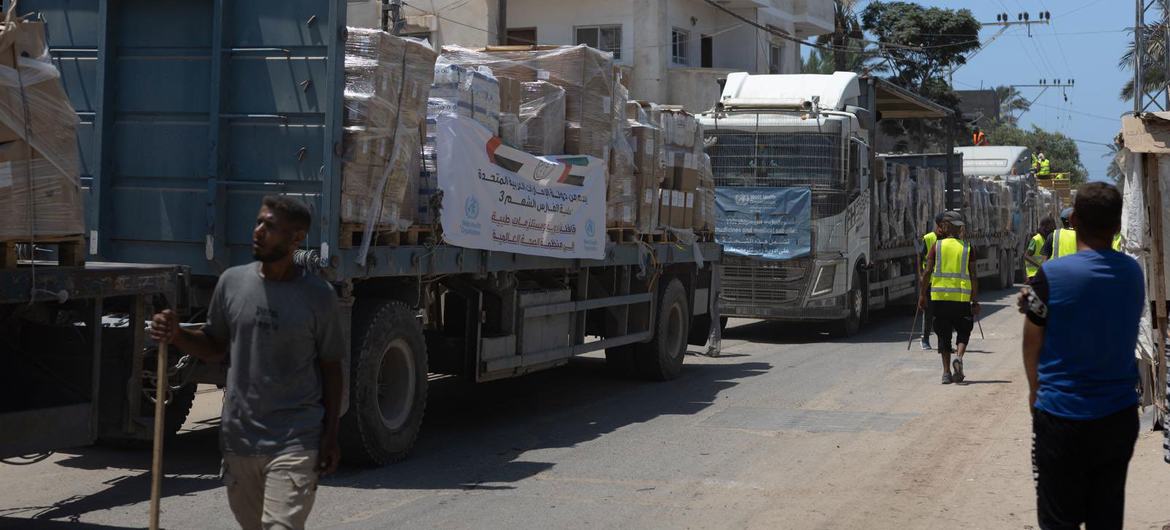
This report comes as Israel’s offensive inside Gaza continues to restrict aid distribution – and starvation-related deaths rise.
By Nargiz Shekinskaya in Awaza and Vibhu Mishra in New York.
(UN News)* — Trapped by geography and squeezed by global market forces, the world’s 32 landlocked developing countries remain among the poorest – and most overlooked.
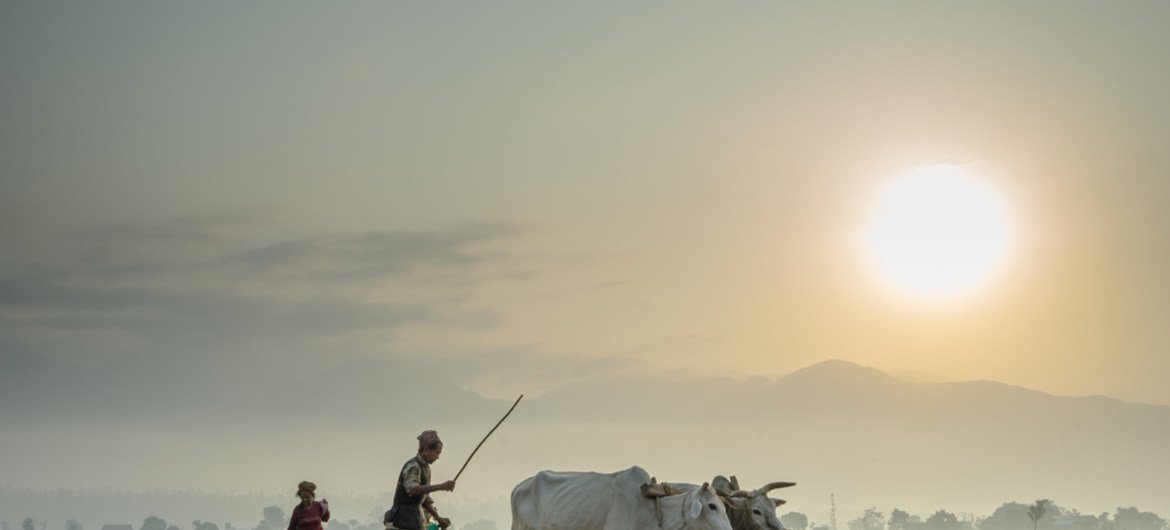
IFAD/Sanjit Das | In landlocked developing countries like Nepal (pictured), a lack of diversified industries and accessible markets limits local livelihoods – driving a growing exodus of young people seeking work abroad and often leaving older generations behind.
At a major UN conference underway this week in Awaza, Turkmenistan, calls are growing to tackle the high trade costs, investment gaps and growing digital divide that continue to hold these countries back.
Despite progress in some areas, landlocked nations – from Bolivia to Bhutan and Burkina Faso – account for just1.2 per cent of global exports, even though they represent over seven per cent of the world’s countries.
AWAZA, Turkmenistan, Aug 6 2025 (IPS)* ––Agriculture is a critical sector in landlocked developing countries, as more than half (55 percent) of the population is employed in the agriculture sector – significantly higher than the global average of 25 per cent.
As such, the deterioration of food security in landlocked developing countries (LLDCs) is an unfolding catastrophe.
A high-level event focused on agriculture at the ongoing Third United Nations Conference on Landlocked Developing Countries. Credit: Joyce Chimbi/IPS
There are 32 LLDCs, with a combined population of nearly 600 million people.
The prevalence of moderate or severe food insecurity rose from an estimated 43 percent in 2015 to 51 percent in 2023, and the rate of undernourishment from approximately 15 percent to 19 percent in the same period.
(UN News)* —At a major UN forum opening in Awaza, Turkmenistan, this week, parliamentarians from around the world are being urged to take decisive action to improve the lives of more than 600 million people living in landlocked developing countries (LLDCs).
UN Photo/Eskinder Debebe | Final preparations being made at the venue of the LLDC3 conference in Awaza, Turkmenistan.
Speaking at the Parliamentary Forum of the Third UN Conference on LLDCs, senior UN leaders stressed that political will, matched with national legislative action, is essential if a new decade-long development plan is to make a real difference.
There are 32 such countries globally, home to over half a billion people. Many are also among the world’s least developed, hindered by high transport costs, limited access to global markets, and heightened vulnerability to climate impacts.
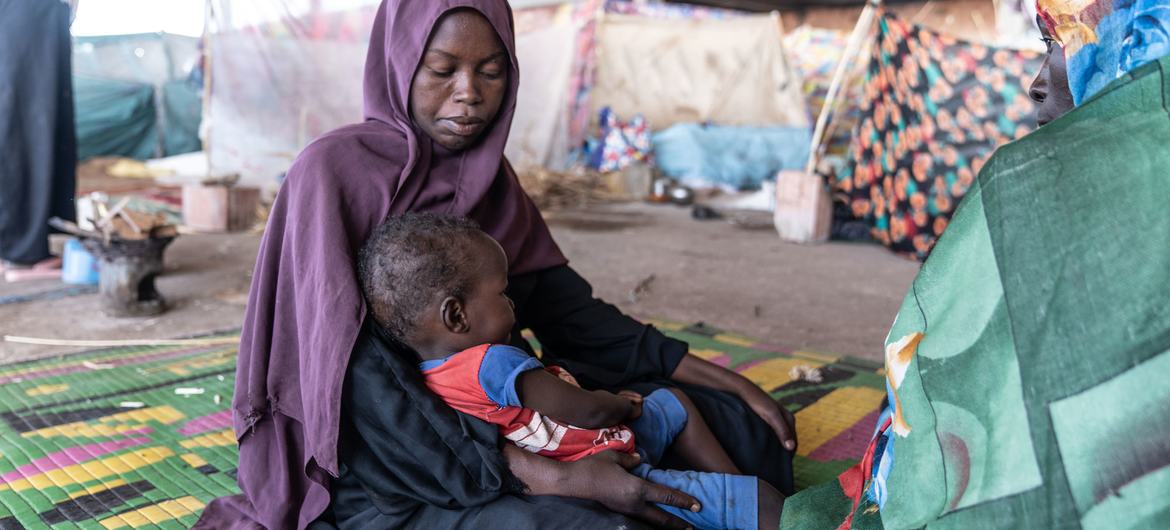
(UN News)* — Famine was declared in the Zamzam camp in North Darfur one year ago. And since then, little has changed – no aid trucks have reached the region, the nearby city of El Fasher is still under siege and food prices are four times higher than other parts of the country.
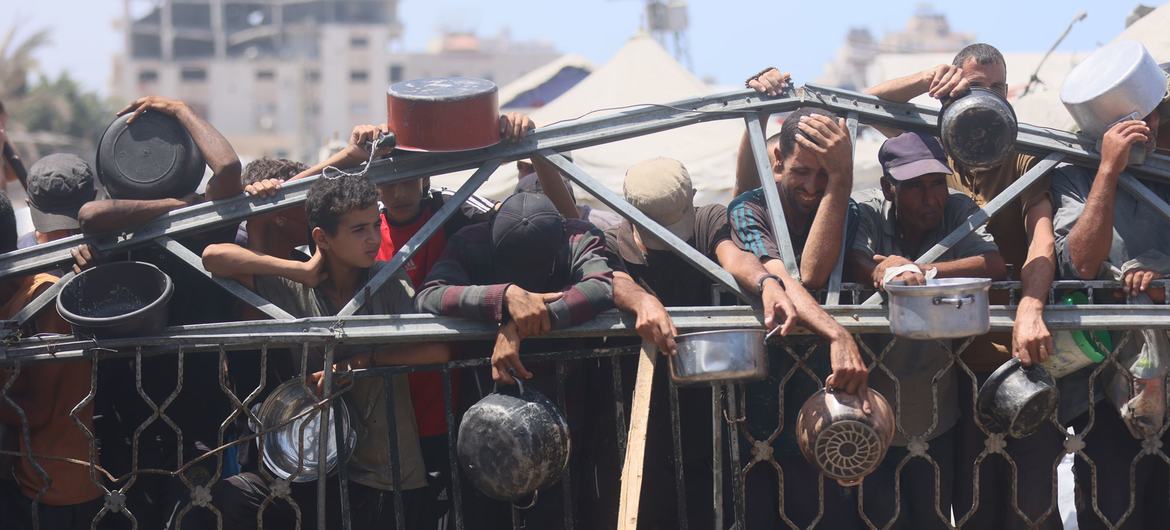
(UN News)* — Children in Gaza are dying not just from hunger, but from the total collapse of the systems meant to protect them, UN agencies warned on Tuesday [].
UN News | People wait for food at a community kitchen in western Gaza City.
.
With 96% of households lacking clean water, many malnourished children are not surviving long enough to receive hospital care.
.
James Elder, Spokesperson for the UN Children’s Fund (UNICEF), told a media briefing in Geneva that it would be a mistake to assume that the situation was improving.
.
“There’s a sense through the world’s press that things are improving,” he said. “But unless there is sustained humanitarian aid…there will be horrific results.”
He emphasised the scale of need: “When food comes in which supports 30,000 children, there are still 970,000 children not getting enough. It is a drop in the ocean.”







 HUMAN WRONGS WATCH