(UN News)* — According to the United Nations, the world needs an extra $4 trillion every year to tackle some of the world’s biggest challenges – ending poverty and hunger, fighting climate change, and reducing inequality.
ATLANTA, USA, Jun 26 2025 ( IPS)* –Chest thumping “Mission Accomplished” claims by President Trump that he ordered the world’s biggest conventional bombs to be dropped on a sleeping nation of 90 million people, were premature.
IAEA chief Rafael Grossi said Iran has reported no increase inradiation levels outside Fordow, Isfahan and Natanz nuclear sites. After surprise US bombing raids on Iranian uranium enrichment facilities over the weekend, the head of the UN-backed nuclear watchdog on Monday appealed for immediate access to the targeted sites to assess the damage that is likely “very significant”. 23 June 2025. Credit: Dean Calma/IAEA
To top it off he bragged that Iran’s nuclear capacity was devastated and that the whole nation fired “not a single shot” back.
— A growing network of online communities known collectively as the “manosphere” is emerging as a serious threat to gender equality, as toxic digital spaces increasingly influence real-world attitudes, behaviours, and policies, the UN agency dedicated to ending gender discrimination has warned.
Unsplash/Anthony Tran | Women and girls are feeling less comfortable to be exposed to the risks and threats when they engage in digital platforms, according to UN Women.
With more than 5.5 billion people connected online – nearly all of them active on social media – digital platforms have become central to how people interact, UN Women highlights.
However, they are also being weaponised to spread misogyny and hate.
A funding shortfall is forcing WFP and other humanitarian organizations to cut assistance to some of the world’s most vulnerable people
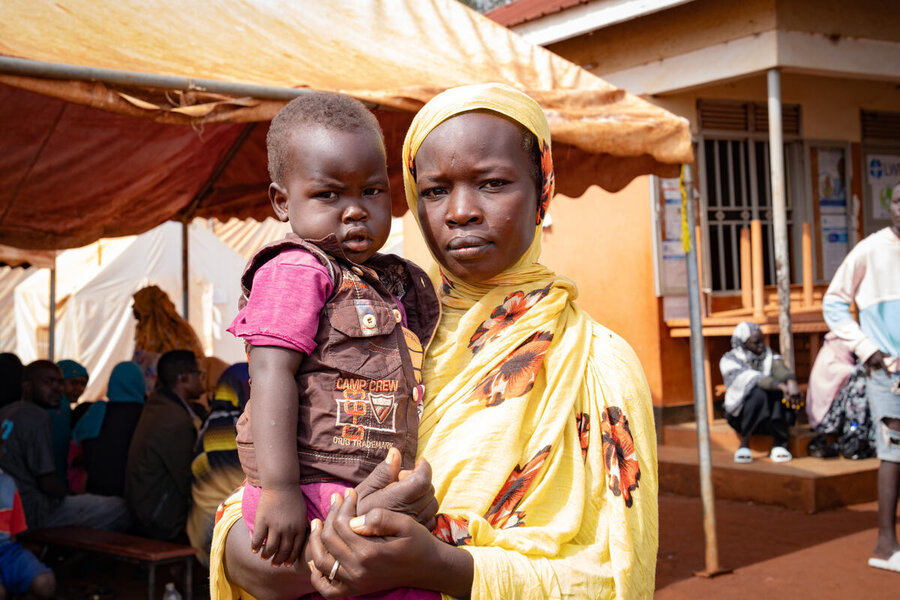
Omnia and her young son received a hot WFP meal upon arrival at Uganda’s Kiryandongo refugee settlement, but WFP’s assistance countrywide is shrinking for lack of funds. Photo: WFP/Daisy Masembe
— Omnia and her young son stand in line under a harsh midday sun, waiting for the daily hot lunch for newcomers at Uganda’s Kiryandongo refugee settlement.
Exhaustion is etched on the face of this single mother, who arrived by bus from war-torn Sudan the day before.
More than 12 million people – one quarter of the population – are at risk of gender-based violence
GEDAREF STATE, SUDAN, 19 June 2025 (UN Population Fund)* – “Every woman and girl here is at risk, no matter her age or background. No one is safe,” said Khadija*, a midwife at a maternity clinic in Sudan’s eastern Gedaref State.
(UN News)* — Last year, 41,370 grave violations against children were documented and verified by the United Nations, according to the UN Secretary-General’s annual report on children in armed conflict, released on Thursday .
UN News | 8,554 grave violations against children occurred in Israel and the Occupied Palestinian Territories.
This number represents a 25 per cent increase from 2023, marking the third consecutive year that violations have increased.
22,495 violations were committed against children themselves while the remaining targeted infrastructure such as schools and humanitarian aid intended for and used by children.
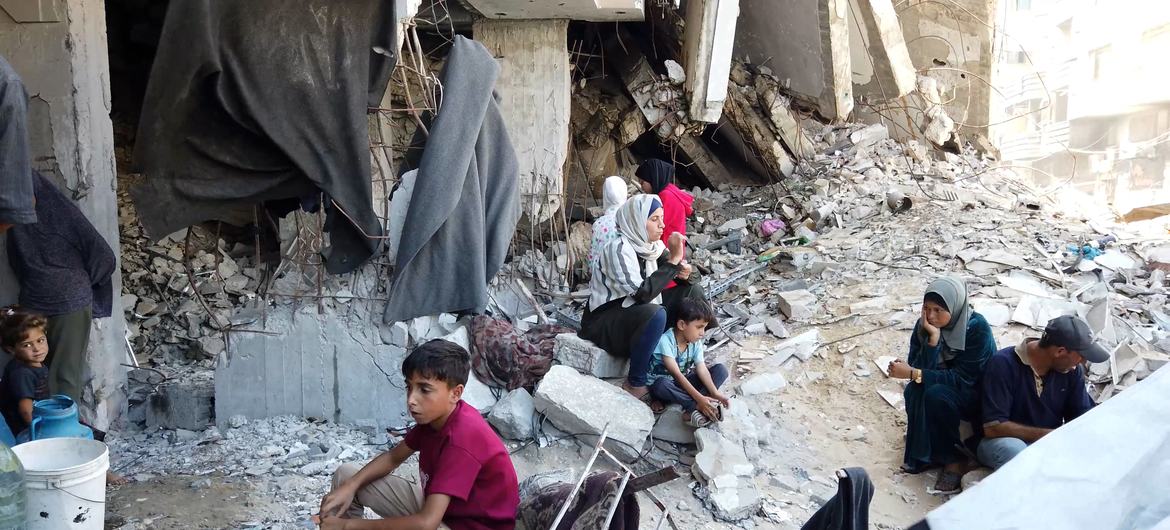
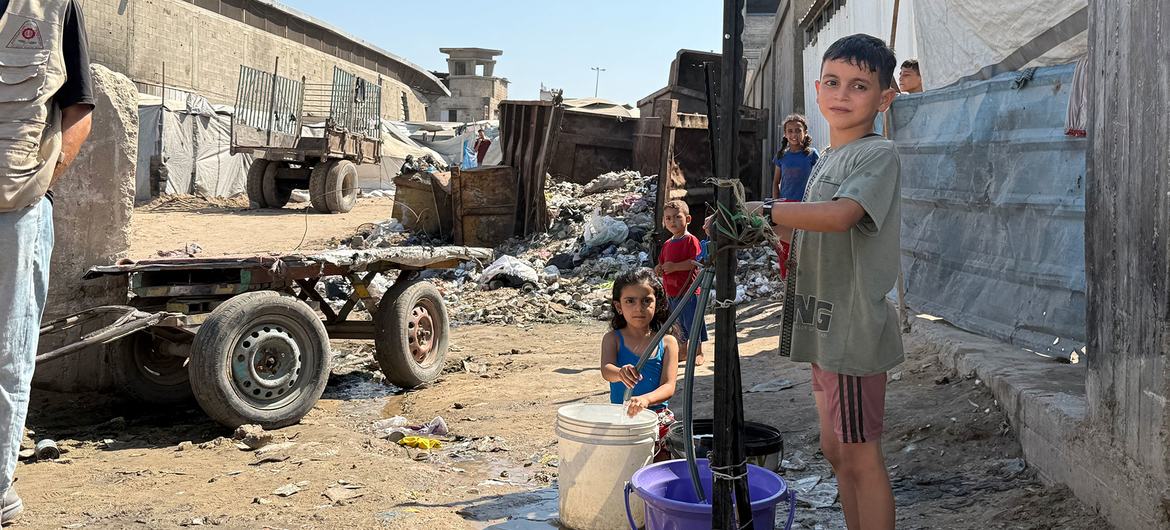
(UN News)* —More than 100 days into Israel’s complete fuel blockade in Gaza, UN agencies still in the shattered enclave warned on Thursday that vital services are only “hours away” from shutting down.
Speaking from Gaza City in the north of occupied territory, Olga Cherevko from the UN aid coordination office, OCHA, said that water pumps had stopped at one site for displaced people there on Wednesday “because there’s no fuel”.
“We are really – unless the situation changes – hours away from a catastrophic decline and a shutdown of more facilities if no fuel enters or more fuel isn’t retrieved immediately,” she told UN News.
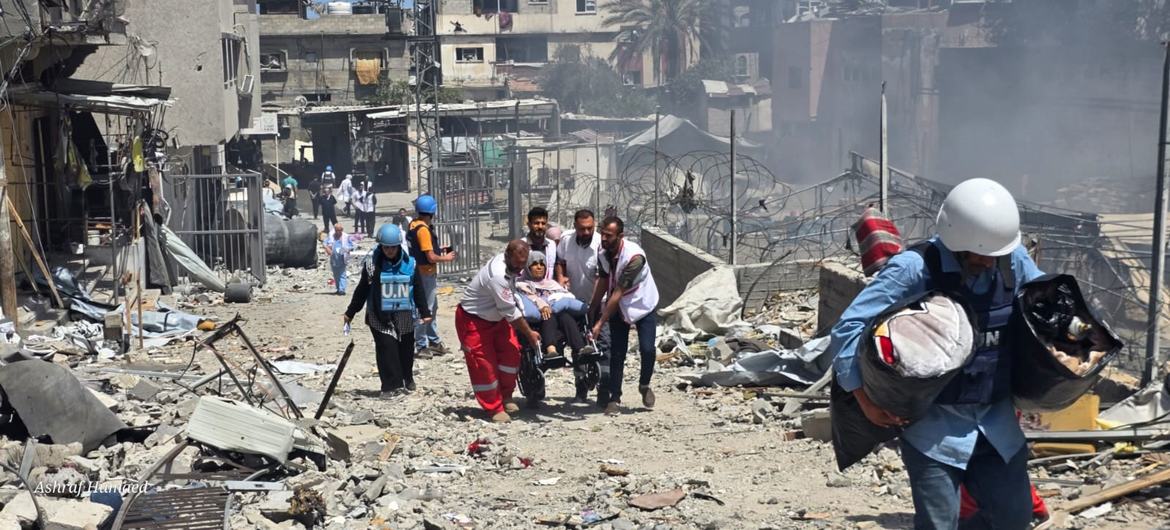
(UN News)* — As the pall of starvation hangs over Gaza, UN agencies have sounded the alarm over deadly violence at food distribution points, where over 400 Palestinians have reportedly been killed in recent weeks while trying to access desperately needed humanitarian aid.
The UN human rights office (OHCHR) in the Occupied Palestinian Territory on called on the Israeli military to cease the use of lethal force near aid convoys and food distribution sites.
It cited “repeated incidents” of Palestinians being shot or shelled while seeking food, warning that such attacks could constitute war crimes under international law.
A girl at the Mother and Child Health Center in Mogadishu, Somalia, visited by the UN Special Representative on Sexual Violence in Conflict. PHOTO:UN/Tobin Jones
“The horror of these heinous crimes echoes long after the guns fall silent.
Too often, perpetrators walk free, cloaked in impunity, while survivors often bear the impossible burden of stigma and trauma.
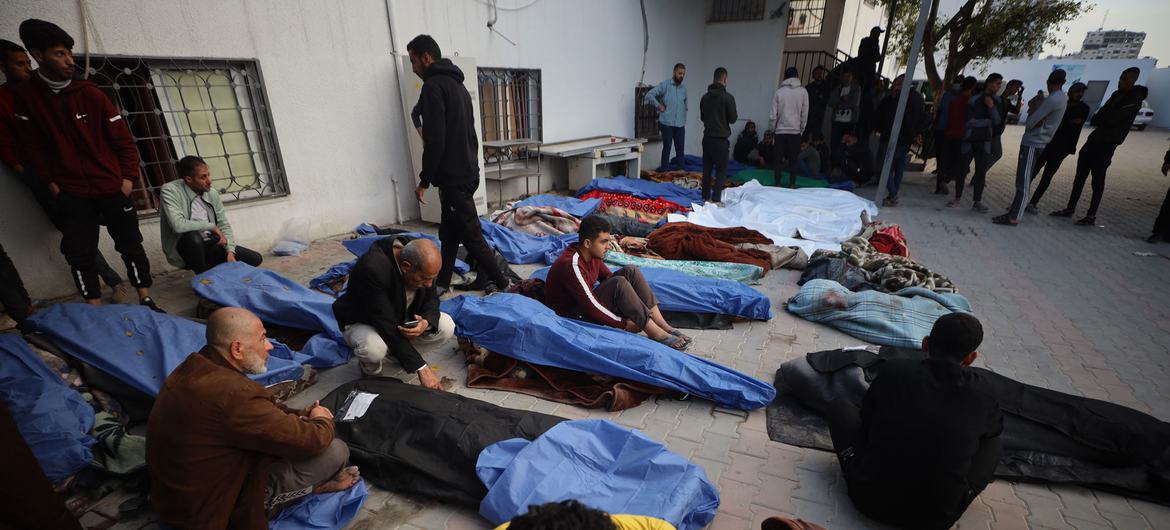
(UN News)* — Civilian deaths in conflict surged by 40 per cent last year, according to new data released by the UN human rights office (OHCHR) with already marginalised groups facing disproportionate levels of discrimination.
At least 48,384 individuals – mostly civilians – were killed in 2024, based on casualties recorded by OHCHR.
“Behind every statistic is a story. Behind every data point, a person,” said UN rights chief Volker Türk.
This alarming rise in civilian deaths exposes major failures to protect some of the most vulnerable in both peacetime and conflict situations, “painting a picture of a global human rights landscape in need of urgent action,” he said.




 HUMAN WRONGS WATCH