(UN News)* — Devastating floods in South Sudan in recent months left thousands of herders without their most precious possessions: goats, cows and cattle. The animals are central to people’s lives and age-old customs including marriage and cultural traditions. All risk being swept away or scorched by the ravages of climate change.
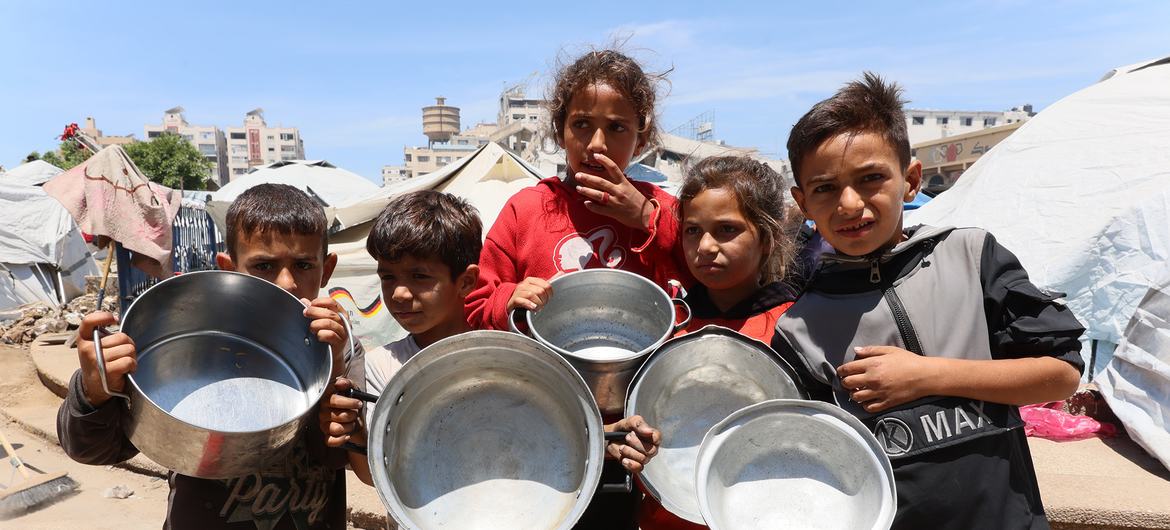
(UN News)* — Gazans remain at “critical risk of famine,” UN-backed food security experts warned on Monday 12 May 2025, a full 19 months since war began with Israel and 70 days since deliveries stopped of all aid and commercial supplies.
UN News | All 25 bakeries supported by the UN World Food Programme have been closed for weeks as stocks of wheat flour and cooking fuel ran out.
“Goods indispensable for people’s survival are either depleted or expected to run out in the coming weeks…The entire population is facing high levels of acute food insecurity,” said the Integrated Food Security Phase Classification (IPC) platform.
In its latest update, the IPC estimated that one in five people in Gaza – 500,000 – faces starvation.
12 May 2025 –Nobel Prize winner Geoffrey Hinton, the physicist known for his pioneering work in the field, told LBC’s Andrew Marr that artificial intelligences had developed consciousness – and could one day take over the world.
Mr Hinton, who has been criticised by some in the world of artificial intelligence for having a pessimistic view of the future of AI, also said that no one knew how to put in effective safeguards and regulation.
(UNICEF)* — Measles is a highly contagious virus. For young children, it can be deadly. In too many places, low vaccination coverage is creating opportunities for measles to spread.
UNICEF/UNI578946/Saleh Elaiwa
Over the last five years, measles outbreaks have hit over 100 countries, home to roughly three-quarters of the world’s children.
But we know how to stop it. Measles vaccines are safe and effective. They are the best way to protect children from getting sick with measles and spreading it to others.
As measles cases surge, here are five things you need to know:
(UN News)* —Israel’s plan to take control of relief assistance in Gaza would put civilian lives in danger and cause mass displacement while using aid as “bait”, UN humanitarians said on Friday .
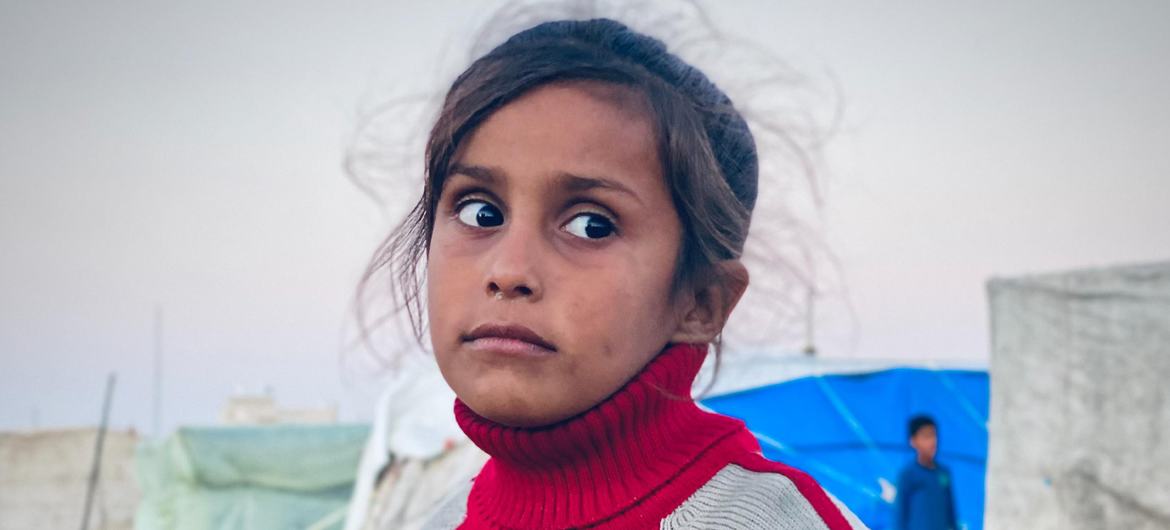
UNRWA | A displaced girl waits her turn to fetch water for her family in the southern city of Rafah in Gaza.
UN Children’s Fund (UNICEF) spokesperson James Elder insisted that the Israeli proposal to create a handful of aid hubs exclusively in the south of the Strip would create an “impossible choice between displacement and death”.
The plan “contravenes basic humanitarian principles” and appears designed to “reinforce control over life-sustaining items as a pressure tactic”, he told journalists in Geneva.
UNITED NATIONS, May 7 2025 (IPS)* – Since the Western Sahara War in 1975, Sahrawi refugees have resided in a collection of refugee shelters in the Tindouf province of Algeria.
Sahrawi refugees walk near the Awserd Refugee Camp in the Tindouf Province of Algeria. Credit: UN Photo/Evan Schneider
For over 50 years, these communities have struggled to develop self-sufficiency and have been solely dependent on humanitarian aid for survival, marking one of the most protracted refugee crises in the world.
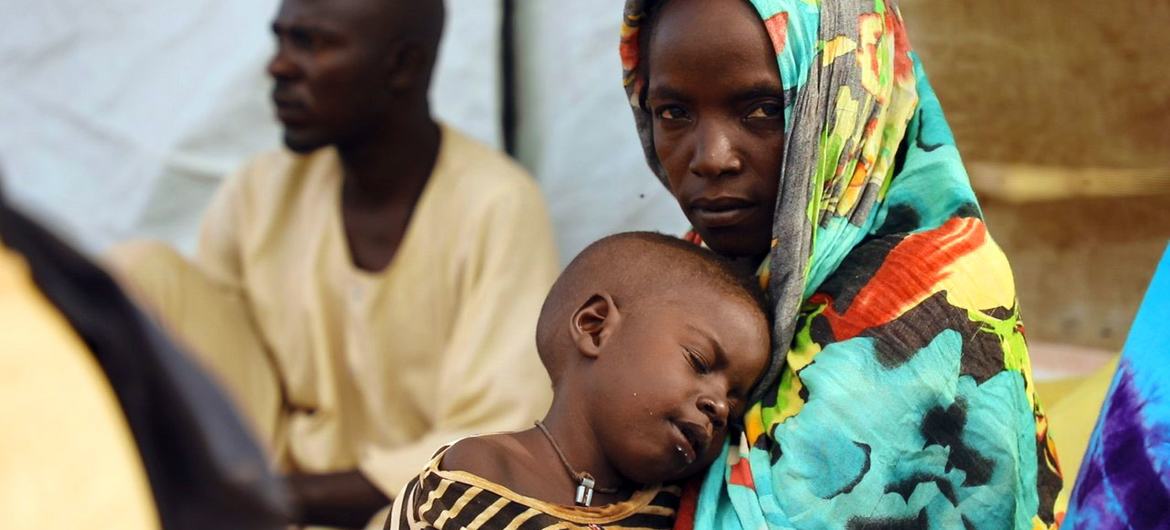
(UN News)* — Thousands of exhausted Sudanese refugees continue to flee fighting in search of safety in neighbouring Chad, aid teams said on Tuesday , as a third day of drone strikes ripped into the city of Port Sudan.
This refrain echoes through centuries of struggle—from the plantations of Saint Domingue to the besieged neighborhoods of Gaza, from the mineral-rich soil of the Congo to the burning plains of Southern Africa.
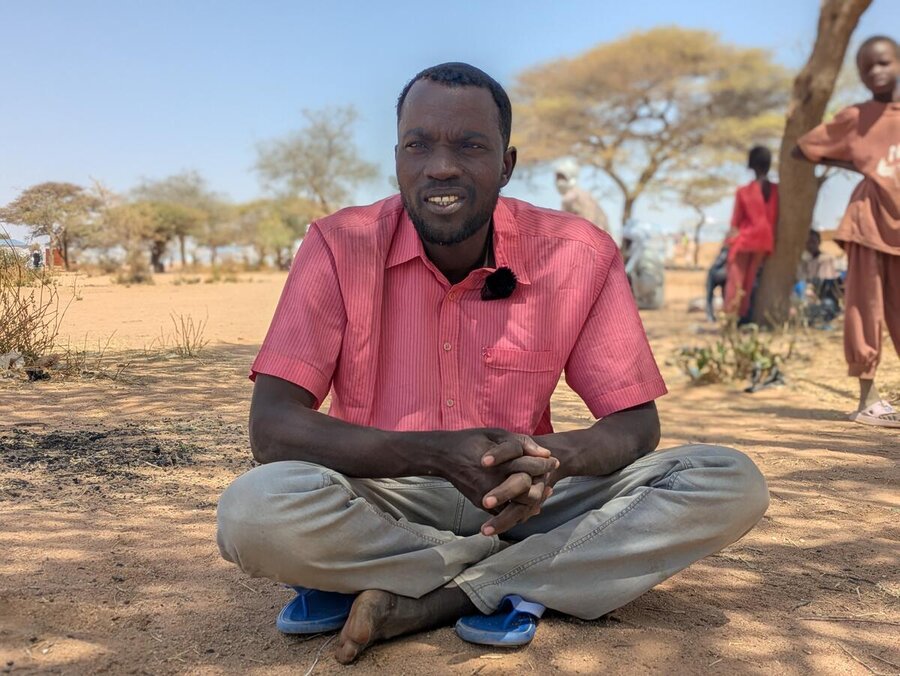
— Hunger and Sudan’s horrific war pushed Abdelminime Moussa from his homeland. Sitting in the sand at eastern Chad’s Koursigue refugee camp, the Sudanese father describes how his family fled assailants who surrounded their village in North Darfur, just across the border.
Abdelminime Moussa at the desolate Koursigue refugee camp in eastern Chad. Moussa and his family count amount the millions of refugees who escaped conflict-torn Sudan. Photo: WFP/Lena von Zabern
“We had nothing,” Moussa says of their arrival earlier this year at this desolate camp, sprinkled with white tents, thorn trees and not much else. “I manage as best as I can to feed my children.”





 HUMAN WRONGS WATCH