In the United States, the Biden administration has adopted the policy of sending many billions of dollars’ worth of advanced weapons to Ukraine, with the hope of weakening Russia, and in the hope of a Ukrainian victory.
John Scales Avery
An underlying motive can be found in the enormous profits made by the American weapons industry.
In fact, the military-industrial complex (against which President Eisenhower warned in his famous Farewell Address) has complete control over both political parties.
The latest yearly appropriation for military purposes was almost a trillion dollars.
The war in Ukraine has always been a proxy war between NATO and Russia, although it is being fought on Ukrainian soil, and although it involves great suffering for the Ukrainian people.
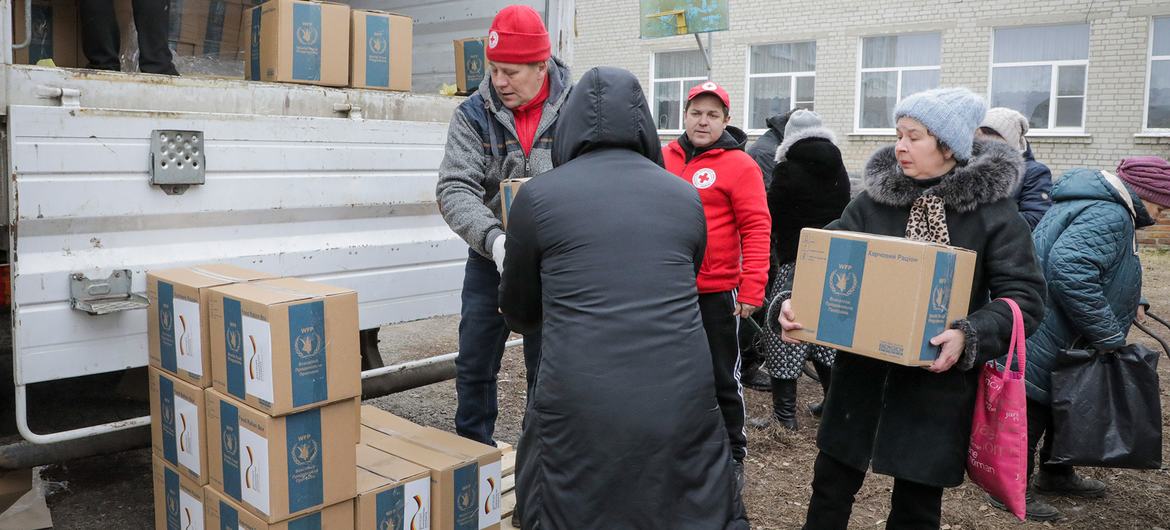
(UN News)* — Arms and ammunition transfers to Ukraine have increased rapidly in recent months, alongside concerning reports of deliveries of banned cluster munitions, the UN’s top disarmament official told the Security Council on Thursday [].
“The influx of weapons and ammunition into any armed conflict can contribute to the escalation and presents significant risks of diversion and proliferation even after the conflict has ended,” Izumi Nakamitsu, the High Representative for Disarmament Affairs, told the Council, briefing on the latest developments in the context of Russia’s full-scale invasion of Ukraine in 2022.
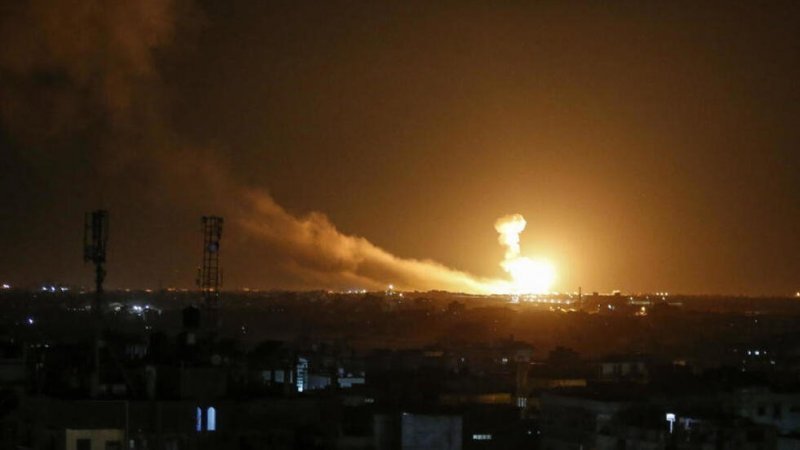
8 Aug 2023 – Israeli airstrikes on Syria have become routine and deadly. Yesterday, Israeli airstrikes on Damascus at 2:20 am local time killed four Syrian soldiers and wounded four others.
Damascus residents were awoken from sleep to sounds and flashes of bright lights from the attacks. Regardless of the numerous attacks, the civilian populations are held hostage to the Israeli military and their relentless attacks which cause emotional distress on innocent people sleeping in their own homes, while trying to survive in a collapsed economy which has pushed the majority to the poverty line.
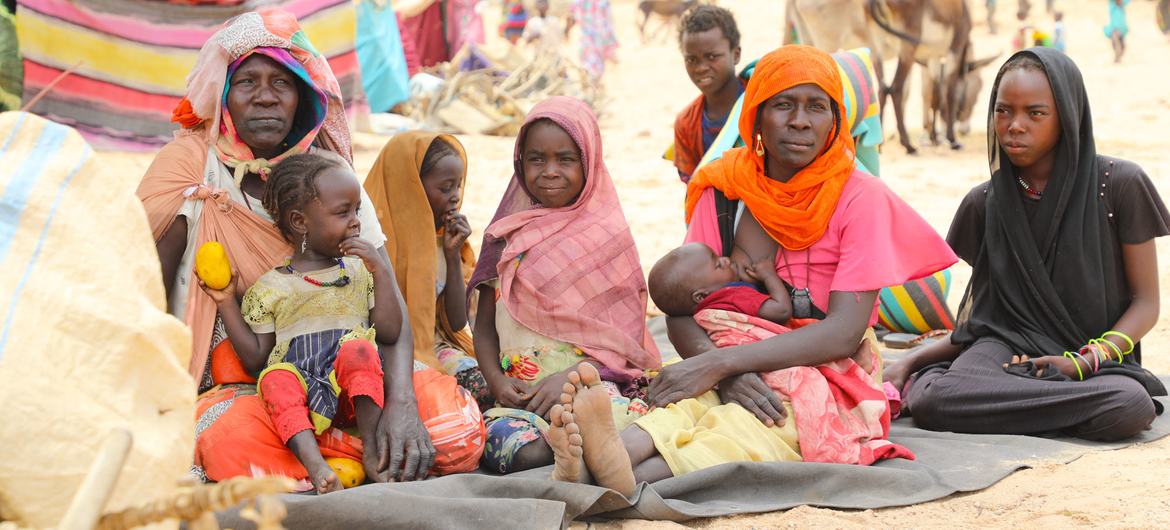
(UN News)*— Dire predictions about escalating hunger in Sudan have tragically come true, as conflict-induced food scarcity has plunged 20.3 million people into severe acute hunger, the UN World Food Programme (WFP) said on Friday [].
Of that figure, 6.3 million people – 13 per cent of Sudan’s population – are experiencing emergency levels of hunger – classified as Phase 4 of the Integrated Food Security Classification – just one step from famine, with the conflict continuing to disrupt access to humanitarian aid and forcing millions to flee their homes.
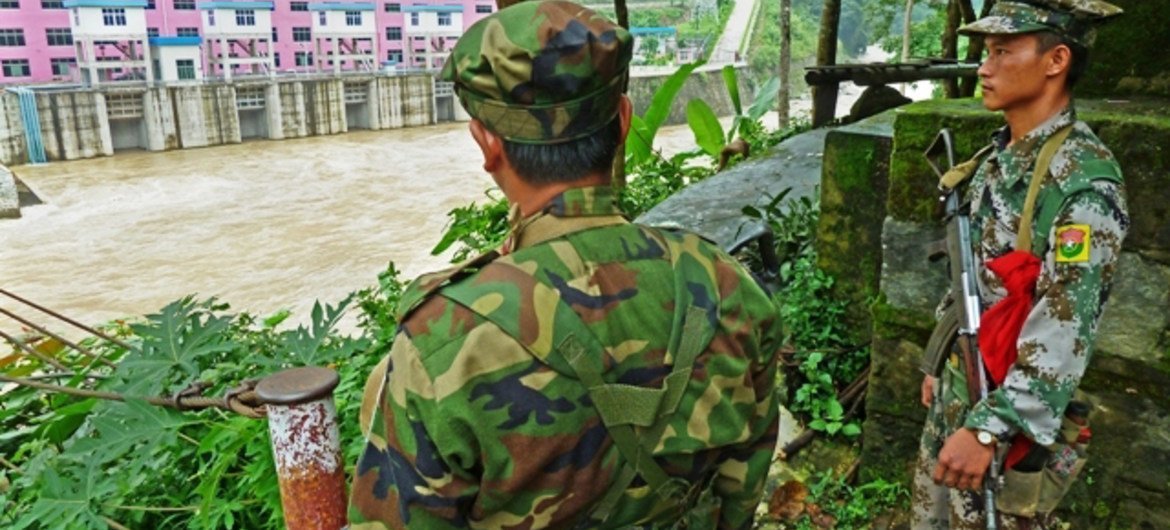
(UN News)* — The Independent Investigative Mechanism for Myanmar (IIMM) on Tuesday [] revealed compelling evidence of the country’s military and affiliate militias engaging in more frequent and audacious war crimes and crimes against humanity.
IRIN/Steve Sandford | Two soldiers stand guard at a post in northern Myanmar. (file)
These include indiscriminate attacks on civilians from aerial bombing, mass executions of civilians and detained combatants, and large-scale and intentional burning of civilian homes and buildings, resulting in the destruction of entire villages in some cases, the Mechanism said in a news release.
“Every loss of life in Myanmar is tragic, but the devastation caused to whole communities through aerial bombardments and village burnings is particularly shocking,” said Nicholas Koumjian, Head of the Mechanism.
How untapped indigenous knowledge can prevent catastrophic wildfires and combat global warming. As an increasing number of countries struggle to deal with wildfires that have become more frequent and more destructive, UNESCO is highlighting the untapped value of alternative models for fire management based on traditional knowledge.
.
Copyright: Elkins Eye Visuals
.
9 August 2023 (UNESCO)* — For thousands of years, Indigenous Peoples have woven fire into the fabric of their existence, understanding that this destructive force could also be used as a powerful tool.
In the Guyana Shield region of South America, these communities have harnessed fire through intentional and precise burns to sculpt their surroundings, nurture their ecosystems, and enhance their livelihoods.
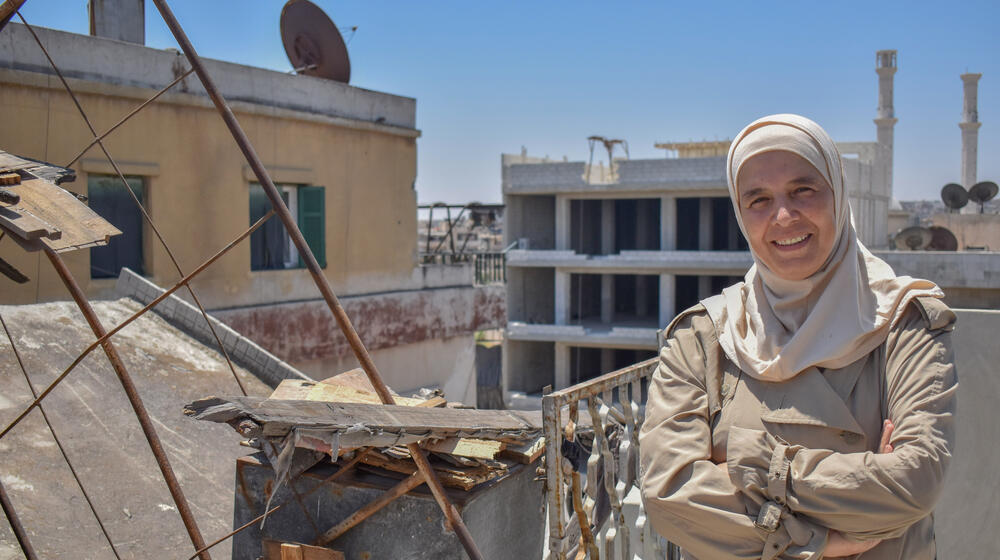
ALEPPO, Syrian Arab Republic, 4 August 2023 (UNFPA)* – “My suffering started with the crisis in Syria, then the economic situation got worse, and the last straw was the earthquake.”
Najwa Bikdash, 52, is from the Bustan Al Zahra neighbourhood in Aleppo. After 20 years of marriage, her husband abandoned her and their four daughters, leaving the family to fend for themselves financially.
(UN News)* — The UN Refugee Agency, UNHCR, voiced concern on Tuesday [] over the situation in Mexico, where refugees and migrants aspiring to get to the United States find themselves in cramped shelters, exposed to multiple risks.
At a press conference in Geneva, agency spokesman William Spindler pointed out that “the capacity to receive and provide assistance to refugees and migrants has been exceeded for months” in that border area.
“The humanitarian situation on the Mexican side of the US-Mexico border continues to be serious,” he stressed, explaining that families with young children arrive there distraught and disoriented.
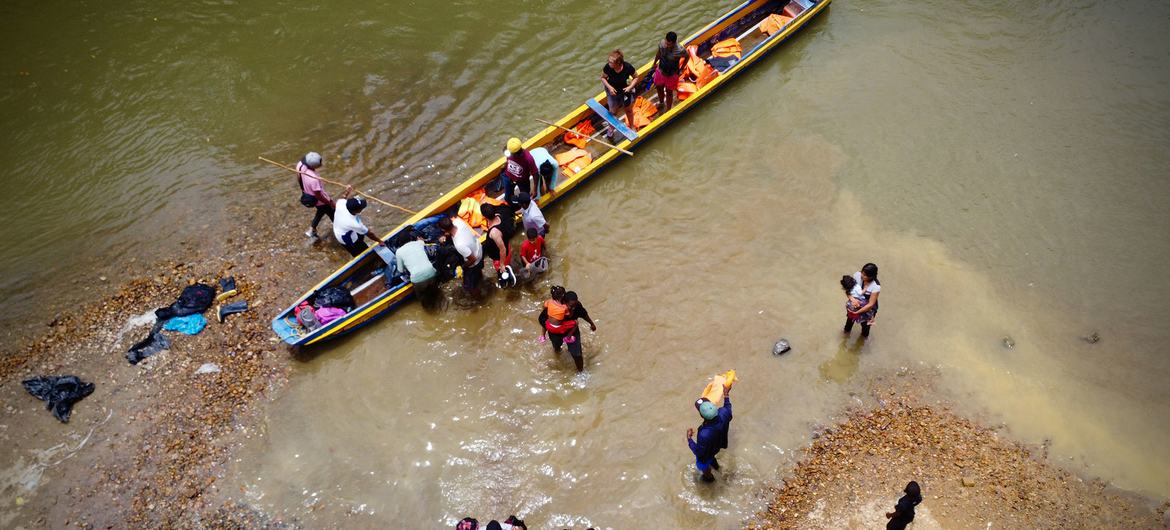
(UN News)* — Record numbers of migrants are crossing the Darién jungle in Latin America in a desperate and perilous journey, including from as far off as Nepal and Afghanistan, UN agencies said on , highlighting the urgency of finding safe and regular pathways.
Crossing the Darién jungle – on the border between Colombia and Panama – and its infamous and so-called Darién Gap, is an arduous undertaking, involving hikes over steep mountains, enduring torrential rain and fording swift rivers. Those on the move are also at risk of robbery and rape.
Belet Weyne, 8 August 2023 (IOM)* – Zamzan knows the devastation of climate shocks all too well. First, drought pushed her to move away from the place she had called home for years, then flooding swept away the new home she’d just begun to build for herself and her family.
Aerial view of Belet Weyne in May 2023, a town in central Hirshabelle State, Somalia, severely affected by the floods. Heavy rainfall in Somalia and the highlands of Ethiopia led to the worst floods the region has experienced in 30 years. Photo: IOM




 HUMAN WRONGS WATCH