NEW YORK, 14 July 2021 (UNICEF)* – Nearly 40 per cent of migrant and displaced youth identified education and skills training as their top priorities, while 30 per cent named employment opportunities, according to a new UNICEF poll announced on the eve of World Youth Skills Day.
.
These findings were revealed through a U-Report poll of more than 26,000 people, including almost 9,000 young people (aged 14-24), across 119 countries.
The poll, conducted between 6 May and 1 June 2021, asked respondents about their aspirations to learn and earn, and the unique barriers they face – as a girl or as a refugee, trying to access the labour market with or without legal status.
With financial support from the EU, Turkey has toughened up its migration policies – putting hundreds of thousands at risk
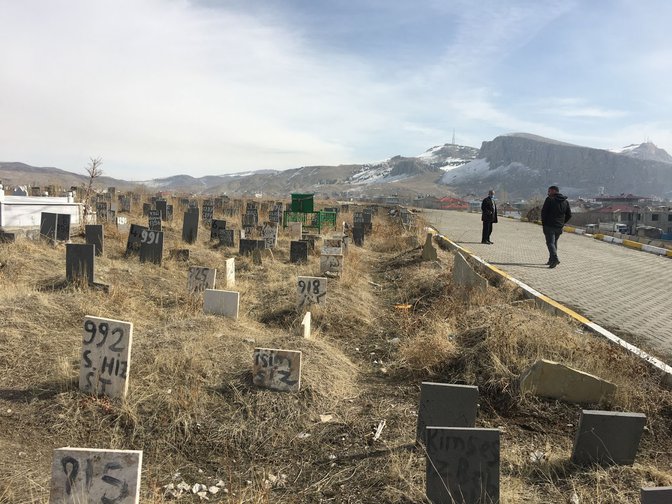
The Seyrantepe cemetery in Van, where many Afghans who attempted to cross Turkey are buried | Karolina Augustova
15 July 2021 (openDemocracy)* — As the US continues withdrawing its troops from Afghanistan, and the Taliban increases its control in the country, around 1,000 Afghans have been arriving to Turkey’s eastern border with Iran every day.
“We are going to lose the war in Afghanistan and it will help bankrupt us. One of our major strategic blunders in Afghanistan was not to have recognized that both Great Britain and the Soviet Union attempted to pacify Afghanistan using the same military methods as ours and failed disastrously. We seem to have learned nothing from Afghanistan’s modern history — to the extent that we even know what it is. Between 1849 and 1947.”
— Chalmers Johnson, Dismantling the Empire – America’s Last Best Hope: 8/2010
Were George W. Bush and NATO Pathological Liars to Invade Afghanistan?
After 9/11, America led NATO’s invasion of Afghanistan was a revulsion against truth as it was in complete disconnect to the living consciousness of global community.
David Corn (“Is the President a Pathological Liar? Bush’s unhealthy relationship with reality”: LA Weekly: 12/11/2003), outlines the compelling facts:
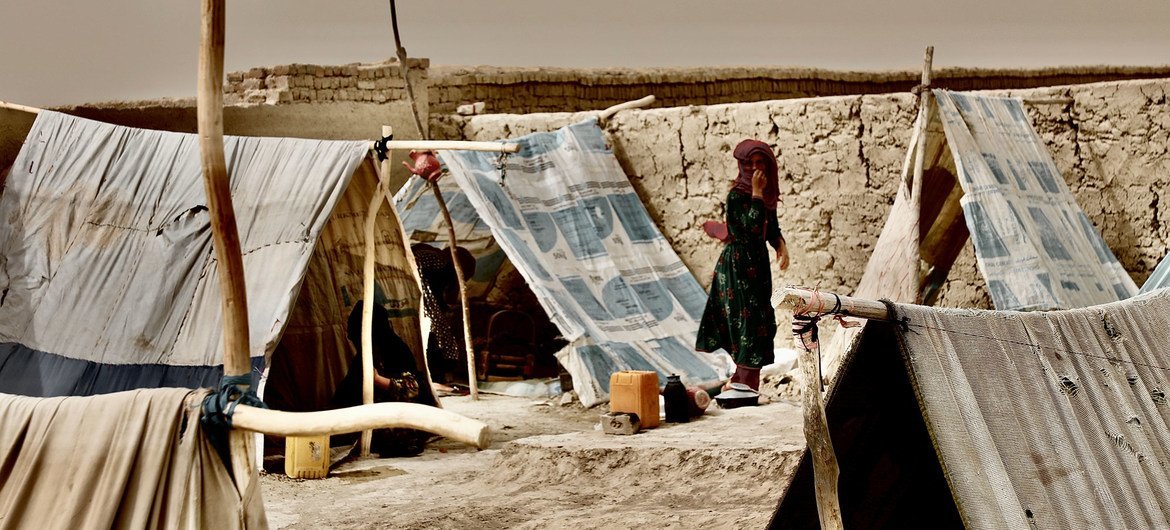
(UN News)* — The worsening security situation across Afghanistan in the wake of foreign troop withdrawal and Taliban advances, has forced an estimated 270,000 from their homes since January, the UN refugee agency (UNHCR) reported on Tuesday[13 July 2021], bringing the total internally displaced to more than 3.5 million.
The agency said that families were fleeing extortion by non-State armed groups and the dangers posed by improvised explosive devices, or IEDs, along major roads.
(UN News)* — Although a new European Union (EU) climate initiative unveiled on 14 July 2021 could change global trade patterns to favour countries where production is relatively carbon efficient, its value in mitigating climate change will likely be limited, the UN trade and development agency, UNCTAD, has warned.
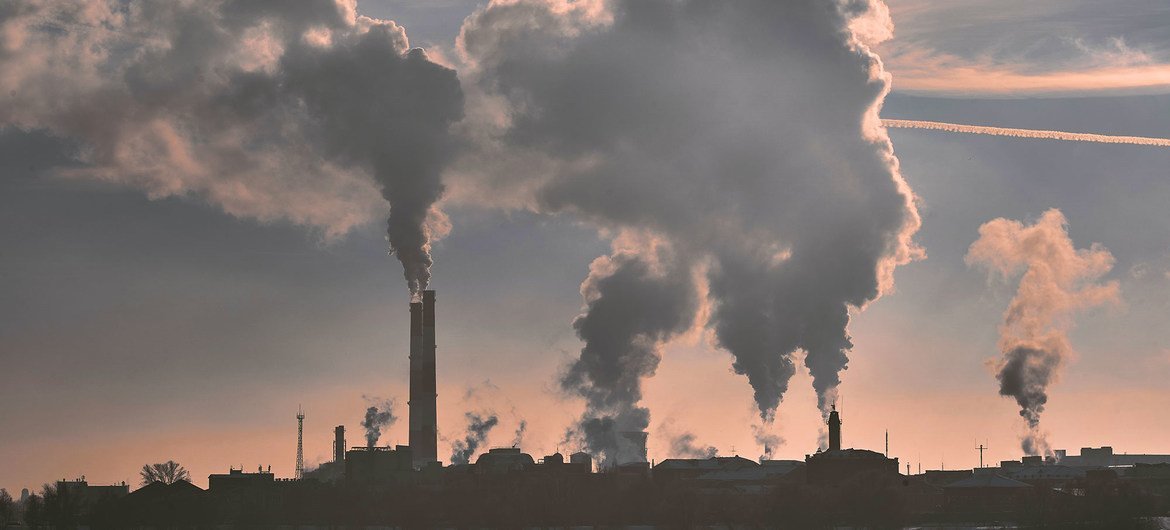
Unsplash/Maxim Tolchinskiy | Air pollution from power plants contributes to global warming.
The Carbon Border Adjustment Mechanism (CBAM) comes into force in 2023 as part of new measures to cut carbon dioxide (CO2) emissions, including taxes on imports such as oil, coal and gas.
Berlin (IOM)* – At least 1,146 people died attempting to reach Europe by sea in the first six months of 2021 according to a new briefing on 13 July 2021 released by the International Organization for Migration (IOM).
.
At least 1,146 people died attempting to reach Europe by sea in the first six months of 2021. Photo: IOM
Deaths along these routes more than doubled so far this year compared to the same period in 2020, when 513 migrants are known to have drowned.
‘Tremendously off track’ to meet 2030 Sustainable Development Goals: UN chief
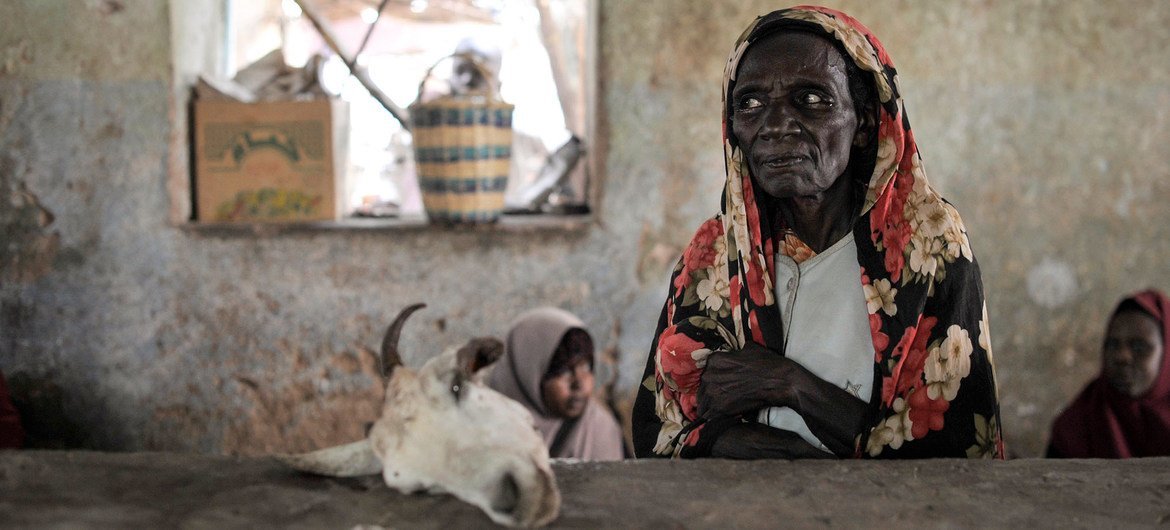
UN Photo/Tobin Jones | A Somali resident sells meat at a market inHudur, where food shortages continue to cause suffering.
(UN News)* — Between 720 and 811 million people in the world faced hunger in 2020 – some 161 million more than for 2019 – the UN Secretary-General said on 12 July 2021; “new, tragic data”, which indicates the world is “tremendously off track” to achieve the Sustainable Development Goals (SDGs) by 2030.
(UN News)* — Global hunger levels have skyrocketed because of conflict, climate change and the economic impact of COVID-19; and one in five children around the world is stunted, UN agencies on 12 July 2021 warned.
New data that represents the first comprehensive global assessment of food insecurity carried out since the coronavirus pandemic began, indicates that the number of people affected by chronic hunger in 2020, rose by more than in the previous five years combined.
This time, it was different. Protests over Israel’s threatened forcible removal of Palestinian residents from East Jerusalem, followed by armed police storming the compound of the Al-Aqsa Mosque; rocket fire from Hamas in Gaza and the latest military onslaught on the Strip, formed a sequence of events that were reported with inputs from a much wider range of sources than in comparable episodes from the recent past.
Jake Lynch
The result was a pattern of coverage, in many international media, which posed a serious challenge to the propaganda lines, elisions and suppressions that have kept the Israeli security state in a privileged position in public discourse over several decades.
The most prominent visual signifier of this shift came when the New York Times used its front page to display photos of all 66 children killed in the ten-day bombardment of Gaza. The paper followed up with in-depth investigations, exposing false claims by Israeli army and government spokespersons that targets for its bombs had any conceivable military role or value.
SYDNEY and KUALA LUMPUR, Jul 13 2021 (IPS)* – ‘No one is protected from the global pandemic until everyone is’ has become a popular mantra. But vaccine apartheid worldwide, due to rich countries’ policies, has made COVID-19 a developing country pandemic, delaying its end and global economic recovery.
Anis Chowdhury
Systemic inequities
Most rich countries have been blocking the developing country proposal to temporarily suspend relevant provisions of the World Trade Organization (WTO) Agreement on Trade Related Aspects of Intellectual Property Rights (TRIPS) for the duration of the pandemic to more affordably and effectively contain it.
Needed to quickly scale up production and affordable access to relevant diagnostic tests, medical treatments, personal protective equipment and prophylactic vaccines, the proposal – by South Africa and India in late 2020 – is now supported by more than two-thirds of WTO members.
The Biden administration has reversed Trump’s opposition to the proposal, albeit only for vaccines.





 HUMAN WRONGS WATCH