14/06/2021
(FAO)* — Cotton is one of the most common fabrics in the world, from its origins in ancient India to the modern garments many of us wear today. This durable, versatile and naturally organic fabric is made from the white, fluffy fibres around the seeds of cotton plants.
Cotton is one of the most popular fabrics around the world, but, in some countries, child labour is common in its production. ©FAO/Swiatoslaw Wojtkowiak
However, the backstory of cotton is more complicated. Its production is heavily dependent on natural resources and labour; and unfortunately, child labour is often a part of this.
read more »
Posted in Africa, Asia, Latin America & Caribbean, Market Lords, Middle East, Migrants and Refugees, Mother Earth, Others-USA-Europe-etc., The Peoples, War Lords |
Leave a Comment »
14/06/2021
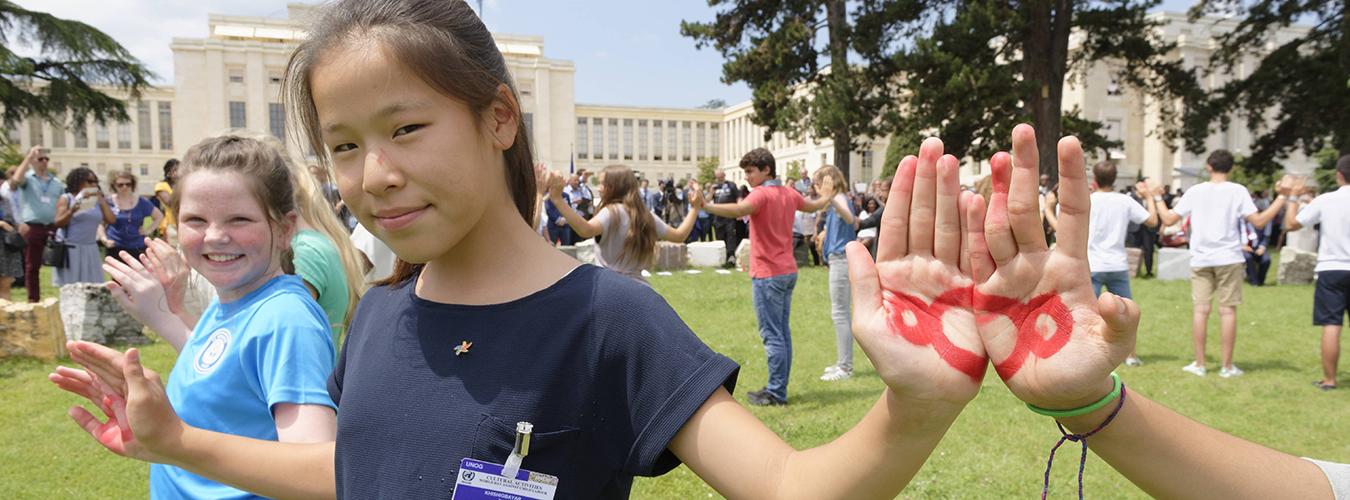
Children from Collège du Léman and the International School of Geneva performed on the World Day Against Child Labour event (12.06.2017) at 106th Session of the International Labour Conference.
PHOTO:© Crozet / Pouteau
Posted in Africa, Asia, Latin America & Caribbean, Market Lords, Middle East, Migrants and Refugees, Others-USA-Europe-etc., The Peoples |
Leave a Comment »
14/06/2021
The International Labour Organization and UNICEF warn nine million additional children at risk as a result of COVID-19 pandemic.
Posted in Africa, Asia, Latin America & Caribbean, Market Lords, Middle East, Migrants and Refugees, Mother Earth, Others-USA-Europe-etc., The Peoples, War Lords |
Leave a Comment »
14/06/2021
(UN News)* – Escalating violence across Myanmar including attacks on civilians must be halted to prevent even greater loss of life and a deepening humanitarian emergency, UN rights chief Michelle Bachelet on 11 June 2021 said.
.
Ms. Bachelet’s appeal follows reports of a continuing military build-up in various parts of the country including Kayah State in the east – where more than 108,000 people have fled their homes in the last three weeks – and in Chin State in the west.
read more »
Posted in Asia, Market Lords, Migrants and Refugees, Others-USA-Europe-etc., The Peoples, War Lords |
Leave a Comment »
11/06/2021
$72.6 billion is how much nine nuclear armed countries spent on their nuclear weapons as the pandemic spread in 2020 and a global treaty banning nuclear weapons took full effect.

The report “Complicit: 2020 Global Nuclear Weapons Spending” details the spending of these nine countries on their arsenals, the companies that profited, and the lobbyists hired to keep nuclear weapons in business.
This amounts to $137,666 every minute, and (after adjusting for inflation) represents an increase of $1.4 billion from last year.
The U.S. spent three times more than the next in line- a whopping $37.4 billion.
China was the only other country crossing the ten billion mark, spending $10.1 billion.
Russia had the third highest spending at $8 billion, though the U.K.’s $6.2 billion and the French $5.7 billion weren’t so far behind.
India, Israel, Pakistan also each spent over a billion on their arsenals, while North Korea spent $667 million.
read more »
Posted in Africa, Asia, Latin America & Caribbean, Market Lords, Middle East, Migrants and Refugees, Mother Earth, Others-USA-Europe-etc., The Peoples, War Lords |
Leave a Comment »
08/06/2021

Magnificent sea anemone with its vivid red underside presents its guest, a resident pink skunk anemonefish. Ngemelis Region, Palau, South Pacific. This photo was one of the winners in the UN Oceans Day Photo Contest. PHOTO:Michael Gallagher
The ocean produces at least 50% of the planet’s oxygen, it is home to most of earth’s biodiversity, and is the main source of protein for more than a billion people around the world.
Not to mention, the ocean is key to our economy with an estimated 40 million people being employed by ocean-based industries by 2030.
read more »
Posted in Africa, Asia, Climate Crisis, Latin America & Caribbean, Market Lords, Middle East, Migrants and Refugees, Mother Earth, Others-USA-Europe-etc., The Peoples |
Leave a Comment »
08/06/2021
Ahead of G7, coalition of luminaries says “new relationship with the planet” and “transformational action this decade” absolutely necessary.
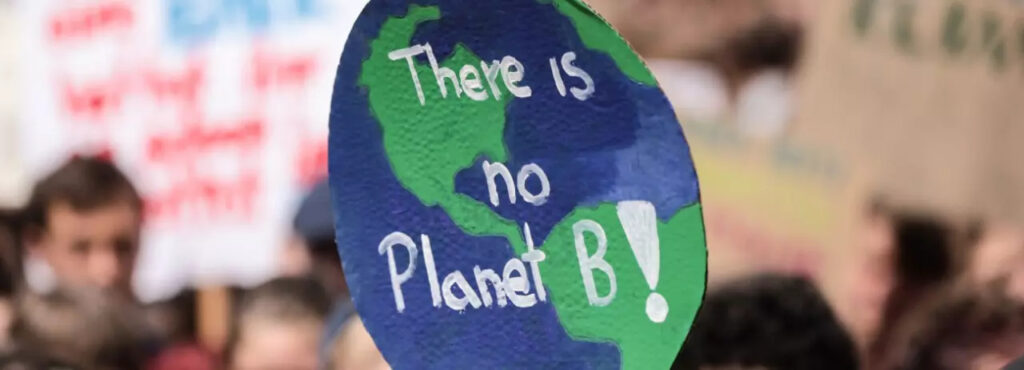
Students demonstrate holding signs reading “There is no Planet B” during the Fridays for Future climate strikes in May 2019. (Photo: Kay Nietfeld/picture alliance via Getty Images)
A group of 126 Nobel laureates and other experts today called on the leaders of the G7 nations and the United Nations secretary-general to help put the global community on a path to establishing “a new relationship with the planet,” as the world continues to battle the Covid-19 pandemic and faces a coming decade which will be “decisive” in determining whether the Earth remains habitable.
read more »
Posted in Africa, Asia, Climate Crisis, Latin America & Caribbean, Market Lords, Middle East, Migrants and Refugees, Mother Earth, Others-USA-Europe-etc., The Peoples, War Lords |
Leave a Comment »
08/06/2021
Illegal, unreported and unregulated fishing is one of the biggest threats to our oceans. ©Cristiano Minichiello
IUU fishing is one of the biggest threats to our oceans, impacting the sustainability of fisheries, the livelihoods of fishers and coastal communities and the protection of aquatic ecosystems. It also impacts consumers who could be cheated in terms of what fish they are buying, where it comes from or how it is caught.
read more »
Posted in Africa, Asia, Latin America & Caribbean, Market Lords, Middle East, Migrants and Refugees, Mother Earth, Others-USA-Europe-etc., The Peoples |
Leave a Comment »
05/06/2021

Image from Greenpeace International.
Sounds like the premise of a brand new Netflix series, but instead this is the reality of what happens in one of the world’s most lucrative industries. And the secret activity worth billions of dollars? Fish.
read more »
Posted in Africa, Asia, Climate Crisis, Latin America & Caribbean, Market Lords, Middle East, Migrants and Refugees, Mother Earth, Others-USA-Europe-etc., The Peoples |
Leave a Comment »



 HUMAN WRONGS WATCH