UNITED NATIONS, Apr 26 2021 (IPS)* – The United Nations– which is desperately seeking funds to help developing nations battling a staggering array of socio-economic problems, including extreme poverty, hunger, economic inequalities and environmental hazards– has continued to be one of the strongest advocates of disarmament.
SIPRI’s research on arms and military spending has been the core of the Institute’s work since its foundation in the 1960s. Credit: Stockholm International Peace Research Institute (SIPRI)
The world body has relentlessly campaigned for reduced military spending in an attempt to help divert some of these resources into sustainable development and humanitarian assistance.
But according to a new report released April 26 by the Stockholm International Peace Research Institute (SIPRI), world military expenditure rose to nearly $2 trillion in 2020, an increase of 2.6 percent, in real terms, from 2019.
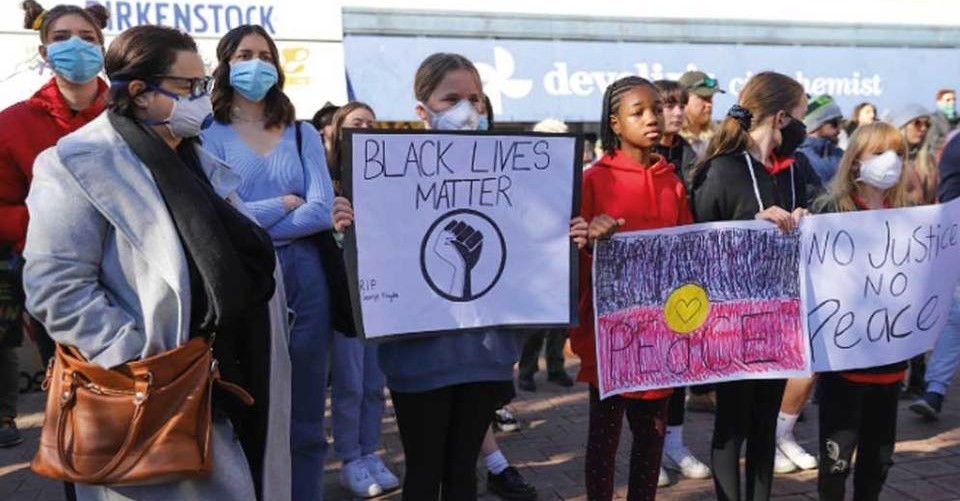
23 April 2021 (IWGIA)* — Aboriginal incarceration rates are much higher than the general Australian population. Moreover, Indigenous women represent 34% of the total number of inmates. As if this wasn’t enough, the legal and welfare systems are removing Indigenous children from their families and culture, serving as a mechanism of forced assimilation.
.
Protests by the Black Lives Matter international movement in front of Sydney’s Town Hall. / Credit: Télam.
Dunghutti man David Dungay Jr died on December 29, 2015, aged 26 calling for breath in a cell in Sydney’s Long Bay prison as he was held face down by prison guards attempting to sedate him.
The harrowing plea “I can’t breathe” recorded in the last moments of George Floyd’s life on 25 May 2020, as he struggled under the weight of a Florida police officer’s knee, remind all First Nations peoples in Australia of the tragic death of David Dungay, and the deaths of so many Aboriginal people while in custody.
New FAO research focuses on contributions of farmers with fewer than two hectares
A farmer in Ghana.
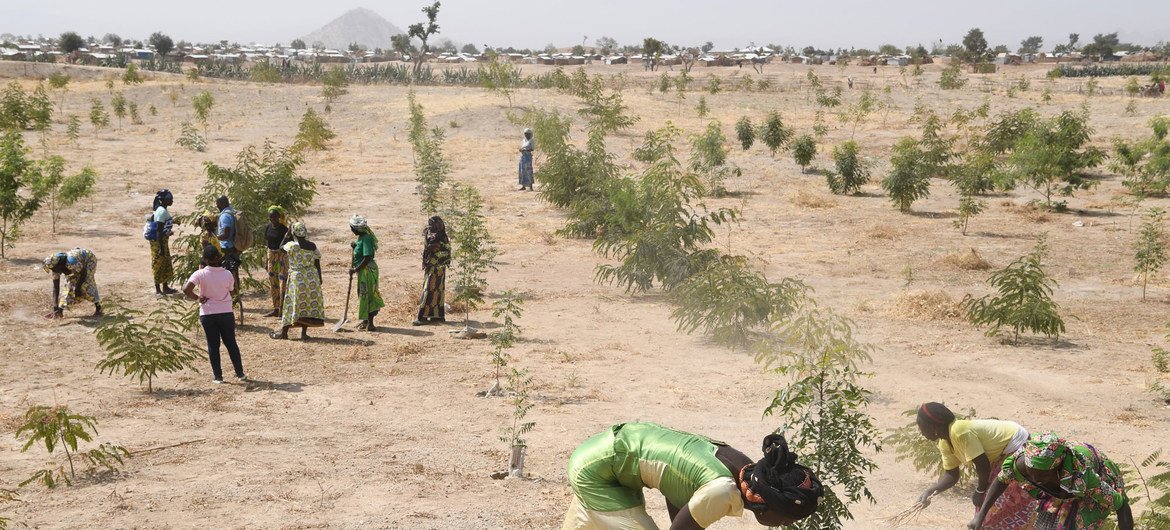
ROME, 23 April 2021 (FAO)* – The world’s smallholder farmers produce around a third of the world’s food, according to detailed new research by the Food and Agriculture Organization of the United Nations (FAO).
Five of every six farms in the world consist of less than two hectares, operate only around 12 percent of all agricultural land, and produce roughly 35 percent of the world’s food, according to a study published in World Development.
Smallholders’ contributions to food supply varies enormously between countries, with the share as high as 80 percent in China and in the low single-digits for Brazil and Nigeria.
Impacts of grain crop cultivation spill into Brazil’s oldest indigenous reserve as farmers work with tribes to restore degraded land
The peoples of the Xingu say agricultural activity beyond the borders of their territory has impacted fish populations (image: Alamy)
Watatakalu Yawalapiti is 40 years old. She was born in the Amakapuku village, surrounded by a large preserved forest in the heart of Brazil. She spent part of her childhood on the white sands and clear waters of the Tuatuari river.
At other times, she would sit in a circle listening to her great-grandfather telling stories, like the one about how the white man would arrive with a huge blade and cut down the trees as one shaves one’s body hair.
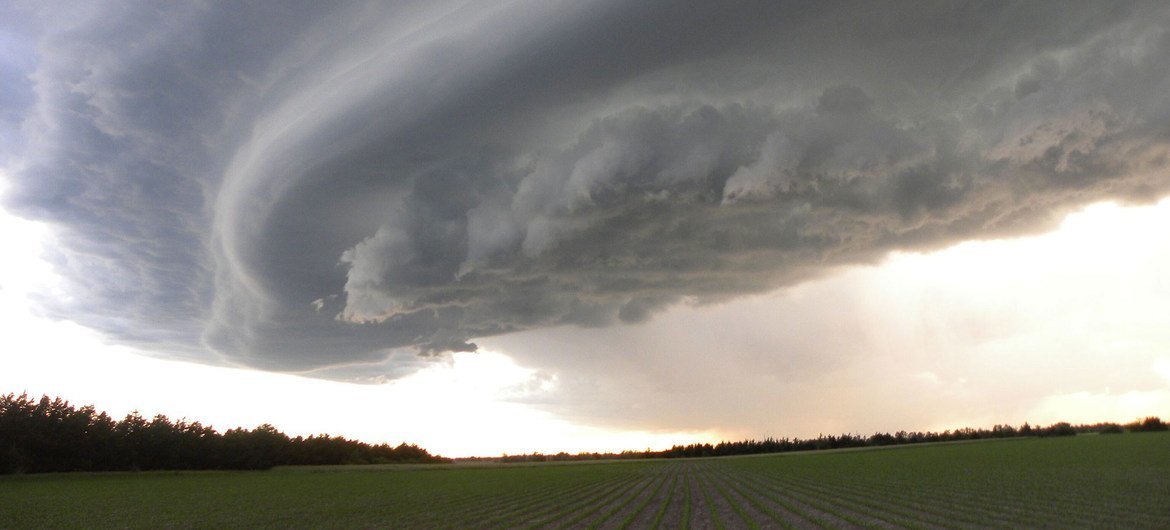
(UN News)* — Weather-related crises have triggered more than twice as much displacement as conflict and violence in the last decade, the UN refugee agency (UNHCR) said on 22 April 2021.
Coinciding with Earth Day on Thursday 22 April, the UN High Commissioner for Refugees, UNHCR, published data showing how disasters linked to climate change likely worsen poverty, hunger and access to natural resources, stoking instability and violence.
The planet’s on ‘red alert’ UN chief warns leaders at President Biden’s climate summit
.
NOAA/Jerry Penry | Scientists believe that climate change is causing an increase in extreme weather events.
.
(UN News)* — World leaders must act now and put the planet on a green path because “we are at the verge of the abyss”, UN Secretary-General António Guterres on 22 April 2021 said in his address to the virtual climate summit convened by United States President Joseph Biden.
(UN News)* — Greater understanding of the ocean is essential if the world is to recover better from the COVID-19 pandemic and achieve agreed targets on sustainable development and climate action, UN Secretary-General António Guterres on 21 April 2021 said in launching a major study on what he called “the life support system of our planet.”
Coral Reef Image Bank/Michele Roux | A turtle swims in the ocean in Martinique in the Caribbean.
The second World Ocean Assessment (WOA II) is the work of hundreds of scientists from across the globe and follows an initial report published in 2015.
It warns that many benefits the ocean provides are increasingly being undermined by human actions, the UN chief said, describing the findings as alarming.
International Council of Voluntary Agencies rallies Oxfam, Save the Children and 258 other organizations after World Food Programme’s warning on increasing levels of hunger
Mozambique: Displaced people receive assistance in Mueda in Cabo Delgado having escaped the violence in Palma. Photo: WFP/Shelley Thakral
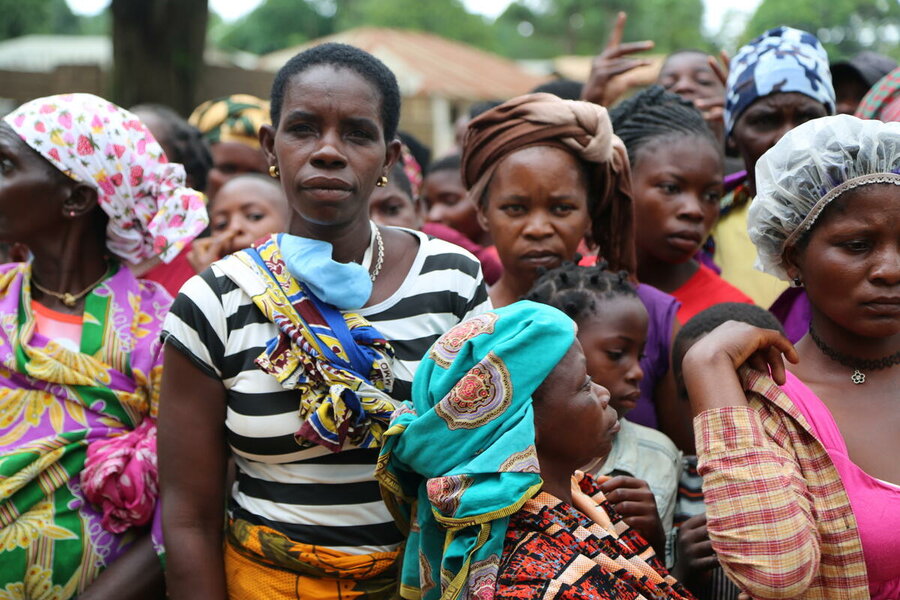
20 April 2021 (WFP)* — Humanitarian agencies around the world have joined forces to warn that rising hunger levels are going to lead to famines unless urgent action is taken.
“Ending the war as soon as possible is the only rational and humane thing to do,” said a co-director of the Costs of War Project.
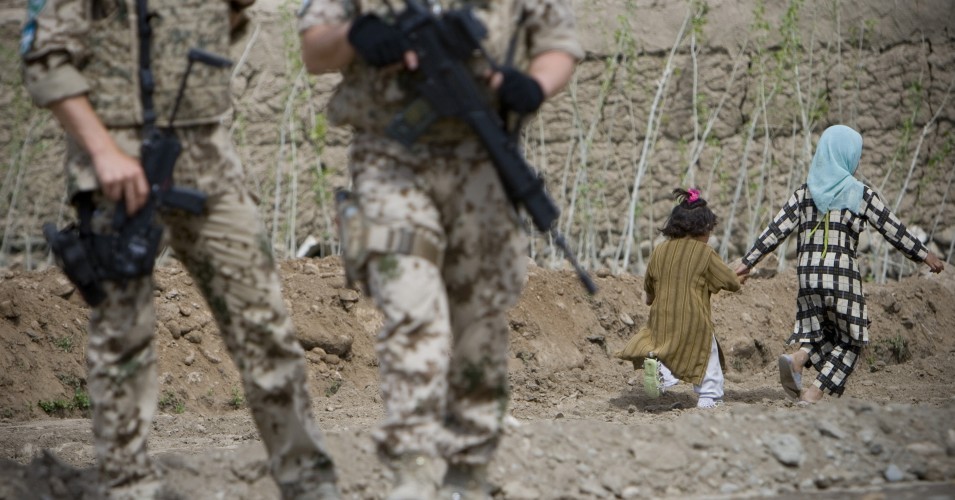
Since the 2001 U.S. invasion of Afghanistan, the war has cost trillions of dollars and nearly a quarter-million lives. (Photo: Veronique de Viguerie/Edit by Getty Images)
In the wake of President Joe Biden’s announcement that he plans to withdraw all regular U.S. combat troops from Afghanistan by this year’s anniversary of the September 11, 2001 attacks, experts at the Costs of War Project on Friday released an update on what nearly two decades of war has cost in both dollars and human lives.





 HUMAN WRONGS WATCH