Emptiness, lack of character and a fundamental unwillingness to take responsibility lurk at evil’s core.
Flickr/Gage Skidmore. CC BY-SA 2.0.
27 October 2020 (openDemocracy)* — Despite our best intentions, Trump’s name is on everyone’s lips, yet I have no interest in the sordid details of his psyche. His pathologies are a matter of indifference. It’s clear to me that he’s a violent, dangerous lunatic. His desperate attempts to win attention and adulation likely stem from abuse he suffered as a youth.
(UNEP)* — Cities are home to 55 per cent of the world’s population, all jammed together cheek-by-jowl. Little wonder, then, that cities are being hit hardest by COVID-19: an estimated 90 per cent of all reported cases have occurred in urban areas.
But the same concentration of people also makes cities the places where the battle for a green recovery from COVID-19 – which is essential to reduce future pandemic risks and fight climate change – can be won.
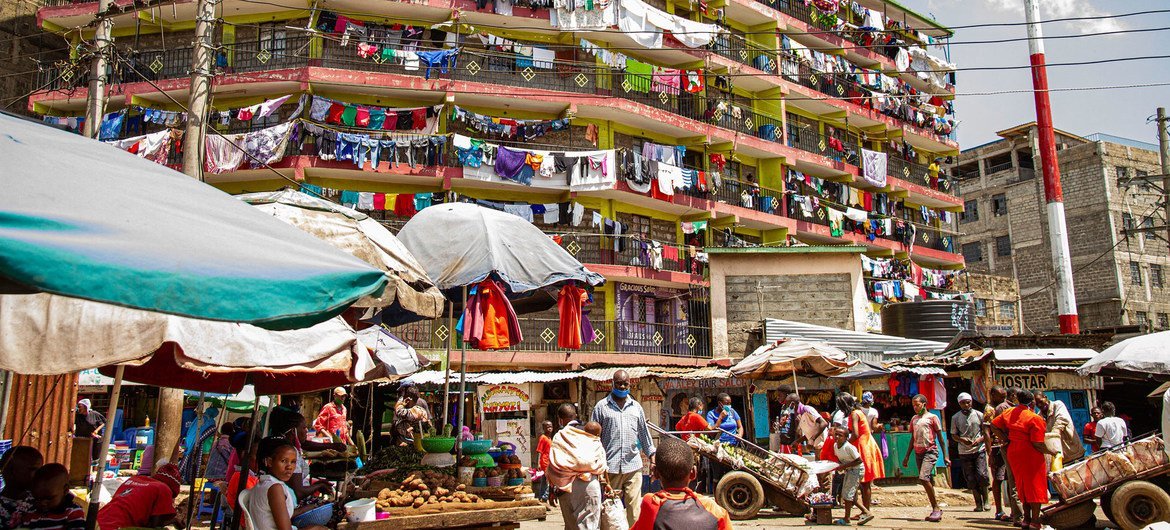
(By FAO)* — Over half of the world’s population now lives in cities. With that number expected to rise to 68 percent by 2050, urbanisation is one of the world’s most transformative trends.
UN-Habitat/Kirsten Milhahn | A residential building in Nairobi, Kenya. According to UN estimates, by 2050 about 68 per cent of the world’s population will be living in urban areas.
29 October 2020 (UN News)* — Top UN officials have highlighted the “extraordinary” contributions of grassroots communities in towns and cities across the world in the face of the coronavirus pandemic, and urged that their unique efforts be built on, during recovery.
Over the past months, we’ve seen some of the richest countries in the world struggle with the effects of Covid-19 and the health and economic emergency it has brought in its wake. But at least they have the resources to cushion the blows, while poor countries face these huge threats with few resources.
Many countries are burdened with massive amounts of debt owed to richer countries, private banks and multilateral institutions. This has constrained their governments from being able to free up resources to spend on public prevention and response. Photo: Aurelie Marrier D’Unienville/Oxfam
26 October 2020 (Wall Street International)* — There are amazing and almost eerie parallels between where America finds itself in 2020 and where the nation was a century ago. In 1920, one hundred years ago, America was in the midst of a pandemic, racial conflict, and a contentious presidential election.
10 Key Issues that Demand the Administration’s Immediate Attention
27 October 2020 – Whoever wins the November 3 presidential election has an opportunity – and a responsibility – to help the United States move forward by making human rights a priority in the next administration.
New analysis from the Integrated Food Security Phase Classification (IPC), the global standard for gauging food insecurity, revealed that in some areas more than one in four children were acutely malnourished.
Sorghum and millet are helping farmers adapt to a warming climate that has seen the third successive year of drought and low rainfall across Zimbabwe. Credit: Isaiah Esipisu/IPS
27 October 2020 (IPS)* — As the coronavirus pandemic has led to decreased incomes and increased food prices across the southern African nation — it is estimated that more than 8 million Zimbabweans will need food aid until the next harvest season in March — Sibanda’s utilisation of traditional and indigenous food resources could provide a solution to food security here.
27 October 2020 (Wall Street International)* — The huge Covid-19 storm is undoubtedly still at its peak since it appeared at the beginning of 2020. The full economic, social and also technological effects are not totally visible yet (although we can enumerate some of them at least in the IT field such as the enforcement of remote distance learning/working, the huge expansion of streaming services, deep corona fakes, stronger phishing and malware campaigns, the new 5G network, etc..) but in any case, they will be tremendous.






 HUMAN WRONGS WATCH