Bogotá – A pioneering new initiative seeks to enhance understanding of mercury trade dynamics in Latin America and foster regional cooperation to improve the control of major mercury flows, aiming to prevent approximately 176 metric tonnes of mercury from entering the international market, reducing the associated negative impacts on human health and environmental integrity.
28 March 2025 — Dying glaciers, record-breaking hurricanes and wildfires, debilitating drought and deadly floods scarred the socio-economic landscape of Latin America and the Caribbean in 2024, inflicting major damage long after the headlines faded, according to a new report from the World Meteorological Organization (WMO).
ROME –The United Nations World Food Programme (WFP) on warned that 58 million people risk losing life-saving assistance in the agency’s 28 most critical crisis response operations unless new funding is received urgently.
(UN News)* — The UN human rights chief sounded the alarm on Friday over the rapidly deteriorating situation in Haiti, calling it a “catastrophe” fuelled by gang violence, widespread impunity and a political process that is hanging by a thread.
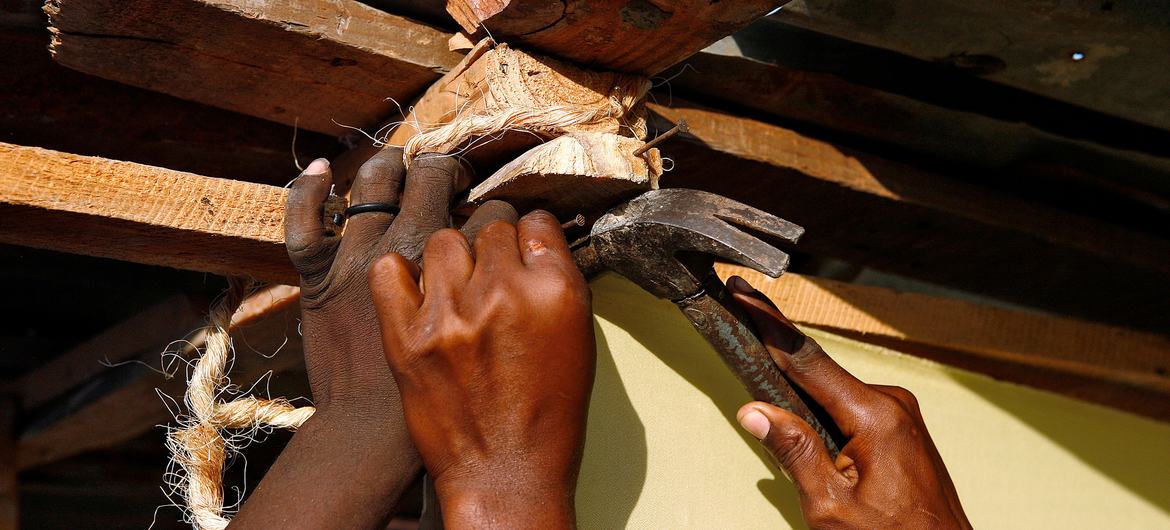
UN Photo/Sophia Paris |mDisplaced Haitians building a makeshift home inside a sports stadium.
Volker Türk told the Human Rights Council in Geneva that the country had reached “yet another crisis point,” with heavily armed gangs expanding their control, public institutions in ruins and a humanitarian emergency deepening by the day.
(UN News)* —UN Secretary-General António Guterres warned on Friday of a rapidly deteriorating crisis in South Sudan, calling for urgent dialogue, the immediate release of detained officials and renewed commitment to the 2018 peace agreement.
“All the dark clouds of a perfect storm have descended upon the people of the world’s newest country – and one of the poorest,” Mr. Guterres told reporters at UN Headquarters in New York.
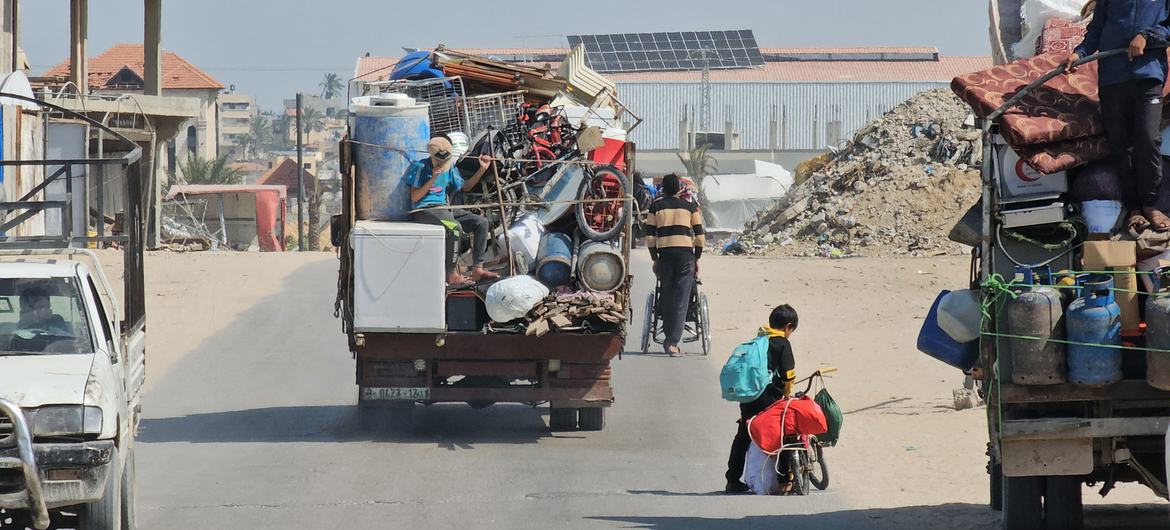
With the war entering its eleventh year, countless Yemenis are still waiting for a chance to rebuild their lives. Photo: IOM/Majed Mohammed
Geneva/ Sana’a, 26 March 2025 -– As Yemen enters its eleventh year of conflict, the country remains in the grip of relentless suffering.
Close to 20 million peoplerely on aid to survive, with many having endured repeated displacement, rising hunger, and the collapse of essential services.
(UN News)* —Lifesaving supplies in Gaza continue to run dangerously low, nearly four weeks into the total aid blockade and deadly bombardment of the enclave by Israel, UN humanitarians said on Friday .
According to local health authorities in Gaza, 830 people were killed between 18-23 March, including 174 women and 322 children. A further 1,787 were injured.
“The acts of war that we see bear the hallmarks of atrocity crimes,” said Jens Laerke, spokesperson for the UN aid coordination office, OCHA.
Even by Israel’s brutal, barbaric standards, the cruel, callous carnage carried out by its military in Gaza has come as a shock to the world.
The carnage which occurred on Tuesday 18th March 2025 killed 436 individuals, the majority of them children and women.
What has exacerbated the tragedy is the fact that the carnage happened as its victims were preparing for, or partaking of, their dawn meal just before beginning their daily fast during Ramadan, one of Islam’s most revered practices.
It is important to note that a big portion of the Gazan population is being subjected to starvation by the Israeli government as a way of forcing them out of the Strip.
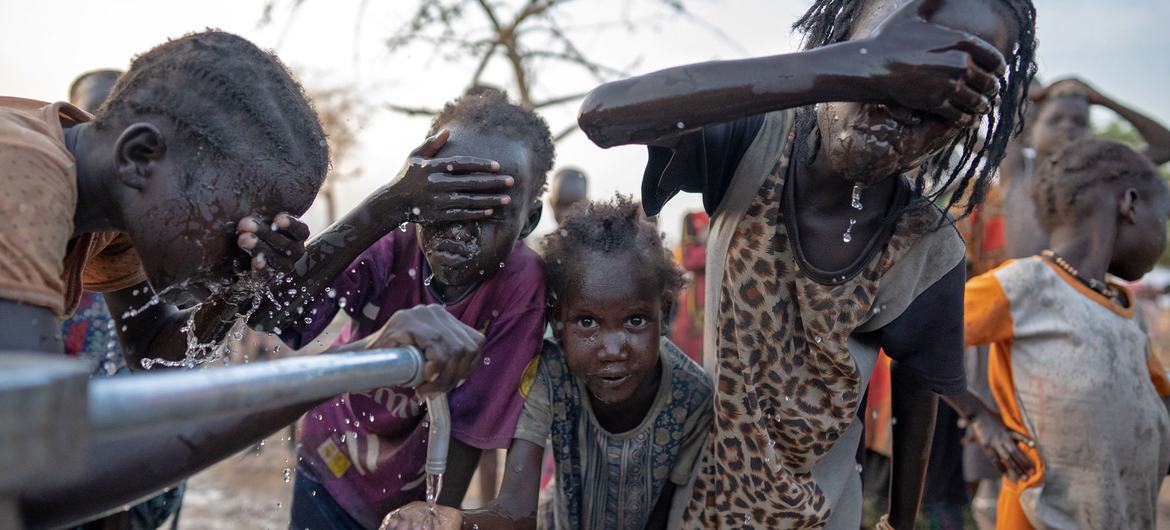
Nearly 116 million people in eight African countries, hardest hit by severe water crises, lack access to drinking water.
Globally, flash floods have become 20 times more frequent between 2000 and 2022
Water-Driven Hunger: How the Climate Crisis Fuels Africa’s Food Emergency – OXFAM International.
The climate crisis has dramatically worsened water scarcity in Eastern and Southern Africa over the past few decades, leaving nearly 116 million people –or 40 percent of the population – without safe drinking water, according to a new Oxfam report.
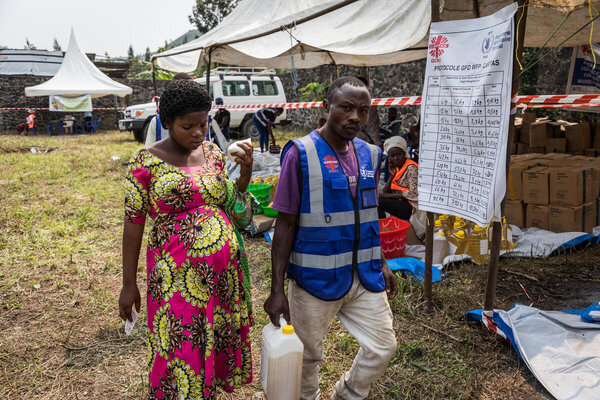
BANGUI PREFECTURE/BIRAO, The Central African Republic, 19 March 2025 – “Life is dangerous for women in this camp,” said Mariam Zakaria, 32, who recently fled brutal violence and conflict in Sudan, returning to the Central African Republic, her home country.
“If you want to work, someone might not hire you unless they can take advantage of you. And if a woman doesn’t accept, her children will get nothing to eat.”
 Canva
Canva




 HUMAN WRONGS WATCH