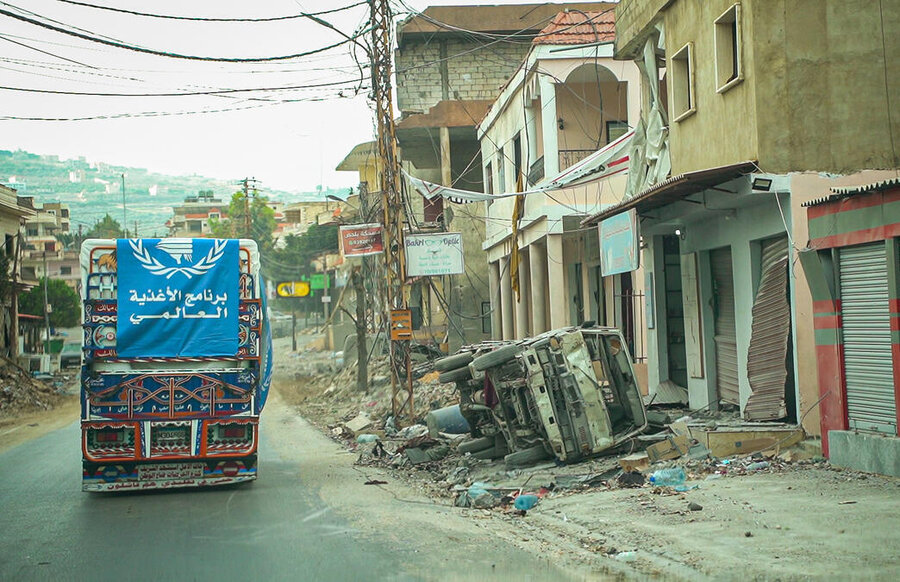
, WFP Staff – After conflict intensified in Lebanon last September, around 1.2 million people were uprooted.
A second humanitarian convoy dispatched by WFP and UNICEF reaches Rmaych, one of the hardest-hit areas near Lebanon’s southern borders, in November. WFP/Mohammed Awadh
“While many are now returning home,” said Matthew Hollingworth, Country Director for the World Food Programme (WFP) in Beirut, others “face the devastating reality of having no home to return to.”
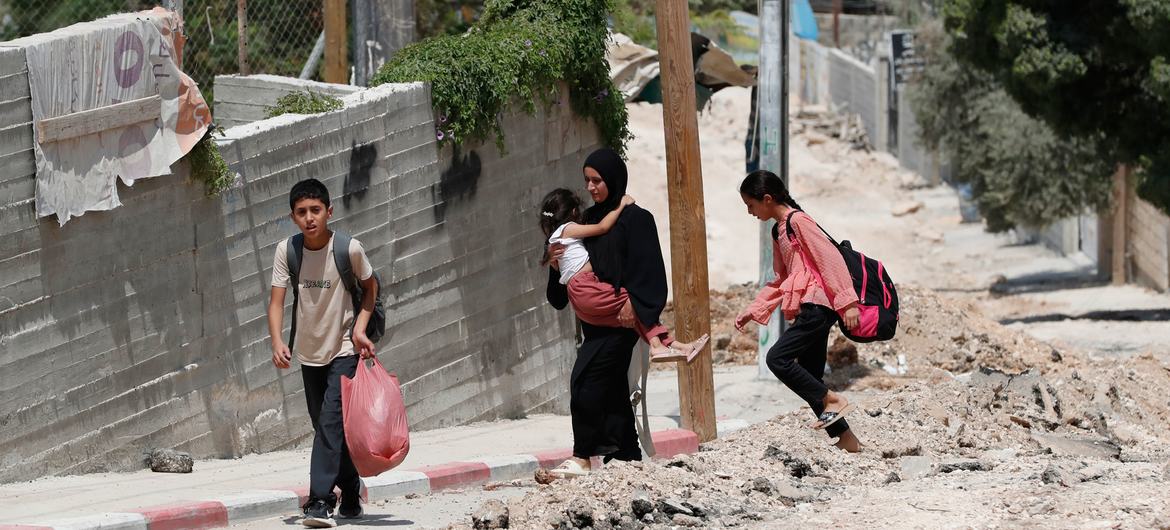
(UN News)* — The UN human rights office, OHCHR, on Friday [] expressed grave concerns over escalating violence in the Jenin area of the occupied West Bank, condemning the use of “unlawful lethal force” by Israeli security forces.
OHCHR spokesperson Thameen Al-Kheetan added that the Israeli military operation in and around the Jenin refugee camp had involved “disproportionate” use of force, including airstrikes and shootings that reportedly targeted unarmed residents.
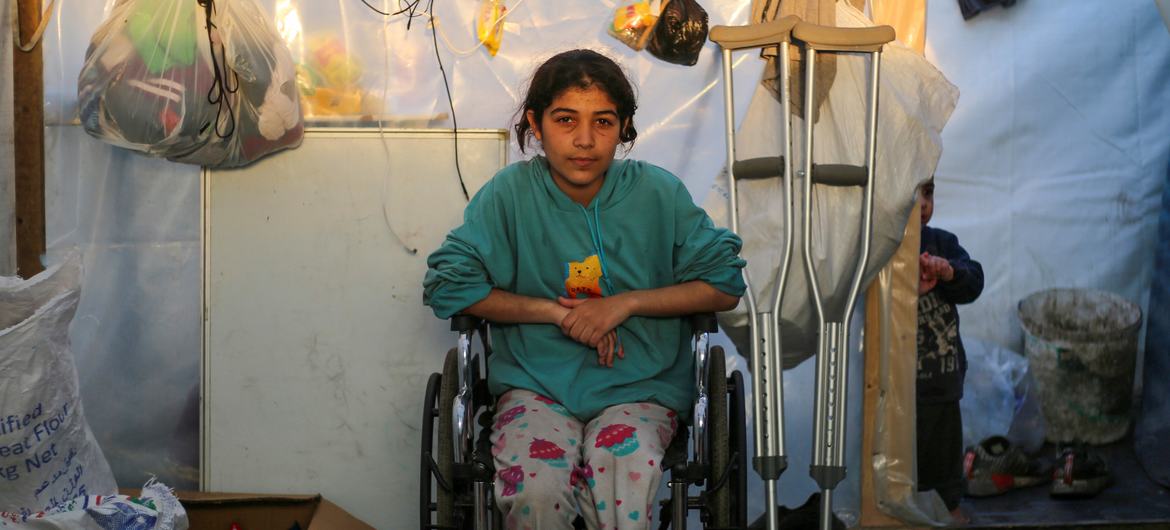
(UN News)* — In a rare moment of cautious optimism, UN Emergency Relief Coordinator Tom Fletcher addressed the Security Council on the dire humanitarian situation in Gaza on Thursday [], emphasizing the plight of children who have borne the brunt of the conflict.
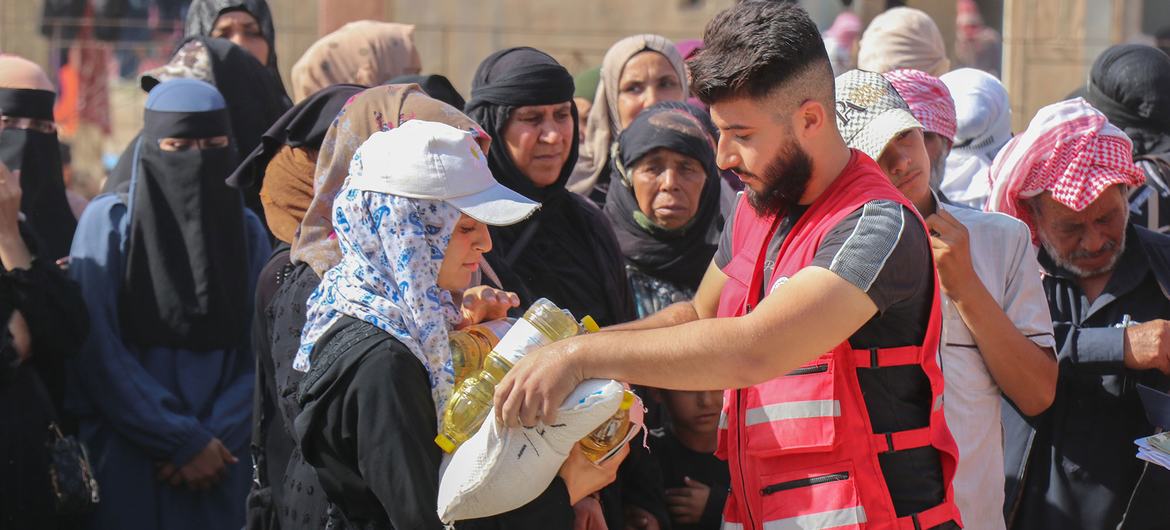
(UN News)* —Nearly a third of Lebanon’s population is facing acute food insecurity following the escalation of hostilities in late 2024, according to the latest Integrated Food Security Phase Classification (IPC) analysis released on Wednesday [].
Developed by the Food and Agriculture Organization (FAO), the World Food Programme (WFP) and the Ministry of Agriculture, the report reveals that the impact of hostilities on agriculture and the economy will likely slow recovery.
Some 1.65 million people are now facing crisis or emergency levels of hunger,with 400,000 additional people classified as acutely food insecure compared to early 2024.
(UN News)* — Africa tragically remains the epicentre of global terrorism, and more action is required to implement international commitments to combat this scourge, the UN Deputy Secretary-General told the Security Council on Tuesday [].
Amina Mohammed was speaking at a meeting focused on strengthening counter-terrorism on the continent, convened by Algeria, the Council president for January.
She emphasized that the Council has a critical role in supporting African Union (AU) counter-terrorism initiatives, grounded in African leadership and solutions.
KUALA LUMPUR, Malaysia, Jan 21 2025 (IPS)* –Corporate-dominated food systems are responsible for widespread but still spreading malnutrition and ill health. Poor diets worsen non-communicable diseases (NCDs), now costing over eight trillion dollars yearly!
Jomo Kwame Sundaram
Unhealthy food systems A recent UN Food and Agriculture Organization (FAO) study of 156 countries found that such food systems account for unsafe food and diet-related NCDs.
FAO estimates related ‘hidden costs’ at about $12 trillion annually, with 70% ($8.1 trillion) due to NCDs such as heart disease, strokes and diabetes. Such costs significantly exceed these food systems’ environmental and social costs.
FAO’s annual State of Food and Agriculture 2024 (SOFA) investigated hidden costs worldwide. These were primarily health-related, followed by environmental degradation, mainly in more ‘industrialised’ agri-food systems in upper-middle and high-income countries.
United States President Donald Trump, on his first day in office on January 20, 2025, issued numerous executive orders that threaten to undermine respect for international human rights both in the US and abroad, Human Rights Watch said today [22 January 2025].
21 January 2025 –UNESCO and the World Meteorological Organization (WMO) have officially launched the International Year of Glaciers’ Preservation on January 21st, 2025, marking a crucial milestone in global efforts to protect these essential water towers that provide freshwater to over 2 billion people worldwide.
Zuckerberg, Trump, Musk. None care about free speech, least of all yours or mine. They care about power and remaining billionaires – or, better still, becoming trillionaires.
.
8 Jan 2025 – A few observations on Mark Zuckerberg’s astonishing volte face today, declaring that he will end the crushing climate of censorship on his Meta platforms, such as Facebook and Instagram, in time for Donald Trump’s arrival in the White House.
It should not have taken a video admission from Zuckerberg for us to appreciate the degree to which we have been living for many years under a regime of political censorship on social media, with Meta leading the pack.
MADRID, Jan 16 2025 (IPS)* –It is no longer a secret that at major global summits there are more lobbyists than official delegates. There, they participate as ‘guests,’ and most of them work for big business corporations. Their goal? To deter the adoption of policies that conflict with their employers’ interests.
Transparency International revealed alarming findings in December 2024 about the siphoning of public funds in Africa. Credit: Shutterstock
Their persuasion exercise quite often helps water down the urgency of taking decisive actions, the need to cut the private business staggering profits, the financial dues of the industrialised powers to the impoverished nations that bear the heaviest brunt of their policies, and so on.
To achieve such a purpose, lobbyists often quietly show different sorts of ‘gratitude.’




 HUMAN WRONGS WATCH