Lucknow, India, Apr 4 2022 (IPS)* – Pooja Shukla, 25, a socialist candidate, has lost her maiden elections to the provincial parliament in Uttar Pradesh (UP), India. But Shukla is no loser.
Pooja Shukla may have lost an election, but the 25-year-old activist is determined to ensure the poor are catered for and women are protected. Credit Mehru Jaffer/ IPS
A day after the results were announced on March 10, Shukla was back to a rousing reception in her constituency in North Lucknow to thank her supporters for polling 1,04,527 votes for her.
(FAO)* — The economic fallout of the COVID-19 pandemic, climate variability and extremes, conflict, and the persistence of hunger and malnutrition have shown us that now is the time for us to build more resilient agrifood systems.
If we don’t, agrifood systems will not be able to ensure food availability to all as well as physical and economic access to nutritious foods that make up healthy diets.
So, how can we protect our agrifood systems from shocks and stresses and better ensure nutritious food is available to all? In other words, how can we make our agrifood systems resilient?
— “Human-induced climate change and the war on Ukraine have the same roots: fossil fuels and our dependence on them” said Ukrainian climate scientist Svitlana Krakovska as Russia, one of the world’s biggest oil and gas producers, was invading her country.
(UN News)* — “Arboviruses” might not be something most of us are familiar with, but for almost four billion people, they’re a deadly threat – which is why the UN health agency on Thursday [31 March 2022], launched a plan to prevent them from causing a new pandemic.
The most common arboviruses are in fact some of the world’s most dangerous mosquito-borne illnesses, such as Dengue, Yellow fever, Chikungunya and Zika.
They represent an ever-present and massive health threat in tropical and sub-tropical parts of the planet, although there are in fact a growing number of arboviral outbreaks worldwide, according to the World Health Organization (WHO).
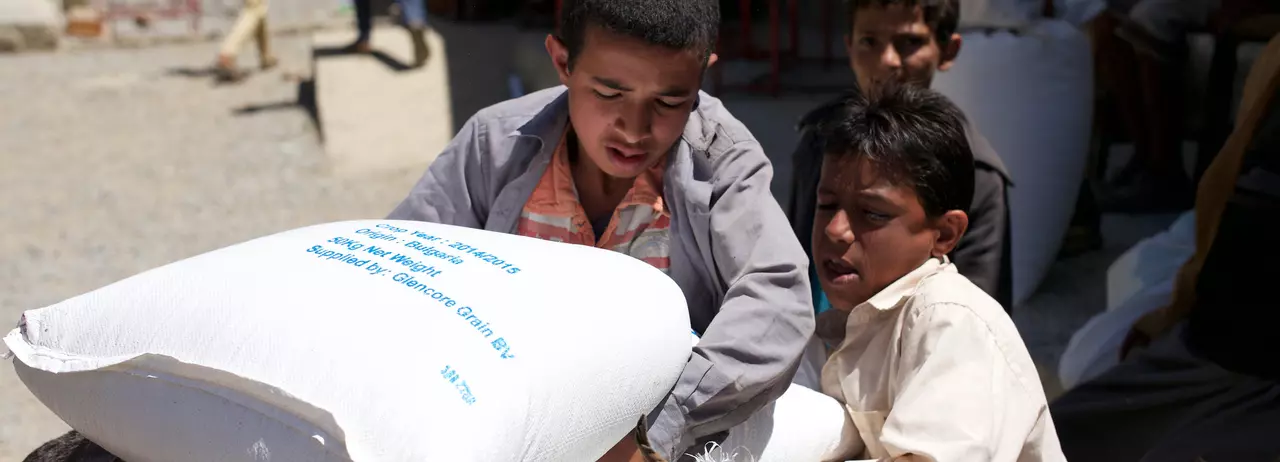
The Western economic war on Russia over Ukraine is having a spillover effect on the forgotten war in Yemen. The ghastly blockade and bombardment of Yemen, led by Saudi Arabia and the United Arab Emirates, is now entering its eighth year.
World Food Programme food distribution in Raymah, Yemen. (Photo: Julian Harneis/CC BY-SA 2.0)
22 Mar 2022 – The United Nations’ goal was to raise more than $4.2 billion for the people of war-torn Yemen by March 15. But when that deadline rolled around, just $1.3 billion had come in.
Since the Russian action in Ukraine began, provoked by Washington’s cold shoulder to Russian security concerns, Washington, in addition to doing all possible to keep the conflict going, has also dumped three more provocations on the Kremlin:
An attempted coup or “color revolution” in the former Russian province of Kazakhstan
NATO military maneuvers currently under way in the former Russian province of Georgia which is not a NATO member
NATO maneuvers in Poland on the Border of Belarus, a former Russian province and current Russian ally
The signal Washington consistently sends to the Kremlin is aggression. Why has no member of any government in the Western world, no presstitute in the Western media pointed this out?It is difficult to fathom the irresponsibility of Washington adding to the Ukraine provocation three more provocations simultaneously. Why provoke a country already concerned with its security with more security concerns unless you are trying to widen the war?
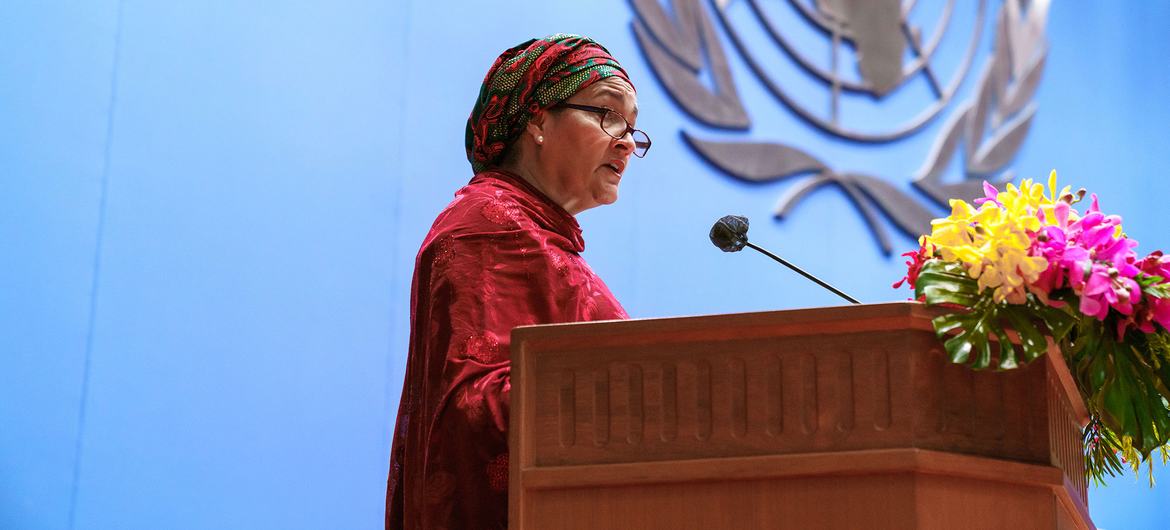
(UN News)* — The United Nations Deputy Secretary-General on Monday [28 March 2022 ] called on countries in Asia and the Pacific to speed up the shift from fossil fuels to new, low-carbon development models, in a just and inclusive way.
ESCAP/Suwat Chancharoensuk | UN Deputy Secretary-General Amina Mohammed delivers special remarks to the opening of the ninth Asia-Pacific Forum on Sustainable Development (APFSD).
“Moving away from coal and fossil fuels in a region that accounts for 75 per cent of global coal-fired generation capacity will not be easy. But it is essential for our common future, and it is financially and technologically possible,” Amina Mohammed said.
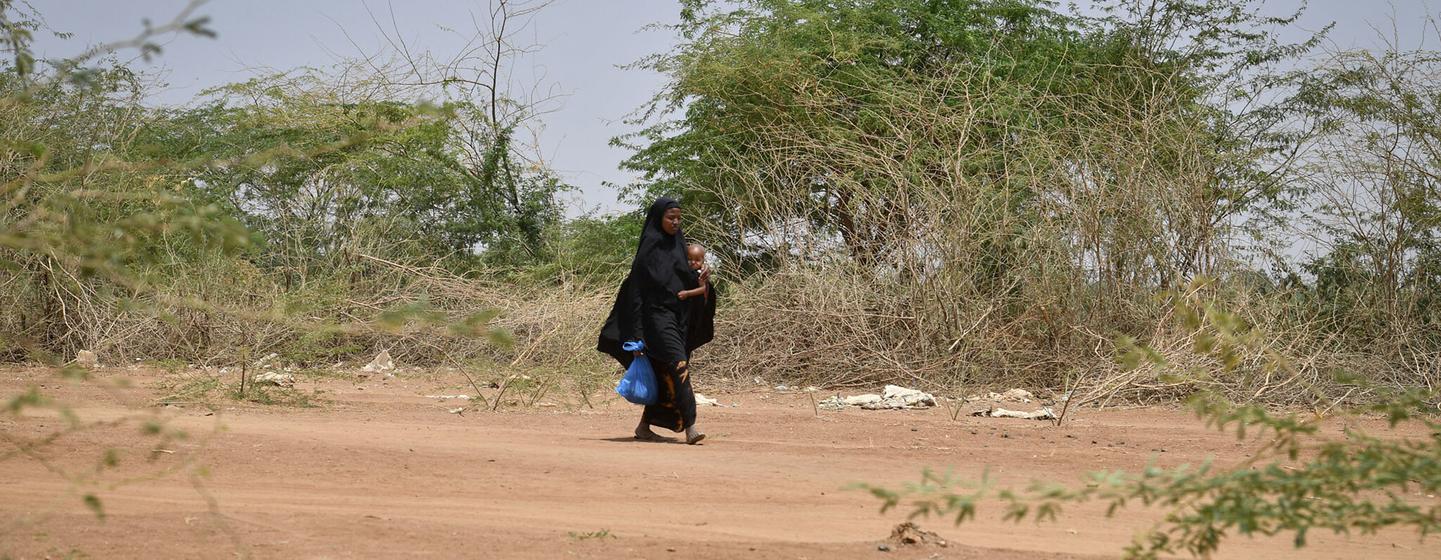
28 March 2022 (UN News)* — The Horn of Africa is experiencing the worst drought since 1981, and a shortfall in aid funding is putting the lives of millions of Somalis in danger.
.
UN Photo/Fardosa Hussein | A mother and her child pass by carcasses of goats and sheep in Luuq, Somalia on 21 March 2022.
Standing in front of his makeshift home in a camp for internally displaced people (IDP) in southern Somalia’s Luuq district, Ahmad Hassan Yarrow looks out towards what remains of the Juba River and shakes his head forlornly.
“Of all the droughts I have experienced in my 70 years, I have not seen anything as severe as this,” he says as he contemplates the scenery before him.
UNITED NATIONS, Mar 25 2022 (IPS)* – When North and South Yemen merged into a single country ushering in the Republic of Yemen back in May 1990, a British newspaper remarked with a tinge of sarcasm: “Two poor countries have now become one poor country.”
MADRID, Mar 24 2022 (IPS)* – Following 20 long years (2011-2021) of brutal war on Afghanistan by the US-led military coalition, which ended up in delivering the country to the Taliban in August 2021, 23 million Afghans now face severe and acute hunger, economic bankruptcy, healthcare system collapse, unbearable family indebtedness, and devastating humanitarian crisis.
A mother and her children fled conflict in Lashkargah and now live in a displaced persons camp in Kandahar, southern Afghanistan. Credit: UNICEF Afghanistan







 HUMAN WRONGS WATCH