25/05/2021
25 May 2021 (FAO)* — “We go to look for oysters in the mangroves to feed our families and for business. This is how I make a living. If I work for two to three days, I can earn money to cover my expenses,” says Fatou Sarr, President of the Women Transformers Group of Diamniadio, a cooperative and producers’ organization that supports small-scale oyster producers.
With backing from FAO and the Coastal Fisheries Initiatives, communities are on a mission to save natural habitats like mangroves to safeguard their local environments. ©FAO/Yacine Cissé
Posted in Africa, Asia, Climate Crisis, Latin America & Caribbean, Market Lords, Middle East, Migrants and Refugees, Mother Earth, Others-USA-Europe-etc., The Peoples |
Leave a Comment »
25/05/2021
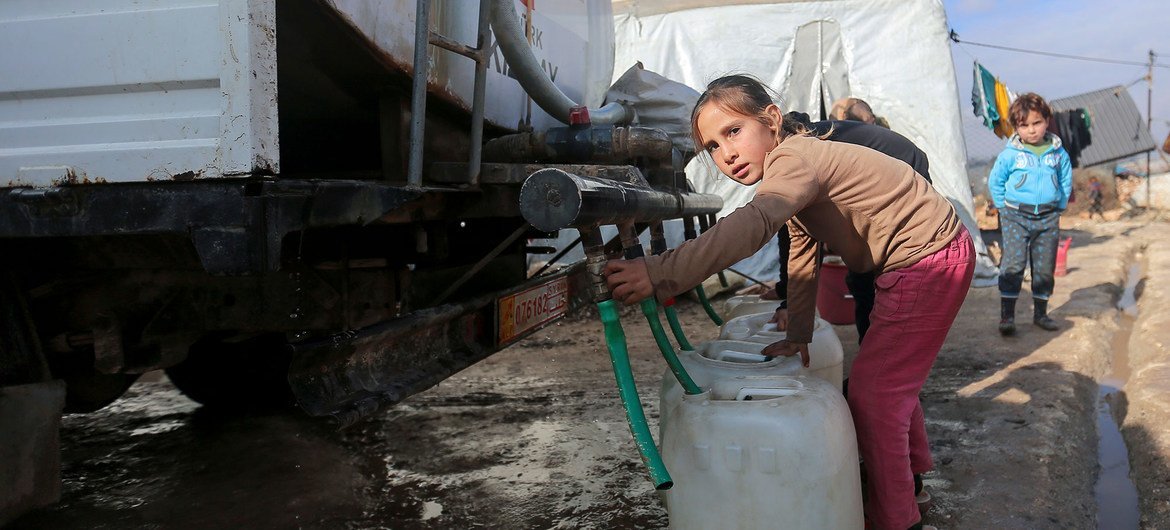
(UN News)* — Attacks on water and sanitation facilities in conflict zones around the world are putting the lives of millions of children around the world in danger, and are a much greater threat than violence itself, warns the UN Children’s agency, UNICEF, in a report released on 25 May 2021.
.
© UNICEF/Khaled Akacha | A young girl collects water from a tanker truck in an IDP camp in northwest Syria.
.
Water Under Fire Volume 3, highlights that children’s access to water has been threatened in nearly every conflict-related emergency where UNICEF is responding.
read more »
Posted in Africa, Asia, Climate Crisis, Latin America & Caribbean, Market Lords, Middle East, Migrants and Refugees, Mother Earth, Others-USA-Europe-etc., The Peoples, War Lords |
Leave a Comment »
24/05/2021

Siddhartha Gautama, the Lord Buddha, was born in 623 B.C. in the famous gardens of Lumbini, which soon became a place of pilgrimage. PHOTO:UN/Pengfei Mi
.
24 May 2021 (United Nations)* — “Vesak”, the Day of the Full Moon in the month of May, is the most sacred day to millions of Buddhists around the world. It was on the Day of Vesak two and a half millennia ago, in the year 623 B.C., that the Buddha was born.
.
It was also on the Day of Vesak that the Buddha attained enlightenment, and it was on the Day of Vesak that the Buddha in his eightieth year passed away.
Posted in Africa, Asia, Latin America & Caribbean, Market Lords, Middle East, Mother Earth, Others-USA-Europe-etc., The Peoples |
Leave a Comment »
23/05/2021
Posted in Africa, Asia, Climate Crisis, Latin America & Caribbean, Market Lords, Middle East, Migrants and Refugees, Mother Earth, Others-USA-Europe-etc., The Peoples, War Lords |
Leave a Comment »
23/05/2021
Thousands of plant species and varieties that fed our ancestors are already extinct, and we are losing more every day. Diversity is our food’s life insurance. ©FAO/Luis Tato
But what if climate change, invasive species, pollution, city sprawl or overuse of land cause these species to weaken, lowering their ability to produce or survive into the future?
read more »
Posted in Africa, Asia, Climate Crisis, Latin America & Caribbean, Market Lords, Middle East, Migrants and Refugees, Mother Earth, Others-USA-Europe-etc., The Peoples |
Leave a Comment »
23/05/2021
Everyone will lose unless humanity makes ‘peace with the planet’ – UN Chief.
UN News/Elizabeth Scaffidi | The sun sets in Acadia National Park, Maine, United States.
Posted in Africa, Asia, Climate Crisis, Latin America & Caribbean, Market Lords, Middle East, Migrants and Refugees, Mother Earth, Others-USA-Europe-etc., The Peoples |
Leave a Comment »
23/05/2021
.
Photo by UNEP / Lisa Murray
.
22 May 2021 (United Nations)* — As the global community is called to re-examine our relationship to the natural world, one thing is certain: despite all our technological advances we are completely dependent on healthy and vibrant ecosystems for our water, food, medicines, clothes, fuel, shelter and energy, just to name a few.
Posted in Africa, Asia, Climate Crisis, Latin America & Caribbean, Market Lords, Middle East, Migrants and Refugees, Mother Earth, Others-USA-Europe-etc., The Peoples |
Leave a Comment »
23/05/2021
New international expert panel to address the emergence and spread of zoonotic diseases

Geneva/Paris/Rome/Nairobi, 20 May 2021 (UNEP)* – International organizations have come together to launch a new One Health High-Level Expert Panel to improve understanding of how diseases with the potential to trigger pandemics, emerge and spread.
read more »
Posted in Africa, Asia, Climate Crisis, Latin America & Caribbean, Market Lords, Middle East, Migrants and Refugees, Mother Earth, Others-USA-Europe-etc., The Peoples |
Leave a Comment »
20/05/2021
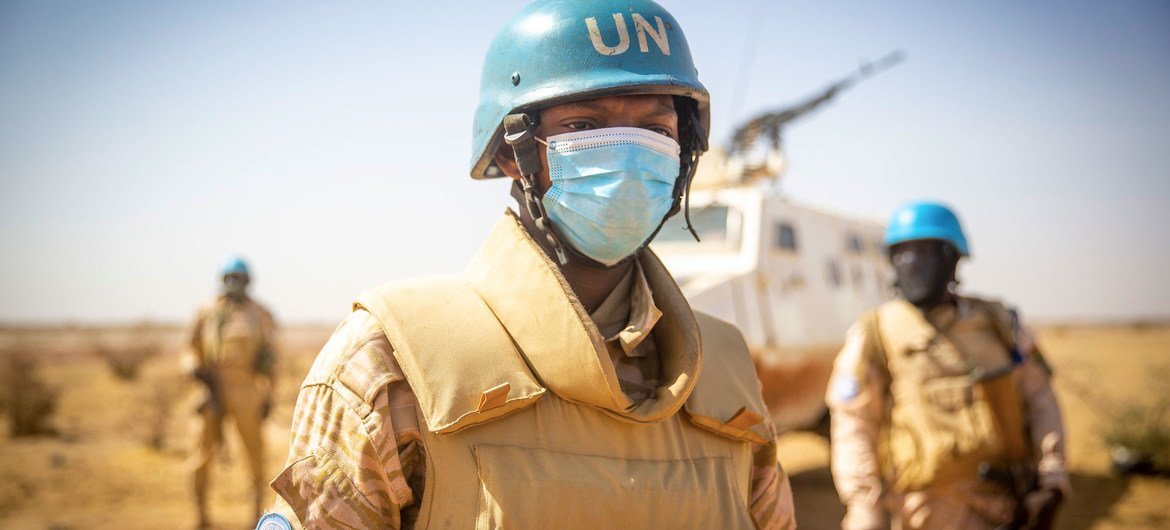
(UN News)* — Despite a deteriorating security situation and the reverberating effects of the COVID-19 pandemic, regional troops deployed to combat terrorists in Africa’s Sahel region have scaled up the tempo of their operations in recent months, efforts that must be matched by a spirit of solidarity among their global partners, the senior UN peacekeeping official on 18 May 2021 told the Security Council.
MINUSMA/Harandane Dicko | MINUSMA peacekeepers on patrol in Niafounké in Mali.
Jean-Pierre Lacroix, Under-Secretary-General for Peace Operations, told delegates that the fight against armed groups in the Sahel has intensified since late 2020.
.
He described the Joint Force first deployed in 2017 by the “Group of Five” (G-5) Sahel countries – Burkina Faso, Chad, Mali, Mauritania and Niger – as a vital part of the security response in the region.
Posted in Africa, Market Lords, Middle East, Migrants and Refugees, Mother Earth, Others-USA-Europe-etc., The Peoples, War Lords |
Leave a Comment »
20/05/2021
Tea is currently grown in very localized areas, and supports over 13 million people, including smallholder farmers and their households, who depend on the tea sector for their livelihoods.
International Tea Day [21 May] is an opportunity to celebrate the cultural heritage, health benefits and economic importance of tea, while working to make its production sustainable “from field to cup” ensuring its benefits for people, cultures and the environment continue for generations.
read more »
Posted in Africa, Asia, Climate Crisis, Latin America & Caribbean, Market Lords, Middle East, Mother Earth, Others-USA-Europe-etc., The Peoples |
Leave a Comment »






 HUMAN WRONGS WATCH