The world needs to get water smart. Everyone has a role to play, and we cannot afford to wait.
UNICEF/UN0328236/Chakma
.
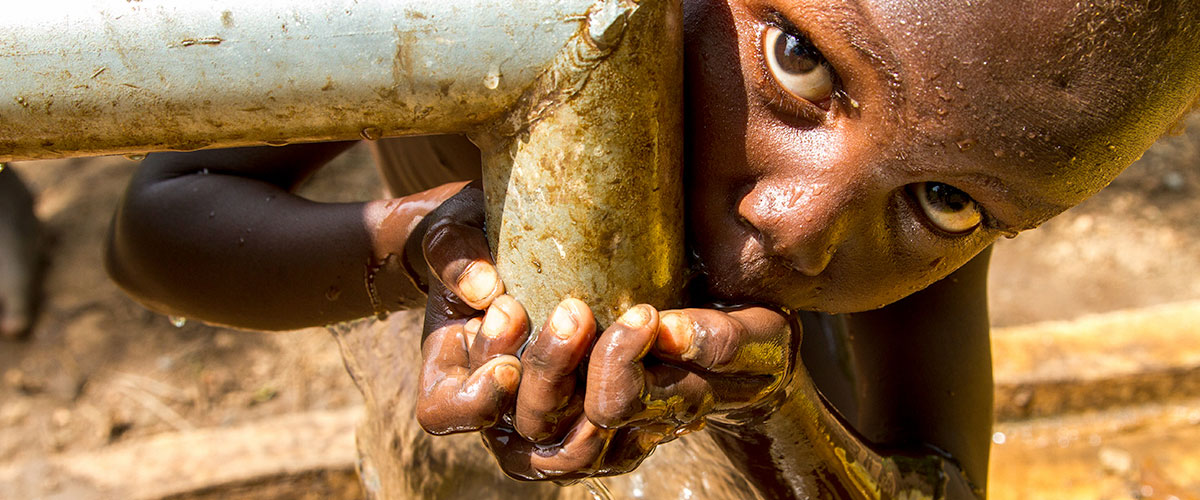
18 March 2021 (UNICEF)* — Climate change is disrupting weather patterns, leading to extreme weather events, unpredictable water availability, exacerbating water scarcity and contaminating water supplies. Such impacts can drastically affect the quantity and quality of water that children need to survive.
Today, a change in climate is felt primarily through a change in water. Millions of children are at risk.
UNICEF launches new initiative, Water Security for All, to mobilize global support and resources to reach children in water vulnerable hotspots
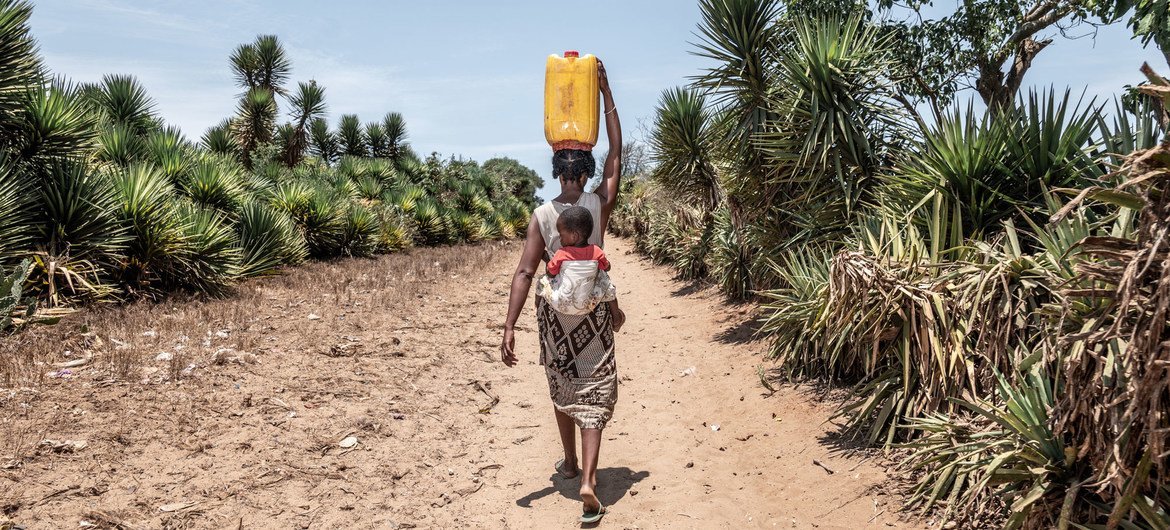
UNICEF/UN0406867/Andrianantenaina/2021Claudine and her child heading back to their home in Mantara, Madagascar, after walking 14km to find water.
NEW YORK, 18 March 2021 (UNICEF)* – Globally, more than 1.42 billion people, including 450 million children, live in areas of high, or extremely high, water vulnerability, according to a new analysis released by UNICEF.
This means that 1 in 5 children worldwide does not have enough water to meet their everyday needs.
(United Nations)* — Access to water and sanitation is a precondition to life and a declared human right. Water is vitally important to sustainable development – from health and nutrition, to gender equity and economics.
Over the coming years, our water-related challenges will become more urgent.
The increasing demands of a growing population and rapidly developing global economy, combined with the effects of climate change, will exacerbate lack of access to water and sanitation for domestic uses.
(UN Water)* — Water scarcity can mean scarcity in availability due to physical shortage, or scarcity in access due to the failure of institutions to ensure a regular supply or due to a lack of adequate infrastructure.
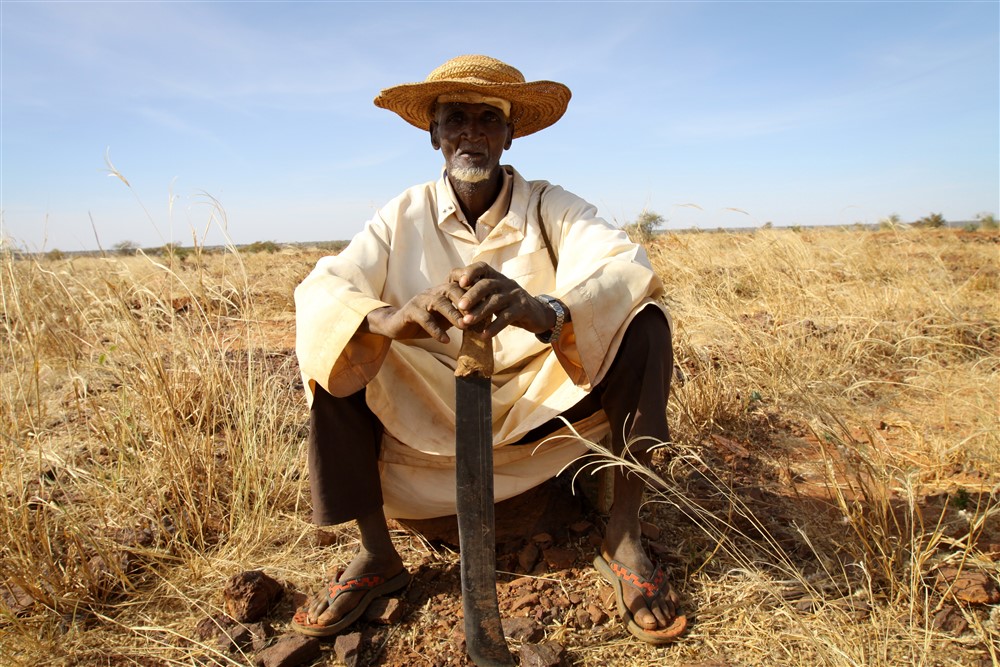
Drought in Niger in 2011. Photo: WFP/Phil Behan
Challenges
Water scarcity will be exacerbated as rapidly growing urban areas place heavy pressure on neighbouring water resources. Climate change and bio-energy demands are also expected to amplify the already complex relationship between world development and water demand.
ROME, 20 March 2021 (FAO)* — When you think of drylands, do you think of miles of empty, barren desert? Well, think again!
Drylands are actually a unique type of ecosystem characterised by water scarcity and low precipitation. Plants and animals here survive on little water, adapted to the droughts and heat waves that are common in these areas.
However, just because these regions are dry does not mean that they are barren. Drylands are still productive landscapes with considerable economic potential and environmental value, but the monitoring and rehabilitation of dryland ecosystems has not attracted as much attention as other ecosystems, such as rainforests. Drylands are vulnerable, yet they are being neglected.
New FAO report finds agricultural losses from natural hazards continue to soar, inflicting economic damage and undermining nutrition
A woman walking with jerricans to collect water, Somali Region, Ethiopia.
ROME (FAO)* — Agriculture absorbs the bulk of the financial losses and damages wrought by disasters which have grown in frequency, intensity, and complexity, says FAO in a new report released on 18 March 2021.
(UN News)* — Access to water is not just about “liquid in a bottle” but instead touches on universal issues such as dignity, opportunity and equality, the UN General Assembly President on 18 March 2021 said, in opening a high-level meeting on ensuring water and sanitation are available to all.
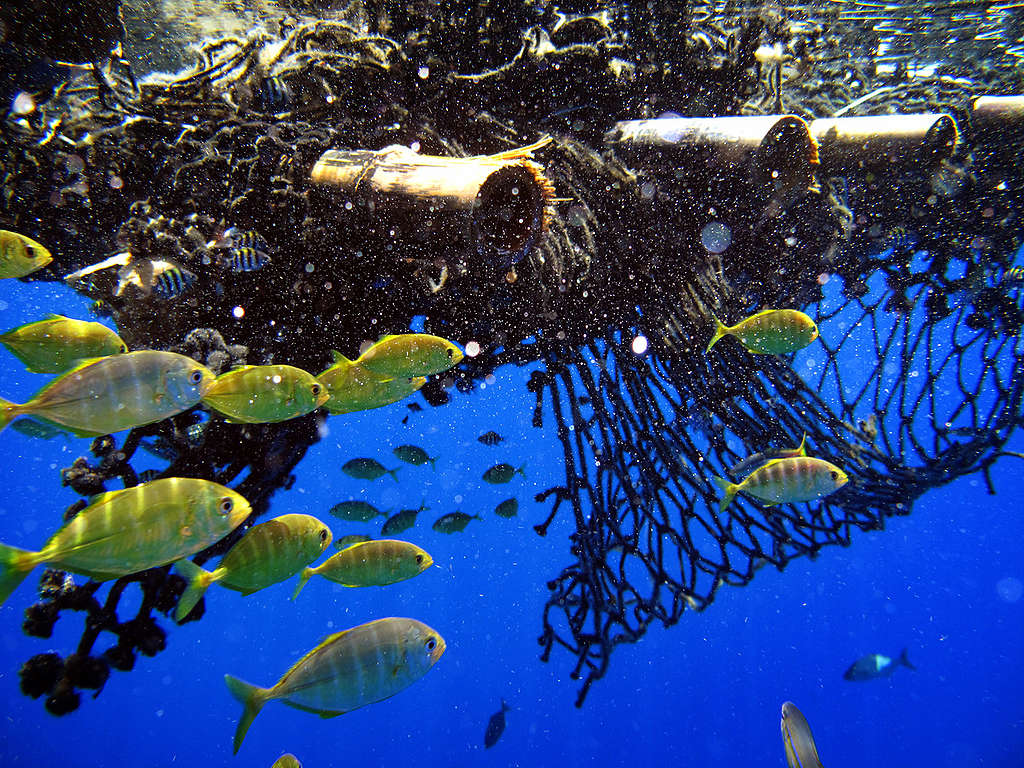
Industrial fishing is emptying our seas of life – ripping up seabeds, decimating wildlife populations and threatening food security for local communities. So why are governments still hoping that they can solve the ocean crisis in discussions dominated by destructive fishing interests?
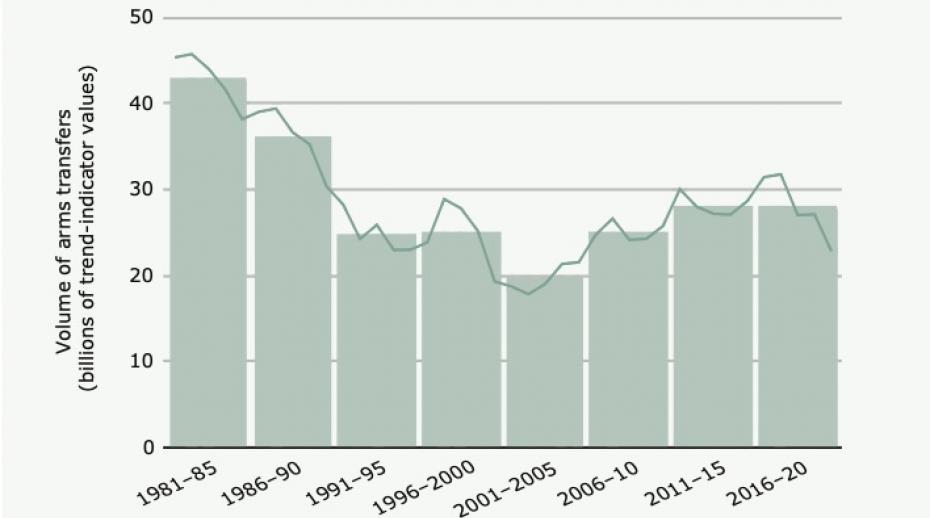
(Stockholm) International transfers of major arms stayed at the same level between 2011–15 and 2016–20. Substantial increases in transfers by three of the top five arms exporters—the USA, France and Germany—were largely offset by declining Russian and Chinese arms exports. Middle Eastern arms imports grew by 25 per cent in the period, driven chiefly by Saudi Arabia (+61 per cent), Egypt (+136 per cent) and Qatar (+361 per cent), according to new data on global arms transfers published on by the Stockholm International Peace Research Institute (SIPRI).
.
The trend in international transfers of major arms, 1981–2020
The prime minister is a political parasite, feeding on distrust in dying institutions. He must be stopped before it’s too late
Boris Johnson’s government is planning to slash the UK’s aid to war-torn countries | Hannah Mckay/Reuters/Alamy
17 March 2021 (openDemocrcay)* — There are lots of reasons why the prime minister, Boris Johnson, should not cut development aid.
Maybe the thought of the 16 million Yemenis who will go hungry this year, while living in fear of British-made bombs, might cause him to turn over at night?
Perhaps he might allow a tear for children in Syria. Those under the age of ten have known nothing but war, but Johnson’s senior civil servants have discussed cutting aid to them by two-thirds.




 HUMAN WRONGS WATCH