A letter to Greta Thunberg: is 5G an experiment on life?
.
Birds and insects can sense the magnetic field of the earth to find their way | Image fromWall Street International.
Dear Greta,
I am an engineer, not a biologist. Yet, I realize wildlife and biodiversity are the Earth’s greatest treasures and need to be protected. In previous letters, I discussed large-scale 5G networks’ energy consumption and climate impacts. I proposed more sustainable alternatives to 5G public networks. Today, I will report how 5G threatens ecosystems and biodiversity.
Tackling marine plastic pollution and protecting our oceans
Unsplash / 03 Mar 2021
In 2020, the world’s attention turned to the COVID-19 pandemic. But even as we poured all of energy and resources into tackling it, many pointed to wider issues as contributing factors. Nature and biodiversity loss. Climate change. Pollution and waste. The three planetary crises. All of which are destroying the natural world and threatening our future.
By Phumzile Mlambo-Ngcuka, UN Women Executive Director*
International Women’s Day this year comes at a difficult time for the world and for gender equality, but at a perfect moment to fight for transformative action and to salute women and young people for their relentless drive for gender equality and human rights. Our focus is on women’s leadership and on ramping up representation in all the areas where decisions are made – currently mainly by men – about the issues that affect women’s lives. The universal and catastrophic lack of representation of women’s interests has gone on too long. [Also available in: ar | es | fr | ru | zh]
5 March 2021 (ILO)* — An original song and music video for International Women’s Day, created by JONA OAK for the ILO and featuring a collective of artists and musicians from around the world.
Empowering women and girls is crucial to ensure sustainable food security in the aftermath of COVID-19
A scientist examining wheat varieties at a greenhouse of the Indian Agricultural Research Institute.
ROME, 6 March 2021 (FAO)* – Hunger and famine will persist and there will be unequal recovery from the impacts of the COVID-19 pandemic unless more women in rural and urban areas hold leadership positions with increased decision-making power, say the heads of the three United Nations’ food agencies ahead of their joint International Women’s Day event on 8 March.
Despite women making up a majority of front-line workers, there is disproportionate and inadequate representation of women in national and global COVID-19 policy spaces. PHOTO:WHO / P. Phutpheng
6 March 2021 (United Nations)* — Women stand at the front lines of the COVID-19 crisis, as health care workers, caregivers, innovators, community organizers and as some of the most exemplary and effective national leaders in combating the pandemic. The crisis has highlighted both the centrality of their contributions and the disproportionate burdens that women carry.
5 March 2021 (UNEP)* — Women are playing a lead role in tackling some of the planet’s biggest environmental threats, from climate change to species loss, to pollution. International Women’s Day, which falls on 8 March, provides an opportunity to reflect on women’s contributions as caretakers of people and nature, defending environmental and human rights and representing the interests of those whose voices may otherwise go unheard.
Meet seven extraordinary women who are using their powers to save the planet.
Venezuelans, Others Face Kidnapping, Extortion, Lack of Essential Services
Washington, DC – Asylum seekers sent to Mexico by the administration of former US president Donald Trump have suffered violence and extortion by Mexican police, immigration agents, and criminal groups, Human Rights Watch on 5 March 2021 said.
Wasting food just feeds climate change, new UN environment report warns
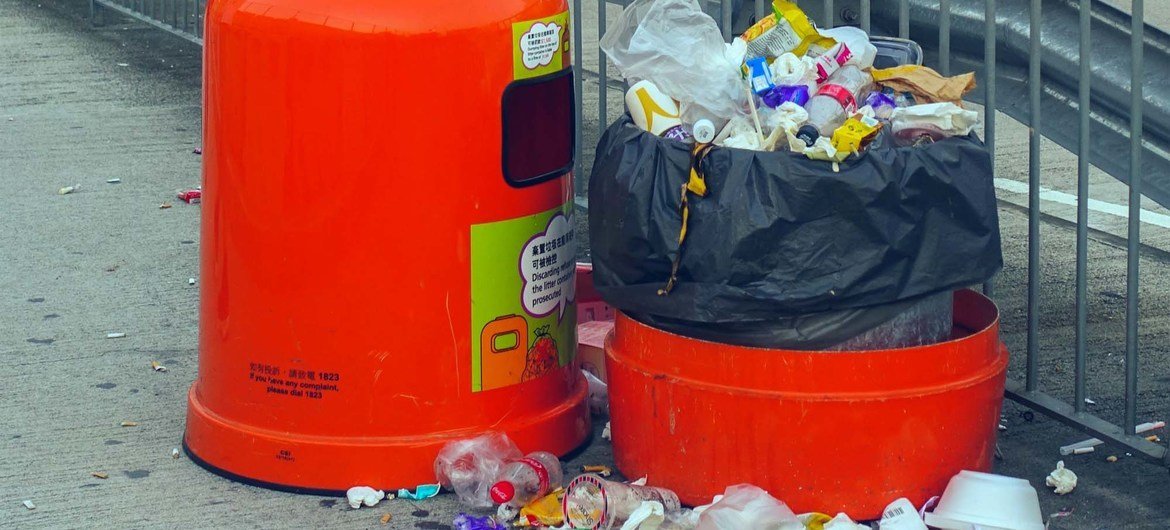
Unsplash/Sanjog Timsina | More than 900 million tonnes of food is thrown away every year. [Image posted here from UN News]
Nairobi/Paris, 4 March 2021 (UNEP)* – An estimated 931 million tonnes of food, or 17% of total food available to consumers in 2019, went into the waste bins of households, retailers, restaurants and other food services, according to new UN research conducted to support global efforts to halve food waste by 2030.
The weight roughly equals that of 23 million fully loaded 40-tonne trucks — bumper-to-bumper, enough to circle the Earth 7 times.
(UN News)* — Trapping and storing carbon dioxide (CO2) emissions from fossil power generation and industry is needed urgently to achieve carbon neutrality, the UN’s Economic Commission for Europe (UNECE) said in a report published on Wednesday [3 March 2021].
.
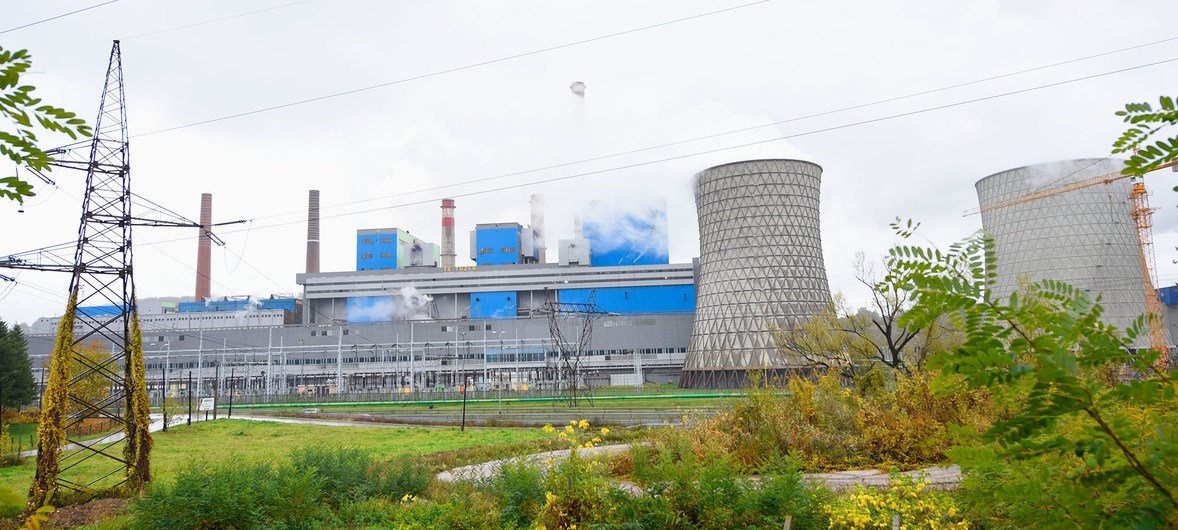
UNEP | A coal power plant in Tuzla, Bosnia.
The net-zero emissions goal is crucial to limit global warming, as outlined in the Paris Agreement on climate change, and the technology brief calls for rapid scale-up of carbon capture, use and storage (CCUS).
The process involves capturing CO2 emissions from coal and gas power plants, and from heavy industry, for deep underground storage or re-use.


 HUMAN WRONGS WATCH