Human Wrongs Watch
'Unseen' News and Views
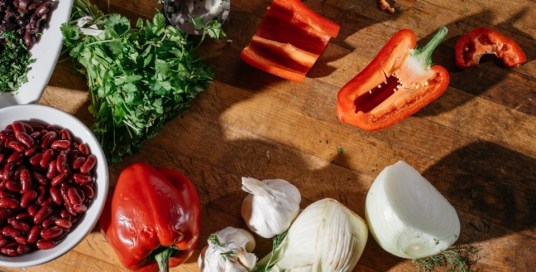
Boost nutrition in your household with these traditional recipes from around the world! ©FAO/Benjamin Rasmussen
5 January 2021 (FAO)* — Meal after meal. Day after day. It’s easy to get into routines with food and forget about the variety of fruits, vegetables, grains and other foods that exist, with all the different nutritional benefits that they offer.
If that sounds familiar, then FAO is here to help. Drawing on our experiences from around the world, we’ve consulted with local cooks, chefs and families to put together some fascinating and useful cookbooks.
– Goodbye 2020, but unfortunately, not good riddance, as we all have to live with its legacy. It has been a disastrous year for much of the world for various reasons, Elizabeth II’s annus horribilis. The crisis has exposed previously unacknowledged realities, including frailties and vulnerabilities.

Jomo Kwame Sundaram
For many countries, the tragedy is all the greater as some leaders had set national aspirations for 2020, suggested by the number’s association with perfect vision. But their failures are no reason to reject national projects.
As Helen Keller, the deaf and blind author activist, noted a century ago, “The only thing worse than being blind is having sight, but no vision.”
After JFK’s assassination in November 1963 ended US opposition to Western intervention in Indonesia, President Sukarno warned his nation in August 1964 that it would be ‘living dangerously’, vivere pericoloso, in the year ahead.
A year later, a bloody Western-backed military coup had deposed him, taking up to a million lives, with many more ruined.

4 January 2021 (Wall Street International)* — Looking at our planet, we see that it is mostly water.
So why are so many politicians, scientists, public officials in hundreds of global conferences all warning of a “Water Crisis”? These alarms are really just focused on the planet’s 3% of freshwater, ignoring the abundant 97% of our planet’s saltwater.
The broad assumption in most of these alarms is that 97% of saltwater is no use for the everyday needs of humans. So all these alarms warn of shrinking food supplies, rising hunger, malnutrition, dwindling drinking water, as taps almost ran dry in some cities, including Cape Town, South Africa in 2019.
The Secretary-General will convene a UN Food Systems Summit in 2021 to launch bold new actions to transform the way the world produces and consumes food, delivering progress on all 17 Sustainable Development Goals.
For decades, synthetic fertilizer – containing nitrogen, phosphorus, and potassium – has been used all over the world to increase crop yields. Plants need phosphorus to grow but using too much of it can harm the environment.
2 January 2021 (UN News)* — In a bid of optimism for the new year, the UN Development Programme (UNDP) expressed confidence that clean energy would grow in 2021.
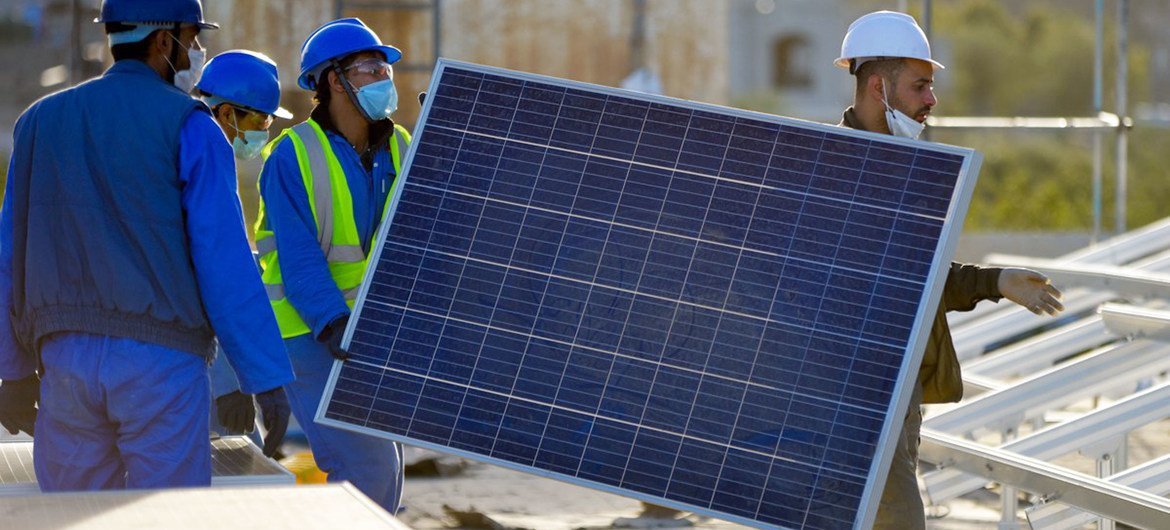
Despite that the world is not on track to meet climate objectives and achieve Sustainable Development Goal 7 (SDG7) for universal access to clean, affordable and reliable energy, Marcel Alers, UNDP Head of Energy, said that “clean energy solutions exist that can get us there”.
“There is growing momentum to make them political and investment priorities”, he added.
Amid the pandemic, refugees stepped up to provide healthcare, boost wellness, safeguard their communities and keep us inspired during lockdowns.

Venezuelan doctor Samuel Suárez is taking part in the public health response to coronavirus in San Francisco, a remote village in Ecuador.© UNHCR/Jaime Giménez Sánchez de la Blanca
Sylvana Simons’ party will stand in the 2021 Dutch general election. ‘We’re activating people who’ve never felt politicians speaking to them.’ #12DaysofResistance
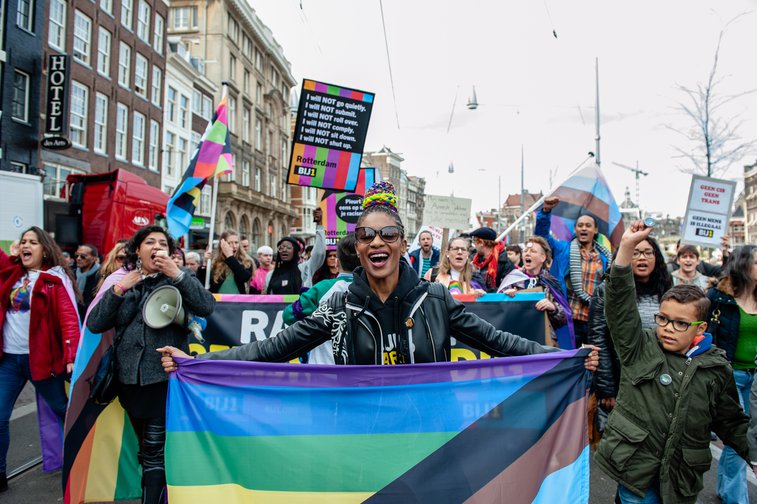
1 January 2021 (openDemocracy)* — “The Dutch have perfected their facade. They are the definition of ‘facade!’” Sylvana Simons tells me, laughing, on a video call from her home in the Netherlands. “Things look great from the outside. We have told ourselves that we’re tolerant and we’re understanding and we’re progressive, and the rest of the world is so backwards.”

Howard Richards
Now is a time to emphasize what we should always do anyway, namely: align across sectors for the common good.
The unbounded idea includes sharing surplus, moving resources from where they are not needed to where they are needed, following the ancient principle Pope Francis is now repeating in one form or another almost every day: our property belongs not only to us but also to those we can help with our surplus.
It is about peace by peaceful means; education, ethics, and practical applications; more than about playing hardball with people who choose to live by a different philosophy.
In this editorial I refer especially to the United States, where the future of democracy now hangs in the balance. Surely similar considerations apply at least to some extent elsewhere.
Recently the University of Chicago historian Kathleen Belew and others have been meticulously documenting how widespread, well-organized, and well-armed anti-democratic movements are.


 HUMAN WRONGS WATCH