“Vaccinating the world against COVID-19 will be one of the largest mass undertakings in human history, and we will need to move as quickly as the vaccines can be produced,” says Henrietta Fore, UNICEF Executive Director.
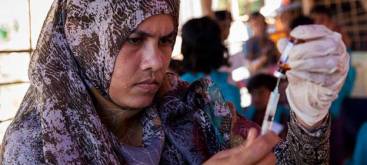
A health worker fills a syringe with vaccine at a Rohingya refugee camp in Cox’s Bazar, Bangladesh. Credit: UNICEF/Patrick Brown.
UNITED NATIONS, Dec 11 2020 (IPS)* – There is a longstanding belief that virtually everything in this world is stacked up against the poor and the downtrodden. The Covid-19 vaccine is no exception because some of world’s richest nations, including the US, Canada and UK, seem to have cornered most of the supplies — whilst marginalizing the world’s poorer nations.
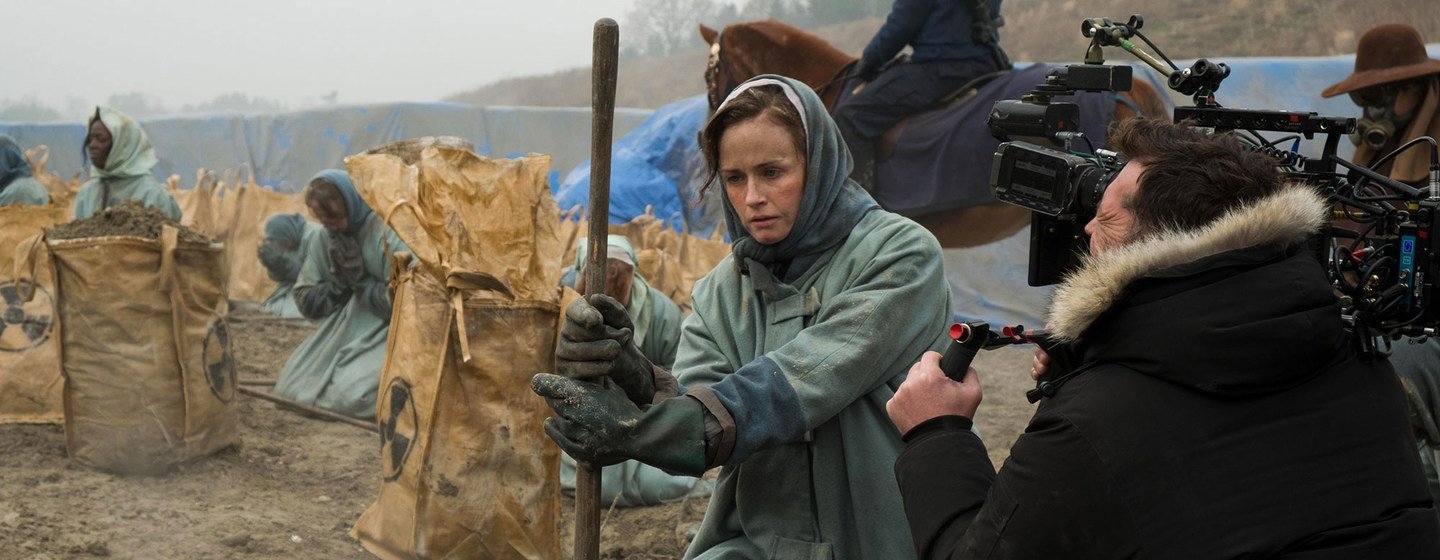
13 December 2020 (UN News)* — The Handmaid’s Tale, a critically acclaimed television series which has won 38 Emmy awards, may be about a fictional “alternative reality”, but the show’s creators have gone to great lengths to ensure that references to themes such as climate change, human rights abuses, and refugees, are as real and accurate as possible, by collaborating closely with UN experts.
George Kraychyk | In the fictional country of Gilead, an environmental disaster has caused infertility amongst women.
The TV version of The Handmaid’s Tale is based on the classic 1985 book of the same name by acclaimed author Margaret Atwood, about a dystopian USA, renamed Gilead, ruled by a brutal theocracy in which people, particularly women, have been stripped of their rights.
11 December 2020 (United Nations)* — Mountains are home to 15% of the world´s population and host about half of the world’s biodiversity hotspots. They provide freshwater for everyday life to half of humanity. Their conservation is a key factor for sustainable development and is part of Goal 15 of the SDGs.
Unfortunately, mountains are under threat from climate change and overexploitation. As the global climate continues to warm, mountain people — some of the world’s poorest — face even greater struggles to survive.
International Mountain Day 2020 highlights need to protect ecosystems and improve livelihoods
Farmer Goma Panthi Khatri in village of Narapani, Nepal.
ROME, 11 December 2020 (FAO)* — Mountains host about half of the global biodiversity hotspots and are home to a growing number of the world’s hungriest people, according to a new study launched by the Food and Agriculture Organization of the United Nations (FAO) and partners to mark International Mountain Day 2020.
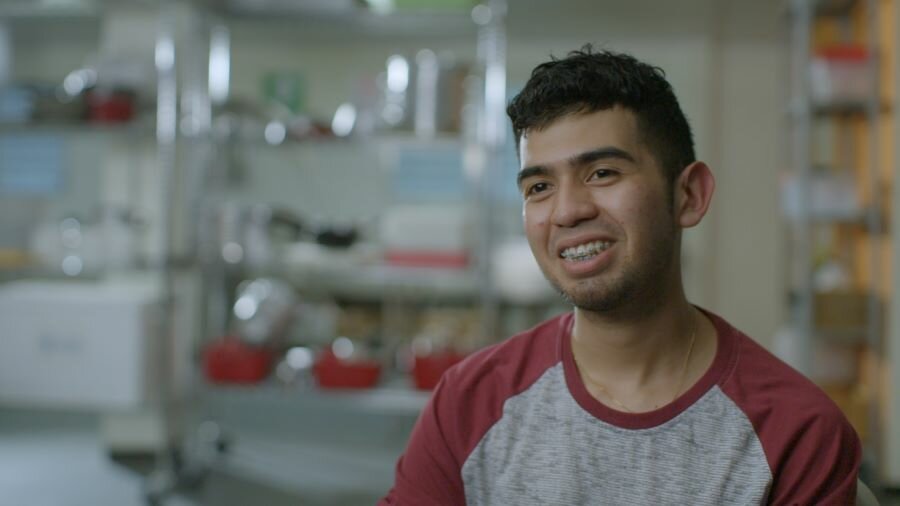
Despite the great challenges faced by youth in El Salvador, becoming a barista has given Moisés the opportunity to pursue his dreams
Access to job opportunities is a challenge for youth in El Salvador. Photo: WFP/Nick Roeder
10 December 2020, Haydee Paguaga (WFP)* — Together with the warmth of its people and beautiful beaches, export-quality coffee is one of the things El Salvador is known for. For 23-year-old Moisés, coffee is what turned his life around.
Like many young people in the country, Moisés has faced several challenges in the pursuit of his dreams. In a context of violence, mainly associated with youth, the stigma that goes with being young makes it difficult to access job opportunities.
(UN News)* — UN experts called on the Security Council on 3 December 2020, along with the international community at large, to put an end to the “surreal and absurd dimension” of human rights violations engulfing war-torn Yemen, where abuses continue unchecked.
“We are running out of time…approximately 16 million people cannot put food on their table. This is a disaster, this is a ticking time-bomb and the world needs to act now,” WFP spokesperson Tomson Phiri told journalists at a scheduled press conference in Geneva.
NEW YORK, 10 December 2020 (UNICEF)* –These are the remarks of UNICEF Executive Director Henrietta Fore – to whom quoted text may be attributed – at today’s High-Level Event: Averting famine in Yemen: What can we do now and in 2021.
.
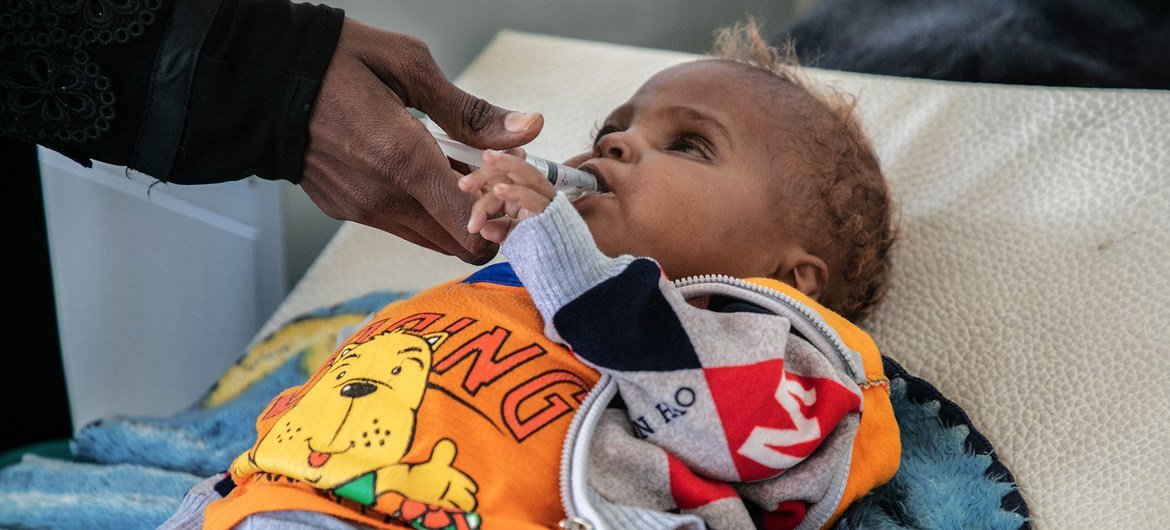
UNICEF Yemen/2020/Mahmoud Al-FalsatinyShawqi, 1, with his mother at the maternal and childhood centre in Zingibar, Abyan. Shawqi is making a strong recovery after receiving care at the UNICEF-supported health facility.
“Yemen is teetering on the edge of complete collapse.
“Over 80 per cent of people require urgent humanitarian assistance and protection. Including 12 million children, whose lives are a waking nightmare.
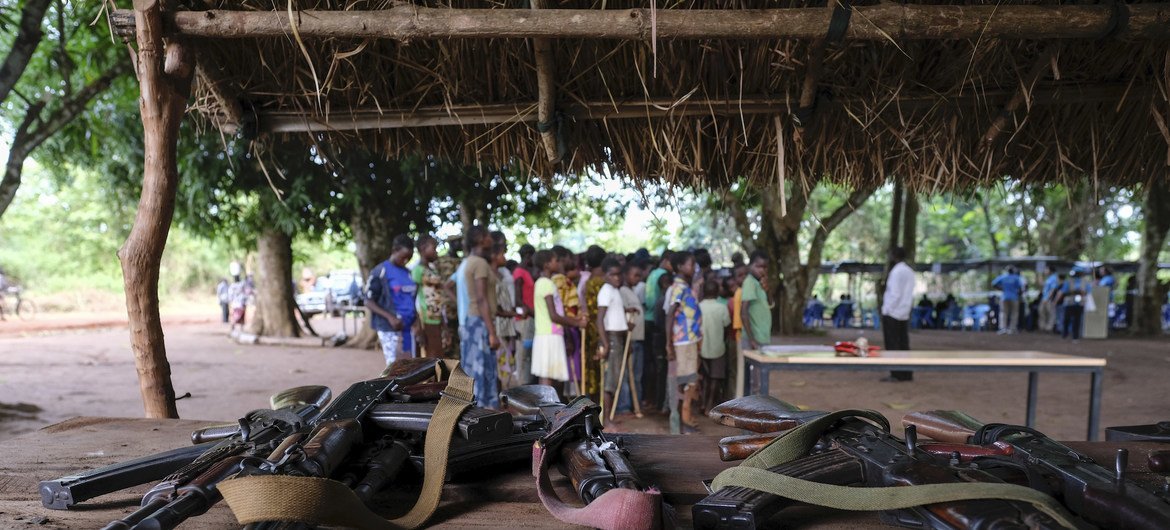
(UN News)* — At a time when Africa is mobilizing resources for pandemic recovery and sustainable development, illicit financial flows (IFFs) are robbing the continent of $50 billion annually, UN Deputy Secretary-General Amina Mohammed told a high-level virtual meeting on Thursday [10 December 2020] held under the African Union’s (AU) ‘Silencing the Guns’ initiative.
UNICEF/Rich | Firearms laid down by child soldiers associated with armed groups in South Sudan (file
These “staggering losses” would be enough to bridge nearly 75 per cent of Africa’s health financing gap, provide inclusive education for all children there, and fund infrastructure projects, she added. “These flows pose a threat to stability and security in African countries, undermine institutions and democracy, and jeopardize sustainable development and the rule of law,” said Ms. Mohammed.
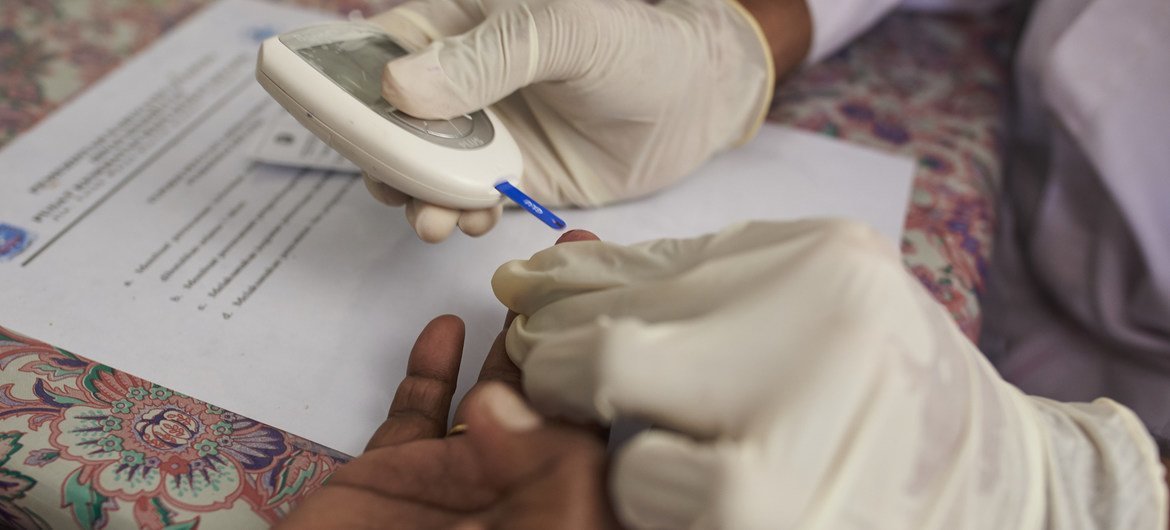
Non-communicable diseases account for 7 of the world’s top 10 causes of death, a sharp increase from two decades ago, and heart disease remains the leading cause of death globally, a new UN World Health Organization (WHO) study has found (*).
UNICEF/Shehzad Noorani | According to WHO, global deaths from diabetes increased by 70 per cent between 2000 and 2019. Pictured here, a health worker checks a woman’s blood sugar level at a community health centre in Jayapura district, Indonesia.
The 2019 Global Health Estimates, released on Wednesday [9 December 2020], “clearly highlight” the need for increased attention on preventing and treating cardiovascular diseases, cancer, diabetes and chronic respiratory diseases, as well as tackling injuries, according to WHO.
PARIS, Dec 10 2020 (IPS)* – On Human Rights Day, civil society calls for the protection of civic space as a fundamental freedom, as more than 80% of the world’s population live in countries where civic space is closed, repressed or obstructed.
Credit: Forus International
Protecting civil society and fundamental freedoms means protecting the rights to associate and assemble, to express views and opinions. Civic space is the bedrock of any open and democratic society.




 HUMAN WRONGS WATCH