20/11/2020
If implemented, the commitments made under various international agreements could go a long way to addressing climate change, land degradation and biodiversity loss as well as achieving the Sustainable Development Goals, including those on dignified work, and food and water security.
read more »
Posted in Africa, Asia, Latin America & Caribbean, Market Lords, Middle East, Migrants and Refugees, Mother Earth, Others-USA-Europe-etc., The Peoples |
Leave a Comment »
19/11/2020
(UN News)* — People, plants and animals around the world are dying from untreatable infections – even with the best medicines available – due to a rise in antimicrobial resistance, the UN food agriculture agency said on Wednesday [18 November 2020], kicking off World Antimicrobial Awareness Week.
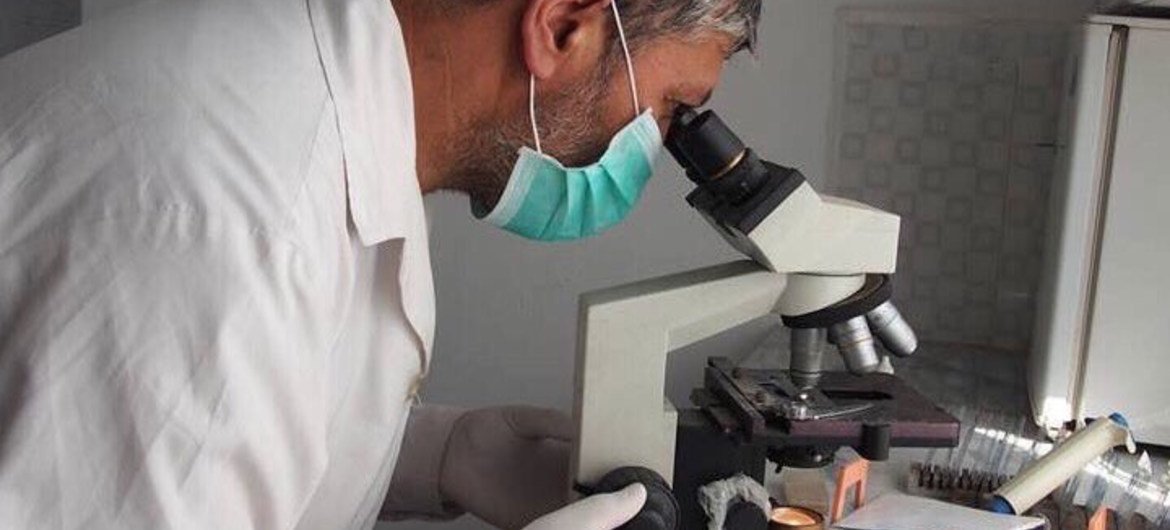
WHO/S. Ramo | WHO says that there are not enough antibacterial treatments in clinical development worldwide to fight the growing threat of drug-resistant bacterial infections.
Antimicrobial medicines, including antibiotics, have long been overused and misused, according to the Food and Agriculture Organization (FAO), which added that antimicrobial resistance (AMR) is “spreading further and faster every day”.
read more »
Posted in Africa, Asia, Latin America & Caribbean, Market Lords, Middle East, Migrants and Refugees, Mother Earth, Others-USA-Europe-etc., The Peoples |
Leave a Comment »
19/11/2020
(UN News)* — Criminals and violent extremists are exploiting the pandemic to build their support networks, undermine trust in government and even weaponize the virus, according to a research report published on Wednesday [18 November 2020] by the United Nations Interregional Crime and Justice Research Institute (UNICRI).
Unsplash/Markus Spiske | The COVID-19 pandemic is being exploited by criminals and violent extremists to build their support and undermine trust in governments.
.
“Terrorist, violent extremist and organized criminal groups are trying to take advantage of the
Coronavirus disease (
COVID-19) pandemic to expand their activities and jeopardize the efficacy and credibility of response measures by governments”, UNICRI Director Antonia Marie De Meo wrote in the introduction to the report, entitled “Stop the virus of disinformation”.
Posted in Africa, Asia, Latin America & Caribbean, Market Lords, Middle East, Migrants and Refugees, Mother Earth, Others-USA-Europe-etc., The Peoples, War Lords |
Leave a Comment »
18/11/2020
NEW YORK, Nov 16 2020 (IPS)* – “This is a crisis without a quick fix that could take years to resolve unless there are concerted efforts to address its root causes”, says Manuel Fontaine, UNICEF Director of Emergency Programmes.
 Female Training at centers. Credit: Bidyanondo Foundation
The Rohingya refugee crisis is among the largest and fastest-growing displacement of people in recent history. Since August 2017, close to a million Rohingya refugees have fled Myanmar and taken refuge in Bangladesh. The Rohingyas are “one of, if not the most discriminated people in the world” said the United Nations Secretary-General Antonio Guterres.
read more »
Posted in Asia, Market Lords, Migrants and Refugees, Mother Earth, Others-USA-Europe-etc., The Peoples, War Lords |
Leave a Comment »
18/11/2020
(UN News)* — A UN-backed fund, launched on Tuesday [17 November 2020 ], is set to take on the centuries-old crisis centred around sanitation, hygiene and menstrual health, which now impacts more than four billion people across the world.
.
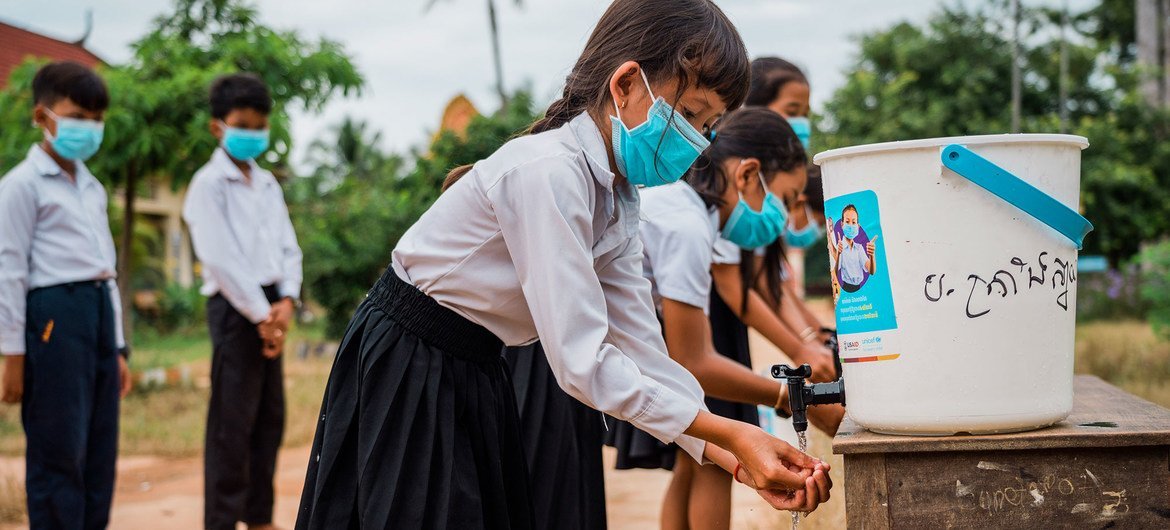
© UNICEF/Antoine Raab | Children at a school in Cambodia wash their hands using a water facility provided by UNICEF.
.
Speaking, via a video message, at the launch of the Fund, UN Deputy Secretary-General Amina Mohammed described safe sanitation and hygiene as “critical to the response that we want to see, first, because it is about human dignity; second, it is a health issue.”
Posted in Africa, Asia, Climate Crisis, Latin America & Caribbean, Market Lords, Middle East, Migrants and Refugees, Mother Earth, Others-USA-Europe-etc., The Peoples, War Lords |
Leave a Comment »
18/11/2020
(UN News)* — The United Nations
released $100 million of emergency funding on Tuesday
[17 November 2020] to stave off the risk of famine in seven countries most at risk from a hunger epidemic fueled by conflict, economic decline, climate change and the COVID-19 pandemic.
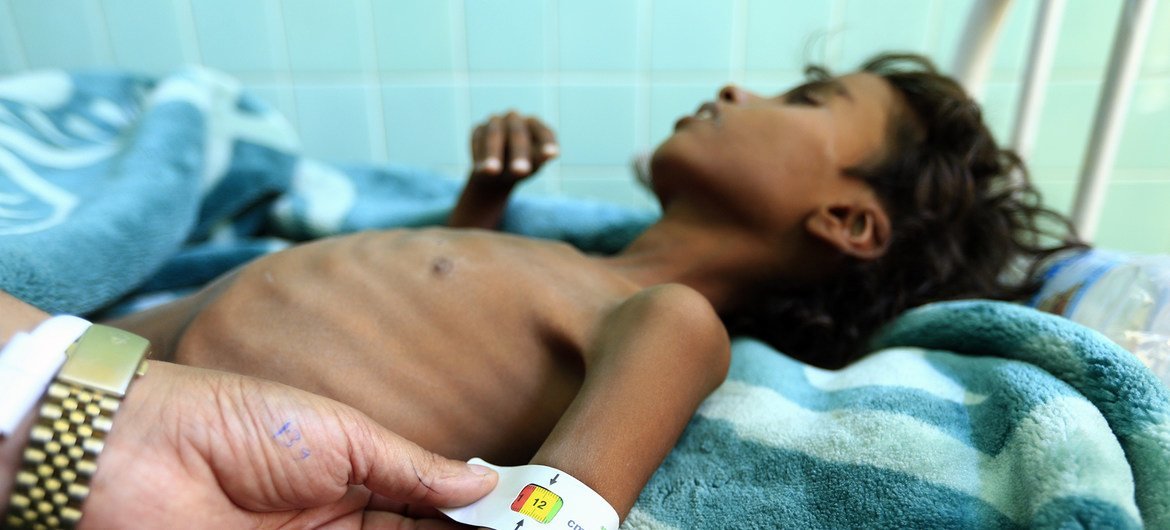
UNICEF | A Yemeni child suffering from malnutrition at a treatment centre in a hospital in Sana’a. (file)
Mark Lowcock, head of the UN Office for the Coordination of Humanitarian Affairs, said $80 million would be split between Afghanistan, Burkina Faso, the Democratic Republic of the Congo, Nigeria, South Sudan and Yemen, which would get the biggest tranche of $30 million. A further $20 million had been set aside for Ethiopia, where droughts could worsen an already fragile situation.
Posted in Africa, Asia, Climate Crisis, Latin America & Caribbean, Market Lords, Middle East, Migrants and Refugees, Mother Earth, Others-USA-Europe-etc., The Peoples, War Lords |
Leave a Comment »
17/11/2020
It’s something that many of us might take for granted. In New York State for example, ingredients for a simple meal – perhaps a soup or a simple stew – costs just 0.6 percent of someone’s income.
Contrast this with South Sudan, where a shopper would have to spend an astonishing 186 percent of their income to do the same.
Such a difference brings into sharp focus the huge inequalities at play between those people in developing countries and others in more prosperous parts of the world.
Conflict and climate change have long affected people’s ability to afford food across multiple countries, as they are driven from their land and livelihoods and left unable to produce or buy the produce they need to feed their families.
read more »
Posted in Africa, Asia, Latin America & Caribbean, Market Lords, Middle East, Migrants and Refugees, Mother Earth, Others-USA-Europe-etc., The Peoples, War Lords |
Leave a Comment »
17/11/2020
(UN News)* — “Hunger is an outrage in a world of plenty”, the UN chief told the governing body of the Organization’s food agency on Monday [16 November 2020], highlighting the important role of food security in cementing peace.
WFP/Barry Came | Displaced victims of the West Java tsunami in Indonesia collect World Food Programme (WFP) food aid.
.
“An empty stomach is a gaping hole in the heart of a society. A stunted child’s growth in the mind is progress for her and for everyone”, Secretary-General António Guterres attested to the Executive Board of the World Food Programme (WFP).
read more »
Posted in Africa, Asia, Latin America & Caribbean, Market Lords, Middle East, Migrants and Refugees, Mother Earth, Others-USA-Europe-etc., The Peoples, War Lords |
Leave a Comment »
16/11/2020
On 14 July 2020, Ruksana Begum fetches water near the raised homestead where her family has been living since floodwaters submerged their house in Amtola Char in Chilmari Upazila, Kurigram, Bangladesh. UN Water
(United Nations)* — Over half of the global population or 4.2 billion people lack safe sanitation and around 297,000 children under five – more than 800 every day – die annually from diarrhoeal diseases due to poor hygiene, poor sanitation or unsafe drinking water.
Without safely managed, sustainable sanitation, people often have no choice but to use unreliable, inadequate toilets or practise open defecation.
read more »
Posted in Africa, Asia, Climate Crisis, Latin America & Caribbean, Market Lords, Middle East, Migrants and Refugees, Mother Earth, Others-USA-Europe-etc., The Peoples, War Lords |
Leave a Comment »
16/11/2020

Eriam Sheikh,7 year old comes out after using the toilet on stilts or floating toilet built over a drain passing by Rafiq Nagar in Mumbai. PHOTO:UN Water
16 November 2020 (United Nations)* — World Toilet Day celebrates toilets and raises awareness of the 4.2 billion people living without access to safely managed sanitation. It is about taking action to tackle the global sanitation crisis and achieve Sustainable Development Goal 6: water and sanitation for all by 2030.
read more »
Posted in Africa, Asia, Climate Crisis, Latin America & Caribbean, Market Lords, Middle East, Migrants and Refugees, Mother Earth, Others-USA-Europe-etc., The Peoples, War Lords |
Leave a Comment »



 HUMAN WRONGS WATCH