23 June 2025 — Asia is currently warming nearly twice as fast as the global average, fuelling more extreme weather and wreaking a heavy toll on the region’s economies, ecosystems and societies, according to the World Meteorological Organization (WMO).
A funding shortfall is forcing WFP and other humanitarian organizations to cut assistance to some of the world’s most vulnerable people
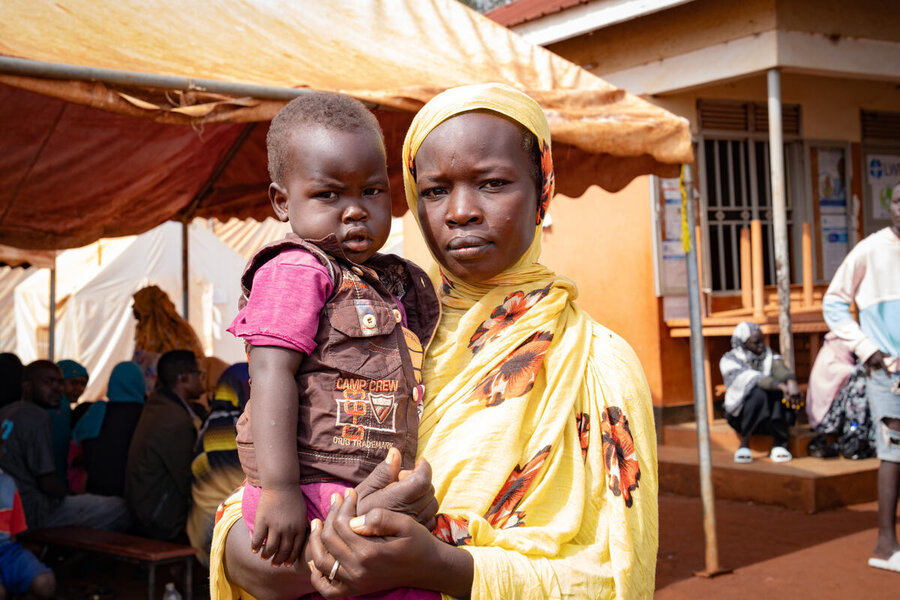
Omnia and her young son received a hot WFP meal upon arrival at Uganda’s Kiryandongo refugee settlement, but WFP’s assistance countrywide is shrinking for lack of funds. Photo: WFP/Daisy Masembe
— Omnia and her young son stand in line under a harsh midday sun, waiting for the daily hot lunch for newcomers at Uganda’s Kiryandongo refugee settlement.
Exhaustion is etched on the face of this single mother, who arrived by bus from war-torn Sudan the day before.
(UN News)* —More than 100 days into Israel’s complete fuel blockade in Gaza, UN agencies still in the shattered enclave warned on Thursday that vital services are only “hours away” from shutting down.
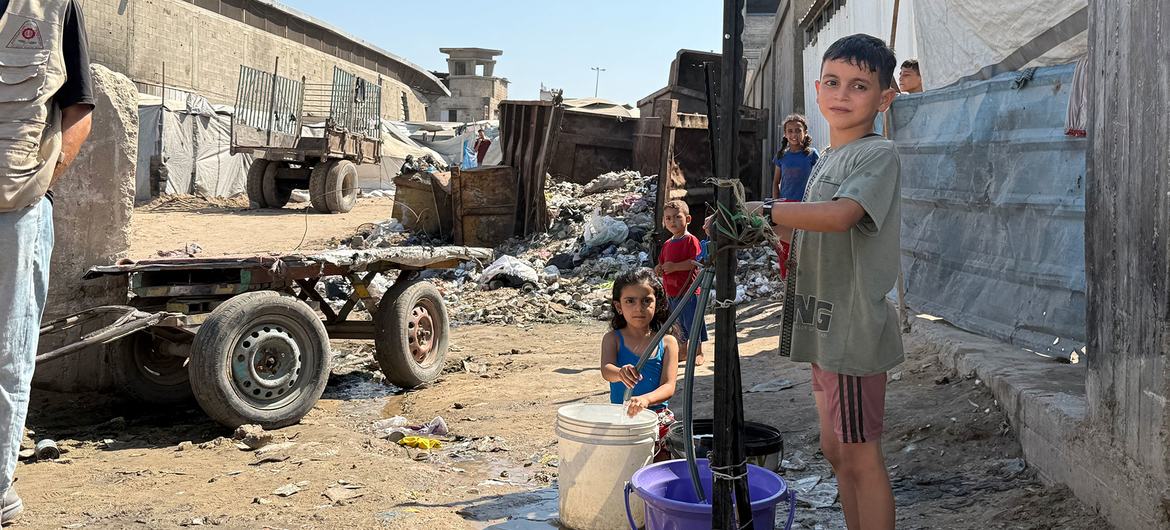
Speaking from Gaza City in the north of occupied territory, Olga Cherevko from the UN aid coordination office, OCHA, said that water pumps had stopped at one site for displaced people there on Wednesday “because there’s no fuel”.
“We are really – unless the situation changes – hours away from a catastrophic decline and a shutdown of more facilities if no fuel enters or more fuel isn’t retrieved immediately,” she told UN News.
(UN News)* — As the pall of starvation hangs over Gaza, UN agencies have sounded the alarm over deadly violence at food distribution points, where over 400 Palestinians have reportedly been killed in recent weeks while trying to access desperately needed humanitarian aid.
The UN human rights office (OHCHR) in the Occupied Palestinian Territory on called on the Israeli military to cease the use of lethal force near aid convoys and food distribution sites.
It cited “repeated incidents” of Palestinians being shot or shelled while seeking food, warning that such attacks could constitute war crimes under international law.
A girl at the Mother and Child Health Center in Mogadishu, Somalia, visited by the UN Special Representative on Sexual Violence in Conflict. PHOTO:UN/Tobin Jones
“The horror of these heinous crimes echoes long after the guns fall silent.
Too often, perpetrators walk free, cloaked in impunity, while survivors often bear the impossible burden of stigma and trauma.
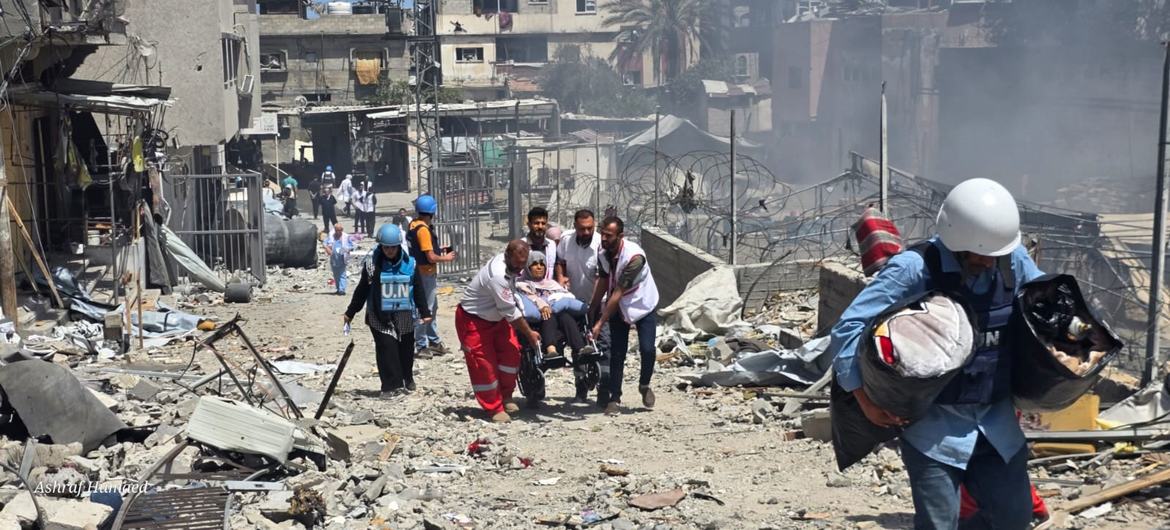
(UN News)* — Gaza’s health system is at breaking point, overwhelmed time and again by scores of people killed or injured near aid distribution sites, the UN World Health Organization (WHO) said on Tuesday .
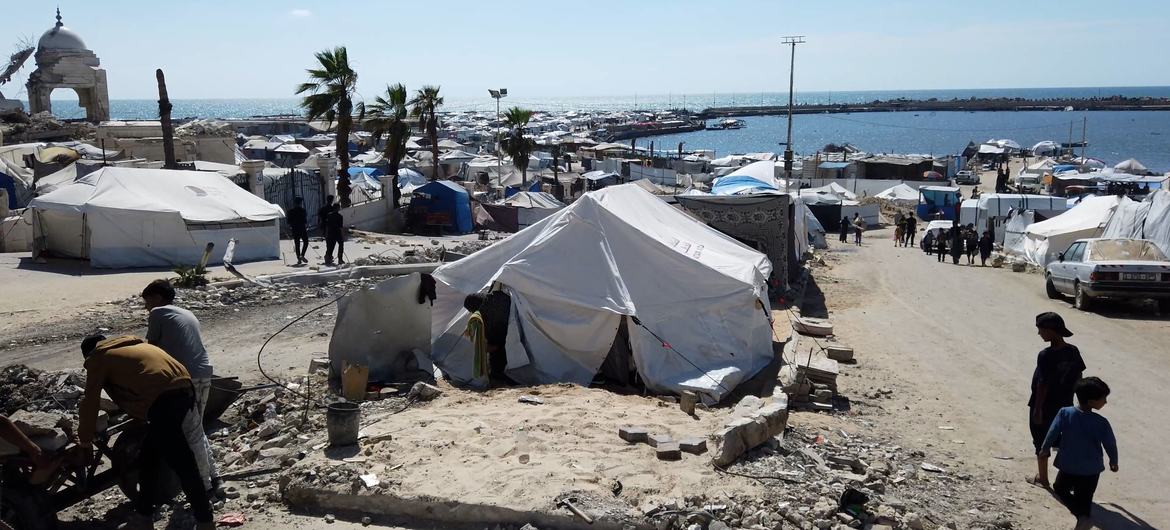
UN News | The Israeli military’s evacuation orders apply to 80 per cent of Gaza, leaving many of the enclave’s people displaced.
“We are walking the fine grey line between operational capacity and full disaster, every day,” said Dr Thanos Gargavanis, WHO trauma surgeon and emergency officer, speaking from the enclave.
The veteran UN medic’s comments came amid new reports on Tuesday morning that more Palestinians had been killed trying to access food, this time near an aid distribution site in Khan Younis in southern Gaza.
Up to 40% of all land area worldwide already considered degraded.
Healthy land underpins thriving economies, with over half of global GDP dependent on nature. Yet we are depleting this natural capital at an alarming rate: every minute, the equivalent of four football fields is lost due to land degradation.
.
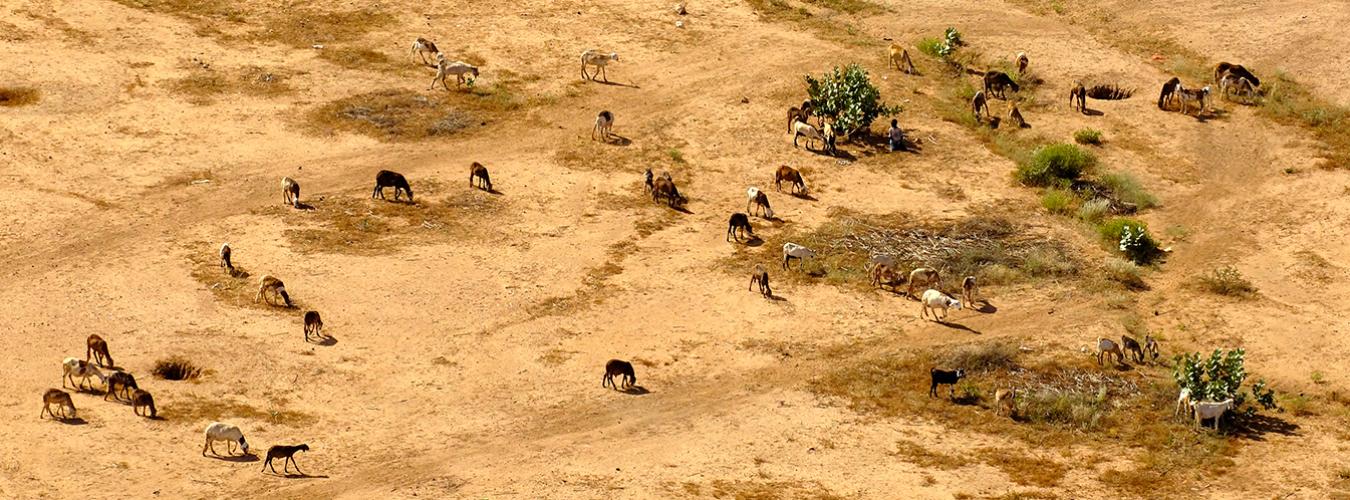
A young boy herds his families cattle in the dry and desolate lanscape of the city of Tawaila in Northern Darfur. UN Photo/Fred Noy.
.
This drives biodiversity loss, increasing drought risk and displacing communities. The ripple effects are global—from rising food prices to instability and migration.
KUALA LUMPUR, Malaysia, Jun 17 2025 (IPS)* – Wars, economic shocks, planetary heating and aid cuts have worsened food crises in recent years, with almost 300 million people now threatened by starvation.
FAO statistics indicate enough output to feed the world’s eight billion plus another three billion!
Clearly, inadequate food due to population growth cannot explain persistent hunger. Yet, the number of hungry people has been rising for more than a decade.
So, why are so many hungry if there is more than enough food for all?
The multi-stakeholder 2025 Global Report on Food Crises (GRFC) notes 2024 was the sixth consecutive year of high and growing acute food insecurity, with 295.3 million people starving!
In 2023, 733 million people experienced chronic hunger. Over a fifth (22.6%) of the 53 countries/territories assessed in this year’s GRFC were especially vulnerable.
MONTEVIDEO, Uruguay, Jun 16 2025 (IPS)** – At a White House meeting, presidents Nayib Bukele and Donald Trump exchanged praises and joked about mass incarceration while discussing an unprecedented agreement: the USA would pay El Salvador US$6 million a year to house deportees – of any nationality, potentially including US citizens – in its Centre for Terrorism Confinement (CECOT), a notorious mega-prison.
Credit: Kevin Lamarque/Reuters via Gallo Images
This agreement marked the evolution of Bukele’s authoritarian model from a domestic experiment to an exportable commodity for strongmen worldwide.
Sudan, Palestine, South Sudan, Haiti, and Mali remain hotspots of highest concern, and Democratic Republic of the Congo has returned as a hunger hotspot to watch.
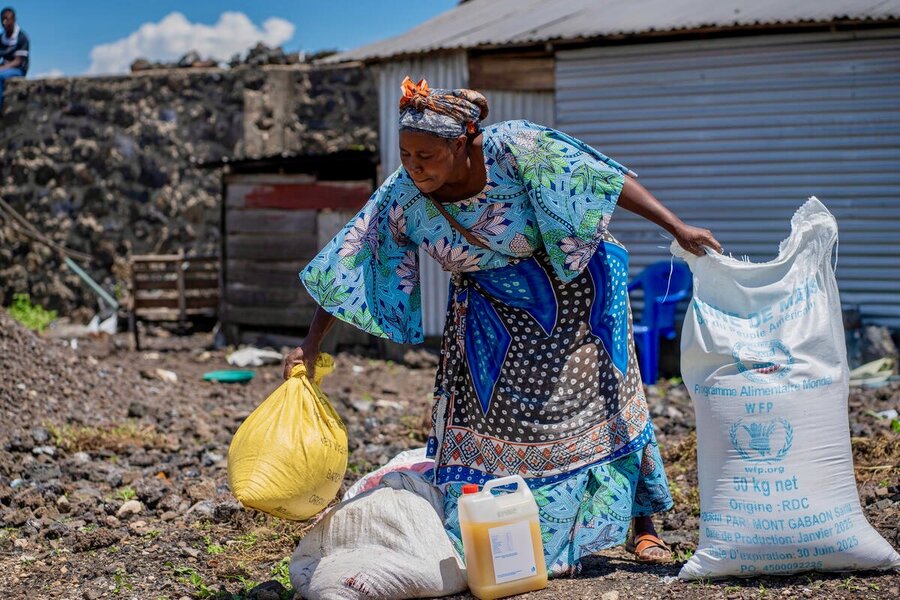
A woman collects WFP food assistance in Goma, where a precarious calm reigns after fighting earlier this year. Photo: WFP/Benjamin Anguandia
ROME, – A new joint UN report warns that people in five hunger hotspots around the world face extreme hunger and risk of starvation and death in the coming months unless there is urgent humanitarian action and a coordinated international effort to de-escalate conflict, stem displacement, and mount an urgent full-scale aid response.




 HUMAN WRONGS WATCH