SYDNEY, Jan 2 2023 (IPS)* – 2022 has been a year of great uncertainty when it seemed the world perilously reached the brink of self-destruction – be it human-induced climate change or military conflict. Welcoming 2022, we had enough reasons to be optimistic; but it was another ‘year of living dangerously’ – Tahun vivere pericoloso in the words of Soekarno, or an annus horribilis in the words of the late Queen Elizabeth.
Anis Chowdhury
No end to Covid-19 The joy of the COVID vaccine discovery quickly vanished as the ‘vaccine apartheid‘ blatantly prioritised lives in rich nations, especially of the wealthy, over the ‘wretched of the earth’, and corporate profit triumphed over people’s lives.
Meanwhile, Dr Anthony Fauci’s sober warning of a more dangerous COVID variant emerging this winter may come to be true as China, the country of 1.4 billion, struggles to deal with the surge in cases since it has largely abandoned its unpopular ‘zero COVID’ policy.
New cold war turns into proxy war Whereas the global pandemic required extraordinary global unity, unfortunately, a ‘new cold war’ quickly turned into a ‘hot war’, bringing the world to the verge of a devastating nuclear war for the first time since the 1962 Cuban missile crisis.
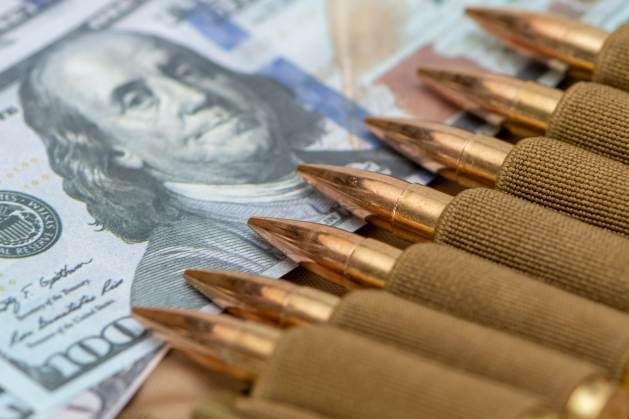
The military-industrial complex, against which President Dwight D. Eisenhower warned in his famous farewell address, has bipartisan support in the United States Congress and Senate. The amount of money involved is enormous. The world, as a whole, spends roughly two trillion dollars each year on armaments, and a very large share of this, more than 800 billion dollars, is spent by the United States.
A vast river of money flows from the huge arms manufacturing corporations into the campaign funds and pockets of politicians, and into the pockets of those who control the mass media.
UNITED NATIONS, Jan 2 2023 (IPS)* – A US Senator once described Ukrainian President Volodymyr Zelensky, perhaps facetiously, as “a Winston Churchill in a tee shirt”.
President Volodymyr Zelenskyy (on screen) of Ukraine, addresses the Security Council meeting on the situation in Ukraine. “We are dealing with a State that is turning the veto of the United Nations Security Council into the right to die”, President Zelynskyy warned. If it continues, countries will rely not on international law or global institutions to ensure security, but rather, on the power of their own arms. April 2022. Credit: UN Photo/Loey Felipe
And last month, when he addressed the US Congress – with the presence of about 100 Senators and 435 Congressmen – he tried to re-live that moment.
While most of the Senators and Congressmen were in business suits for the formal occasion, Zelensky opted for green military fatigues and a matching sweatshirt.
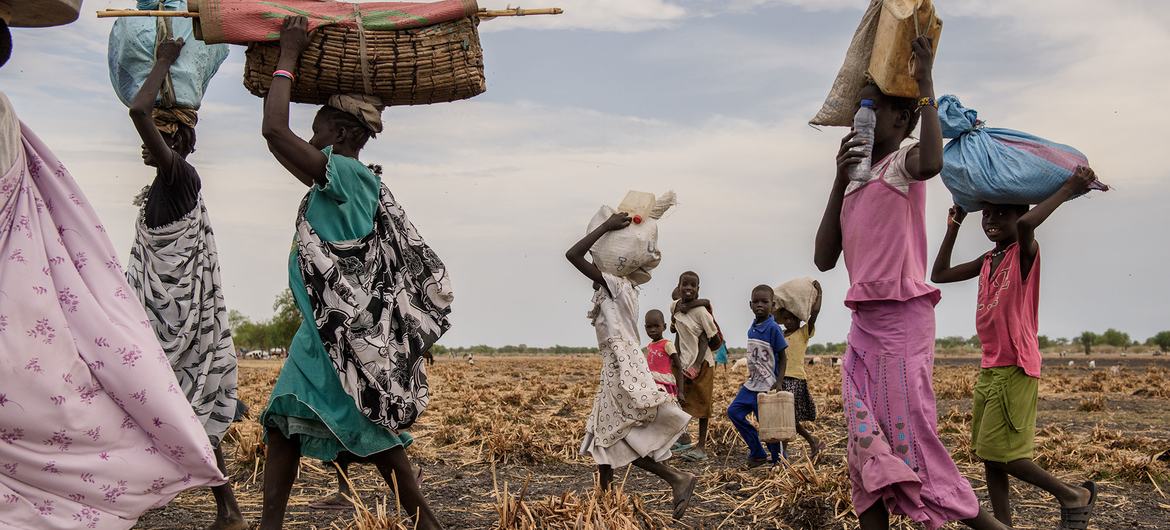
(UN News)* — UN humanitarian chief Martin Griffiths released from the Central Emergency Response Fund (CERF) on Thursday [], $14 million for direct assistance to 262,521 South Sudanese affected by increased violence and severe flooding.
Interconnected shocks have had a devastating impact on the most vulnerable, said the UN humanitarian office, OCHA.
“This funding will support reducing people’s vulnerability and protection risks through activities implemented by the United Nations humanitarian agencies in South Sudan”, stated Sara Beysolow Nyanti, Humanitarian Coordinator for South Sudan.
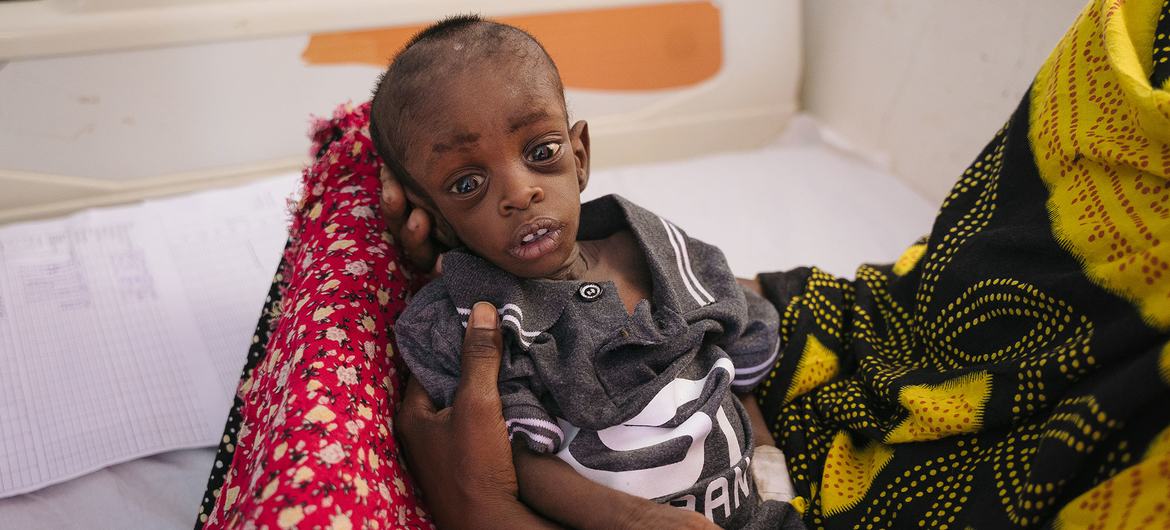
(UN News)* — The number of children suffering from dire drought conditions across Ethiopia, Kenya and Somalia has more than doubled in five months, the UN Children’s Fund (UNICEF) said on Thursday [].
Around 20.2 million children are under threat of severe hunger, thirst and disease – compared to 10 million in July – as climate change, conflict, global inflation and grain shortages devastate the region.
“While collective and accelerated efforts have mitigated some of the worst impact of what had been feared, children in the Horn of Africa are still facing the most severe drought in more than two generations”, statedUNICEF Deputy Regional Director for Eastern and Southern Africa Lieke van de Wiel.
A hundred million people were forced to leave their homes in 2022. The UN continued to help those in need in a myriad of ways, and push for more legal, and safe ways for people to migrate.
2022 UNRWA | School children in Jenin refugee camp, West Bank.
The 100 million figure, which includes those fleeing conflict, violence, human rights violations and persecution, was announced by the UN refugee agency (UNHCR) in May and described by Filippo Grandi, the head of the agency, as “a record that should never have been set”.
The figure is up from some 90 million in 2021. Outbreaks of violence, or protracted conflicts, were key migration factors in many parts of the world, including Ukraine, Ethiopia, Burkina Faso, Syria, and Myanmar.
Thousands of desperate migrants looked to Europe as a preferred destination, putting their lives in the hands of human traffickers, and setting off on perilous journeys across the Mediterranean.
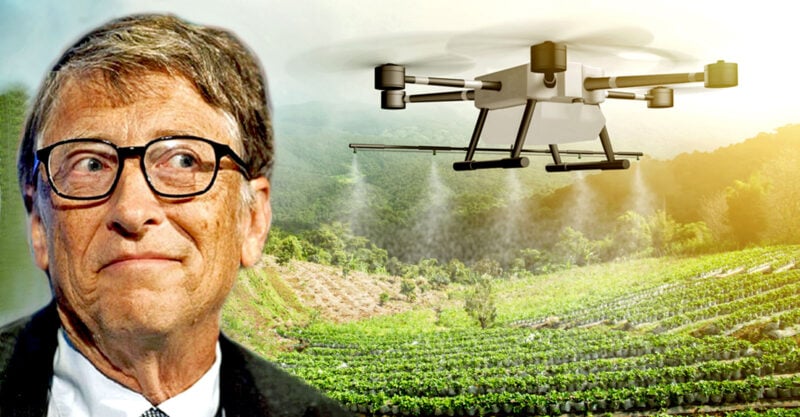
Vandana Shiva and Russell Brand discussed the history of agriculture, the role of Big Food in the current global cost-of-living crisis and how Gates is promoting “basically a surveillance agriculture.”
5 Dec 2022 – Prior to World War II, big corporations had no role in growing food, according to Vandana Shiva, Ph.D. “Growing food was an act of care, an act of love,” she said.
Today’s food and agriculture system is “very violent,” Shiva — environmental activist, author and founder of Navdanya International — told comedian and political commentator Russell Brand on a recent episode of his show, “Stay Free with Russell Brand.”
After World War II, “The same corporations that made chemicals for Hitler’s concentration camps [and] poison gases for the war started to trade in food as a commodity, rather than food as nourishment and food as life,” Shiva said.
MADRID, Dec 22 2022 (IPS)* – Day after day, international humanitarian organisations launch desperate appeals for funding to continue saving some of the many lives at high risk. When they get a handful of dollars –even just one million– from a rich country, they welcome it as manna from heaven.
Sales of arms and military services by the 100 largest companies in the industry reached 592 billion US dollars in 2021, a 1.9% increase compared with 2020 in real terms. Credit: Shutterstock
Not only the available funding for humanitarian aid is already short, but next year will also set another record for humanitarian relief requirements, with 339 million people in need of assistance in 69 countries, an increase of 65 million people compared to the same time last year, the United Nations and partner organisations on 1 December 2022 said.
“The estimated cost of the humanitarian response going into 2023 is US$51.5 billion, a 25% increase compared to the beginning of 2022.”
On December 11, 2022, the New York Times broke a front-page story about “J.R.O.T.C,” the Junior Reserve Officers Training Corps, described as “a program funded by the U.S. military designed to teach leadership skills, discipline, and civil values – and to open students’ eyes to the idea of a military career.” The well-researched Times article has the air of a dramatic expose, although the facts it presents have been known for years.
Richard E. Rubenstein
This Pentagon program, now enrolling more than half a million “cadets” in some 3,500 high schools across the United States, was founded during World War I and has greatly expanded since the 1970s.
It is no coincidence that this expansion took place simultaneously with the development of the “all-volunteer” armed forces introduced by President Richard Nixon at the end of the Vietnam War.
The use of conscription to raise forces for that war not only generated a massive antiwar movement among youth at risk of being drafted, it also produced a dissension-ridden, unreliable U.S. Army.
By 1973, ending the draft seemed to American rulers little more than common sense. But how, then, to ensure that young people willing to risk their lives in imperial adventures would volunteer in numbers sufficient to maintain the largest, most far-flung military establishment in human history?
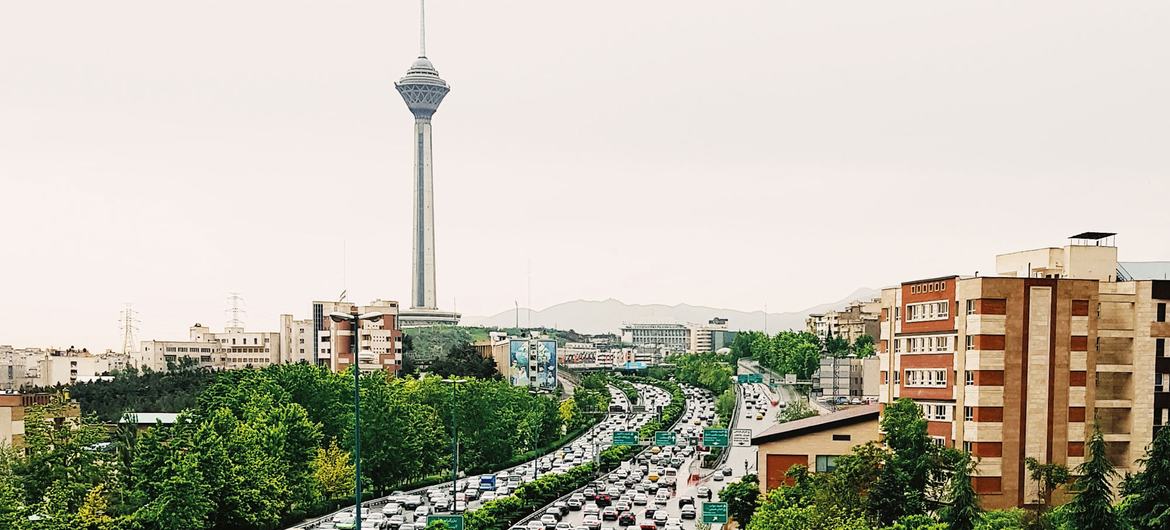
(UN News)*— US sanctions on Iran are resulting in harm to the country’s environment and preventing everyone there – including migrants and Afghan refugees – from fully enjoying their rights to health and life, and contributing to other factors such as rising air pollution, UN-appointed independent experts said on Tuesday [].
Unsplash/Mehrshad Rajabi | Hakim Expressway, Tehran, Iran.
“Like many countries, Iran has environmental issues. The sanctions not only prevent the Iranian Government from addressing them effectively; they contribute to making the challenges worse,” the group of Special Rapporteurs and the Independent Expert on international solidarity, said in a statement.
Air pollution is a particular concern and reportedly causing higher levels of respiratory and other diseases among residents, that lead to an estimated 4,000 premature deaths per year in the capital Tehran and 40,000 premature deaths annually across the country.


 HUMAN WRONGS WATCH