Fashion brands must end exploitation in supply chains and offer fair salaries and working conditions, say industry experts.
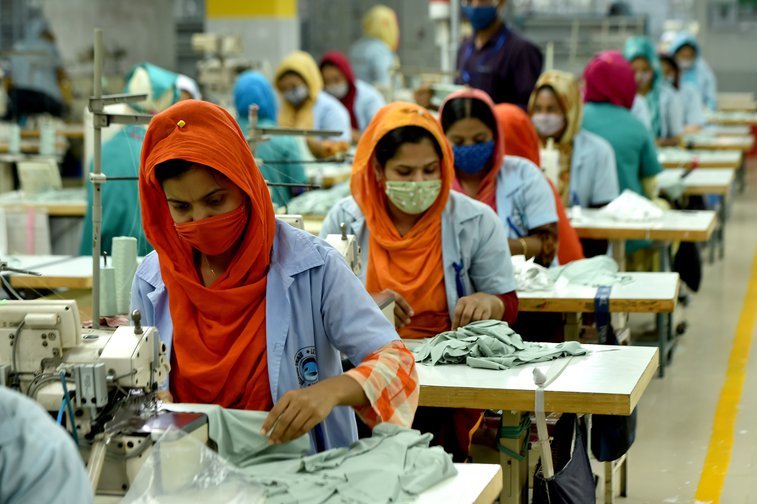
Women wearing face masks work at Liz Fashion Industry Limited, a garment manufacturer, in Gazipur on the outskirts of Dhaka, Bangladesh on Jan. 3, 2021 | Salim/Xinhua News Agency/PA Image
18 January 2021 (openDemocracy)* — In 2019 the fashion industry generated $2.5trn in global revenues, making it one of the largest industries in the world. But when COVID-19 struck in 2020, it virtually collapsed.
17 January 2021 (UNEP)* — 2020 was not only the year of the COVID-19 pandemic. It was also the year of intensifying climate change: high temperatures, floods, droughts, storms, wildfires and even locust plagues. Even more worryingly, the world is heading for at least a 3°C temperature rise this century.
.
Image by UNEP / 14 Jan 2021
We need strong action to reduce greenhouse gas emissions to meet the Paris Agreement goals of holding global warming this century to well below 2°C and pursuing 1.5°C. This would limit the impacts of climate change on vulnerable communities and ecosystems.
In August 2010, the secretary-general of the UN Convention on Biological Diversity, Ahmed Djoghlaf, warned that ‘We are losing biodiversity at an unprecedented rate.’ According to the UN Environment Program, ‘the Earth is in the midst of a mass extinction of life’ with scientists estimating that ‘150-200 species of plant, insect, bird and mammal become extinct every 24 hours’ which is nearly 1,000 times the ‘natural’ or ‘background’ rate.
Two months later, at the tenth meeting of the Conference of the Parties to the Convention on Biological Diversity, held from 18 to 29 October 2010, in Nagoya, Aichi Prefecture in Japan, a revised and updated Strategic Plan for Biodiversity, including the Aichi Biodiversity Targets, for the 2011-2020 period was adopted. See ‘Strategic Plan for Biodiversity 2011-2020, including Aichi Biodiversity Targets’.
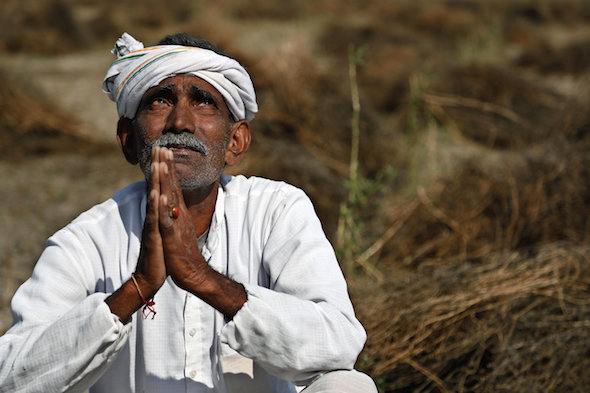
Since late November, braving the bitter cold, hundreds of thousands of farmers have set up protest camps at various points on the borders of India’s capital, New Delhi. Their main demand is the withdrawal of the three farm laws rammed through parliament by the right-wing Narendra Modi government in September. Farmers fear these laws will drive down the prices they get for their produce and pave the way for greater corporatization of agriculture. Noted economist Prabhat Patnaik analyzes some of the key arguments being made in this context.
A farmer looks skyward as he sits amid his wheat crop in the Indian state of Rajasthan. (AP / Deepak Sharma)
Nairobi, 14 January 2021 (UNEP)* – As temperatures rise and climate change impacts intensify, nations must urgently step up action to adapt to the new climate reality or face serious costs, damages and losses, a new UN Environment Programme (UNEP) report finds.
Adaptation – reducing countries’ and communities’ vulnerability to climate change by increasing their ability to absorb impacts – is a key pillar of the Paris Agreement on Climate Change. The agreement requires its signatories to implement adaptation measures through national plans, climate information systems, early warning, protective measures and investments in a green future.
Geneva, 14 January 2021 (WMO)* – The year 2020 was one of the three warmest on record, and rivalled 2016 for the top spot, according to a consolidation of five leading international datasets by the World Meteorological Organization (WMO). A naturally occurring cooling climate phenomenon, La Niña, put a brake on the heat only at the very end of the year.
2020 was the warmest decade on record, according to the World Meteorological Organization.
All five datasets surveyed by WMO concur that 2011-2020 was the warmest decade on record, in a persistent long-term climate change trend. The warmest six years have all been since 2015, with 2016, 2019 and 2020 being the top three.
The differences in average global temperatures among the three warmest years – 2016, 2019 and 2020 – are indistinguishably small. The average global temperature in 2020 was about 14.9°C, 1.2 (± 0.1) °C above the pre-industrial (1850-1900) level.
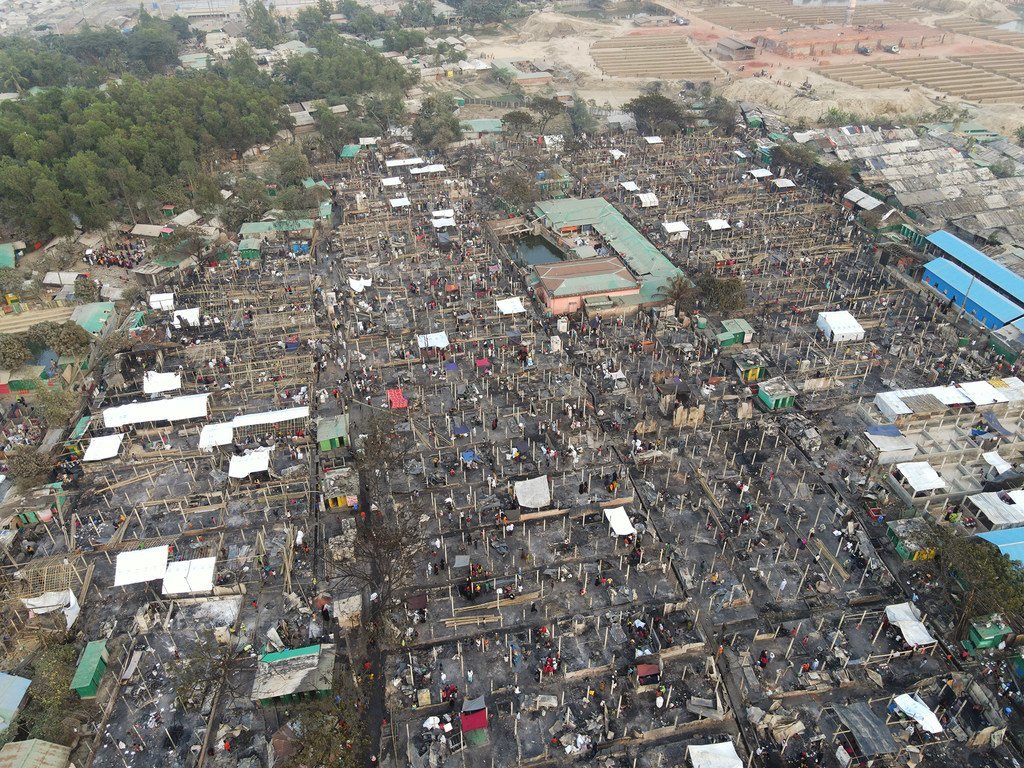
15 January 2021 (UN News)* — UN agencies have stepped up efforts to help thousands of Rohingya refugees left without shelter after a devastating fire tore through a crowded refugee camp in south-eastern Bangladesh on Thursday [14 January 2021].
WFP Bangladesh | A devastating fire broke out on 14 January in Nayapara refugee camp, southern Bangladesh, destroying over 500 shelters.
The fire erupted shortly after midnight on Thursday (local time) in the Nayapara refugee camp in Cox’s Bazar, gutting about 550 shelters and 150 shops. A community centre is also said to have been destroyed.
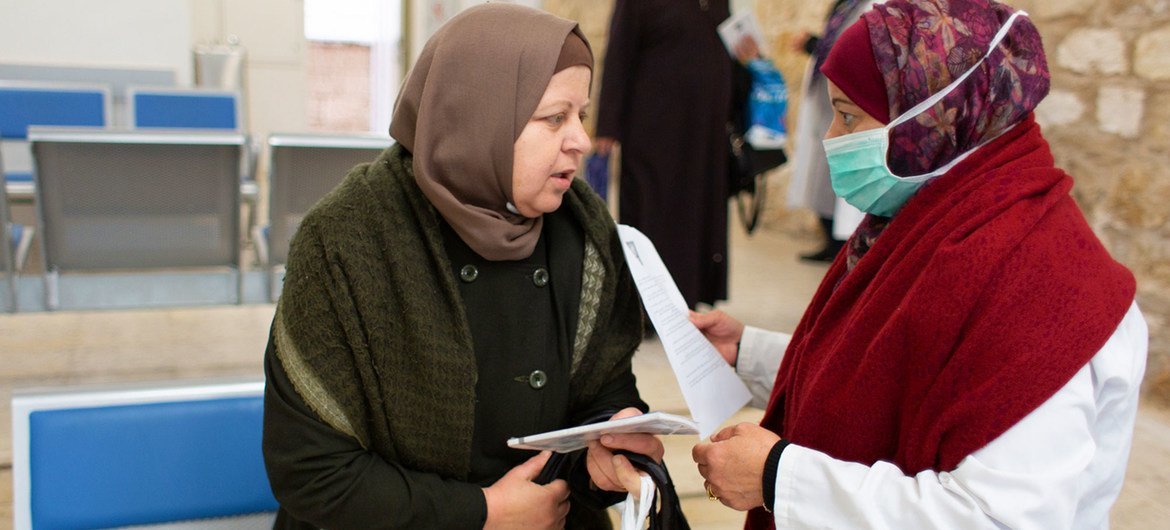
14 January 2021 (UN News)* — Israel’s “impressive” vaccination programme against the COVID-19 pandemic must include Palestinians under occupation, UN independent human rights experts stressed on Wednesday [13 January 2021].
UNRWA/Louise Wateridge | A health worker provides COVID-19 information to a patient visiting the Jerusalem Health Center.
“In this early stage of the worldwide inoculation programme, Israel has delivered the vaccines to a higher percentage of its citizens than any other country”, said Special Rapporteurs Michael Lynk and Tlaleng Mofokeng.
While noting that Israel has offered Palestinians with resident status in occupied East Jerusalem the vaccines, they noted however, that it has not ensured that those under occupation in the West Bank and Gaza will have any near-future access to the vaccine.
(UN News)* — The UN’s labour agency (ILO) on 13 January 2021 called for greater recognition and protection for the hundreds of millions of people who work from home, accounting for almost eight per cent of the global workforce even before the COVID-19 pandemic.
.
.
Since movement restrictions linked to the global spread of the virus were implement in many countries, the number of people working from home has increased sharply, and that trend is expected to continue in coming years, despite the rollout of vaccines that began in late 2020.




 HUMAN WRONGS WATCH