Human Wrongs Watch
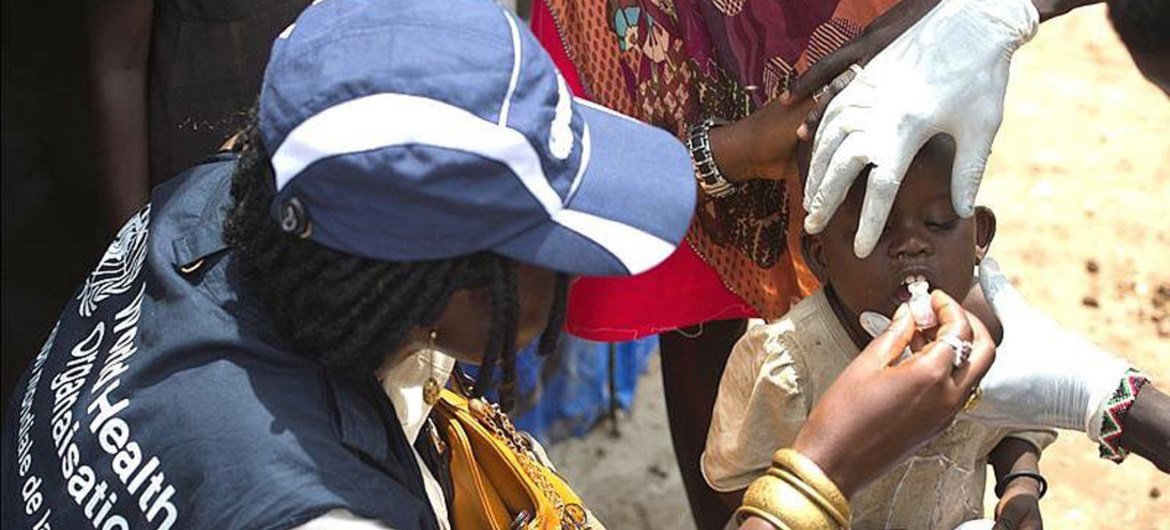
(UN News)* — On the eve of the fourteenth anniversary of its independence, South Sudan – the world’s youngest country – is experiencing its worst and longest cholera outbreak.
read more »
'Unseen' News and Views
(UN News)* — On the eve of the fourteenth anniversary of its independence, South Sudan – the world’s youngest country – is experiencing its worst and longest cholera outbreak.
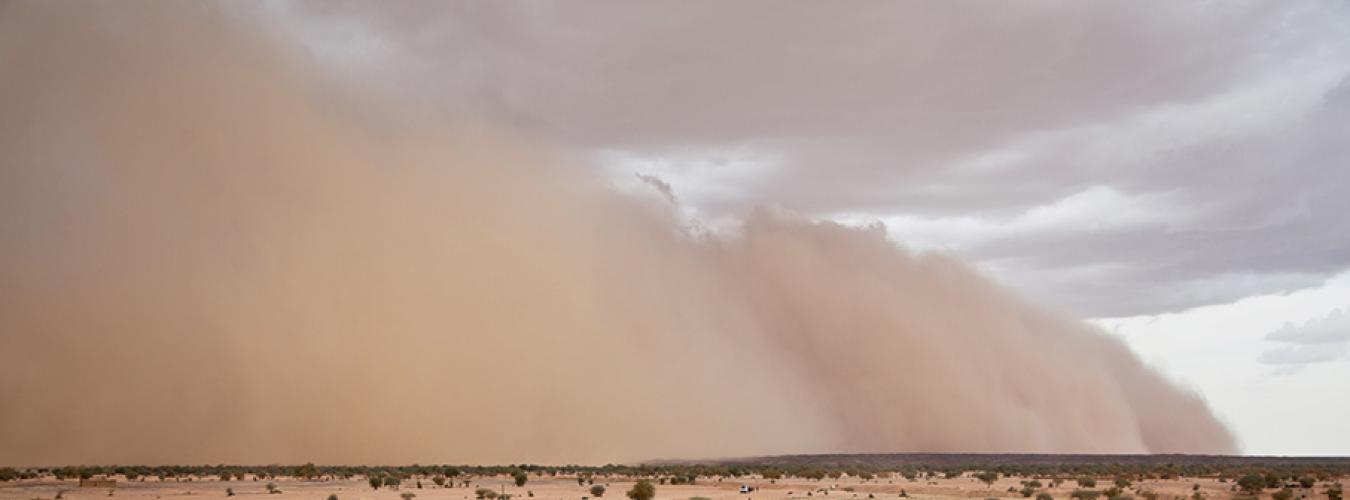
(United Nations)* — Some of the most intimidating sights in nature are rolling dark clouds of sand and dust that engulf everything in their path, a phenomenon that turns day into night and wreaks havoc everywhere from Northern China to sub-Saharan Africa.
The southern part of South America is counting the societal and economic cost of an extreme cold spell which brought frost and freezing morning temperatures intensified from Patagonia to central regions of Chile and Argentina.

On 30 June, both Chile and Argentina ranked among the coldest places on Earth, excluding the polar regions.
It was due to the persistence of a powerful polar-origin anticyclone which extended into parts of Paraguay and Uruguay, causing unusually low temperatures for the season.
The World Meteorological Organization, its members and partners are ramping up action against extreme heat to protect lives from what is widely described as a silent killer.

July is typically the warmest month of the year in the Northern hemisphere.
Western Europe is currently under influence of a strong high-pressure system, trapping dry air from northern Africa over the region and leading to extreme heat which is having a major impact on all aspects of daily life, leading to spikes in air pollution and a big risk of wildfires.
This is coupled with a severe drought in some European countries.
Cibitoke, Burundi – The last thing Elizabeth Uwimana remembered before the Rusizi River swallowed her two eldest children is the fear in their eyes as a violent surge of water tore them from her grasp.
 Elizabeth Uwimana sits at a transit site in Burundi, exhausted after fleeing violence in the DRC with her children. Photo: IOM Burundi 2025/Alexander Bee
“The river took them from me,” she whispers, seated in a makeshift shelter surrounded by hundreds of other displaced families. “To this day, I don’t know if they are alive.”
Elizabeth, a mother of four, is among tens of thousands who fled renewed violence in eastern Democratic Republic of the Congo (DRC).
GENEVA (United Nations Human Rights)* – Israel’s genocide against Palestinians is being sustained by a system of exploitative occupation and profit, a UN expert on 3 July 2025 warned in a new report to the Human Rights Council that reveals how corporate profiteering and monetary gain has enabled and legitimised Israel’s illegal presence and actions.
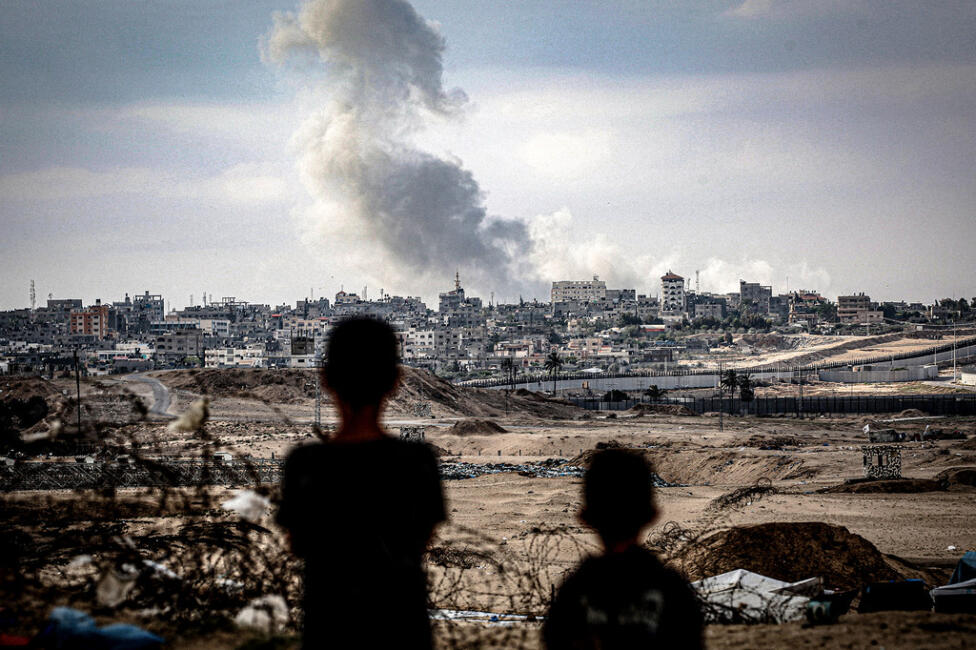 Photo: UNICEF.
“In the past 21 months, while Israel’s genocide has devastated Palestinian lives and landscapes, the Tel Aviv stock exchange soared by 213 percent (USD), amassing $225.7 billion in market gains—including $67.8 billion in the past month alone…

3 July 2025 — US headlines have been dominated by coverage of the many ways President Trump’s budget bill will gut healthcare programs and deepen economic inequality in the United States if it is passed into law.

Somewhat lost amidst all that noise is the story of how the Trump administration also weaponized the bill to benefit the wealthiest US corporations by undermining global efforts to tax businesses fairly.

Richard E. Rubenstein
30 Jun 2025 — The question that nobody wants to talk about – not even Congressional opponents of Trump’s potential war against Iran – is why the Iranians can’t have a nuclear weapon if they want one.
This is not discussed because US citizens have been taught to believe that there are good and evil nations and regimes, and that Iran is an evil, “rogue” state that only wants nukes so that the Ayatollahs can use them to destroy Israel.
What a crock!
Iran is a state like most others, vesting the power of an elite while calling itself a republic. They have their Ayatollahs and we have our Oligarchs.
The actual reason Iran wants nuclear weapons (or at least the right to threaten to develop them) is so that their country – an industrialized, middle-income nation of more than 90 million people – can hold its own with Israel and avoid becoming another dependent subject of the US Empire.
 HUMAN WRONGS WATCH