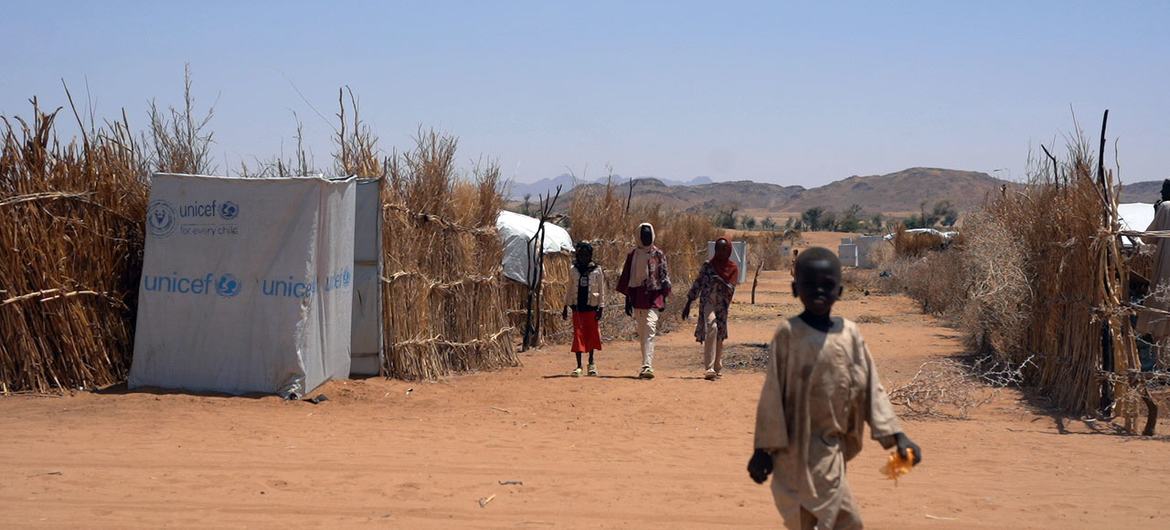
(UN News)*– The humanitarian crisis in Sudan’s El Fasher remains dire as mass displacement accelerates and aid access stays restricted, amid warnings of widespread trafficking, sexual violence and the recruitment of children.
UN agencies say conditions are deteriorating further across North Darfur and neighbouring Kordofan, while independent human rights experts on Thursday warned that the collapse of protection following the city’s fall has sharply increased the risks facing women and children.
A young visitor signs a panel at Geneva’s Palais des Nations to support the “50 for Freedom” campaign, which urges global ratification of the ILO’s Protocol on Forced Labour to help end modern slavery affecting 21 million people worldwide.PHOTO:UN Photo/Jean Marc Ferré
Latest estimates by the International Labour Organisation(ILO) show that forced labour and forced marriage have increased significantly in the last five years.
10 million more people were in modern slavery in 2021 compared to 2016 global estimates, bringing the total to 50 million worldwide. Women and children remain disproportionately vulnerable.
Geneva, 24 November 2025 – The United Nations’ International Organization for Migration (IOM) has launched Anyone a Victim, a global campaign that calls for stronger action to prevent human trafficking and expand support for survivors.
The “Anyone a Victim” campaign brings survivor stories to the forefront, encouraging global support for efforts that help people regain safety and rebuild their lives. Photo: Peter Bateman
Donors provided lowest aid funding ever in 2025, since country created in 2011.
.
Nadia Zahad, a refugee from the Sudan war stands outside her makeshift home in Renk, South Sudan. (Photo: Herison Philip Osfaldo/Oxfam)
Almost 6 million people – nearly half of the population – in South Sudan are experiencing acute hunger, with little access to clean water or sanitation as funding cuts have stripped away vital humanitarian support just as it is needed the most, Oxfam on 26 November warned.
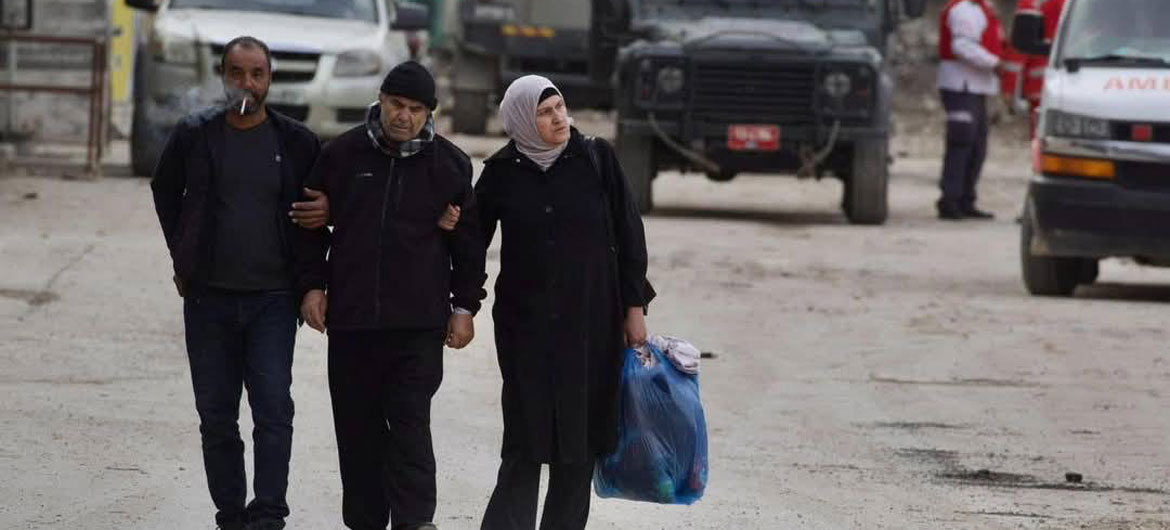
(UN News)* —The UN human rights office, OHCHR said on Friday [] that it was “appalled” by the “brazen killing” of two Palestinian men by Israeli border police in the West Bank, describing it as “an apparent summary execution.
The shooting occurred on Thursday [] in Jenin and was apparently caught on film by a TV channel, OHCHR Spokesperson Jeremy Laurence told journalists in Geneva.
(Bangkok) – The Cambodian government is failing to provide support to hundreds of thousands of migrant workers with microfinance debts who returned from Thailandbecause of hostilities in mid-2025,Human Rights Watch on 25 November 2025 said.
(UN News)* — Soaring inflation, fragile job markets and shrinking access to healthcare and education are pushing millions of people in South and South-East Asia onto risky migration paths, the UN human rights office said on Thursday [], as regional migration reaches historic highs.
.
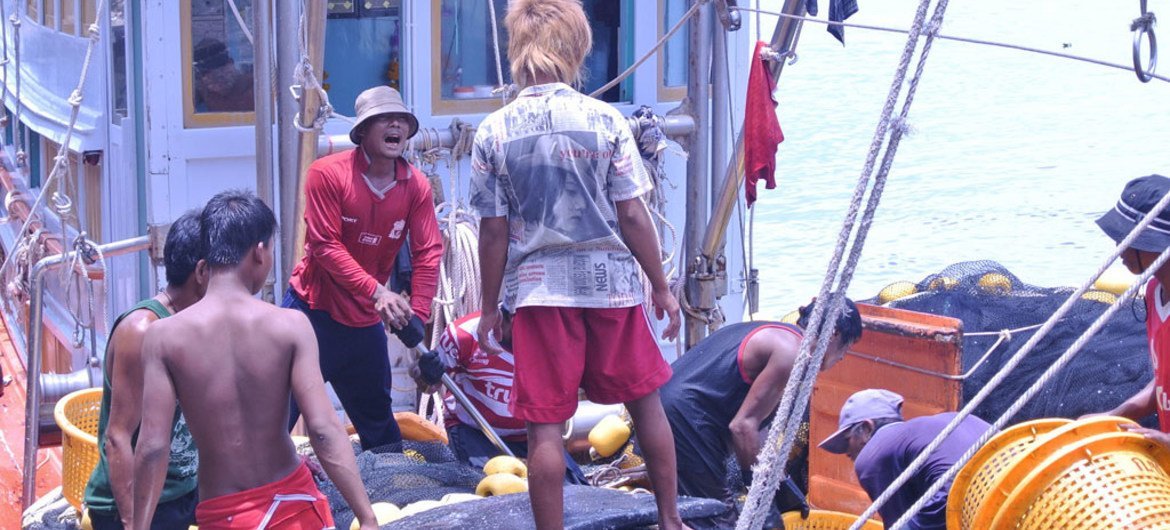
Photo: ILO | Migrant workers onboard a fishing vessel. While they make an enormous development contribution to both their countries of origin and destination, many migrant workers suffer human and labour rights violations. (file photo)
The office said people across the region are migrating “not by choice, but out of necessity,” driven by the systemic deprivation of economic, social and cultural rights at home.
.
Poverty, unemployment, weak public services and climate stress are eroding livelihoods and leaving millions with few alternatives but to leave.
First-ever regional analysis shows that over half of children in Oceania and around a third in both sub-Saharan Africa and Central and Southern Asia are victims of violence in the home.
UNICEF/UNI790515/Chair
NEW YORK, 26 November 2025 – Children in Oceania, Sub-Saharan Africa, and Central and Southern Asia are most likely to live with a mother who has experienced physical, emotional, or sexual abuse by a partner in the past year, reflecting pervasive inequalities and global patterns of abuse faced by women, according to new UNICEF data.
(UN News)* — Aid deliveries into Gaza continue to face difficulties as fighting continues across the territory, with the UN warning that most hospitals are only partially functioning and more than 16,500 patients still require urgent medical evacuation.
Briefing reporters in New York on Wednesday [], UN Spokesperson Stéphane Dujarricsaidhostilities in parts of the Gaza Strip are still resulting in casualties and repeated disruptions to humanitarian operations.
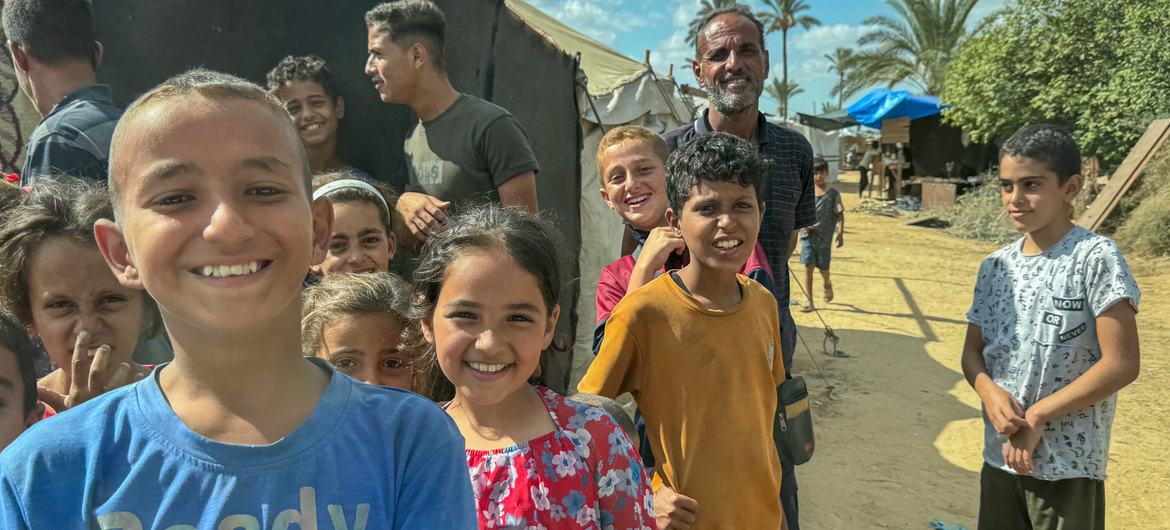
(UN News)* — For over two years, tens of thousands of people have been killed in Gaza. The enclave faces its most severe economic collapse in history, and even amid a fragile ceasefire, children continue to die.
.
UNOCHA/ Olga Cherevko | Children queue for food at a community kitchen in Deir al Balah, Gaza, prior to the ceasefire agreement.





 HUMAN WRONGS WATCH