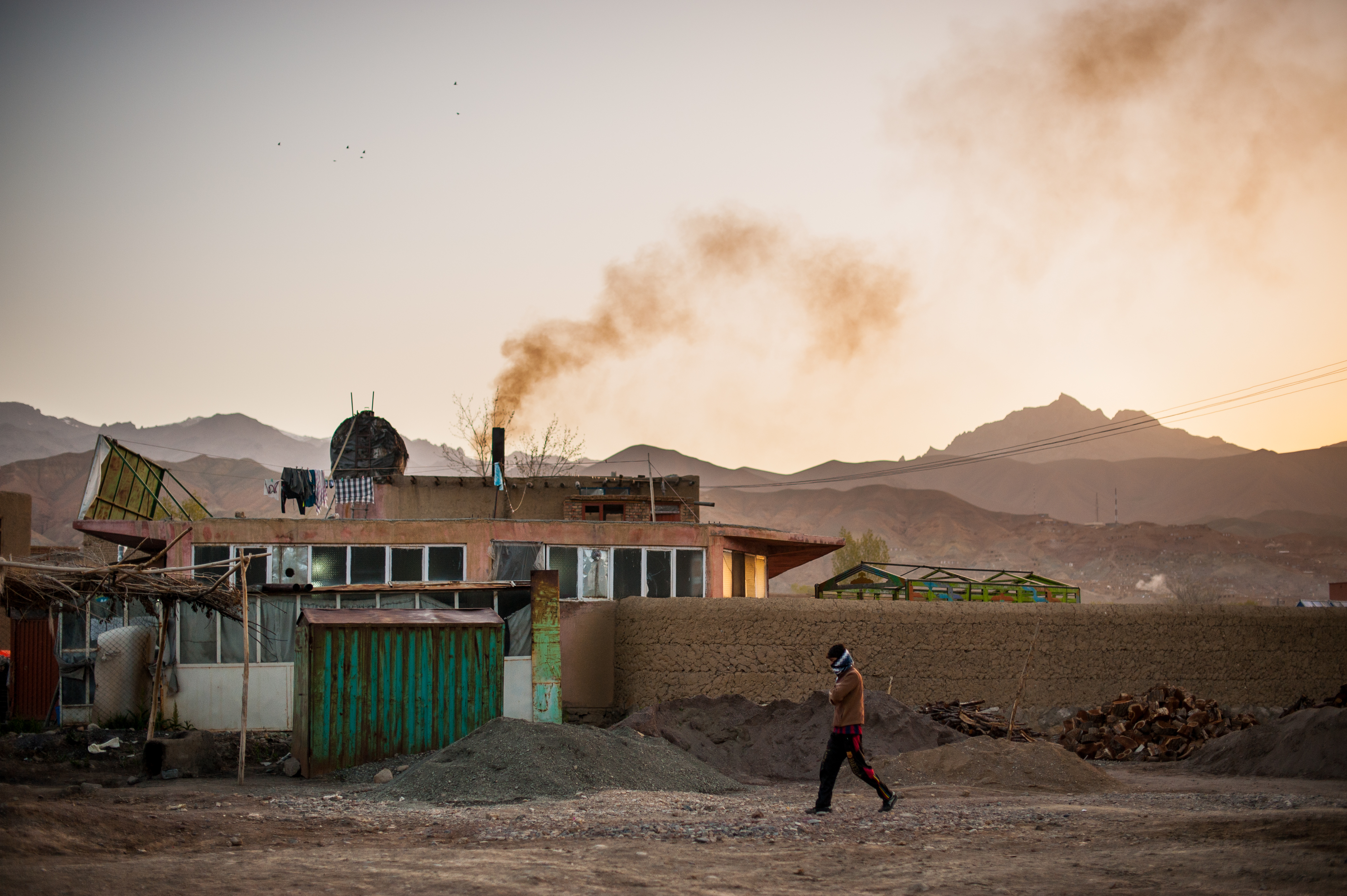
New York (UNDP)* – Afghanistan teeters on the brink of universal poverty. As much as 97 percent of the population is at risk of sinking below the poverty line unless a response to the country’s political and economic crises is urgently launched, according to a rapid appraisal on 9 September 2021 released by the United Nations Development Programme (UNDP).
27 September 2021 (Wall Street International)* — Adam Smith (1723-1790) maintained that individual self-interest can and should be the principle guiding our economic behavior.
He told the readers of his book The Wealth of Nations, that, as if guided by an invisible hand, individual self-interest leads to the general good. To put is in fewer words, Smith maintained that greed is good.
The Royal Family’s archaic-seeming rules and customs obscure its deep connections with modern global corporate power
The British royal family is often dismissed as an archaic institution | newsphoto / Alamy Stock Photo
26 September 2021 (openDemocracy)* — On 12 October 2018, Princess Eugenie married Jack Brooksbank at Windsor Castle, in a ceremony funded in part by the Sovereign Grant, the British government’s annual payment to the monarchy. At my local gym that day, I overheard two people discussing the day’s events.
These are the names of but a few of the military exercises carried out by the U.S. Africa Command forces (AFRICOM) on the African continent in recent years.
The exercises have occurred across the expanse of the continent – east, west, north, and south – as well as on the surrounding seas and oceans.
And the exercises have included participation from Europe, and from almost every African country.
(Wall Street International)* — President Barack Obama sits in front of the American flag: “We are entering an era in which our enemies can make it look like anyone is saying anything at any point in time,” he warns.
Although he is using familiar expressions and hand gestures, there is something strange about the video. Obama’s face looks weird, and his voice sounds flat and forced.
U.S. wars in foreign nations always come home. The latest example is “Gorgon Stare,” wide angle surveillance planes, used in Iraq and Afghanistan, that have now been brought home to an urban area near you. “Gorgon Stare” is named for the three Gorgons in Greek mythology, snakeheaded sisters whose stare could turn a person to stone.
(UN News)* — A sharp increase in the deaths and disappearances of migrants at sea heading to Spain’s Canary Islands, along the West African coast, is a cause for “extreme concern” the UN’s migration agency, IOM, said on Friday [24 September 2021].
IOM/Peter Schatzer | Conflict and poverty continue to compel people to undertake extremely perilous journeys at sea.
By the end of last month, the International Organization for Migration’s (IOM) Missing Migrants Project recorded 785 people, including 177 women and 50 children, who had died or disappeared this year.
23 September 2021 (UN News)* — Every day, hundreds of millions of people go to bed hungry. Three billion people cannot afford a healthy diet. Two billion are overweight or obese and yet 462 million, are underweight. Nearly a third of all food that is produced, is lost or wasted.
FAO/Luis Tato | Women vendors sell fresh vegetables at a market in Limuru, Kenya.
These are just some of the problems and contradictions laid bare by the UN Secretary-General on Thursday [23 September 2021] at the opening of the landmark UN Food Systems Summit, that is bringing together farmers and fishers, youth, Indigenous Peoples, Heads of State, governments and many more, in an effort to transform the sector and get the world back on track to achieve all 17 Sustainable Development Goals (SDGs) by 2030.
WFP racing against clock to provide most vulnerable with life-saving food – but funding is short
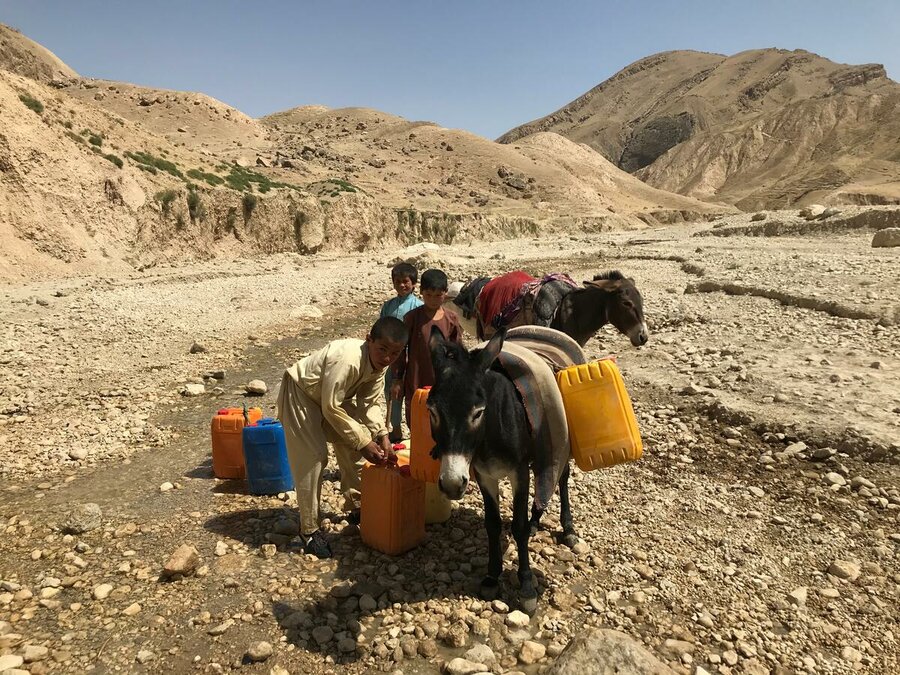
Two droughts in the space of three years have hit Afghanistan hard. Photo: WFP/Arete
(WFP)* — As the harsh Afghan winter looms closer, recent surveys conducted by the World Food Programme (WFP) have revealed that only five percent of families have enough to eat every day, while half reported they had run out of food altogether at least once in the past two weeks.
A guest looks at pictures from the ‘Against Nuclear Arms’ exhibit, presented on August 2009 at UN Headquarters. UN Photo/Paulo Filgueiras
From the very start, addressing the existential threat of nuclear weapons has been central to the work of the United Nations.
In 1946, the very first General Assembly resolution sought “the elimination from national armaments of atomic weapons and of all other major weapons adaptable to mass destruction.”
Seventy-six years later, we have yet to achieve that resolution’s goals.








 HUMAN WRONGS WATCH