Millions of women and girls worldwide still cannot afford menstrual products or access water and sanitation facilities to manage their menstrual health and hygiene.
Periods make them miss school, work, and negatively impact their health, but it does not have to be that way.
Image
In Sitamarhi State, Bihar, India, in 2022, women hold sanitary pads during an awareness campaign as part of a menstrual hygiene management program organized by UNICEF. Photo: UNICEF/Priyanka Parashar
SRINAGAR & KISTIWAR, India, Sep 4 2025 (IPS)* ––The relentless rain that battered the mountains and valleys of Jammu and Kashmir this August shattered lives and records.
The Kishtwar cloudburst on August 26 buried Chesoti village beneath a torrent of mud and boulders, killing at least 65 people, with several still missing. Credit: Umar Manzoor Shah/IPS
Naminaue, Mozambique, 3 September 2025 – “This water is sweet,” says Merina, watching clear water flow from a newly rehabilitated borehole in Naminaue, northern Mozambique.
For the past five years she has lived in this displacement site, and for her, the taste of clean water brings back a rare sense of normalcy after years of conflict and loss.
Before displacement, Merina’s life in Litamanda village in Macomia District was steady. Her family farmed maize, rice, and sweet potatoes, slept on proper beds, and even watched Brazilian soap operas on television.
That ended the day armed groups attacked. Merina lost her husband in the violence and fled with nothing.
Merina scoops fresh water from the newly rehabilitated borehole – the first safe source in years. Photo: IOM 2025/Amanda Nero
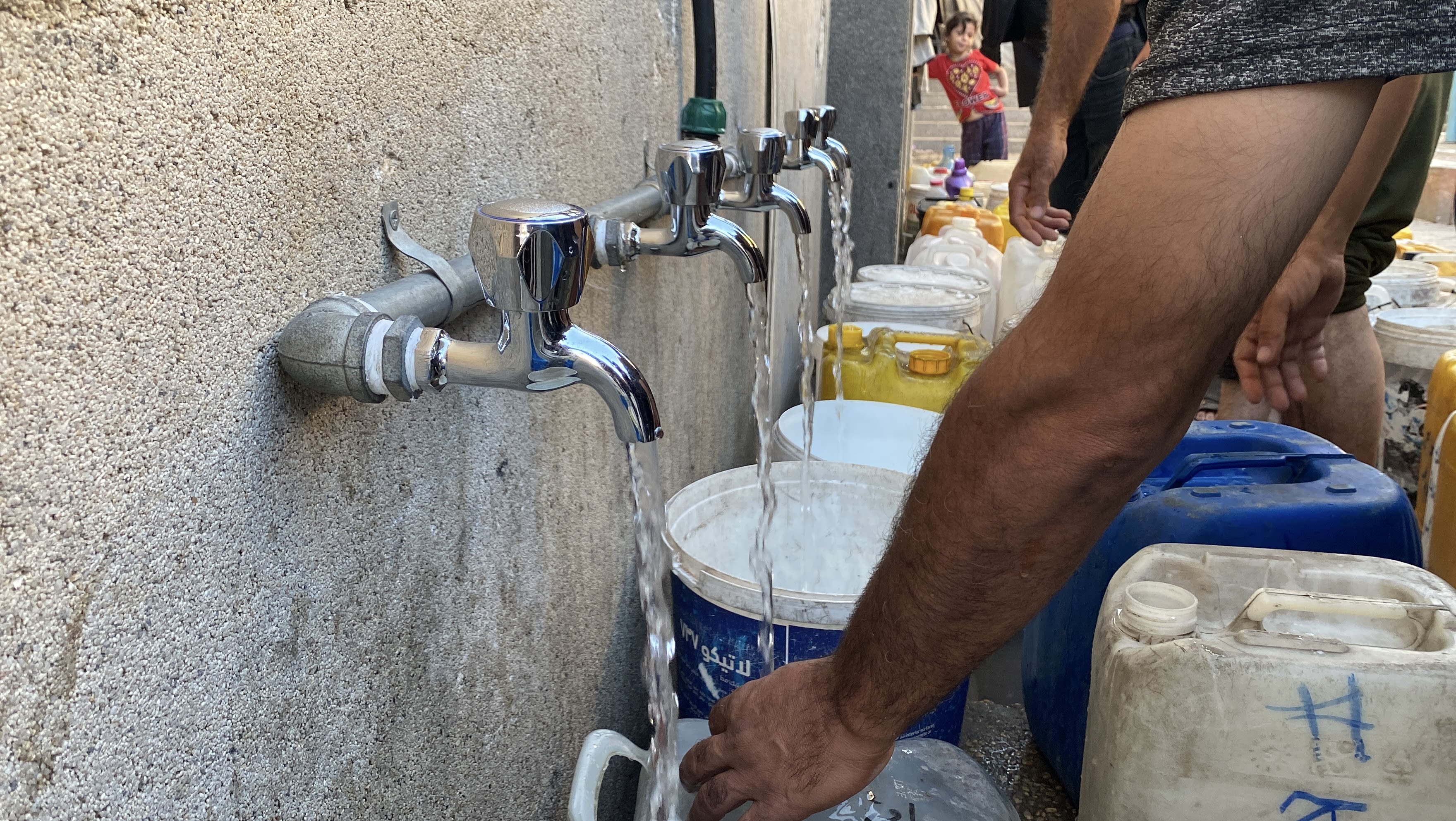
7 September 2025 —In the midst of bombing, shelling and access denial, the Norwegian Refugee Council (NRC) continues to deliver safe water to thousands of Palestinians in Gaza.
Photo: Nasser Harara/NRC
Since October 2023, Israel has repeatedly attacked water facilities, wells, pipelines, desalination units and sewage systems in Gaza.
(UN News)* — Sanctions imposed by the United States on three prominent and well-respected Palestinian human rights groups are “completely unacceptable and should be withdrawn”, UN human rights chief Volker Türk said on Friday [].
(UN News)* — Governments, academia and other stakeholders must “double down on delivering reparatory justice” for people from the African diaspora, the UN human rights office, OHCHR, said in a report published on Wednesday [].
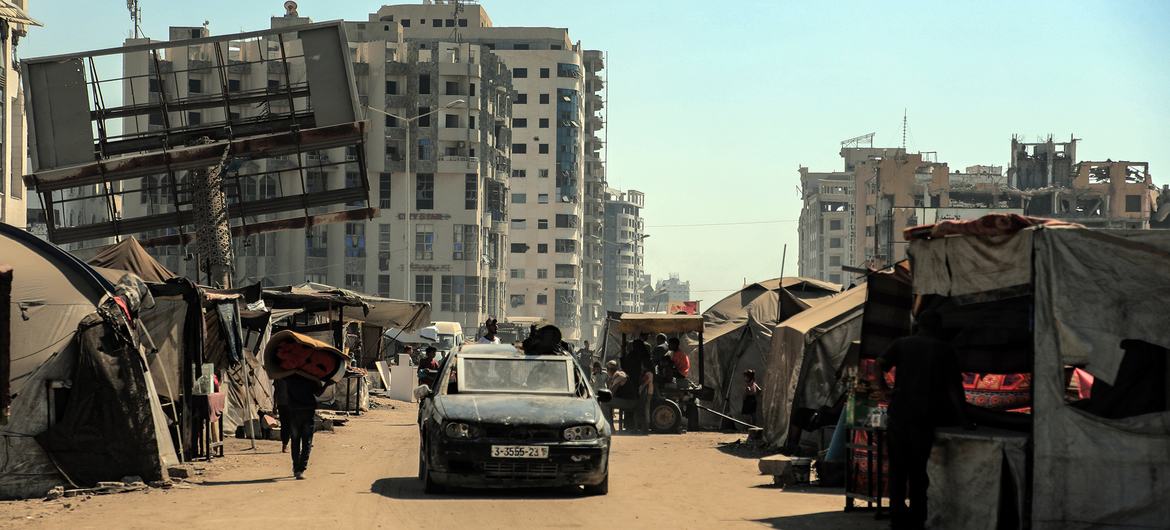
(UN News)* —A senior official from the UN human rights office, OHCHR, said on Thursday [] he was extremely concerned over intensifying Israeli military operations in northern Gaza – including Gaza City – and warned against any attempt to annex parts of the West Bank.
Ajith Sunghay, Head of OHCHR’s Office in the Occupied Palestinian Territory (OPT), told UN News that the escalation has caused extensive destruction to residential buildings in southern parts of North Gaza governorate and in northeastern areas of Gaza City.
(UN News)* —The UN Children’s Fund (UNICEF) called on Thursday [] for the international community to do everything possible to prevent catastrophe in Gaza City as Israel ramps up military operations ahead of a planned full takeover.
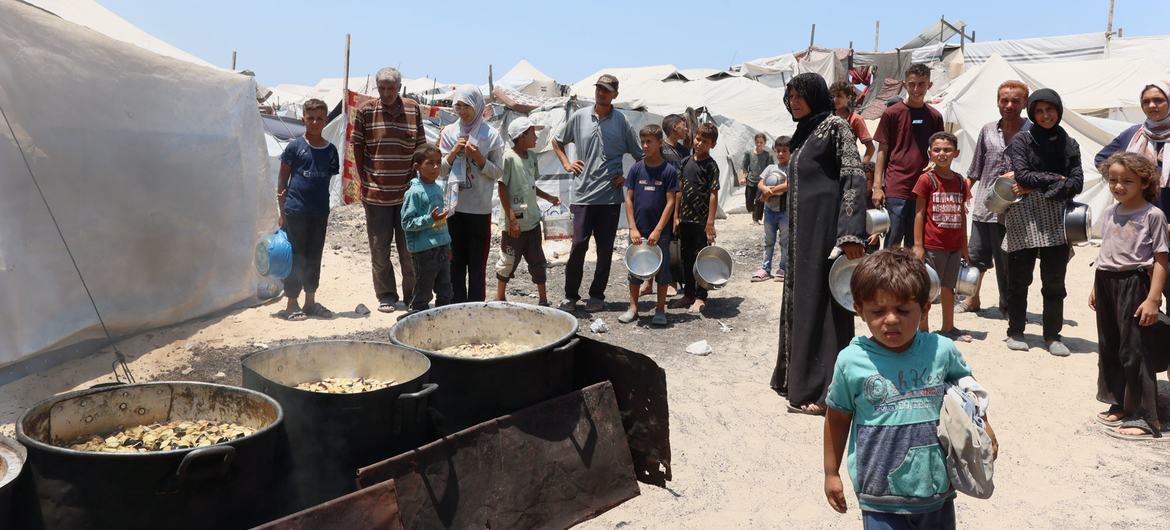
UN News | Families seek food at a community kitchen in western Gaza City.
Tess Ingram, Communication Manager for UNICEF’s Middle East and North Africa Regional Office, recently spent nine days there, describing it as “a city of fear, flight and funerals.”
“The last refuge for families in the northern Gaza Strip is fast becoming a place where childhood cannot survive,” she said, speaking from the enclave to journalists in New York.
2 September 2025 —More than 1 billion people are living with mental health disorders, according to new data released by the World Health Organization (WHO), with conditions such as anxiety and depression inflicting immense human and economic tolls.
WHO / Christopher Black | Community mental health teams are one way of providing mental health care, Ukraine, 2023.
While many countries have bolstered their mental health policies and programmes, greater investment and action are needed globally to scale up services to protect and promote people’s mental health.
Mental health conditions such as anxiety and depression are highly prevalent in all countries and communities, affecting people of all ages and income levels.



 HUMAN WRONGS WATCH