MEXICO CITY, Mar 19 2021 (IPS)* – Indigenous farmers on communally owned lands have blocked since 2016 a private solar farm in the southeastern Mexican state of Yucatan by means of legal action, due to the company’s failure to hold consultations with local native communities and the risk of environmental damage. | En español
.
Since 2016, inhabitants of three municipalities in the central Mexican state of Puebla have managed to block construction of the Puebla 1 private hydroelectric power plant, by means of a lawsuit arguing that the mandatory indigenous consultation was not carried out and that the megaproject will cause environmental damage. This screenshot from a video shows a protest in one of the municipalities by the Fundar Centre for Analysis and Research. CREDIT: IPS/Fundar
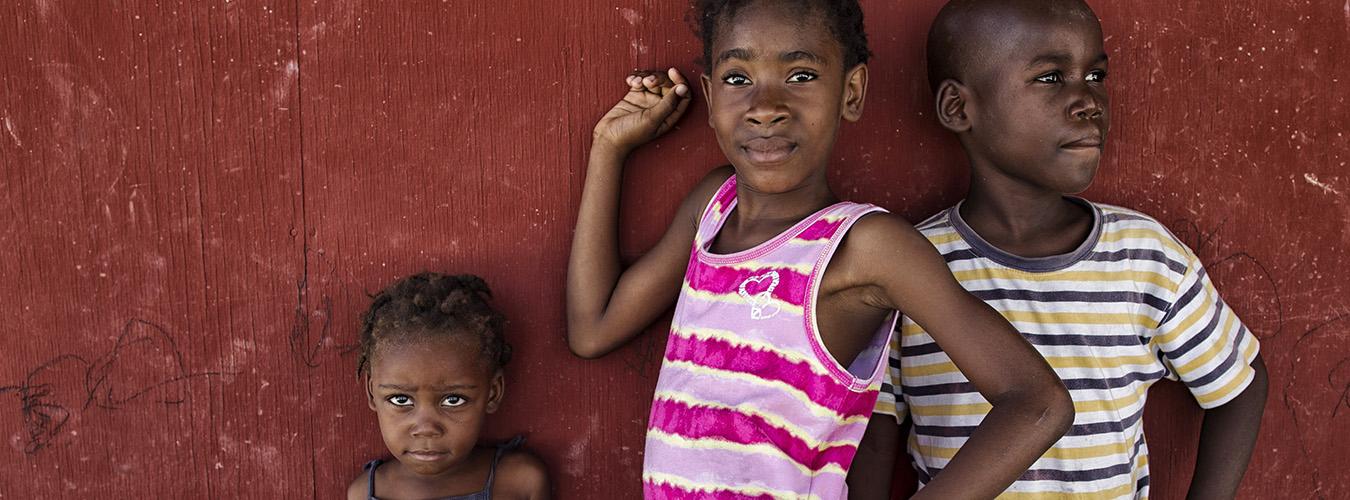
Children in a camp for internally displaced people (IDPs) in Haiti. PHOTO:UN Photo/Logan Abassi
21 March 2021 (United Nations)* — “Youth standing up against racism” is the 2021 theme. It engages the public through #FightRacism, which aims to foster a global culture of tolerance, equality and anti-discrimination and calls on each and every one of us to stand up against racial prejudice and intolerant attitudes.
Participants at a special event on Youth Standing Up for Human Rights. Empowering youth to better know and claim their rights will generate benefits globally. UN Photo/Eskinder Debebe
“Last year, people around the globe took to the streets to protest the vicious global pandemic of racism.
17 March 2021 (UN News)* — An arms embargo imposed on Libya by the Security Council in 2011 remains “totally ineffective” a UN Panel of Experts has said, adding that civilians, including migrants and asylum seekers, continue to suffer widespread rights violations and abuses.
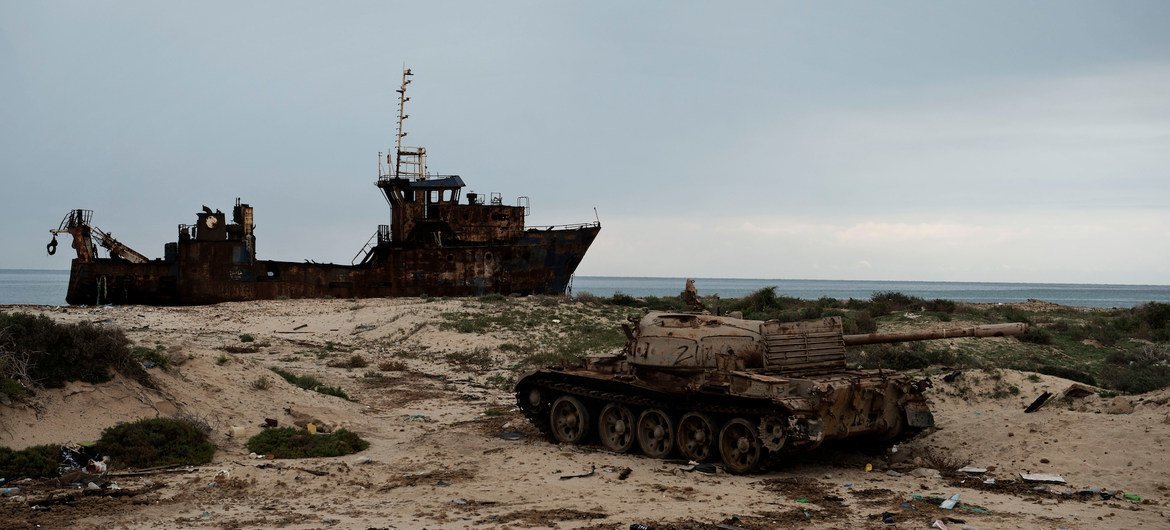
UNICEF/Alessio Romenzi | The rusting hulk of a ship and a destroyed armoured vehicle on the beach in Zuwarah, western Libya. (file photo)
In its final report, the Panel of Experts on Libya – established pursuant to resolution 1973 (2011) – said that throughout its mandate, the body identified “multiple acts” that threatened the peace, stability or security of the country, and increased attacks against State institutions and installations.
“Designated terrorist groups remained active in Libya, albeit with diminished activities. Their acts of violence continue to have a disruptive effect on the stability and security of the country”, it said.
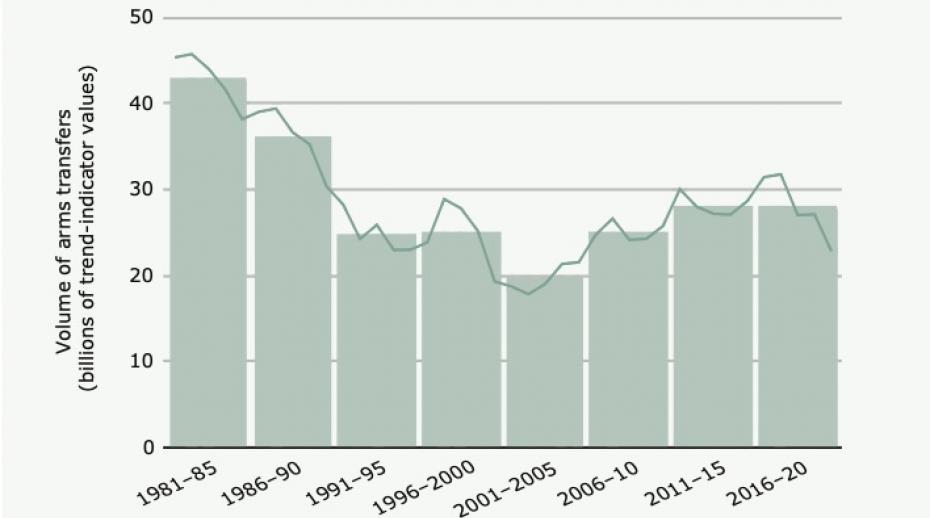
(Stockholm) International transfers of major arms stayed at the same level between 2011–15 and 2016–20. Substantial increases in transfers by three of the top five arms exporters—the USA, France and Germany—were largely offset by declining Russian and Chinese arms exports. Middle Eastern arms imports grew by 25 per cent in the period, driven chiefly by Saudi Arabia (+61 per cent), Egypt (+136 per cent) and Qatar (+361 per cent), according to new data on global arms transfers published on by the Stockholm International Peace Research Institute (SIPRI).
.
The trend in international transfers of major arms, 1981–2020
The prime minister is a political parasite, feeding on distrust in dying institutions. He must be stopped before it’s too late
Boris Johnson’s government is planning to slash the UK’s aid to war-torn countries | Hannah Mckay/Reuters/Alamy
17 March 2021 (openDemocrcay)* — There are lots of reasons why the prime minister, Boris Johnson, should not cut development aid.
Maybe the thought of the 16 million Yemenis who will go hungry this year, while living in fear of British-made bombs, might cause him to turn over at night?
Perhaps he might allow a tear for children in Syria. Those under the age of ten have known nothing but war, but Johnson’s senior civil servants have discussed cutting aid to them by two-thirds.
“The basic problem is that the 193-member General Assembly has deferred too many times, for too long, and on too many issues to the UN Security Council and the five permanent members (P-5) of the UN Security Council (UNSC)”.
UNITED NATIONS, Mar 15 2021 (IPS)* – The United Nations has continued to pursue a notoriously longstanding tradition of doling out some of the highest-ranking jobs either to the five big powers, who are permanent members of the Security Council—namely the US, UK, China, France and Russia – or to Western industrialized nations such as Spain, Italy, Canada, Sweden, Germany, plus Japan.
.
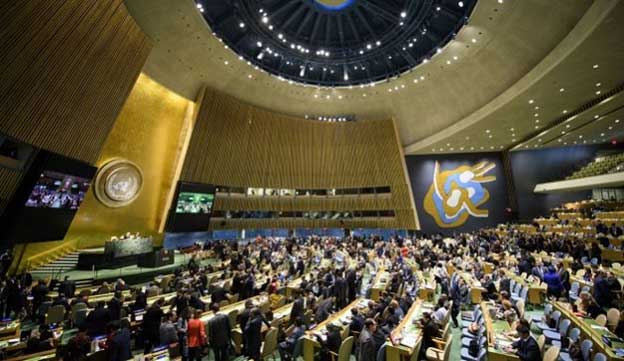
The UN General Assembly in session. Credit: UN Photo/Manuel Elias
The Biden presidency is still in its early days, but it’s not too early to point to areas in the foreign policy realm where we, as progressives, have been disappointed–or even infuriated.
.
There are one or two positive developments, such as the renewal of Obama’s New START Treaty with Russia and Secretary of State Blinken’s initiative for a UN-led peace process in Afghanistan, where the United States is finally turning to peace as a last resort, after 20 years lost in the graveyard of empires.
By and large though, Biden’s foreign policy already seems stuck in the militarist quagmire of the past twenty years, a far cry from his campaign promise to reinvigorate diplomacy as the primary tool of U.S. foreign policy.
By Hilde F. Johnson, Norway’s Former Minister of International Development*
Achieving peace is not possible without engaging regional powers
Band-e Amir National Park located in the Bamyan Province of central Afghanistan | Image fromWall Street International.
15 March 2021 (Wall Street International)* — After 20 years of international allied engagement in Afghanistan, the country is in a worse state than ever. Despite the peace talks in Doha between the Government of Afghanistan and Taliban, the security situation has deteriorated significantly.
In addition, in the last few months, targeted killings of journalists, human rights activists, judges, and teachers have reached an unprecedented level. And many of them have been women.
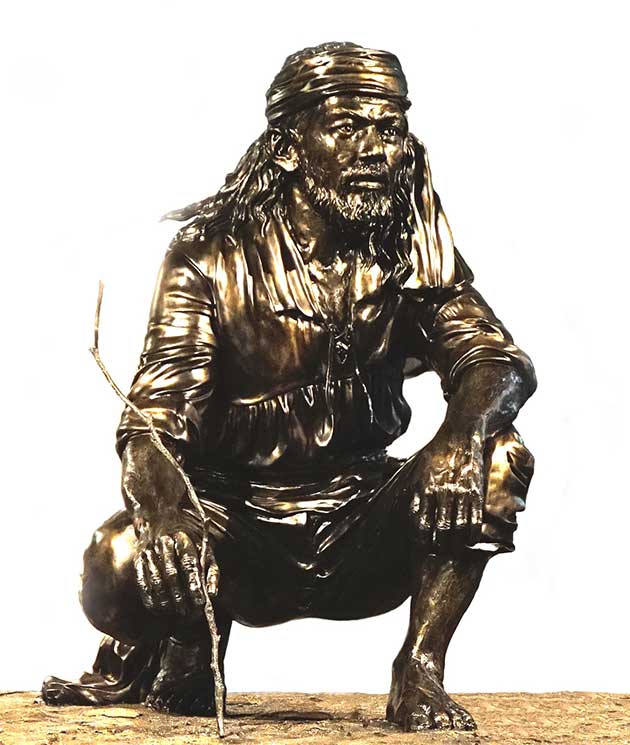
KUALA LUMPUR, Malaysia, Mar 16 2021 (IPS)* – Globalisation’s beginnings are symbolised by Ferdinand Magellan’s near circumnavigation of the world half a millennium ago. But its history is not simply of connection and trade, but also of intolerance, exploitation, slavery, violence, aggression and genocide.




 HUMAN WRONGS WATCH