7 January 2021 (Wall Street International)* — By mid-February 2021, American deaths from Covid-19 may well surpass the country’s 405,400 deaths during the Second World War.
By around mid-May, more Americans will have died from Covid-19 than during the Civil War, which killed 655,000, and the Spanish flu pandemic of 1918, when 675,000 are estimated to have perished.
Meanwhile,” the COVID-19 pandemic has worsened the already dire humanitarian and socio-economic situation” Secretary-General António Guterres said at a meeting online last November, marking the International Day of Solidarity with the Palestinian People.
Patients arrive at a health centre in Gaza. Credit: UNRWA
UNITED NATIONS, Jan 7 2021 (IPS)* – If the coronavirus is not deemed a biological weapon, is the heavily-publicized Covid-19 vaccine in danger of being weaponized when over 159,000 Palestinians who have tested positive in Occupied Palestinian Territories (OPT) are being denied treatment during a deadly pandemic?
The London-based human rights organization Amnesty International (AI) says Israel’s vaccine roll-out plan excludes the nearly 5 million Palestinians who live in the West Bank and Gaza Strip under Israeli military occupation.
‘Lockdown’ was declared by Collins Dictionary as the Word of the Year for 2020.
Looking back, the world will remember 2020 as the year that disrupted our present-day lives: most of us were locked up for months and doing everything from home, unable to see and be with friends and loved ones, when everyone wore masks, scrubbed our hands with soap or alcohol, and practiced social distancing. Many felt worried and anxious about the uncertainties that came with lockdown living.
But amidst a raging pandemic, humanity was not spared from a much bigger threat. While some were feeling safe and secure in their homes, thousands of people were fighting for their survival against a raging climate.
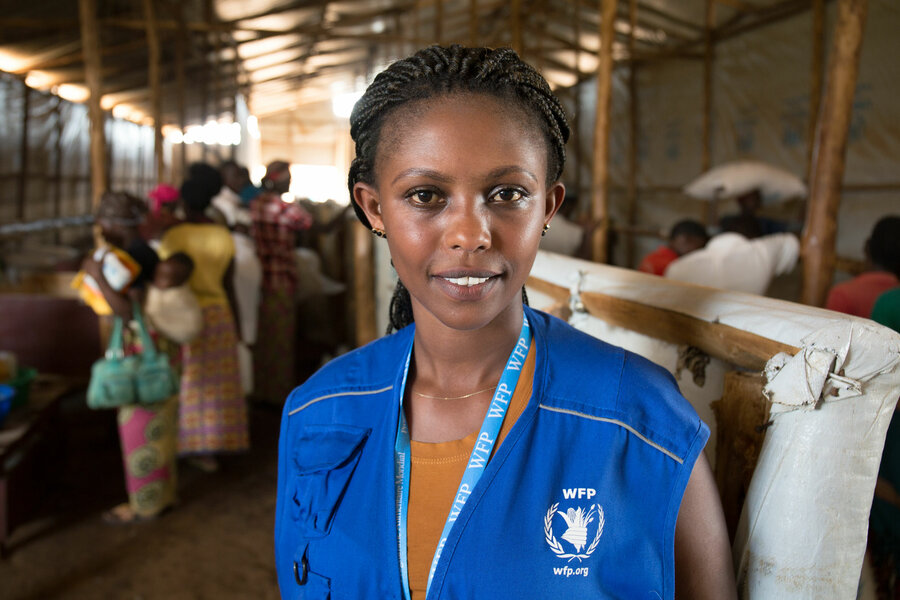
As a child, she received emergency nutritional support from the World Food Programme where she is now a monitor helping Burundian refugees
Liberee Kayumba’s traumatic experience during the genocide against Tutsi in Rwanda inspired her to make a difference in the lives of others. Photo: WFP/Jonathan Eng
Liberee Kayumba, a survivor of the 1994 genocide against the Tutsi in Rwanda, has seen the horrors of war first-hand. She was only 12 years old when she lost her parents and brothers in the genocide – a trauma that was further compounded by the immediate risk of starvation.
5 January 2021 (Wall Street International)* — Here are some quotations from a December 2, 2020 article by Justin Rowlatt entitled Humans waging suicidal war on nature – UN chief Antonio Guterres:
Humanity is waging what he describes as a suicidal war on the natural world.
Nature always strikes back, and is doing so with gathering force and fury, he told a BBC special event on the environment.
(UN News)* — The World Bank Group on Tuesday [5 January 2021] issued a guarded growth forecast for the global economy this year, saying that a four per cent overall expansion was likely, although the recovery will likely be a “subdued” one.
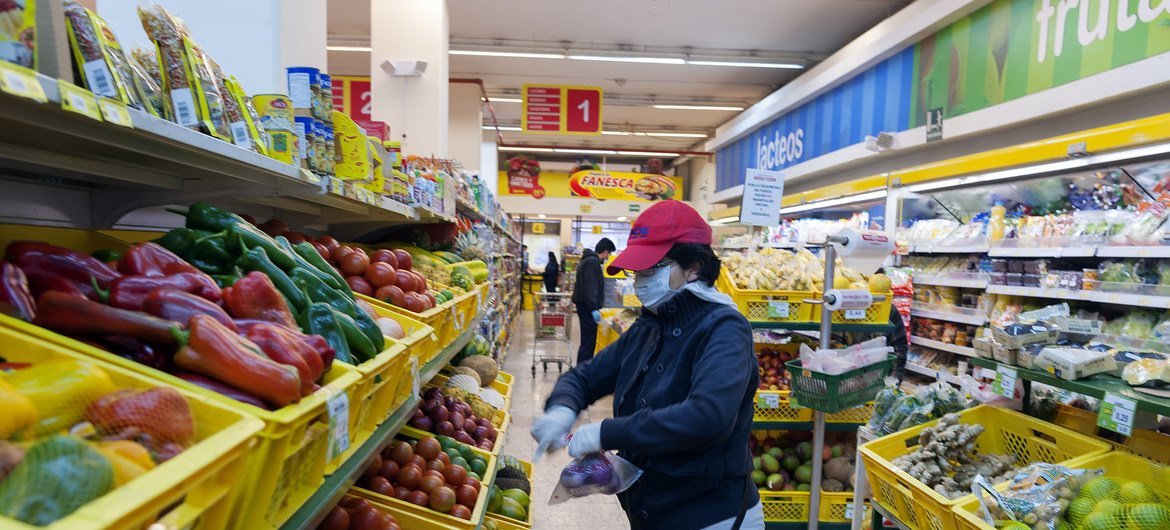
World Bank/Paul Salazar | Shopping during the coronavirus pandemic: greater population growth in regions such as Latin America, will require more productive and sustainable agriculture.
Policy makers must move decisively, according to January’s Global Economic Prospects, and although it is already growing again following the 4.3 per cent contraction of 2020, the COVID-19 pandemic has caused “a heavy toll of deaths and illness, plunged millions into poverty, and may depress economic activity and incomes for a prolonged period”, said a press release issued by the World Bank – a key financial institution within the United Nations system.
5 January 2021 (Wall Street International)* — We are unknown to most Americans. But some notables – New York Governor Andrew Cuomo’s former wife Kerry Kennedy, Congressman Joe Kennedy, House Speaker Nancy Pelosi’s daughter Christine, Paul Simon, Bill and Hillary Clinton, Samantha Power, actor Oscar Isaac, Susan Robeson (granddaughter of opera singer Paul Robeson) have visited us. Oscar Isac even played me in a film partly shot here.
KUALA LUMPUR, Malaysia, Jan 5 2021 (IPS)* – Goodbye 2020, but unfortunately, not good riddance, as we all have to live with its legacy. It has been a disastrous year for much of the world for various reasons, Elizabeth II’s annus horribilis. The crisis has exposed previously unacknowledged realities, including frailties and vulnerabilities.
Jomo Kwame Sundaram
For many countries, the tragedy is all the greater as some leaders had set national aspirations for 2020, suggested by the number’s association with perfect vision. But their failures are no reason to reject national projects.
As Helen Keller, the deaf and blind author activist, noted a century ago, “The only thing worse than being blind is having sight, but no vision.”
After JFK’s assassination in November 1963 ended US opposition to Western intervention in Indonesia, President Sukarno warned his nation in August 1964 that it would be ‘living dangerously’, vivere pericoloso, in the year ahead.
A year later, a bloody Western-backed military coup had deposed him, taking up to a million lives, with many more ruined.
4 January 2021 (Wall Street International)* — Looking at our planet, we see that it is mostly water.
So why are so many politicians, scientists, public officials in hundreds of global conferences all warning of a “Water Crisis”? These alarms are really just focused on the planet’s 3% of freshwater, ignoring the abundant 97% of our planet’s saltwater.
The broad assumption in most of these alarms is that 97% of saltwater is no use for the everyday needs of humans. So all these alarms warn of shrinking food supplies, rising hunger, malnutrition, dwindling drinking water, as taps almost ran dry in some cities, including Cape Town, South Africa in 2019.
1 January 2021 (UNHCR)* — For most people, 2020 cannot end soon enough. The COVID-19 pandemic has killed nearly 1.8 million people and caused extreme hardship. As the year comes to an end and vaccinations begin, many are hopeful the virus can be contained. But the socioeconomic effects of the pandemic could be felt for years – especially in the world’s least developed countries, where most of the world’s forcibly displaced people live. | Français





 HUMAN WRONGS WATCH