04/12/2020
Soil pollution a risk to our health and food security
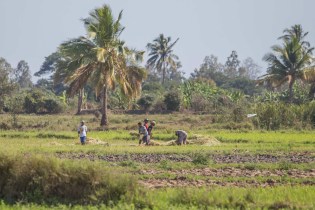
Photo by UNEP / 04 Dec 2020
4 December 2020 (UNEP)* — Each year, the world marks World Soil Day on 5 December to raise awareness about the growing challenges in soil management and soil biodiversity loss, and encourage governments, communities and individuals around the world to commit to improving soil health.
read more »
Posted in Africa, Asia, Climate Crisis, Latin America & Caribbean, Market Lords, Middle East, Migrants and Refugees, Mother Earth, Others-USA-Europe-etc., The Peoples, War Lords |
Leave a Comment »
04/12/2020
New FAO report examines the potential of soil organisms in ensuring sustainable agri-food systems and mitigating climate change
.
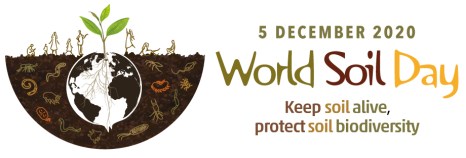
ROME, 4 December 2020 (FAO)* — Soil organisms play a crucial role in boosting food production, enhancing nutritious diets, preserving human health, remediating polluted sites and combating climate change, but their contribution remains largely underestimated, FAO on 4 December 2020 in its first ever report on “The State of Knowledge of Soil Biodiversity“.
The report was launched today on the occasion of World Soil Day, marked on 5 December.
read more »
Posted in Africa, Asia, Climate Crisis, Latin America & Caribbean, Market Lords, Middle East, Migrants and Refugees, Mother Earth, Others-USA-Europe-etc., The Peoples, War Lords |
Leave a Comment »
04/12/2020

Soil biodiversity reflects the variability among living organisms including micro-organisms not visible with the naked eye, and macro-fauna like this little shrew. PHOTO:Marija Šajgen, Russia.
4 December 2020 (United Nations)* — Plants nurture a whole world of creatures in the soil, that in return feed and protect the plants. This diverse community of living organisms keeps the soil healthy and fertile.
This vast world constitutes soil biodiversity and determines the main bio-geochemical processes that make life possible on Earth.
read more »
Posted in Africa, Asia, Climate Crisis, Latin America & Caribbean, Market Lords, Middle East, Migrants and Refugees, Mother Earth, Others-USA-Europe-etc., The Peoples, War Lords |
Leave a Comment »
04/12/2020
The coronavirus pandemic has swept across a world that was already profoundly unequal. The failure to tackle inequality has left the majority of countries far more vulnerable and unprepared for both the health and economic impacts of the disease.
In the Central African Republic, the Covid-19 represents a health crisis which is added to an already alarming humanitarian crisis. One in two people in need of humanitarian assistance, and about 70% of health services are provided by humanitarian organizations. Photo: Aurelie Godet/Oxfam
read more »
Posted in Africa, Asia, Latin America & Caribbean, Market Lords, Middle East, Migrants and Refugees, Mother Earth, Others-USA-Europe-etc., The Peoples, War Lords |
Leave a Comment »
04/12/2020
The UN agency devoted to ending AIDS as a public health threat is calling on top politicians and governments across the world to ensure the right to quality healthcare is upheld, and not just a privilege to be enjoyed by the wealthy.
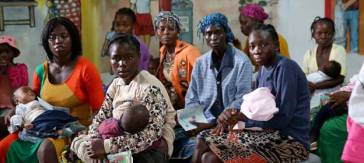 Patients seeking treatment at the Redemption Hospital in Monrovia, Liberia. Credit: World Bank/Dominic Chavez
WASHINGTON DC, Dec 2 2020 (IPS)* – Wealth begets wealth. This simple concept of privilege has added to growing discontent with inequality that has escalated under the shadow of the COVID-19 pandemic.
read more »
Posted in Africa, Asia, Climate Crisis, Latin America & Caribbean, Market Lords, Middle East, Migrants and Refugees, Mother Earth, Others-USA-Europe-etc., The Peoples, War Lords |
Leave a Comment »
04/12/2020
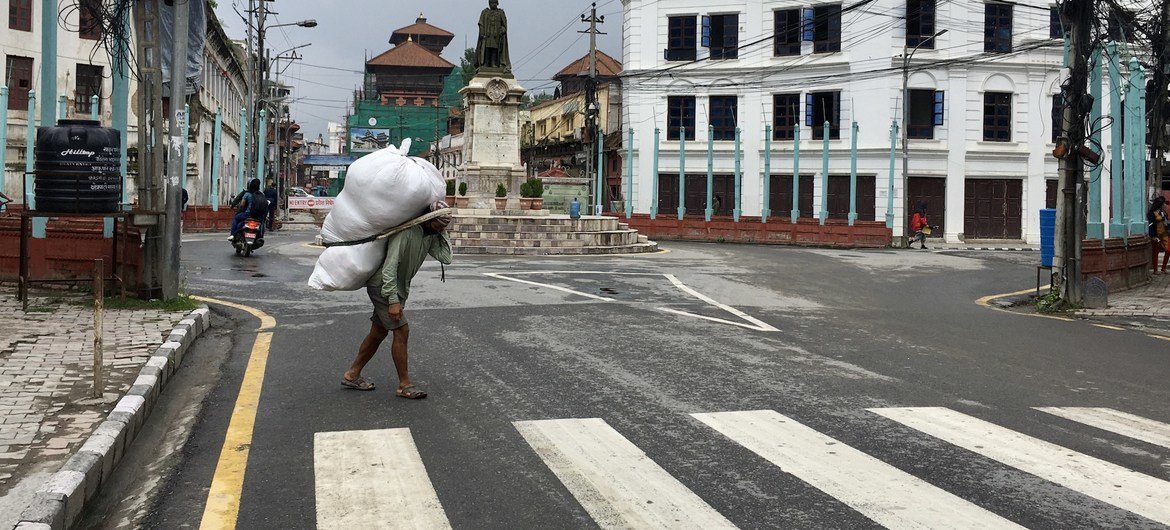
An additional 207 million people could be pushed into extreme poverty by 2030, due to the severe long-term impact of the coronavirus pandemic, bringing the total number to more than a billion, a new study from the UN Development Programme (UNDP) has found (*).
.
UN News\Vibhu Mishra | A man, carrying a load on his back, in what is generally a busy business district in Kathmandu, Nepal. COVID-19 and the associated lockdown has hit people hard, with many daily-wage earners losing their only source of income.
.
According to the study, released on Thursday, [3 December 2020], such a “high damage” scenario would mean a protracted recovery from COVID-19, anticipating that 80 per cent of the pandemic-induced economic crisis would continue over a decade.
read more »
Posted in Africa, Asia, Climate Crisis, Latin America & Caribbean, Market Lords, Middle East, Migrants and Refugees, Mother Earth, Others-USA-Europe-etc., The Peoples, War Lords |
Leave a Comment »
04/12/2020
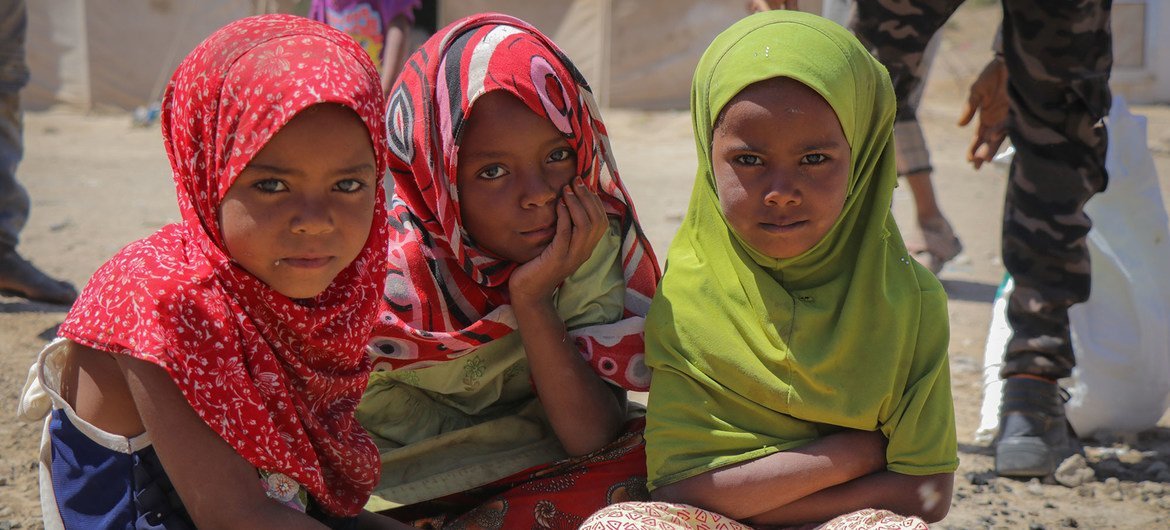
UN experts called on the Security Council on Thursday [3 December 2020], along with the international community at large, to put an end to the “surreal and absurd dimension” of human rights violations engulfing war-torn Yemen, where abuses continue unchecked. (*).
YPN for UNOCHA | Young girls in the Al Dhale’e camp for people displaced by the conflict in Yemen.
“Civilians in Yemen are not starving, they are being starved by the parties to the conflict”, said Kamel Jendoubi, the Chairperson of the UN Group of Eminent International and Regional Experts on Yemen, in the closed session.
The conflict in the Arab world’s most impoverished nation ramped up in 2015, when fighting erupted between a Saudi-backed coalition supporting the internationally recognized Government, and the Houthi rebel group, which is known formally, as Ansar Allah.
read more »
Posted in Africa, Asia, Market Lords, Middle East, Migrants and Refugees, Others-USA-Europe-etc., The Peoples, War Lords |
Leave a Comment »
03/12/2020
Brazilian mothers of black and indigenous children speak out
Image from Wall Street International.
1 December 2020 (Wall Street International)* — Brazil is a young and fragile democracy and holds a most shameful record: it’s the country with the highest number of murdered teenagers worldwide.
In 2015 alone, 11,403 boys and girls aged 10 to 19 were homicide victims. Of these, 10,480 were boys – more than the total violent deaths of boys in conflict-affected countries, Syria and Iraq.
read more »
Posted in Africa, Asia, Latin America & Caribbean, Market Lords, Middle East, Migrants and Refugees, Others-USA-Europe-etc., The Peoples, War Lords |
Leave a Comment »
03/12/2020
Extreme weather compounds the impact of COVID-19
.
Geneva, 2 December 2020 (WMO)* –– Climate change continued its relentless march in 2020, which is on track to be one of the three warmest years on record. 2011-2020 will be the warmest decade on record, with the warmest six years all being since 2015, according to the World Meteorological Organization.
read more »
Posted in Africa, Asia, Climate Crisis, Latin America & Caribbean, Market Lords, Middle East, Migrants and Refugees, Mother Earth, Others-USA-Europe-etc., The Peoples, War Lords |
1 Comment »
03/12/2020
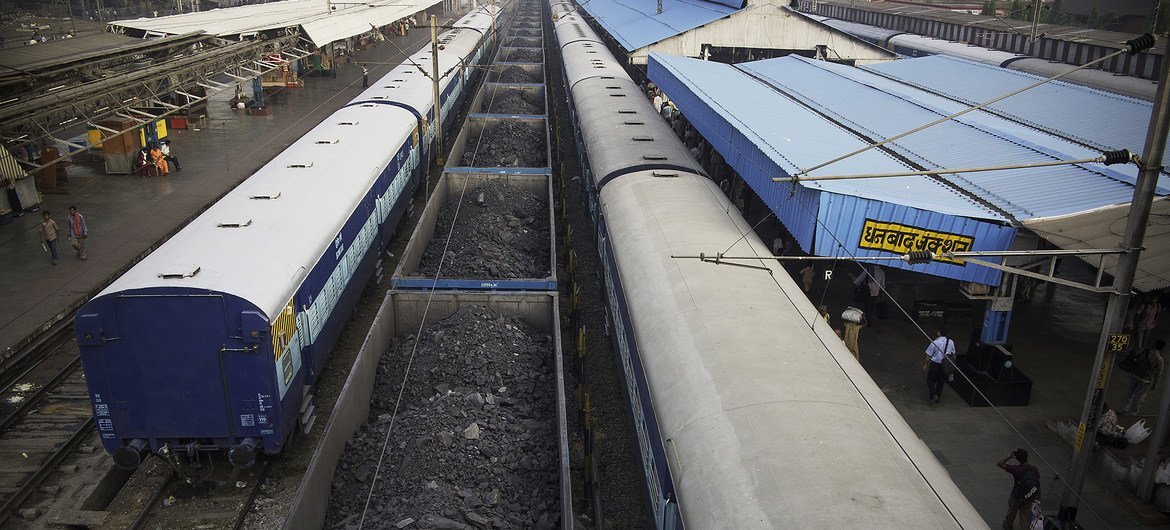
Countries must decrease production of fossil fuels by 6 per cent per year, between 2020 and 2030, if the world is to avert “catastrophic” global temperature rise, a new UN-backed report has found.*
ESCAP Photo/Christian Dohrmann | A new report has urged countries to cut the production of fossil fuels by 6 per cent, per year, to avoid catastrophic global warming. Pictured here, a cargo train, laden with coal, waits at a railway station in India. (file photo)
Released, on Wednesday [2 December 2020], in the shadows of the coronavirus pandemic, the Production Gap Report also revealed that while the pandemic and resulting lockdowns led to “short-term drops” in coal, oil and gas production, pre-COVID plans and post-COVID stimulus measures point to a continuation of increasing fossil fuel production.
read more »
Posted in Africa, Asia, Climate Crisis, Latin America & Caribbean, Market Lords, Middle East, Migrants and Refugees, Mother Earth, Others-USA-Europe-etc., The Peoples, War Lords |
Leave a Comment »


 HUMAN WRONGS WATCH