(UN News)* — Remembering the more than one million people who over the course of just 100 days, were systematically killed in Rwanda, 26 years ago, the UN chief underscored on Tuesday [7 April 2020] that “we must never again let such an atrocity occur”.
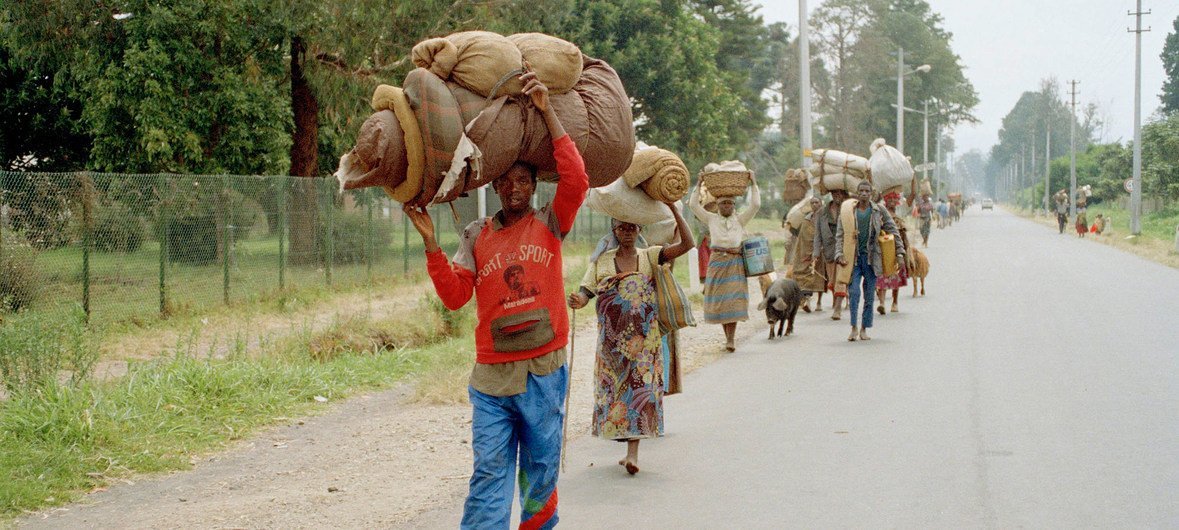
UN Photo/John Isaac | Rwandan refugees who fled the country during the genocide are pictured returning home in 2005.
In honouring everyone who perished as well as survivors of the carnage against the mostly Tutsi, but also Hutus and others who opposed the massacre, Secretary-General António Guterres said in his message on the International Day of Reflection on the 1994 Genocide against the Tutsi in Rwanda, that we “must say no to hate speech and xenophobia, and reject the forces of polarization, nationalism and protectionism”.
By Dilip Chakma, Convenor, Indigenous Lawyers Association of India (ILAI) and Paritosh Chakma, Advisor, ILAI*
6 April 2020 (IWGIA)* — Coronavirus (COVID-19) has been declared as a pandemic and its impact on the world is yet to be fully assessed. Indigenous peoples living on the margins of the society are unlikely to be considered in the scheme of responses and reactions by most of the States.
Photo: Chris Erni // IWGIA
India has been affected by COVID-19 too but the scale of infections is still unknown given fewer tests conducted. The tests are expensive – their cost is pegged at Rs 4,500 per test at present[1] and testing facilities only exist in metropolises.
GENEVA, 7 April 2020 (WHO)* — The Covid-19 pandemic underscores the urgent need to strengthen the global health workforce. A new report, The State of the World’s Nursing 2020, provides an in-depth look at the largest component of the health workforce.
7 April 2020 is the day to celebrate the work of nurses and midwives and remind world leaders of the critical role they play in keeping the world healthy. Nurses and other health workers are at the forefront of COVID-19 response – providing high quality, respectful treatment and care, leading community dialogue to address fears and questions and, in some instances, collecting data for clinical studies. Quite simply, without nurses, there would be no response.
5 April 2020 (United Nations)* — The preamble to the Universal Declaration of Human Rights states that “disregard and contempt for human rights have resulted in barbarous acts which have outraged the conscience of humankind, and the advent of a world in which human beings shall enjoy freedom of speech and belief and freedom from fear and want has been proclaimed as the highest aspiration of the common people.”
.
People taking part in activities related to the Peace and Peaceful Coexistence Festival organized by the Communication and Public Information Section of the African Union-United Nations Hybrid Operation in Darfur (UNAMID). UN Photo/Mohamad Almahady
3 April 2020 (UN Environment)* — In recent decades, zoonotic diseases–those transferred from animals to humans–have gained international attention. Ebola, avian influenza (or bird flu), H1N1 flu virus (or swine flu), Middle East respiratory syndrome (MERS), Rift Valley fever, sudden acute respiratory syndrome (SARS), West Nile virus, the Zika virus–and now, the novel coronavirus COVID-19–have all either caused or threatened to cause major pandemics, with thousands of deaths and billions in economic losses.
3 April 2020 (UN Environment)* — To help prevent further outbreaks of zoonotic viruses like COVID-19, the illegal wildlife trade and the destruction of habitats must stop. We cannot go back to business as usual. And we will need to rebuild by working with nature, not against it.
According to the president of a country with 210 million inhabitants, the Health Minister, a doctor who recommends social isolation, is not “humble” enough to lead the COVID-19 war.
President Jair Bolsonaro in Brasilia, Brazil, March, 2020. | Photo: Twitter/ @festhiago | Photo posted here fromteleSUR’s article.
3 April 2020 (teleSUR)* — After lashing out at his health minister because he does not have a “humble attitude,” Brazil’s President Jair Bolsonaro Thursday announced that he and other religious leaders will perform a fast as a form of sacrifice to rid Brazil of the COVID-19 pandemic.
CARACAS, Apr 4 2020 (IPS)* – Health systems in Latin America, already falling short in their capacity to serve the population, especially the poor, are in a weak position and face serious risks when it comes to addressing the COVID-19 pandemic.
Congestion in public hospitals is frequent in Latin America even without epidemics. Long waits and the need to resort to out-of-pocket spending to obtain medical assistance are common in the region. CREDIT: Courtesy of Integralatampost
Low levels of health spending and a relative scarcity of hospital beds are indicators that most countries in the region do not guarantee universal access to healthcare and risk being overwhelmed by the wave of the new coronavirus.
COPENHAGEN, 30 March 2020 (IWGIA)* — As the spread of COVID-19 continues, Indigenous Peoples worldwide are in increasing danger of losing their lives and having their rights strippedaway.
Indigenous Peoples at increased risk due to coronavirus




 HUMAN WRONGS WATCH