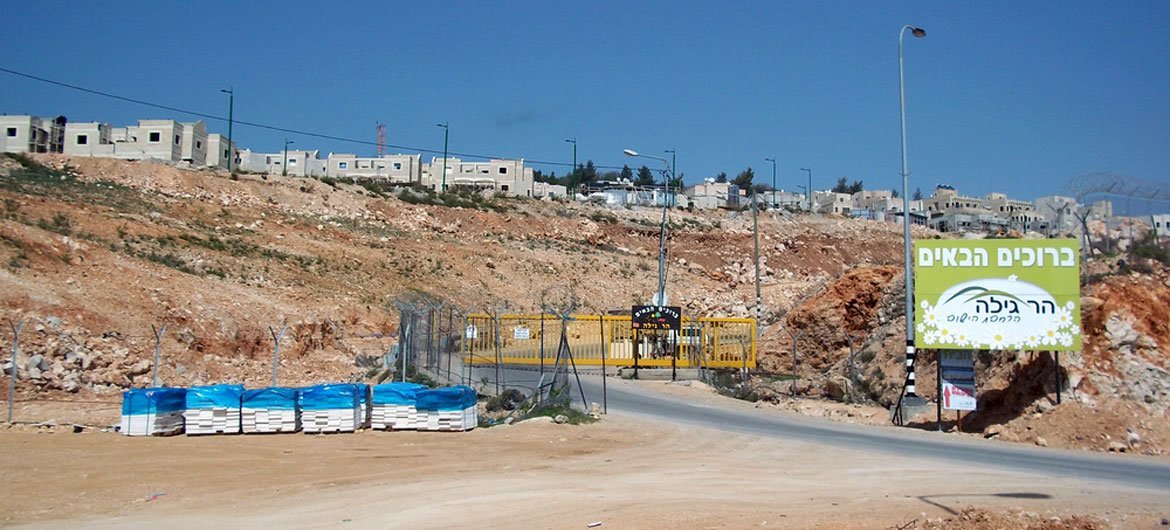
By UN News* — Regardless of any national policy declarations, Israeli settlement activities are “a flagrant violation under international law”, the UN Special Coordinator for the Middle East Peace Process spelled out to the Security Council on Wednesday [20 November 2019].
19/11/2019
At UN, Middle East Countries Discuss Steps Towards Regional Nuclear-Free Zone
Human Wrongs Watch
Representatives from across the Middle East are meeting at UN Headquarters this week in efforts to negotiate a legally binding treaty establishing a regional zone free of nuclear weapons and other weapons of mass destruction. (*).

.
Speaking on Monday [18 November 2019] during the inaugural session of the deliberations on a nuclear-weapon free Middle East, UN Secretary-General António Guterres said the zone would have significance beyond the region.
19/11/2019
Hundreds of Thousands of Forcibly Displaced People in Eastern DR Congo Face Widespread Human Rights Violations
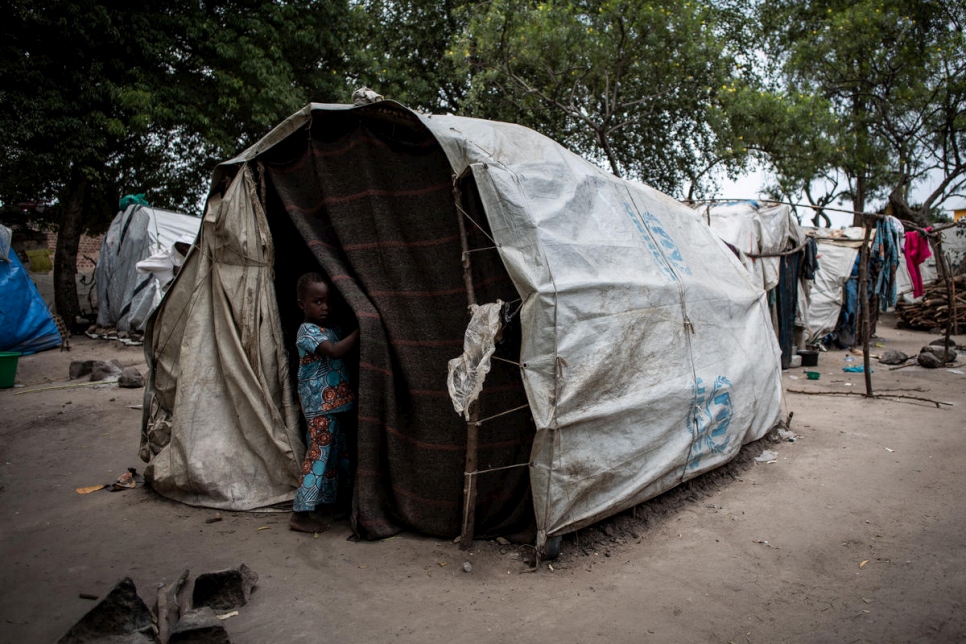 A child stands outside tents at a site for internally displaced persons in Kasenyi. © UNHCR/John Wessels
UNHCR, the UN Refugee Agency, is alarmed that hundreds of thousands of forcibly displaced people in eastern Democratic Republic of the Congo (DRC) are not only living in dire conditions without proper assistance but are unprotected and exposed to extreme human rights violations on a daily basis. (*).
read more »
19/11/2019
Over 5.4 million Children Detained Worldwide; Human Rights Experts Highlight “Aggressive” State Counter-Terrorism Measures
Human Wrongs Watch
(UN News)* — More than 5.4 million children are detained around the world, rights experts said on Monday [18 November 2019], highlighting “aggressive” State counter-terrorism measures for the spike in youngsters held for alleged links with armed conflict or national security concerns based on their social media posts.

19/11/2019
One-Third of Afghans Need Urgent Humanitarian Aid, Millions Suffer ‘Acute Food Insecurity’
(UN News)* — Over the last three months (August to October 2019), around one-third of the Afghan population required urgent humanitarian action, according to the latest Integrated Food Security Phase Classification (IPC) Alert, released on Monday [18 November 2019 ], which declares that some 10.23 million people are living in a state of “severe acute food insecurity”.

The IPC, a coalition of UN agencies and other partners, classifies food insecurity in five distinct phases, from phase 1 (Minimal/ None), to phase 5 (Catastrophic/Famine): around 2.44 million Afghan are believed to be in an Emergency situation (phase 4), and 7.79 million in a Crisis situation (phase 3).
read more »
18/11/2019
New Development Models to Drive Growth and Employment for Youth in Africa

Pixabay (photo posted here from UN Environment).
17/11/2019
Somalia: Climate Change Poses Serious Challenges to the Future Success of Peace-building, Amplifies the Existing Ones, Strengthens Radical Groups – SIPRI
Human Wrongs Watch
Stockholm (SIPRI)* — Climate change poses serious challenges to current and future peacebuilding missions, according to a new report by the Stockholm International Peace Research Institute (SIPRI) which studies the UN Assistance Mission in Somalia (UNSOM). Climate change amplifies existing challenges and strengthens radical groups. At the same time, climate change forces missions to think out of the box with UNSOM proving to be an encouraging example.
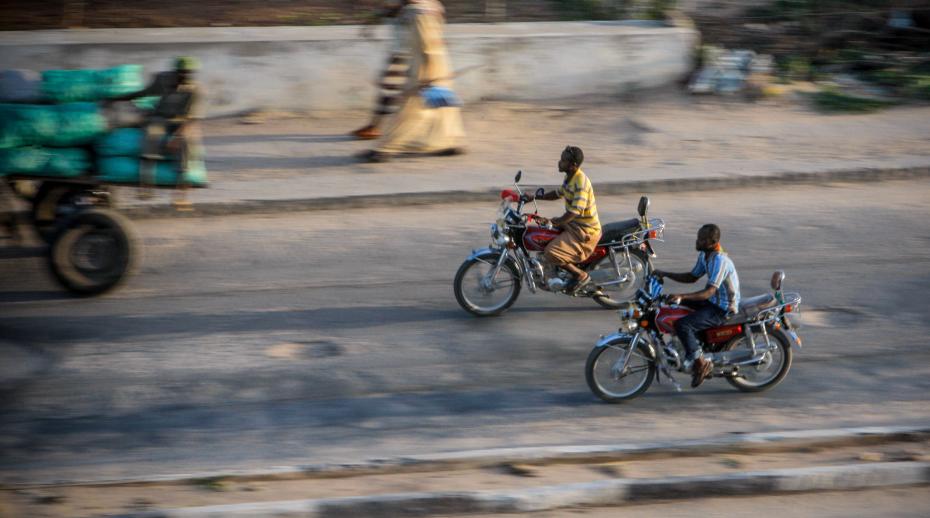
Somali men on motorcycles ride along a road 6 August 2012, opposite the parliament building in the Somali capital, Mogadishu.Photo posted here from SIPRI).
17/11/2019
Saving Lives in One of the World’s Most Dangerous Countries

read more »

16/11/2019
What You Need to Know about the UNESCO Qualifications Passport for Refugees and Vulnerable Migrants
Human Wrongs Watch
15 November 2019 (UNESCO)* — One of the main obstacles refugees and migrants face when applying for higher education or seeking work in their new countries is the lack of recognition of their prior studies and qualifications. How do we solve this challenge?
 Getty/Rawpixel (posted here from UNESCO).
UNESCO Member States have expressed the necessity to establish a globally recognized Qualifications Passport, drawing from the experiences and methodology of the European Qualifications Passport initiative taken by the Norwegian Agency for Quality Assurance in Education and the Council of Europe.
 HUMAN WRONGS WATCH