KORCHI/GADCHIROLI, India, Aug 9 2019 (IPS)* –– Kumaribai Jamkatan, 51, has been fighting for women’s land rights since 1987.
Though the constitution of India grants equal rights to men and women, women first started to stake their claim for formal ownership of land only after 2005–the year the government accorded legal rights to daughters to be co-owners of family-owned land.
Indigenous peoples and their food systems can provide answers to food insecurity and climate change
Indigenous peoples are stewards of natural resources, biodiversity and nutritious native foods. They are key partners in finding solutions to climate change and reshaping our food systems. @FAO/Francesco Farnè
9 August 2019 (FAO)* — Constituting only 5 percent of the world population, indigenous peoples are nevertheless vital stewards of the environment.
There are an estimated 370 million indigenous people in the world, living across 90 countries. They make up less than 5 per cent of the world’s population, but account for 15 per cent of the poorest. They speak an overwhelming majority of the world’s estimated 7,000 languages and represent 5,000 different cultures..
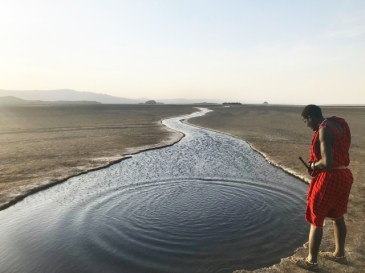
Maasai participant at the 18th Session of the United Nations Permanent Forum on Indigenous Issues (UNPFII). UN/Broddi Sigurdarson
There are an estimated 370 million indigenous people in the world, living across 90 countries. They make up less than 5 per cent of the world’s population, but account for 15 per cent of the poorest.
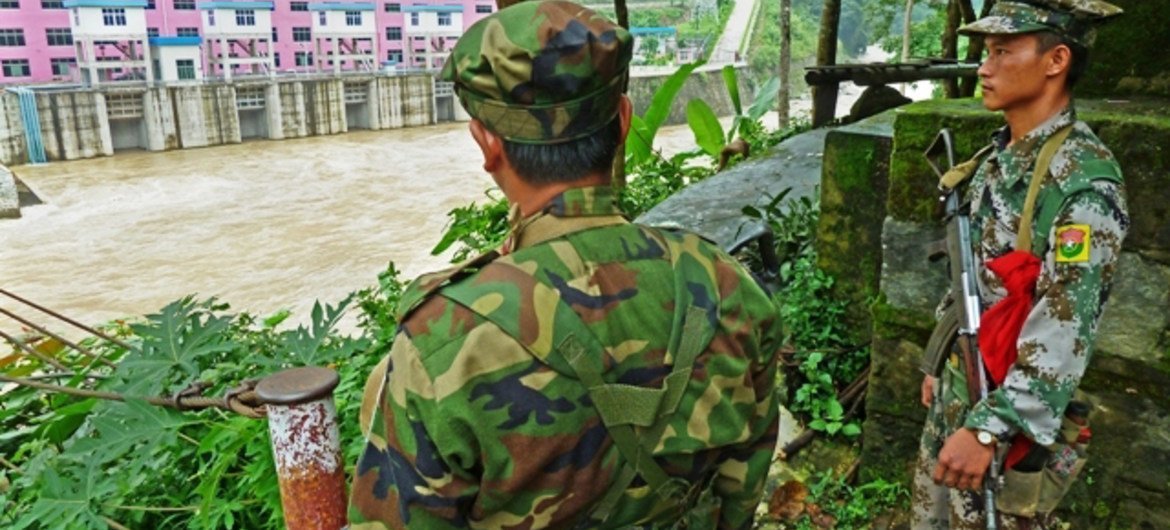
Money earned by the Myanmar military from international and domestic business deals, “substantially enhances its ability to carry out gross violations of human rights with impunity” according to a report released on Monday [5 August 2019] by an independent United Nations group looking into military-business ties in the South East Asian country.
IRIN/Steve Sandford | Two Kachin soldiers stand guard opposite a Chinese dam in northern Kachin state, where more than 85,000 people have been displaced by conflict. Photo: IRIN/Steve Sandford (posted here fromUN News).
4 August 2019 (Wall Street International)* — David Ray Griffin is a philosopher of religion who has written a dozen books on 9/11, all of which I have reviewed. George W Bush apparently wrote in his diary on September 11, 2001, that “the Pearl Harbour of the 21st-century happened today”, and we now know the foreign policy fallout of this event in terms of the War on Terror, along with domestic measures curtailing freedom and embodied in the Patriot Act.
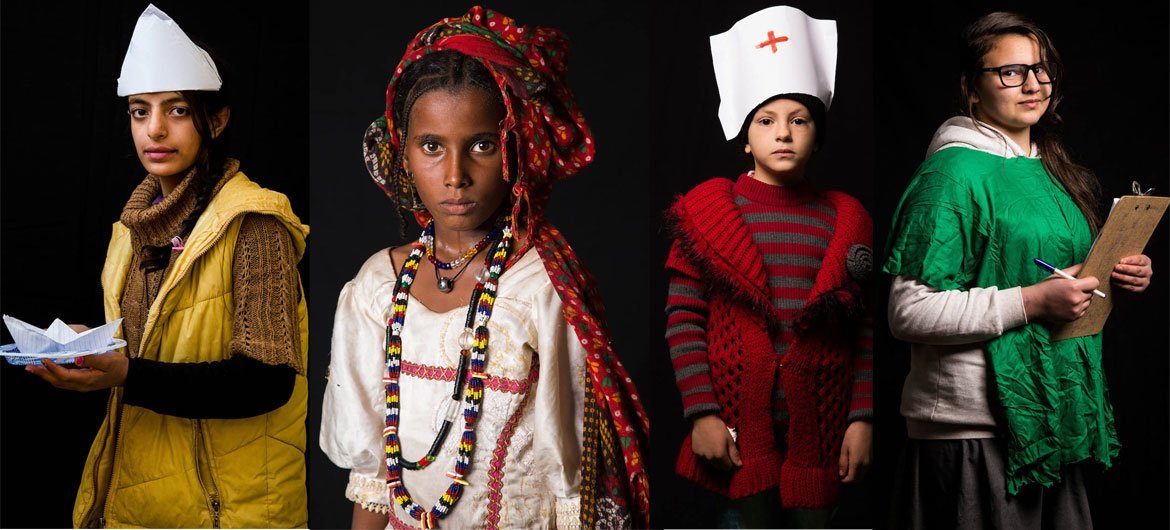
4 August 2019 — One person in every 70 is caught up in a humanitarian crisis right now, according to the United Nations Office for the Coordination of Humanitarian Affairs (OCHA), with women and girls among the most impacted.
.
Vincent Tremeau presented by UNOCHA | One day i will exhibition
.
The harsh reality of rape, early marriage, or sex trafficking or slavery, rarely makes headlines. Nor do girls who are often kept away from school for their own safety or to care for their family.
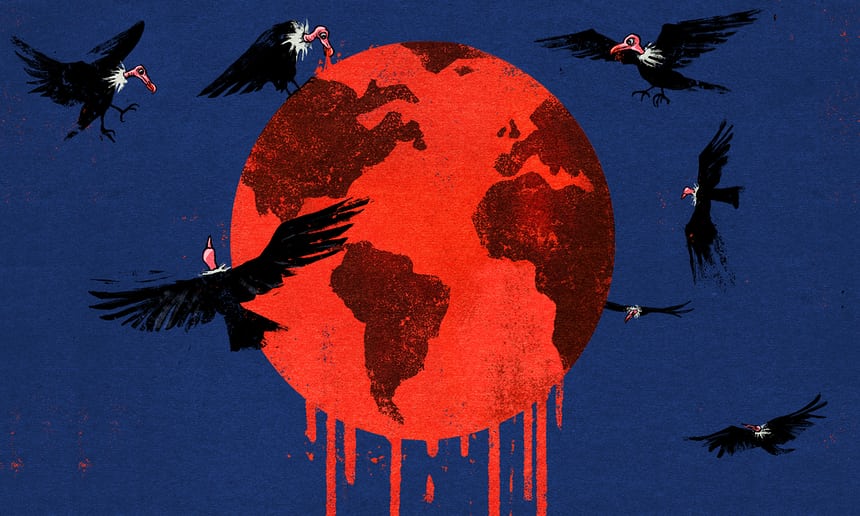
Out-of-Control Military Spending Since Eisenhower’s Presidency May be the Primary Reason Why the US National Debt is $23,000,000,000,000 (23 trillion) and Counting.
Illustration by Ben Jennings
“Until the latest of our world conflicts, the United States had no armaments industry. American makers of ploughshares could, with time and as required, make swords as well…We have been compelled to create a permanent armaments industry of vast proportions.”
In 2017, the Hanford Waste Management Site, Washington, was suddenly evacuated. A radioactive waste storage tunnel, built in 1965, had collapsed and the fallout was unknown.
Hanford holds the waste from most of the US’s weapons-grade plutonium, about 56 million gallons of radioactive sludge in decrepit tanks.
By the International Campaign to Abolish Nuclear Weapons (ICAN)* — Building nuclear weapons requires materials and labor, not just from scientists, but also from the men and women living in communities nearby. After the Cold War, many of the United State’s most crucial nuclear weapons production sites ‘closed’ and were forgotten, but not by workers and local communities, who were left to deal with the devastating, toxic legacy of these sites.
This is obvious at Hanford Waste Management Site, Washington. It is sometimes referred to as “the most toxic place in America,” yet most people will never have heard of it.





 HUMAN WRONGS WATCH