UNITED NATIONS, Jul 15 2019 (IPS)* – The world’s two most populous nations-– China and India—have been making steady progress in eradicating extreme poverty, but have fallen short in their attempts to eliminate extreme hunger, according to the Bangkok-based UN Economic and Social Commission for Asia and the Pacific (ESCAP).
In an interview with IPS, Armida Salsiah Alisjahbana, UN Under-Secretary-General and Executive Secretary of ESCAP said Asia-Pacific is on track to eradicate extreme poverty, which still afflicts 285 million people in that region, but that goal would be successful only “if current progress is maintained until 2030”.
“Both China and India are reducing extreme poverty faster than the regional average. And half the population lifted out of extreme poverty globally, since 2000, comes from China,” she said.
After nearly a decade of progress, the number of people who suffer from hunger has slowly increased over the past three years, with about one in every nine people globally suffering from hunger today, the United Nations said in a new report released on Monday [15 July 2019].
.
FAO/Manan Vatsyayana | Local school children eat their meals at the Ban Bor Primary School in Xay District, Lao People’s Democratic Republic. (14 May 2019)
Before the UN Conference on a Nuclear Weapons [WMD] Free Zone in the Middle East
Edward Hicks, Peaceable Kingdom, c. 1834, oil on canvas – Lion with Lamb
In the spirit of TRANSCEND co-founder and friend Dieter Fischer, I’ll start with a joke. When Arafat and Rabin die they ask God, “When will there be peace in the Middle East?” God says, “Not in my lifetime.”
15 July 2019 (UN Environment)*— Today is Youth Skills Day. There are 1.2 billion young people aged 15 to 24 years in the world, accounting for 16 per cent of the global population.
Engaging young people in sustainable development efforts is central to achieving the Sustainable Development Goals.
And, to averting the worst threats and challenges to sustainable development, including the impacts of climate change, unemployment, poverty, gender inequality, conflict and migration.
How developing countries lose $3 billion every day through an accounting trick that allows corporations to avoid paying tax.
Image: Kurtis Garbutt, CC by 2.0
10 July 2019 (openDemocracy)* — Amazon.com Inc. was brought to court by the U.S. Internal Revenue Service (IRS) in 2017 for transfer pricing discrepancies. In 2005 and 2006, the multinational tech company had transferred $255 million in royalty payments to its tax haven in Luxembourg, but according to the IRS these royalty payments should have amounted to $3.5 billion. This transfer pricing adjustment would have increased Amazon’s federal tax payments by more than $1 billion.
12 July 20193 (Norwegian Refugee Council)* — Imagine you’re a refugee in a foreign country. You have no income and few possessions. You desperately need transport so you can earn money to feed your family. But the nearest town is 20km away and the bus fare is expensive. What do you do?
Photo: Qhubeka
Bicycles are a lifeline for many refugees. Cheap, quick and efficient, they are a vital tool on the road to self-reliance.
The problem to be explored in this paper can be stated very briefly as follows: is peace research necessarily a peaceful activity? More precisely, is there a meaningful distinction between violent and nonviolent methodologies in peace research?
NAIROBI, Jul 12 2019 (IPS)* – Many NGOs around the world are fighting inequality between the rich and the poor, between the policies that make rich countries richer, and poor countries poorer.
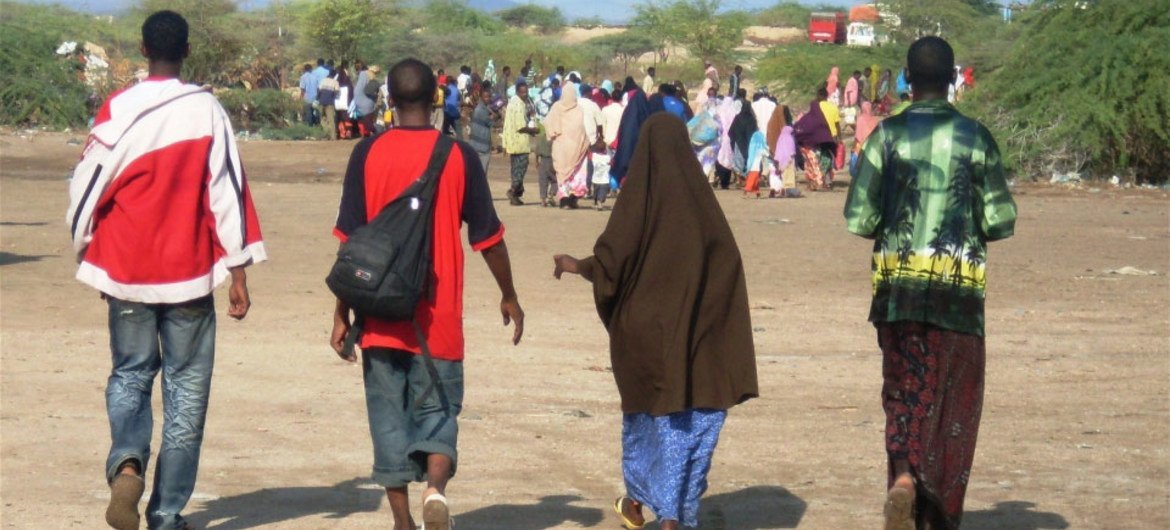
13 July 2019 — Access to education in Somaliland is extremely limited, with more than 50 per cent of children in Somaliland out of school. In an effort to address the problem, the UN children’s fund, UNICEF, has partnered with the government, and the global fund Education Cannot Wait, to launch a programme designed to help children affected by ongoing crises in the country.
IRIN/Mohamed Amin Jibril | Rampant unemployment in Somaliland has prompted thousands of young people to leave the territory every month. (Photo from UN News).
Drought, food insecurity, poverty and inequality are some of the challenges that hinder efforts to get more Somaliland children and youth in schools.
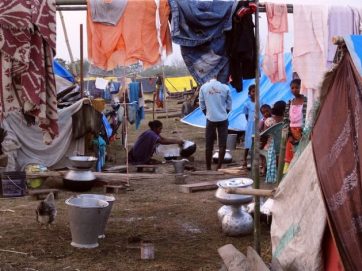
Education for over 60,000 children in camps and host community is disrupted because of damage to learning centres
.
UNICEF/UN0226412/Brown
COX’S BAZAR, Bangladesh/NEW YORK, 9 July 2019(UNICEF)* – Thousands of children and families living in the Rohingya refugee camps and host communities in Cox’s Bazar in south-eastern Bangladesh are at risk from flooding and landslides caused by heavy rainfall in the last few days.
 In an interview with IPS, Armida Salsiah Alisjahbana, UN Under-Secretary-General and Executive Secretary of ESCAP said Asia-Pacific is on track to eradicate extreme poverty, which still afflicts 285 million people in that region, but that goal would be successful only “if current progress is maintained until 2030”.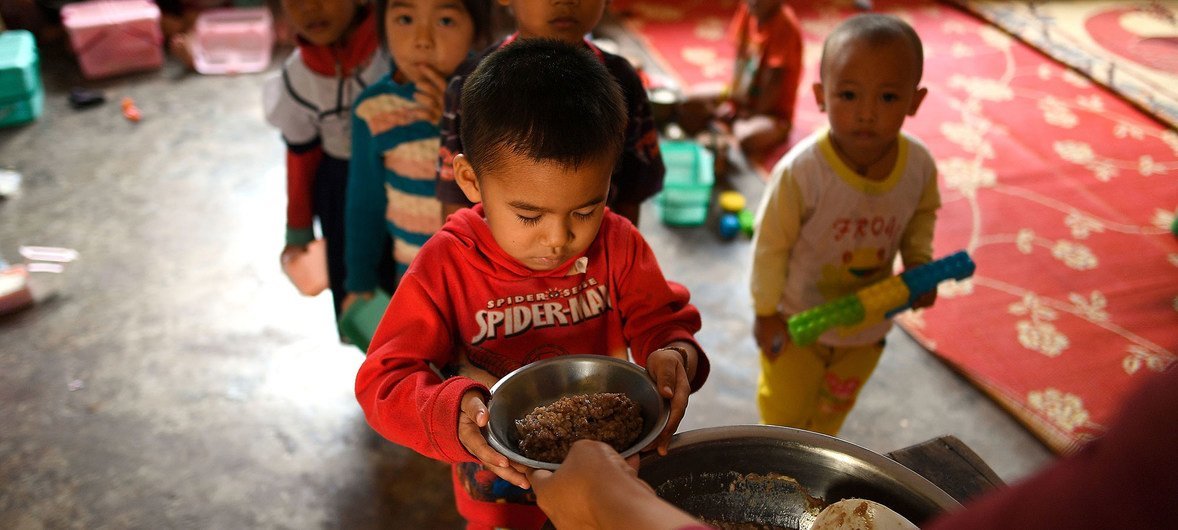




 .
.

 HUMAN WRONGS WATCH