KUALA LUMPUR, Malaysia, Jun 17 2025 (IPS)* – Wars, economic shocks, planetary heating and aid cuts have worsened food crises in recent years, with almost 300 million people now threatened by starvation.
FAO statistics indicate enough output to feed the world’s eight billion plus another three billion!
Clearly, inadequate food due to population growth cannot explain persistent hunger. Yet, the number of hungry people has been rising for more than a decade.
So, why are so many hungry if there is more than enough food for all?
The multi-stakeholder 2025 Global Report on Food Crises (GRFC) notes 2024 was the sixth consecutive year of high and growing acute food insecurity, with 295.3 million people starving!
In 2023, 733 million people experienced chronic hunger. Over a fifth (22.6%) of the 53 countries/territories assessed in this year’s GRFC were especially vulnerable.
Dawood is 19 years old and living in a crowded Rohingya refugee settlement in Bangladesh. He says his life is shattered.
In February 2024, the Myanmar military conscripted Dawood and other Rohingya men and boys to fight the Arakan Army, an ethnic armed group, in Rakhine State. They received little or no training, and dozens were killed or injured.
MONTEVIDEO, Uruguay, Jun 16 2025 (IPS)** – At a White House meeting, presidents Nayib Bukele and Donald Trump exchanged praises and joked about mass incarceration while discussing an unprecedented agreement: the USA would pay El Salvador US$6 million a year to house deportees – of any nationality, potentially including US citizens – in its Centre for Terrorism Confinement (CECOT), a notorious mega-prison.
Credit: Kevin Lamarque/Reuters via Gallo Images
This agreement marked the evolution of Bukele’s authoritarian model from a domestic experiment to an exportable commodity for strongmen worldwide.
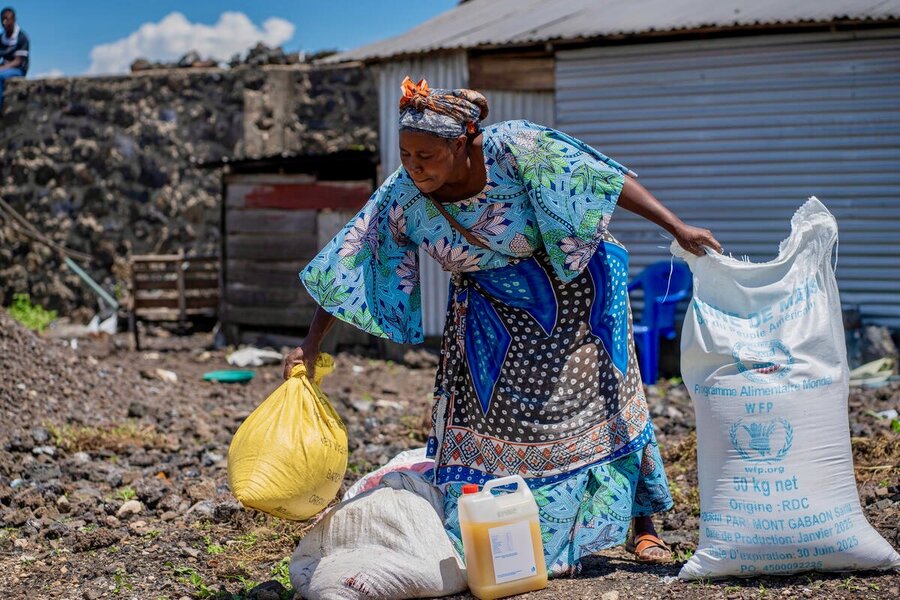
Sudan, Palestine, South Sudan, Haiti, and Mali remain hotspots of highest concern, and Democratic Republic of the Congo has returned as a hunger hotspot to watch.
A woman collects WFP food assistance in Goma, where a precarious calm reigns after fighting earlier this year. Photo: WFP/Benjamin Anguandia
ROME, – A new joint UN report warns that people in five hunger hotspots around the world face extreme hunger and risk of starvation and death in the coming months unless there is urgent humanitarian action and a coordinated international effort to de-escalate conflict, stem displacement, and mount an urgent full-scale aid response.
Over two hundred press freedom advocacy groups and international newsrooms have joined Reporters Without Borders (RSF) and the Committee to Protect Journalists (CPJ) in issuing a public appeal demanding that foreign journalists be granted immediate, independent and unrestricted access to the Gaza Strip
(Ottawa) –G7 leaders should commit to taking concrete actions to halt Israeli atrocities in the Occupied Palestinian Territory at their upcoming summit, Human Rights Watch on 13 June 2025 said in a letter to G7 leaders.
Leaders of the G7 will be gathering in Kananaskis, Alberta from June 15-17, 2025, for the Leaders’ Summit hosted by Canada.
The summit takes place in the context of ongoing hostilities and Israel’s unlawful blockade of Gaza, where the world’s foremost experts on food security warn that there’s a high risk of imminent famine for the entire civilian population.
ALBERTA, Canada, Jun 13 2025 (IPS)* – Aid cuts could cost millions of lives and leave girls, boys, women and men without access to enough food, water, education, health treatment.
.
Credit: United NationsThe 51st G7 summit is scheduled to take place 15-17 June 2025 in Kananaskis, Alberta, Canada. The G7 consists of seven of the world’s largest developed economies: Canada, France, Germany, Italy, Japan, the United Kingdom, and the United States plus the European Union (EU), a non-enumerated member.
G7 countries are making deliberate and deadly choices by cutting life-saving aid, enabling atrocities, and reneging on their international commitments.
—Famine is defined as “extreme food deprivation” by the Integrated Food Security Classification, or IPC, the global hunger monitoring body. It is at the extreme end of IPC Phase 5, the highest hunger level under the IPC’s classification. Not all IPC 5 areas are in famine.
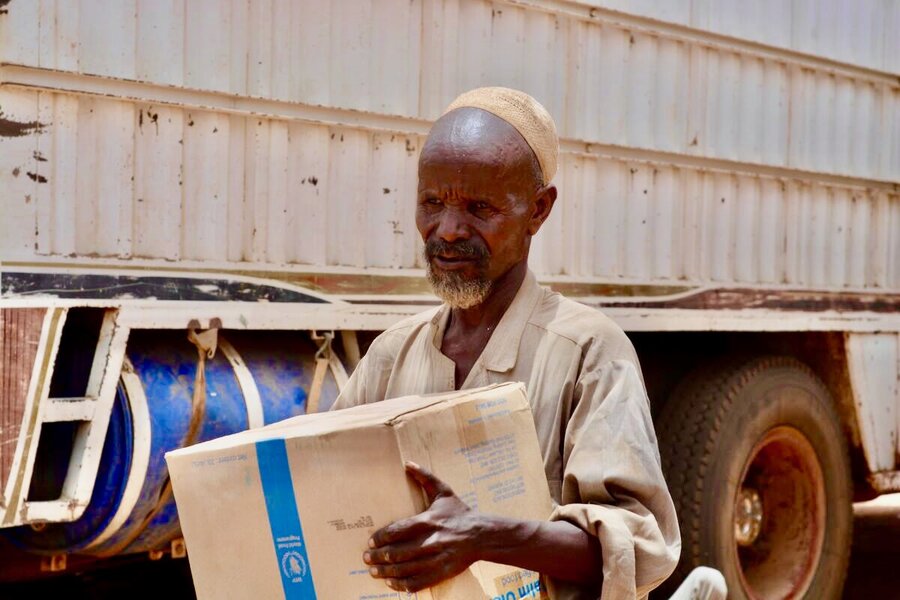
WFP food assistance arriving in Sudan’s North Darfur State, where pockets of famine have been confirmed. Photo: WFP/Mohamed Galal
Famine is rare, predictable and – with the right resources, political will and action – preventable.Vulnerable population groups such as young children, pregnant and nursing women and displaced people are most at risk of hunger emergencies.
Once a famine is declared, many people have already died of starvation, and it’s hard to slow it down.
To stem this pollution crisis, countries agreed in 2022 to establish a new body that would provide policymakers with robust, independent information on chemicals, waste and pollution prevention.
Negotiators are finetuning the details of this new science-policy panel, with the latest round of discussions set for 15-18 June in Uruguay.
Gaza, Occupied Palestinian Territory, 13 June 2025 – Amina sits behind a wood stove, exposed to the elements, a small teapot warming over the fire.
Amina prepares something to eat for her family with the few food supplies she has left. Photo: IOM 2025
She has been displaced six times in just under 20 months – sometimes twice in the same month. Today, she lives in a tent, with only the memory of a home that no longer stands.
Her story echoes the reality of nearly two million people in Gaza, living through what has become one of the most devastating chapters in the region’s history.






 HUMAN WRONGS WATCH