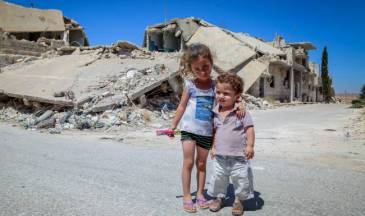
14 March 2019 (UNRWA)* — When last visiting the Yarmouk refugee camp, in Damascus, I was confronted with a scale of devastation unlike anything I had witnessed before in almost three decades of work in war zones around the world.
Standing in these fields of ruin, I saw signs everywhere of the appalling human cost of an unforgiving conflict, which has torn apart the lives of millions of Syrians. I was also reminded of what makes the tragedy of Palestine refugees in Syria so particularly unique.
7 March 2019 (Wall Street International)* — The February 14 suicide attack on a convoy of paramilitary police in Indian-occupied Kashmir (IOK) which killed at least 40 paramilitary police was allegedly claimed by a Pakistan-based Islamist terror group. There was great anger in India and people called for revenge. Narendra Modi, India’s prime minister, quickly promised a harsh response. As expected, tense relations between India and Pakistan now appear to be moving towards an alarming conflict.
Kashmir is a Muslim-majority region which is divided between Pakistan-occupied Kashmir commonly called Azad Kashmir, the IOK and parts under Chinese control in the North.
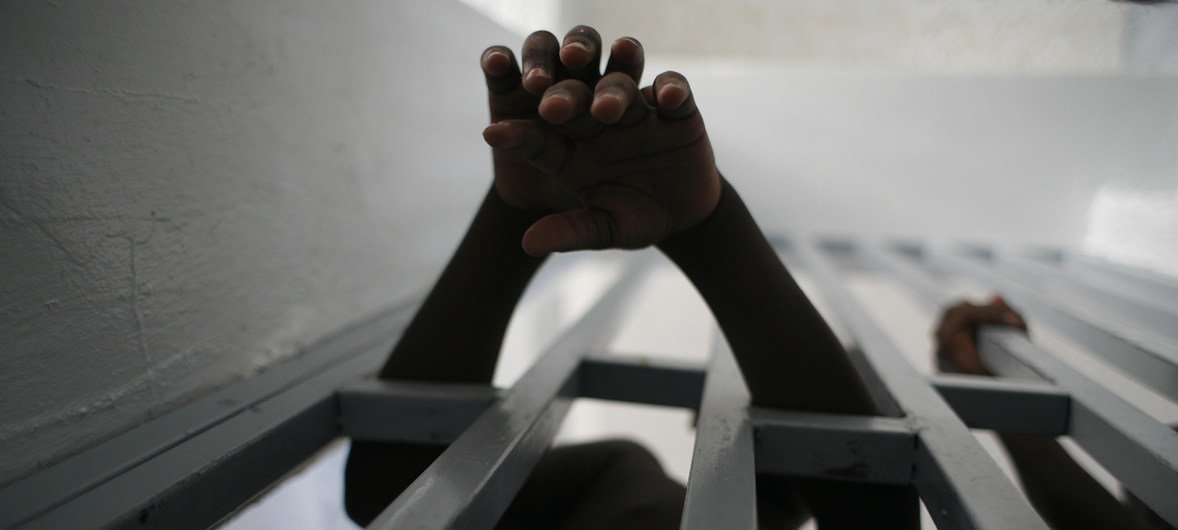
At every stage of the criminal justice system, people of African descent around the world are discriminated against, including death sentencing for drugs-related crimes, United Nations human rights experts said on Thursday [14 March 2019], calling on Member States to do more to “combat racial discrimination”.
In fighting the global drug problem, the UN Working Group of Experts on People of African Descent underscored that States must acknowledge and amend the devastating impact of judicial policies on people of African descent, who are more likely to be stopped, searched, arrested, convicted, and harshly sentenced for drug crimes, in many countries.
GENEVA, Mar 13 2019 (IPS) – The bell rings and the halls erupt with the sounds of chatter and excitement as hundreds of children run to the dusty courtyard for recess. I joined them to play football but the game instead turned into a round of questions.
“What is your name? Do you speak Arabic? Where are you from? Do you support Barcelona or Madrid? Or Manchester? Do you play PokemonGo?”
Where am I from? I’m from Belgium. But I know that if I asked this question to some of these children, their response wouldn’t be so simple.
ROME, March 2019 (Other News)* – There is a huge debate on anti-Semitism. I think we need to make a systematic analysis that makes the problem simple and clear. Obviously, the subject is very complex and produces so many urges that any attempt of schematization is inevitably incomplete. However, outlining some broad traits can be useful. Let us try it.
Roberto Savio
First, we must remember that there is an historical anti-Semitism, which is at the root of the wave of anti-Semitism that is waking up throughout Europe.
This has precisely historical reasons, caused by the resentment towards the Jews, starting from the Middle Ages at least until the beginning of the Renaissance, when the Roman Catholic Church lost its power of absolute control.
The Jews have been the only non-Christian minority in Europe for 1,400 years, more literate and brilliant than the uneducated, barbaric and violent Christians. A feudal prince who could read and write was suspicious.
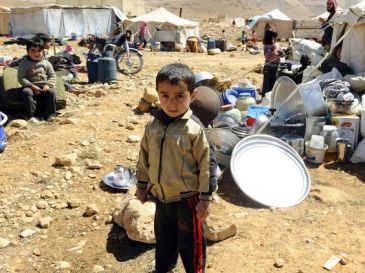
In Tanzania, a peaceful country hosting 335,000 refugees, the lack of funding is so dire that aid agencies are struggling to meet even the most basic needs. NRC needs all the support we can get to make a difference.
“There just isn’t enough food. We eat the same things every single day,” says Kiza, 59, a refugee from the Democratic Republic of the Congo in Nyarugusu refugee camp, Tanzania. Photo: Guri Romtveit/NRC
“There is no area where we’re meeting the standards,” says the Norwegian Refugee Council’s (NRC) area manager Fred Magumba.
13 March 2019 (UN Women)* — At a side event during the 63rd session of the Commission on the Status of Women, youth leaders from 100 countries urged political leaders and senior UN officials to make strong commitments that safeguard and improve access to social protection, public services and sustainable infrastructure for women and girls, including young women and girls, worldwide. Equally important, they said, was to engage young people in shaping the solutions that affect their lives.
Youth called on policy-makers to make commitments to gender equality and empowering youth at the “Take the Hot Seat: A High-level Intergenerational Dialogue”. Photo: UN Women/Ryan Brown
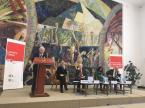
GENEVA, 13 March 2019 (The Geneva Centre)* – Multilateralism must be people-driven. The current rise of populism around the world is inextricably linked to a feeling of being excluded and kept out of decision-making processes broadly shared by ordinary people.
These were the main conclusions of a joint event between the Geneva Centre for Human Rights Advancement and Global Dialogue and the UNOG Library entitled Leadership in Modern Multilateralism.
The debate was held on 12 March 2019 at the United Nations Office in Geneva in the Library Events Room at Palais Des Nations.
At a time when the UN and other international organizations in Geneva are actively celebrating “100 years Anniversary of Multilateral Diplomacy in Geneva” to mark the Centenary of the founding of the League of Nations, multilateralism is under important strain.
After hearing from many of the world’s top women politicians on Tuesday [13 March 2019] in a session on “Women in Power”, Secretary-General António Guterres, held a Town Hall meeting for civil society activists where he underscored the importance of women seizing the initiative in the struggle for gender equality.
UN Women/Amanda Voisard | UN Women Executive Director Phumzile Mlambo-Ngcuka moderates United Nations Secretary-General António Guterres’ Townhall for civil society on topics pertaining to gender equality and the work of the UN.
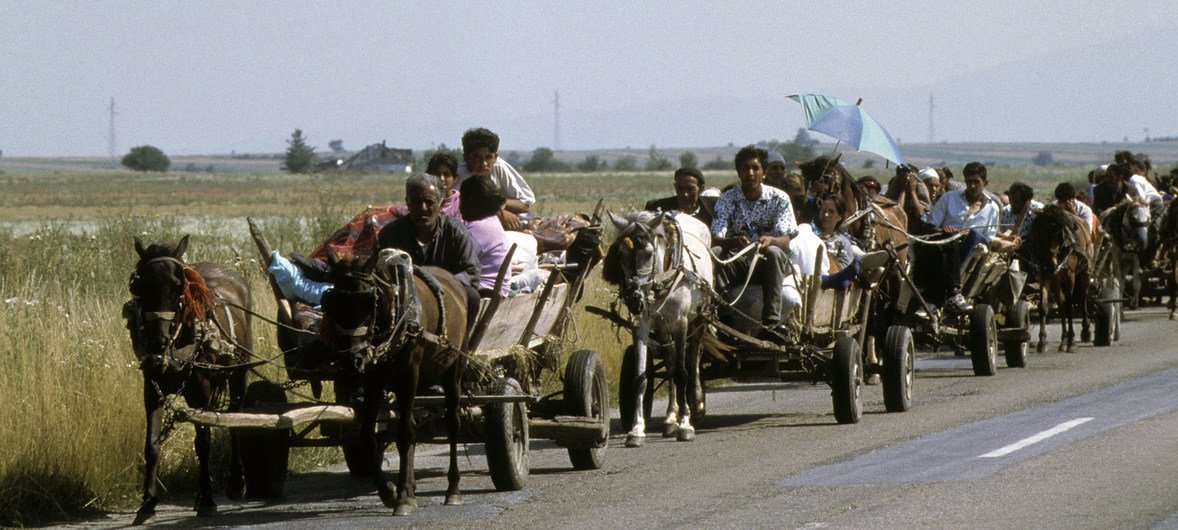
An independent rights expert appointed by the Human Rights Council has called on the United Nations to “provide justice and remedies” to displaced people who suffered lead poisoning after being housed in UN camps on toxic wasteland in Kosovo.
UN Photo/UNHCR/Roger LeMoyne | Roma civilians on the move in search of safety, inside Kosovo.



 These were the main conclusions of a joint event between the Geneva Centre for Human Rights Advancement and Global Dialogue and the UNOG Library entitled Leadership in Modern Multilateralism.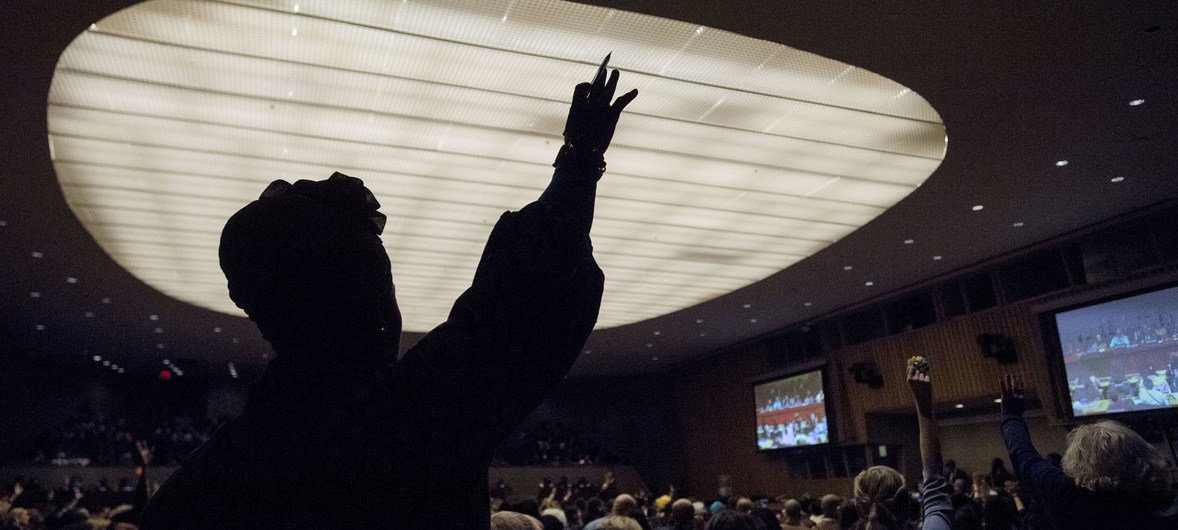
 HUMAN WRONGS WATCH