Dec 23 2025 (IPS)** – CIVICUS discusses migrants’ rights in Libya with Sarra Zidi, political scientist and researcher for HuMENA, an international civil society organisation (CSO) that advances democracy, human rights and social justice across the Middle East and North Africa.
Sarra Zidi
Libya has fragmented into rival power centres, with large areas controlled by armed groups.
As state institutions have collapsed, there’s no functioning system to protect the rights and safety of migrants and refugees.
Instead, state-linked bodies such as the Directorate for Combating Illegal Immigration (DCIM) and the Libyan Coast Guard (LCG) often work with militias, smugglers and traffickers, with near-total impunity.
In this lawless environment, Sub-Saharan migrants face systematic abuses that the International Criminal Court (ICC) and United Nations bodies warnmay amount to crimes against humanity.
Despite this, the European Union (EU) continues to classify Libya as a ‘safe country of return’ and work with it to externalise its migration control.
GAZA, The Occupied Palestinian Territory, 24 December 2025 —When Rana learned she was pregnant, her joy was quickly overshadowed by another feeling – fear.
For Rana, as for many of the 55,000 pregnant womenacross Gaza seeking healthcare, the question was not if her baby would be born but where, and whether they would survive the delivery.
“I thought I would have to give birth in a tent,” she recalled.
After two years of relentless attacks, Gaza’s health system has been shattered. Only a fraction of health facilities remain functional, and very few can provide emergency obstetric and newborn care.
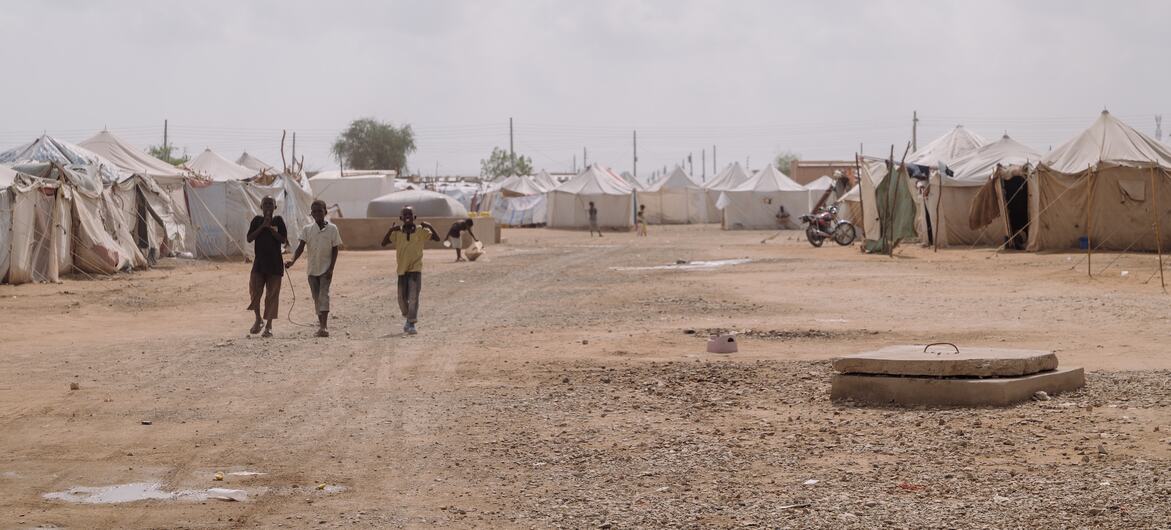
(UN News)* —The war in Sudan is entering a deadlier phase, the United Nations has warned, as intensified fighting in the Kordofan region, mounting civilian casualties from drone strikes and growing risks of regional spillover push the conflict toward the 1,000-day mark.
Briefing the Security Council on Monday [], senior UN political and humanitarian officials described a sharply deteriorating security and humanitarian situation marked by indiscriminate attacks, expanding territorial gains by the Rapid Support Forces (RSF), and escalating dangers for civilians, aid workers and peacekeepers.
(UN News)* — An estimated 500,000 people have been forced from their homes since fighting erupted in South Kivu province, Democratic Republic of Congo (DRC), at the beginning of December.
That’s according to the UN World Food Programme (WFP).
“This hunger crisis risks spiraling without urgent action,” said Cynthia Jones, WFP Country Director for the DRC.
She added that even the families who have provided shelter to those forced to flee are already living at emergency levels of food insecurity, “sharing their last food with displaced neighbors—pushing all of them closer to utter desperation.”
UNITED NATIONS, Dec 23 2025 (IPS)* – Jeanne Kirkpatrick, a former U.S. ambassador to the United Nations, once made a highly debatable distinction between “friendly” right-wing “authoritarian” regimes (which were mostly U.S. and Western allies) and “unfriendly” left-wing “totalitarian” dictatorships (which the U.S. abhorred).
Tercer Piso. Source Amnesty International
Around the same time, successive U.S. administrations were cozying up to a rash of authoritarian regimes, mostly in the Middle East, widely accused of instituting emergency laws, detaining dissidents, cracking down on the press, torturing political prisoners and rigorously imposing death penalties.
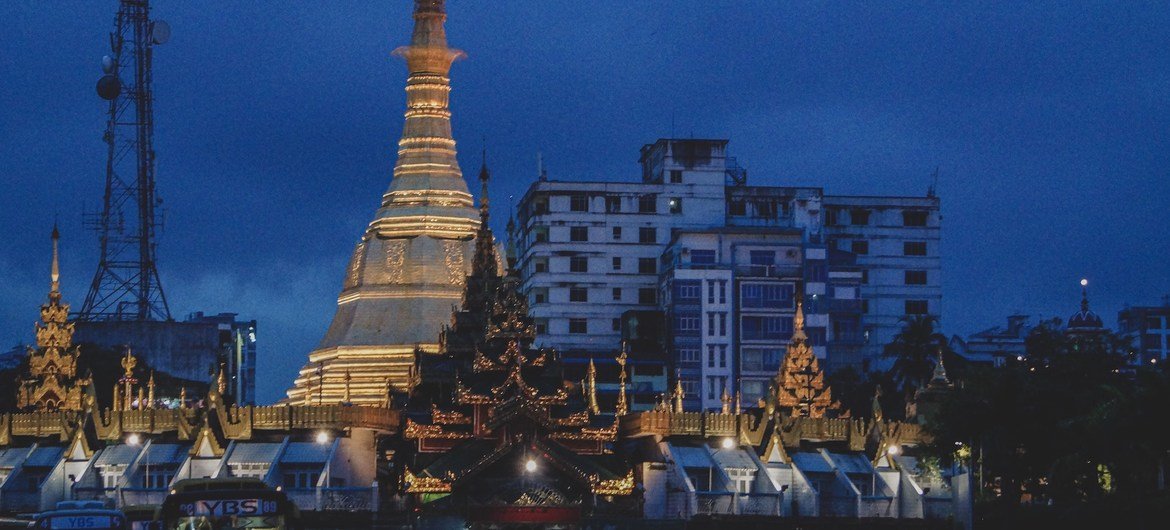
(UN News)* —As Myanmar approaches elections scheduled for 28 December, the UN’s top human rights official has said that civilians are being coerced from all sides – forced by the military to vote and threatened by armed opposition groups to boycott – in a climate of fear, violence and mass repression.
Unsplash/Kyle Petzer | A pagoda at dawn in downtown Yangon, the commercial hub of Myanmar.
UN High Commissioner for Human Rights Volker Türk warnedthat the military-controlled ballot is unfolding amid intensified violence, intimidation and arbitrary arrests, leaving no space for free or meaningful participation.
“These elections are clearly taking place in an environment of violence and repression,” Mr. Türk said in a news release.
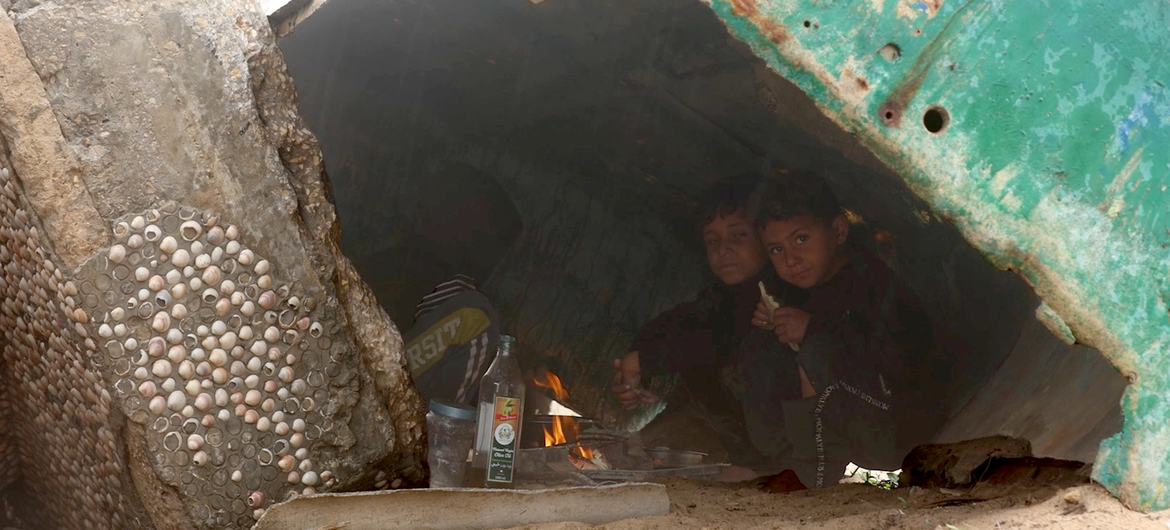
(UN News)* — Despite the ceasefire in the Gaza Strip, humanitarians continue to receive reports of airstrikes, shelling and gunfire in all five governorates, the United Nations said on Monday [].
UN News | As rain falls over Gaza, children take refuge beneath a disabled fishing boat, one of the few places offering shelter in the overcrowded displacement area.
This has resulted in casualties and disruptions to aid operations over the past 24 hours, UN Spokesperson Stéphane Dujarric told journalists at Headquarters, in New York.
Still, efforts to deliver assistance to the most vulnerable families continue during the cold and wet winter season, although a rescue mission to reach an injured person in Gaza City was denied.
MONTEVIDEO, Uruguay, Dec 22 2025 (IPS)** – Myanmar is heading for an election, beginning on 28 December, that’s ostensibly an exercise in democracy – but it has clearly been designed with the aim of conferring more legitimacy on its military junta.
.
Credit: Issei Kato/Reuters via Gallo Images
Almost five years after its February 2021 coup, the regime continues to fight pro-democracy forces and ethnic armed organisations, barely controlling a fifth of Myanmar’s territory.
The junta hasacknowledgedthat voting won’t be possible in much of the country.
Explore UN Women’s FAQs on how gender affects migration experiences.
.
Image
. Photo: UN Women Cambodia/Women Migrant Workers participatory photography project
Learn about the unique challenges that migrant women and girls face and how these differ to those men experience, from limited access to information and services to risks like trafficking, exploitation and violence.
What is the difference between migrants, refugees, and asylum seekers?
(UN News)* — Food security in Gaza has improved since the ceasefire declared in October, pushing back famine conditions, but the situation remains critical with more than three-quarters of the population still facing acute hunger and malnutrition, a new UN-backed analysis has found.





 . Photo: UN Women Cambodia/Women Migrant Workers participatory photography project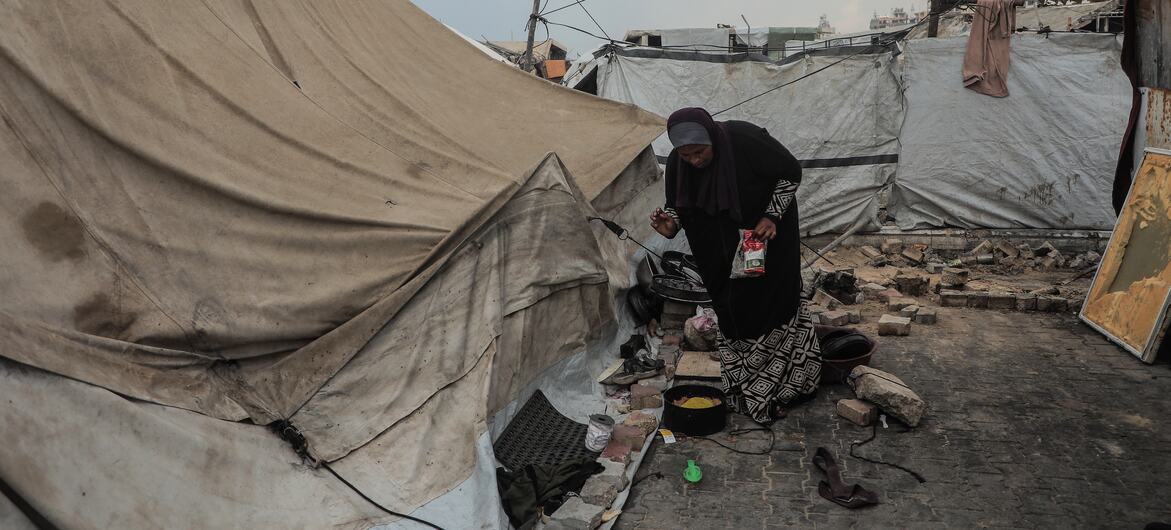
 HUMAN WRONGS WATCH