South Africa and other countries that have abstained from voting against Russia at the United Nations General Assembly in response to the war in Ukraine face intense international criticism. In South Africa, the domestic criticism has been extraordinarily shrill, and often clearly racialized.
.
.
It is frequently assumed that abstention means that South Africa is in support of the Russian invasion, and this is either due to corrupt relations between Russian and South African elites, or nostalgia for support given to the anti-apartheid struggle by the Soviet Union, or both. Continue reading →
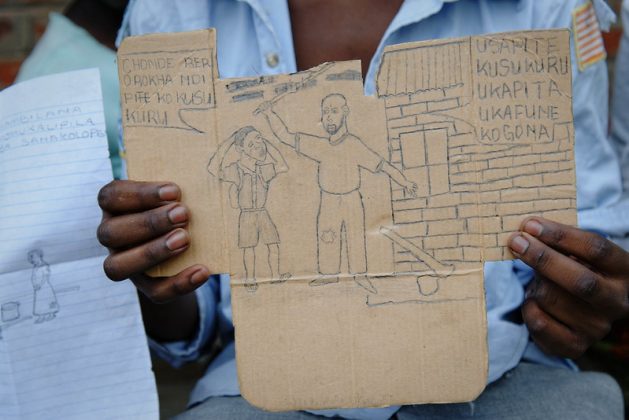
Nairobi, May 13 2022 (IPS)* – Children washing clothes in rivers, begging on the streets, hawking, walking for kilometres in search of water and firewood, their tiny hands competing with older, experienced hands to pick coffee or tea, or as child soldiers are familiar sights in Africa and Asia.
A child beneficiary holding a drawing portraying domestic violence, at the Centre for Youth Empowerment and Civic Education, Lilongwe, Malawi which partnered with the ILO/IPEC to support the national action plan aimed at combating child labour. Credit: Marcel Crozet/ILO
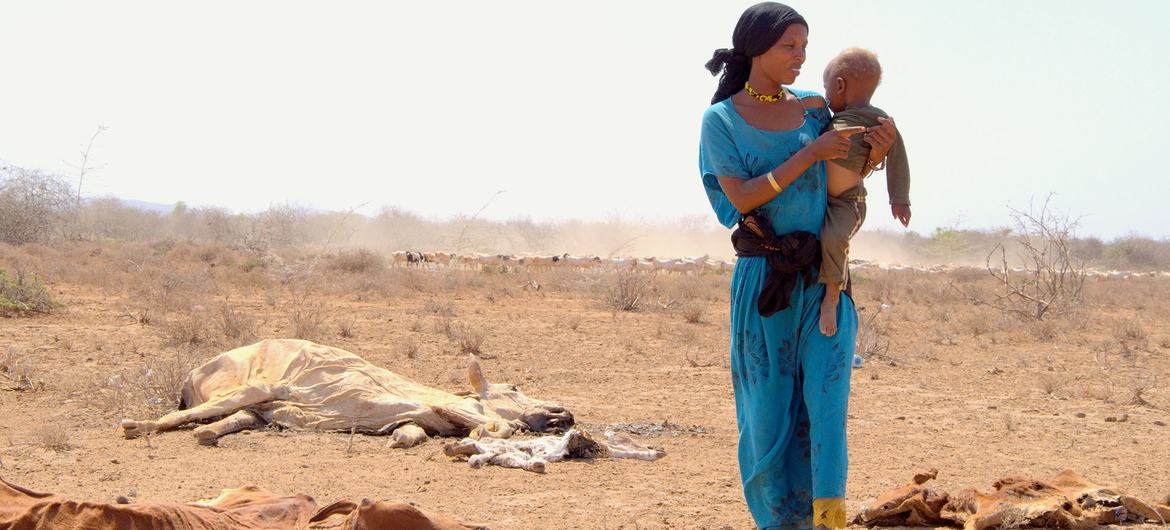
(UN NEWS)* — Humanity is “at a crossroads” when it comes to managing drought and accelerating ways of slowing it down must happen “urgently, using every tool we can”, said the head of the UN Convention to Combat Desertification (UNCCD) on Thursday [12 May 2022], calling for a global commitment to support drought preparedness and resilience.
Through its newly published Drought in Numbers report, released in Abidjan, Côte d’Ivoire, during the 15th Conference of Parties (COP15), UNCCD’s compendium of drought-related information and data is helping inform negotiations for the final outcomes of the conference when it closes on 20 May.
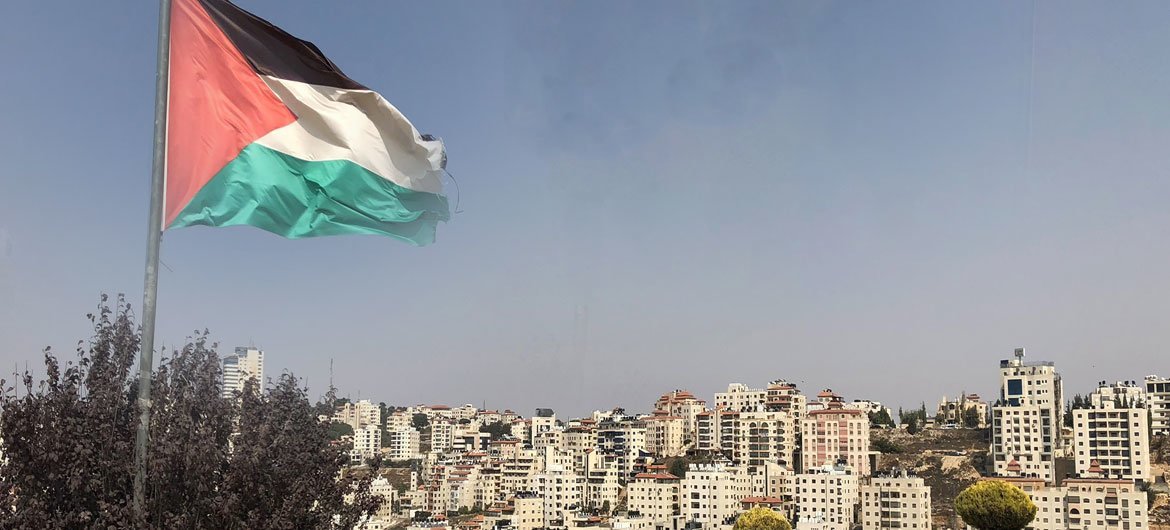
(UN News)* — The top UN official in the Middle East has urged Israel to halt all settlement activity following the latest approval given to new construction in the Occupied Palestinian Territory, announced on Thursday [12 May 2022].
UN News | The Palestinian Flag in the West Bank city of Ramallah.
“I condemn today’s decision by Israeli authorities to advance plans for over 4,000 housing units in settlements in the occupied West Bank,” Tor Wennesland, UN Special Coordinator for the Middle East Peace Process, said in a statement.
Israel’s Higher Planning Council, which approved the move, also retroactively legalized two outposts: Mitzpeh Dani and Givat Oz VeGaon, according to media reports.
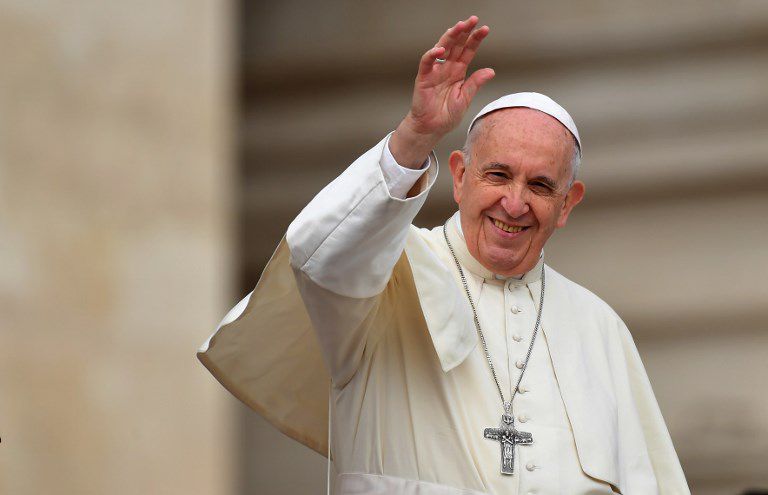
Pope Francis has suggested to Italian daily Corriere Della Sera that the “barking of NATO at the door of Russia” provoked the military operation in Ukraine and alluded that countries should not supply Ukraine with more arms. Specifically, the Pope said that Russia has “an anger that I don’t know whether it was provoked but was perhaps facilitated” by NATO’s unrelenting expansion towards the Eurasian Giant.
– This year didn’t start well. In January, off the coast of Thailand, thousands of litres of oil leaked into the sea from an underwater pipeline courtesy of Chevron’s subsidiary. The resulting spill blackened waters and beaches, killing local wildlife and threatening the livelihoods of communities reliant on the sea.
MADRID, May 11 2022 (IPS)* – It is as simple –and as horrifying– as that: both human health and the health of Planet Earth depend on plants. However, plants that make up 80% of the food and 98% of the oxygen, are under growing dangerous threats.
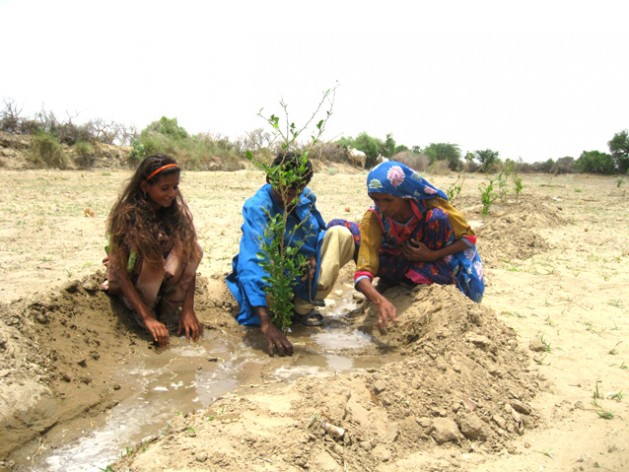
Protecting plant health can help end hunger, reduce poverty, protect biodiversity and the environment, and boost economic development. Credit: Saleem Shaikh/IPS
As dangerous as the fact that up to 40% of food crops are lost due to plant pests and diseases every single year, according to the world top food and agriculture organisation.
Millions of people worldwide are aware that their lives, and their children’s lives, are being threatened by lockdowns, vaccine mandates and loss of free speech.
And there is a growing awareness that these immediate and obvious threats are merely parts of a complex overall plan to implement a technocratic system of world governance that can be described as a neo-feudal system that seeks to increase and consolidate the power and wealth of the world’s billionaire individuals and families by destroying any possibility of autonomous individual behaviour.
The intention of these psychopathic elitists is that we ‘the people’ become literal extensions of their will, through technological invasion of all aspects of our lives which will lead to the total loss of our capacity to feel, think and act for ourselves. Continue reading →
Accra, May 10 2022 (IPS)* – “It feels like yesterday when I was deceived by one man who claimed to be a travelling agent. He promised me a work opportunity and a good salary,” says 25-year-old Cissy, as she prefers to be called. “As a young lady coming from an average family who really needed help, I fell for his lies.”
Caught in a web of deceit, a human trafficking survivor from Ghana tells her story. Credit: Getty Images
Cissy says although she was a bit sceptical about the offer and afraid of her destination country, the so-called travel agent convinced her that she had nothing to worry about. Continue reading →
We have a serious debt problem, but solutions such as the World Economic Forum’s “Great Reset” are not the future we want. It’s time to think outside the box for some new solutions.
Ellen Brown
In ancient Mesopotamia, it was called a Jubilee. When debts at interest grew too high to be repaid, the slate was wiped clean. Debts were forgiven, the debtors’ prisons were opened, and the serfs returned to work their plots of land.
This could be done because the king was the representative of the gods who were said to own the land, and thus was the creditor to whom the debts were owed. The same policy was advocated in the Book of Leviticus, though it is unclear to what extent this biblical Jubilee was implemented.
That sort of across-the-board debt forgiveness can’t be done today because most of the creditors are private lenders. Banks, landlords and pension fund investors would go bankrupt if their contractual rights to repayment were simply wiped out. But we do have a serious debt problem, and it is largely structural.
Governments have delegated the power to create money to private banks, which create most of the circulating money supply as debt at interest.



 HUMAN WRONGS WATCH