“The Arab word’s a veritable mess. The cosmic leadership deficit, the absence of legitimate institutions, the lack of transparency, disrespect for human rights, abysmal regard for gender equality, and too much conspiratorial thinking make it impossible to come to terms with the magnitude of the problems. In short, this region will remain broken, angry, and dysfunctional until the leaders who purport to take responsibility for governing these unhappy lands get their proverbial acts together. And that’s … well, a generational enterprise at best, and I suspect something that will take a good deal longer.”
— Aaron David Miller (“Where Have all the Arab States Gone” Foreign Policy: 4/14/2015)
UNITED NATIONS, Oct 22 2021 (IPS)* – The British novelist George Orwell’s “1984” characterized a dystopian society where people were restricted from independent thought and were victims of constant surveillance.
Published in 1949, it was a prophecy of the future with the underlying theme: “Big Brother is Watching You”
Credit: UN Office on Drugs and Crime (UNODC)
Fast forward to 2021
We are back in “1984” where all our movements are monitored—this time by surveillance cameras planted in New York city streets, expressways, public parks, subways, shopping malls, and parking lots– in violation of personal privacy and civil rights. Continue reading →
3 November 2021 (UNEP)* — The impact of climate change on global peace and security is high on the agenda as world leaders gather at the COP26 UN Climate Change Conference in Glasgow this week.
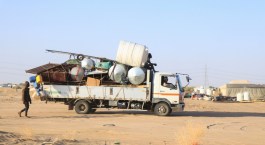
Photo: Reuters/Muhammad Fuhaid | Belongings on a truck heading to a camp for internally displaced people in Marib, Yemen.
As UN Secretary-General António Guterres said in his landmark state of the planet speech: climate change is one of the biggest dangers to peace. “The fallout of the assault on our planet is impeding our efforts to eliminate poverty and imperiling food security. And it is making our work for peace even more difficult, as the disruptions drive instability, displacement and conflict.”
(UN News)* — All parties involved in the escalating conflict in Ethiopia’s Tigray must stop fighting immediately, or else risk pushing the region’s catastrophic humanitarian situation “over the edge”, the UN High Commissioner for Human Rights, Michelle Bachelet, said on Wednesday [3 November 2021].
The UN rights chief’s appeal followed the declaration of a broad state of emergency in Ethiopia, amid reports that Tigrayan forces had made further advances into the neighbouring Amhara region, and other news reports of shelling of the Tigrayan capital Mekelle, by Ethiopian Government forces.
3 November 2021 (UN News)* — The World Health Organization (WHO) on Wednesday approved an eighth vaccine against COVID-19, which follows a slight uptick in new cases globally.
COVAXIN, made by Indian company Bharat Biotech, has received WHO emergency use listing (EUL), meaning it could soon be available to millions worldwide.
The EUL process assesses the quality, safety and efficacy of vaccines and is a prerequisite for their inclusion in the global solidarity initiative, COVAX.
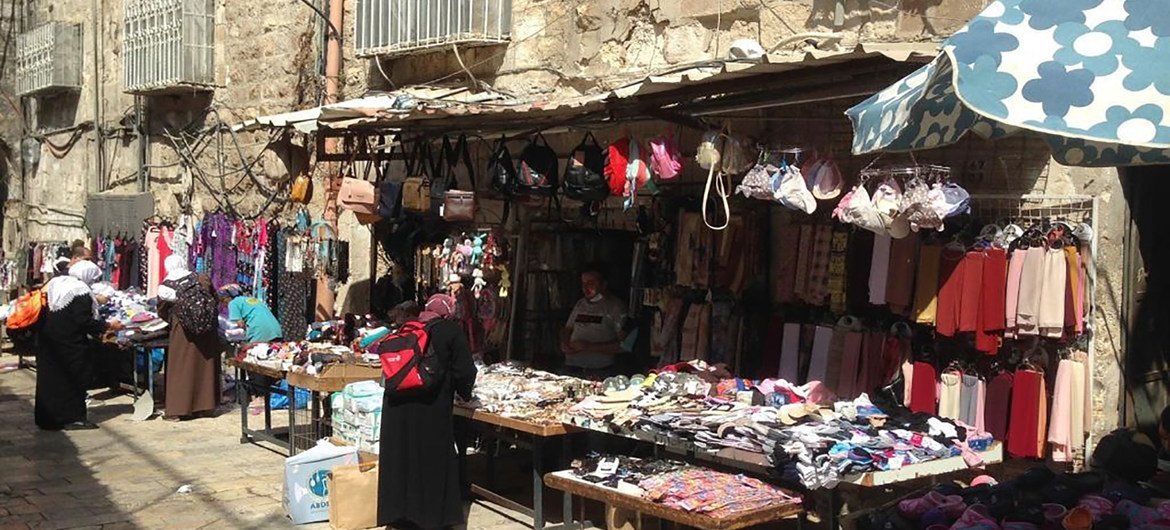
3 November 2021 (UN News)* — Israel’s plan to build thousands of new homes for Jewish settlers in the occupied West Bank and East Jerusalem has drawn strong condemnation from two independent experts appointed by the UN Human Rights Council.
Rafique Gangat | The market in Old City of East Jerusalem.
Settlement expansion “tramples” on human rights law, Special Rapporteurs Michael Lynk and Balakrishnan Rajagopal said in a statement on Wednesday [3 November 2021].
Brexit showed that a few ruthless, well-connected people with big money behind them can change history. Now they’re at it again, and the stakes are even higher
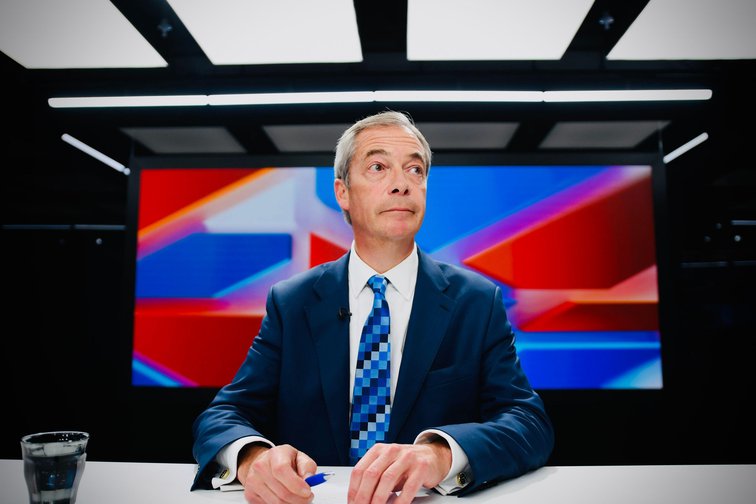
Nigel Farage presents his first show on GB News channel in London | SOPA Images Limited / Alamy Stock Photo
1 November 2021 (openDemocracy)* — If Brexit proved anything, it’s that a handful of people with powerful connections can go a long, long, way.
Conflict and the environment are deeply interlinked. Around the world, at least 40 per cent of all intrastate conflicts have had an important natural resource dimension. Rising temperatures due to climate change now threaten to further amplify environmental stresses and tensions.
And, all too often, the environment is among the casualties of war, through deliberate acts of destruction or collateral damage, or because, during conflicts, governments fail to control and manage natural resources.
A Nepalese peacekeeper with the African Union-UN Hybrid Operation in Darfur (UNAMID) plants a tree outside UNAMID Headquarters in El Fasher, Sudan.
PHOTO:UN Photo/Albert Gonzalez Farran
3 November 2021 (United Nations)* — Though humanity has always counted its war casualties in terms of dead and wounded soldiers and civilians, destroyed cities and livelihoods, the environment has often remained the un-publicized victim of war. Water wells have been polluted, crops torched, forests cut down, soils poisoned, and animals killed to gain military advantage.
The U.S. Military is the greatest polluter and creator of chaos on the planet.
The Roman Empire, as bad as it was, left cobblestone streets and aqueducts in areas it conquered or occupied, many of which are still in use today throughout the world.




 HUMAN WRONGS WATCH