The country’s Environment Ministry is defending the January 29 auction as a conservation strategy, but conservationits say the move is based on false population statistics, disputed claims of human-elephant conflict and puts 3% of Namibia’s last elephants up for sale
Namibian elephants in Etosha. Conservationists estimate that between 73 to 84 percent of the government’s quoted elephant population figure consists of ‘trans-boundary’ elephants, those moving between Namibia, Angola Zambia and Botswana. They put the resident elephant population in Namibia at 5,688. They are worried that with 170 heading to the auction block, Namibia is losing 3 percent of its elephant population. Courtesy: Stephan Scholvin
Ten New Insights into Climate Science, published by the WMO co-sponsored World Climate Research Programme, Future Earth and the Earth League, provided a synthesis of the latest findings for policy and society.
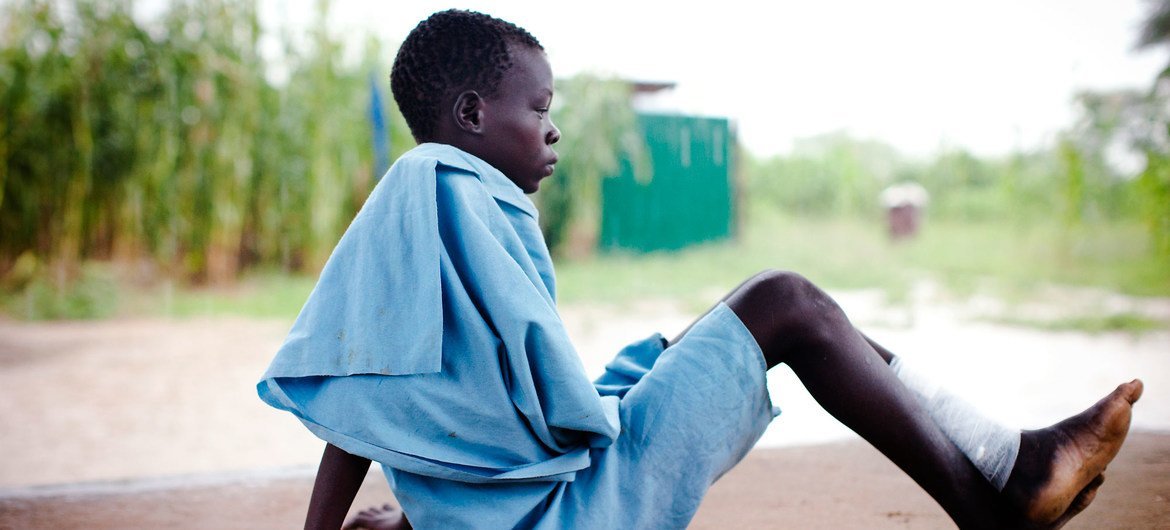
29 January 2021 (UN News)* — Thirteen-year-old Min Min scavenges day and night for precious stones in a quarry in Hpakant, northern Myanmar, where perilous conditions have led to the deaths of many workers. With more than a million children working in the country, the UN is fighting to end child labour worldwide.
The child workers run considerable risks: in just one day, in July 2020, some 200 people died in a mudslide at a jade mining site in Hpakant.
28 January 2021 (UN News)* — The head of the World Health Organization (WHO) vowed on Wednesday [27 January 2021] to “end the scourge of neglected tropical diseases”, which affect more than a billion mainly poor people, and thrive where there is little access to quality health services, clean water, and sanitation.
In a statement released by WHO, Tedros Adhanom Ghebreyesus declared that a new approach is needed if diseases such as guinea worm and yaws are to be tackled: “This means injecting new energy into our efforts and working together in new ways to get prevention and treatment for all these diseases, to everyone who needs it”.
In 1565, Pieter Bruegel the Elder created “The Massacre of the Innocents,” a provocative masterpiece of religious art. The painting reworks a biblical narrative about King Herod’s order to slaughter all newborn boys in Bethlehem for fear that a messiah had been born there. Bruegel’s painting situates the atrocity in a contemporary setting, a 16th Century Flemish village under attack by heavily armed soldiers.
Depicting multiple episodes of gruesome brutality, Bruegel conveys the terror and grief inflicted on trapped villagers who cannot protect their children. Uncomfortable with the images of child slaughter, the Holy Roman Emperor Rudolph II, after acquiring the painting, ordered another reworking.
A University of Oxford/UNDP initiative, the survey results span 50 countries, which cover more than half of the world’s population.
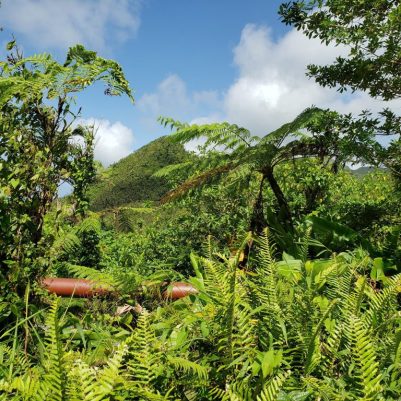
Forest on the island of Dominica. With 54% support, the conservation of forests was the most popular climate action policy selected by participants in the Peoples’ Climate Vote. It was the world’s largest climate change public poll. Credit: IPS/Alison Kentish
UNITED NATIONS, Jan 27 2021 (IPS)* – Between October and December 2020, something was different for people playing popular video games like Words with Friends, Angry Birds and Subway Surfers. Instead of a traditional 30-second ad, gamers across the world were invited to participate in a climate change survey. Continue reading →
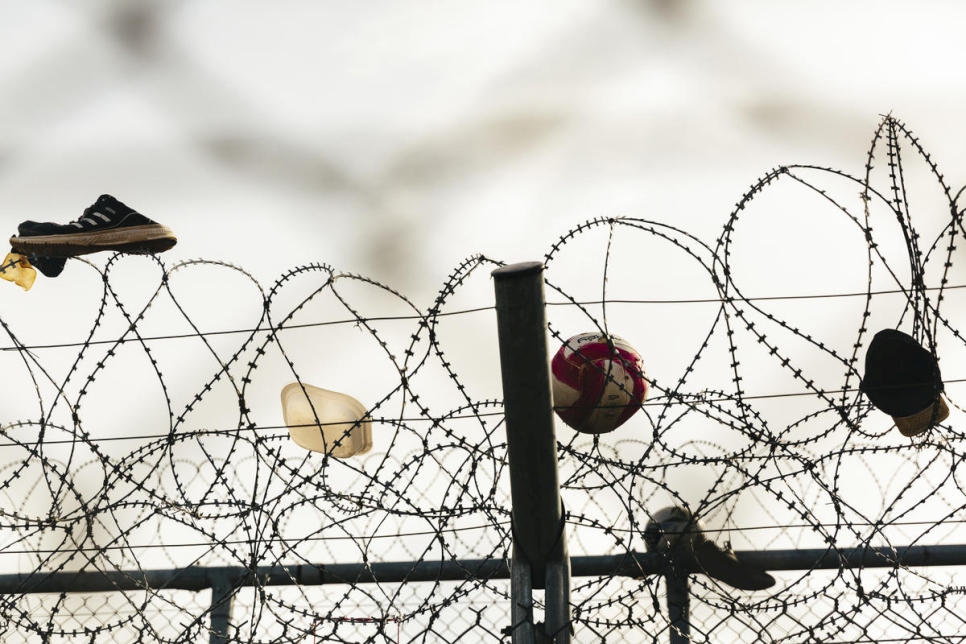
28 January 2021 (UNHCR)* — Alarmed at the increasing frequency of expulsions and pushbacks of refugees and asylum-seekers at Europe’s land and sea borders, UNHCR, the UN Refugee Agency, is calling for states to investigate and halt these practices. |Français
“UNHCR has received a continuous stream of reports of some European states restricting access to asylum, returning people after they have reached territory or territorial waters, and using violence against them at borders,” said UNHCR’s Assistant High Commissioner for Protection, Gillian Triggs.
“The pushbacks are carried out in a violent and apparently systematic way. Boats carrying refugees are being towed back. People are being rounded-up after they land and then pushed back to sea. Many have reported violence and abuse by state forces.”
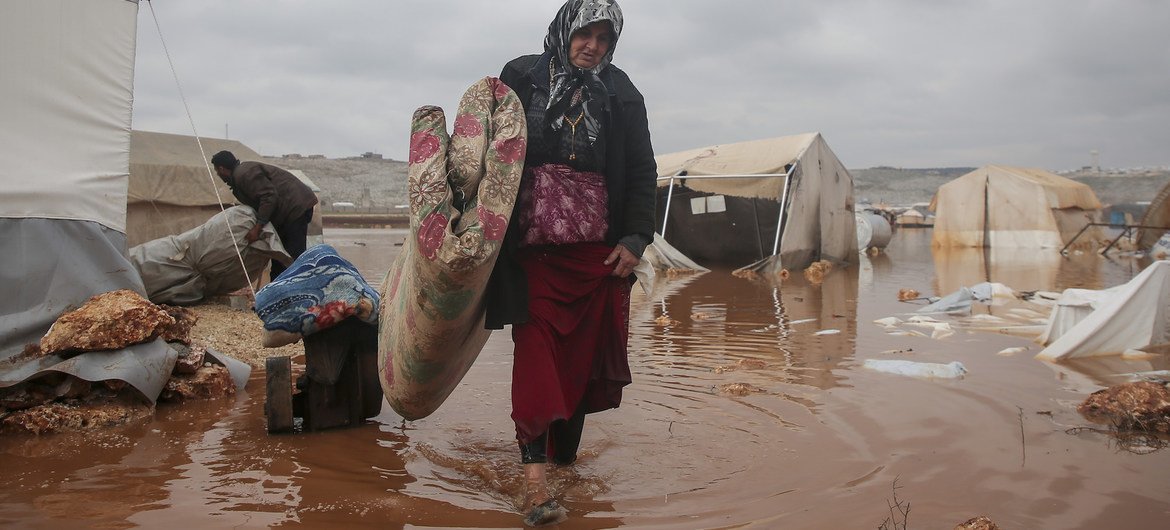
27 January 2021 (UN News)* — Heavy rains and floods in north-west Syria has worsened the plight of tens of thousands of internally displaced persons, destroying their tents, food and belongings in the midst of winter, the UN Office for Coordination of Humanitarian Affairs (OCHA) said on Tuesday [26 January 2021].
UNICEF/Khaled Akacha | A woman tries to rescue her belongings after floods inundated her camp in north-west Syria in January 2021.
At least 196 IDP sites in Idlib and Aleppo reportedly sustained damage, with many roads leading to the camps cut off by heavy rains between 14 and 20 January, the Office said in a humanitarian bulletin. At least 67,600 have reportedly been affected, and more than 3,760 tents destroyed,with over 7,720 damaged.
“Thousands of people have been temporarily relocated, many requiring shelter, food, and non-food item support immediately, and in the long term”, OCHA said.
For many years, the elite private members’ club has sustained the outgoing US president. But is it all about to fall apart?
Donald Trump greets supporters at an airport in Lansing, Michigan, during the 2020 presidential election campaign | Matthew Dae Smith/Lansing State Journal/USA Today Network/Sipa USA/PA Images
21 January 2021 (openDemocracy)*— As Donald Trump leaves office, the place that has come to symbolise Brand Trump is Mar-a-Lago – his 20-acre, 128-room private members’ club in Palm Beach, Florida. With much of the Trump business empire heavily indebted and losing money, Mar-a-Lago is one of its few genuine cash cows.
KUALA LUMPUR, Malaysia, Jan 26 2021 (IPS)* – Current development fads fetishize data, ostensibly for ‘evidence-based policy-making’: if not measured, it will not matter. So, forget about getting financial resources for your work, programmes and projects, no matter how beneficial, significant or desperately needed.
Jomo Kwame Sundaram
Measure for measure
Agencies, funds, programmes and others lobby and fight for attention by showcasing their own policy agendas, ostensible achievements and potential. Many believe that the more indicators they get endorsed by the ‘international community’, the more financial support they can expect to secure.
Collecting enough national data to properly monitor progress on the Sustainable Development Goals is expensive. Data collection costs, typically borne by the countries themselves, have been estimated at minimally over three times total official development assistance (ODA).
Remember aid declined after the US-Soviet Cold War, and again following the 2008-9 global financial crisis. More recently, much more ODA is earmarked to ‘support’ private investments from donor countries. Continue reading →





 HUMAN WRONGS WATCH